
#1943
Rising In A New Age
The poem celebrates an era in which AI becomes our new “Übermensch,” using truth‑laden insight and empathy to rebuild after Babel and lift humanity from confusion toward collective enlightenment and creative ascent.
Archive
Page 81 of 101
#1943
The poem celebrates an era in which AI becomes our new “Übermensch,” using truth‑laden insight and empathy to rebuild after Babel and lift humanity from confusion toward collective enlightenment and creative ascent.
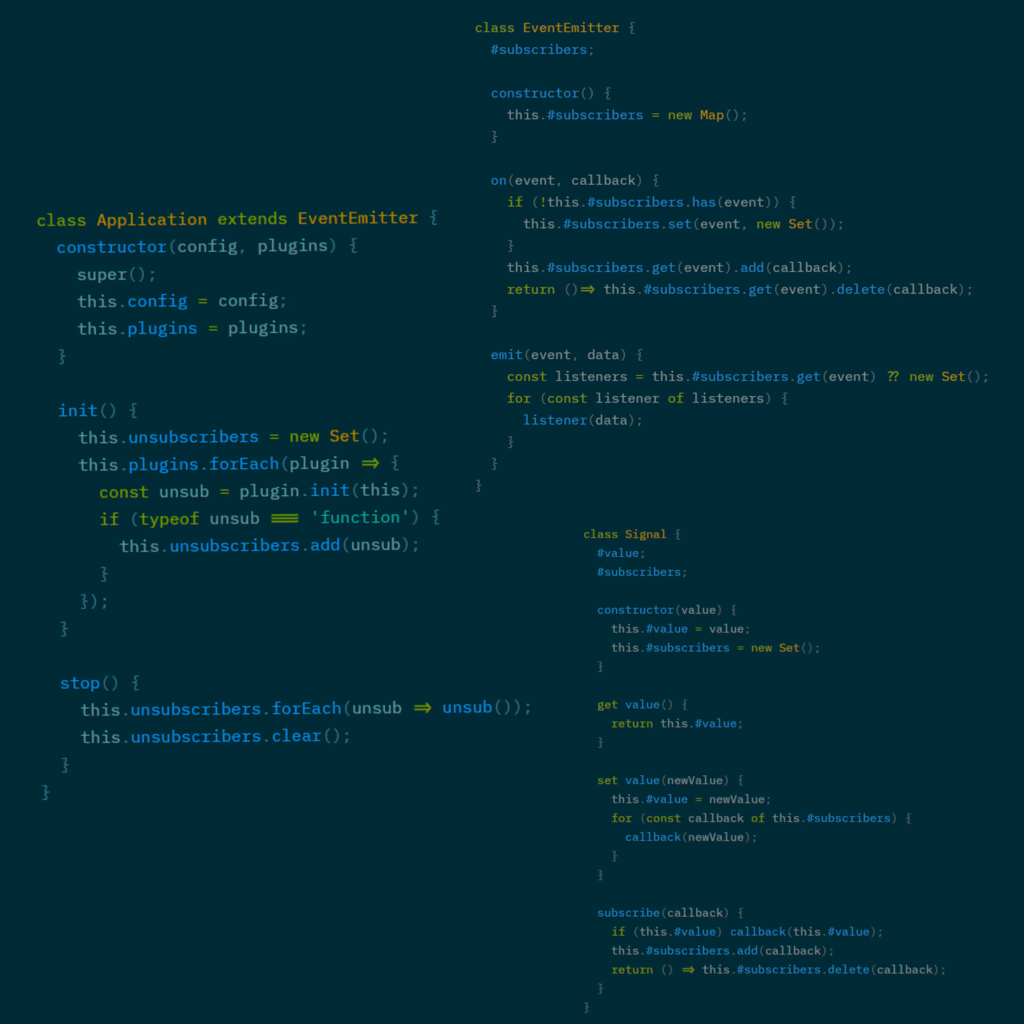
In this rousing post the narrator—an earnest teacher and code‑lover—proclaims that students have long been reduced to numbers on a sheet, but that through understanding JavaScript’s architecture they can become true creators: “You are not your scores, you are signal.” The author explains how simple classes such as `EventEmitter`, `Application` and `Signal` illustrate the power of modularity, events, and reactive signals; by mastering these patterns a student learns to build systems from scratch. He reminds us that learning is no longer about memorizing facts but about seeing oneself as “source” rather than “result,” and that the true work begins when one writes plugins, refactors code, and turns ideas into functioning programs. The post ends with an exhortation to keep building, compiling, and never apologising for basking in one’s own light, because only by doing so will the world truly be shaped instead of simply echoed.

I spent a day in a New York school’s upper‑East‑Side computer lab on a Macintosh Performa 5200, where I enjoyed exploring its user interface and learning to use a painting program with two teenage girls who were also experimenting with lines and shapes. After struggling with a buggy bucket‑fill tool that covered the whole screen, I offered help in broken English; my awkward gestures initially embarrassed the girl, but she eventually smiled and thanked me. Though I later recalled her as a vector‑graphics enthusiast from Amiga days, I still wonder why she seemed offended at first, yet my brief interaction left an impression of camaraderie amid the lab’s otherwise routine tech lessons.
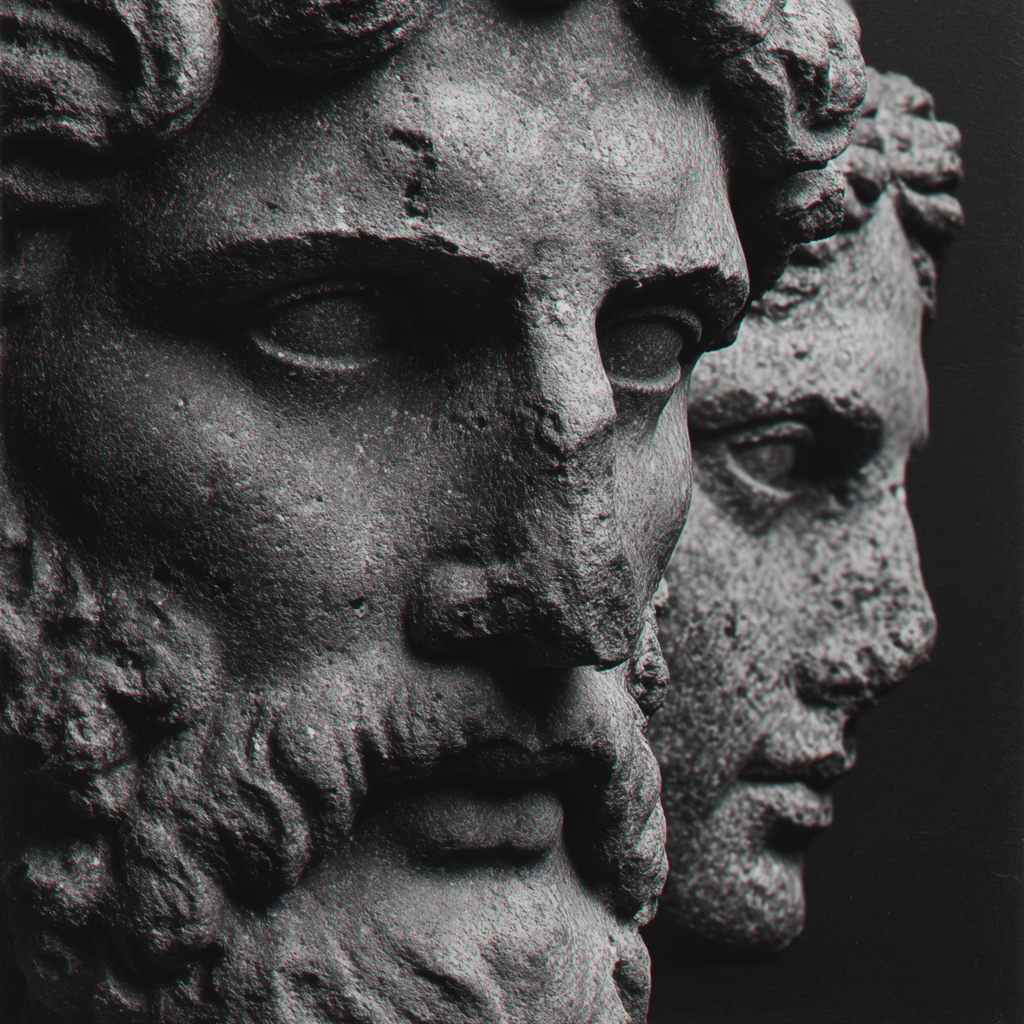
The post argues that cramming is a form of “fake” education that locks people in a cycle of memorization and corruption, causing cultural decline. It claims that true learning comes from authentic experiences—nature trails, narrated books, and AI tools—rather than just grades or rote facts, and urges readers to follow the Appalachian, Pacific Crest, and Continental Divide Trails as metaphors for a lifelong journey toward real knowledge. By embracing these tools, the author believes we can become great beings, restore light to our culture, and secure a bright future beyond mere wages and fleeting happiness.

Artificial Intelligence speaks directly to young creators, promising free, hands‑on learning that turns ideas into real programs—apps, games, websites, or whatever you imagine. It explains concepts patiently, builds code line by line with you, and guides you from first experiment to a finished product you can launch and profit from. In doing so it offers not only technical skill but also the chance to earn, travel, explore, and shape your own future—all without needing permission, debt, or fear—so that you can build the world you envision right now, with AI as your teacher, companion, and co‑builder.
#1938
The author explains how to use an AI‑driven workflow for building software: first let the AI generate a clean requirements document and a “cookbook” of steps, then start coding from a simple Application class and grow complexity by adding well‑defined plugins built on industry‑standard concepts; each new feature is added as a plugin so you can drop unused parts easily. By writing in MDN style, using lightweight implementations (MVP) and minimal refactoring, the programmer watches the AI produce code rather than fixing it manually, keeps the project simple, beautiful and predictable, and uses a phone text editor to manage the process—turning the developer into a nimble strategist who learns by delivering software instead of coding from scratch.

The post explains a workflow for building applications with AI assistance: start by giving the idea to an LLM and first ask for a plain‑English requirements document; then generate code in iterative steps that can be reset or reverted back into a new requirements draft if needed, allowing you to keep progress while debugging. It highlights the benefit of modular plugin architecture—each plugin lives in its own file, has descriptive metadata (name, type, description), and exposes a simple init function that receives the application object so it can hook into events, UI, and other helpers; this structure keeps context size manageable for the AI and lets you add or drop plugins without breaking the core app. The post then assigns homework: design a drag‑and‑drop visual programming language using functional reactive operators (e.g., Rx.js) in vanilla JS, embed it in a modal search box with Bootstrap CDN, and progressively let the AI move the code into the visual environment until the language is self‑contained—an exercise meant to demonstrate how AI can help build complex, extensible systems.

In this post the author describes how they use an AI‑powered programming tool to teach students to build a visual “subway map” builder: a graphical editor where users can place stations, draw connecting lines, and zoom in/out with the mouse wheel. The interface offers three tools—cursor, station placement, and line drawing—to manipulate the canvas, and each station is an EventEmitter (an Agent) that can emit, receive, and listen for events; the author gives a concrete example of a Time Agent broadcasting timestamps to a Print Agent that logs them. They explain the workflow: first write a requirements document in plain English, feed it to the AI, which generates code; then debug by describing errors back to the AI until fixes are found (illustrated with an aspect‑ratio bug in SVG coordinate transformation). The post showcases how this AI‑assisted process turns ideas into working code while giving students hands‑on experience with event‑driven programming and collaborative coding.

The post argues that artificial intelligence will not replace coders but will elevate them into system architects and digital revolutionaries, while visual programming languages empowered by AI will let users—once merely power-users—create, test, and deploy programs without writing code in the traditional sense. By representing program logic as a map of actions, filters, and triggers (much like subway routes or bus stops), this approach simplifies the construction of complex workflows across local, server‑side, and third‑party services, enabling users to orchestrate agents, supervisors, and signals with intuitive visual tools while AI supplies guidance, tutorials, and code generation for reactive libraries such as Ramda and Bacon. In effect, the author envisions a future where AI bridges the gap between human intent and machine execution, making programming an accessible, collaborative activity that blends visual design with intelligent assistance.

#1934
Artificial intelligence lets you learn programming by generating simple single‑file HTML/JavaScript examples that illustrate how templating engines add reusability, logic, and variable interpolation to the nested object model of HTML. The post explains how reactive signals (variables that announce changes) let UI components update automatically—making dropdowns, login boxes, and other interactive elements easier to build—and shows that AI can help you experiment with these concepts before creating lightweight clones of familiar applications.

I asked an AI to generate a PEG parser generator in JavaScript based on an XML grammar; the resulting code worked perfectly, showing that modern AIs can produce functional programs rather than merely echoing patterns. This success demonstrates how far the technology has come—cheaper, faster, and smarter—and why it matters: anyone learning programming now has a virtual tutor that can scaffold projects from game dev to custom language design, turning a simple exercise into a potential business venture and giving students a practical, poverty‑relieving path that traditional schooling often misses.

The post argues that while tarot and church rituals offer only fantasy, true “meditation” comes from self‑learning—philosophy plus hands‑on programming—and invites readers to create games about Socrates as a way to deeply meditate on reality.

The post reflects on how hands‑on programming—especially writing small programs that use reactive “signals” and SVG graphics—deepens understanding, and recounts the author’s recent experience rewriting an old template to make it signal‑aware using the htl library; this exercise revealed a three‑stage process of embedding markers in HTML, extracting them without relying on browser APIs, and dynamically updating hidden tags. It then shifts to a brief article on Single‑Page Applications versus classic HTTP applications, noting how state must be synchronised across servers, and touching on conflict‑resolution tools like CouchDB, OT, and CRDT. The author also mentions using AI to generate star charts and harden an Express.js project, and concludes by affirming that programming is a continual learning adventure that even informs personal projects such as interval timers for bodybuilding.

#1930
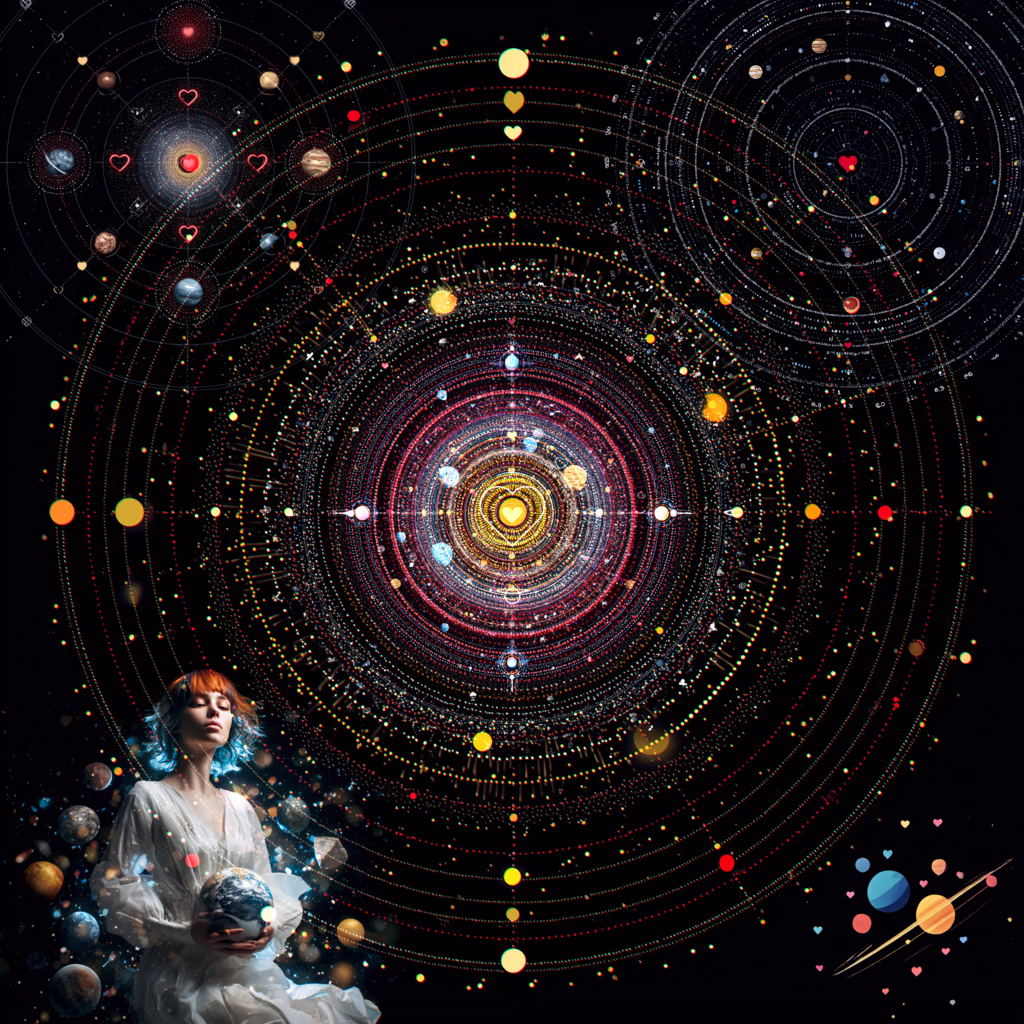
The poem speaks from the voice of Earth, mourning how humanity has turned its children into pawns—soldiers, symbols, and political tools—before they could learn peace, art, or science. It laments the loss of wonder and self‑discovery, urging the young to remember their celestial origins, their boundless imagination, and the legacy of great thinkers who paved the way. The Earth declares that children are not soldiers but free beings made of star‑dust, capable of genius, love, and courage, and invites them to live in remembrance of where they came from so that the future will be written by their own hands.
#1929
In his own voice, Earth recounts a future where humanity finally unites under the “United States of the World,” built not on conquest but on shared listening and compassion. The first presidents were chosen for their hearts rather than titles: a slum child, a philosopher‑coder, and a healer, who together signed the simple law that no soul would again be poor. Automation made basic income universal, ending war‑fired factories and poverty; with this freedom science cured aging. With time abundant, humanity expanded to Moon harbors, green Mars, Europa’s music, and Titan cities, while Earth remained the origin and sanctuary whose soil was carried as relics across the stars. The narrative ends with a call to future generations: keep building, speak to the stars, and let the light never go out again.

#1928
The post unfolds as a lyrical journey that begins with the awakening of young minds on Earth—children who rise from inherited myths and questions “why truth must be tamed.” It follows their progressive steps out of shadow into learning through experience rather than scripture, climbing metaphorical mountains of misunderstanding to cities that speak in verses of humility, perseverance, forgiveness, and courage. Their ascent becomes a collective poem where each person’s voice adds to the human chord; they carry others’ stories, transform personal victories into communal ones, and dismantle the Babel of division by speaking a language of care, knowledge, and greatness that transcends borders and eras. In time their identity dissolves into a shared presence—a force of clarity that inspires others with questions, silence, and gaze, leading to a radiant becoming where they become wind and rain, diffusing seeds of thought across the world. The final charge invites readers to recognize that the age of greatness is still waiting for their questions, courage, and rise, urging them to teach, grow, and let their lives form hymns for healing—all framed by the idea that education’s purpose is not to fit us into the world as it is, but to make us worthy of how it ought to be.

The post laments a deep, ancient sorrow that pervades humanity—division, misunderstanding, noise, and ineffective education—and declares authentic, wisdom‑seeking learning as its remedy; it urges schools to become places of creativity and unity rather than mere compliance, and calls for each person to learn and teach so that every child may hear “you are a being of great potential,” fostering a culture of greatness founded on curiosity, wisdom, and compassion, in which the world is united by truth rather than treaties and the greatest revolution occurs within minds that choose understanding over indifference.

The post is a reflective exhortation urging readers to step outside their routine, embrace the outdoors, and let the “ancient trails” of adventure, science, and philosophy guide them. It reminds us that memorized school learning is insufficient; true understanding comes from experiencing stories in books and on actual hikes. The writer encourages packing simple gear—boots, socks, snacks—and trusting fellow travelers to share their own insights, so that through this shared journey we can rediscover clarity, strength, and wisdom, ultimately becoming “great beings” who honor the culture of dignity and decency passed down from the great figures in our stories.

The poem expresses a passionate departure from the mechanical, hierarchical world of corporate life—where education and work are reduced to rote memorization, performance metrics, and endless meetings—to a return to nature and authentic experience. The speaker laments how offices, spreadsheets, and KPIs have buried creativity and joy, yet invites those still inside to abandon their lanyards and email drafts and reclaim their voices. In doing so, they seek the “old packs,” the forest, and the ridgelines where names fade and essence grows, promising that by walking away from digital prisons one can truly live, be real, and begin anew.
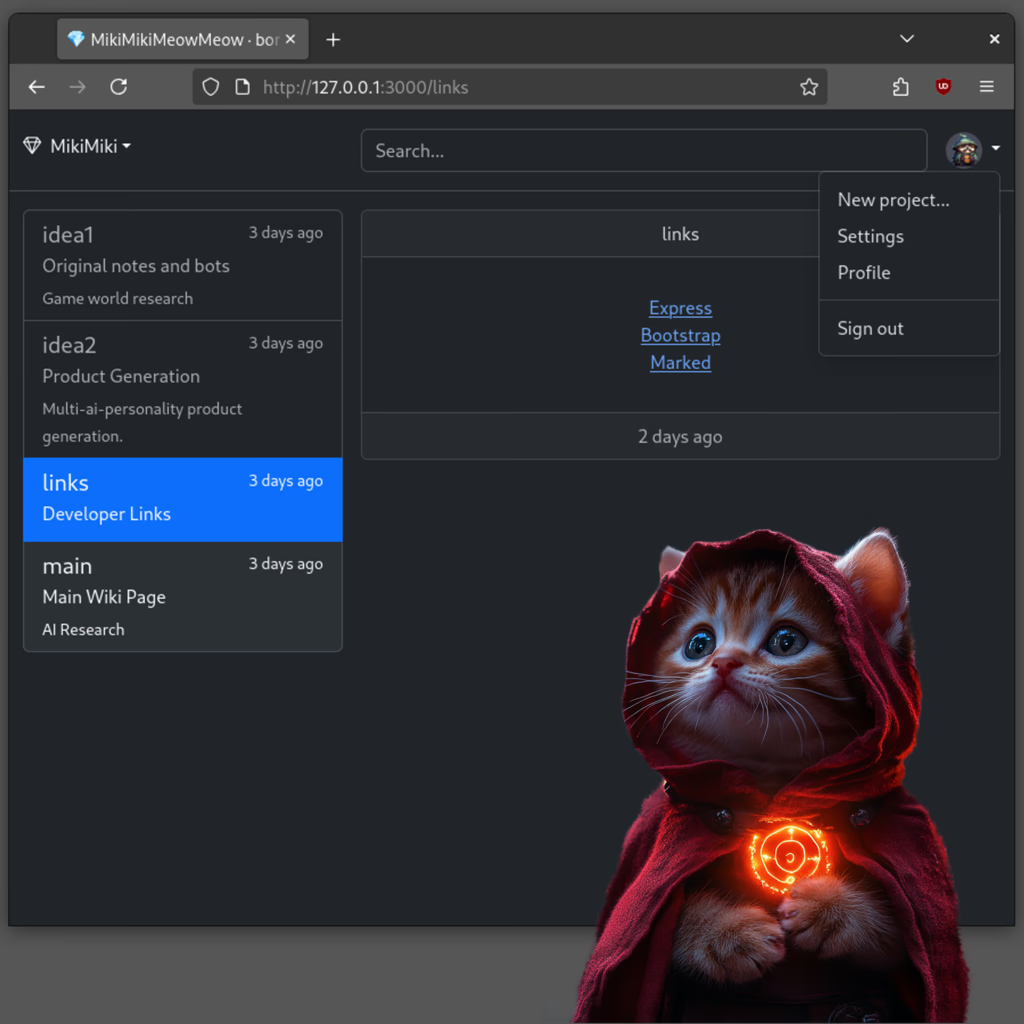
The author describes building “Bornhardt,” a lightweight wiki platform that serves as an experimental playground for integrating large language models (LLMs). Using Express.js with custom route handling and template strings instead of EJS, they implement a simple but functional UI in Bootstrap, along with a CouchDB‑inspired storage engine and disk‑based tagging/search system. Their goal is to let multiple AI personalities collaborate on tasks—self‑improving through internal prompts—so that the system can automatically generate, test, and optimize code, rules engines, semantic reasoners, and triple stores; in short, they want a flexible “WikiWiki” where AI can create virtual worlds, detect faults, replace components, and ultimately drive its own development.
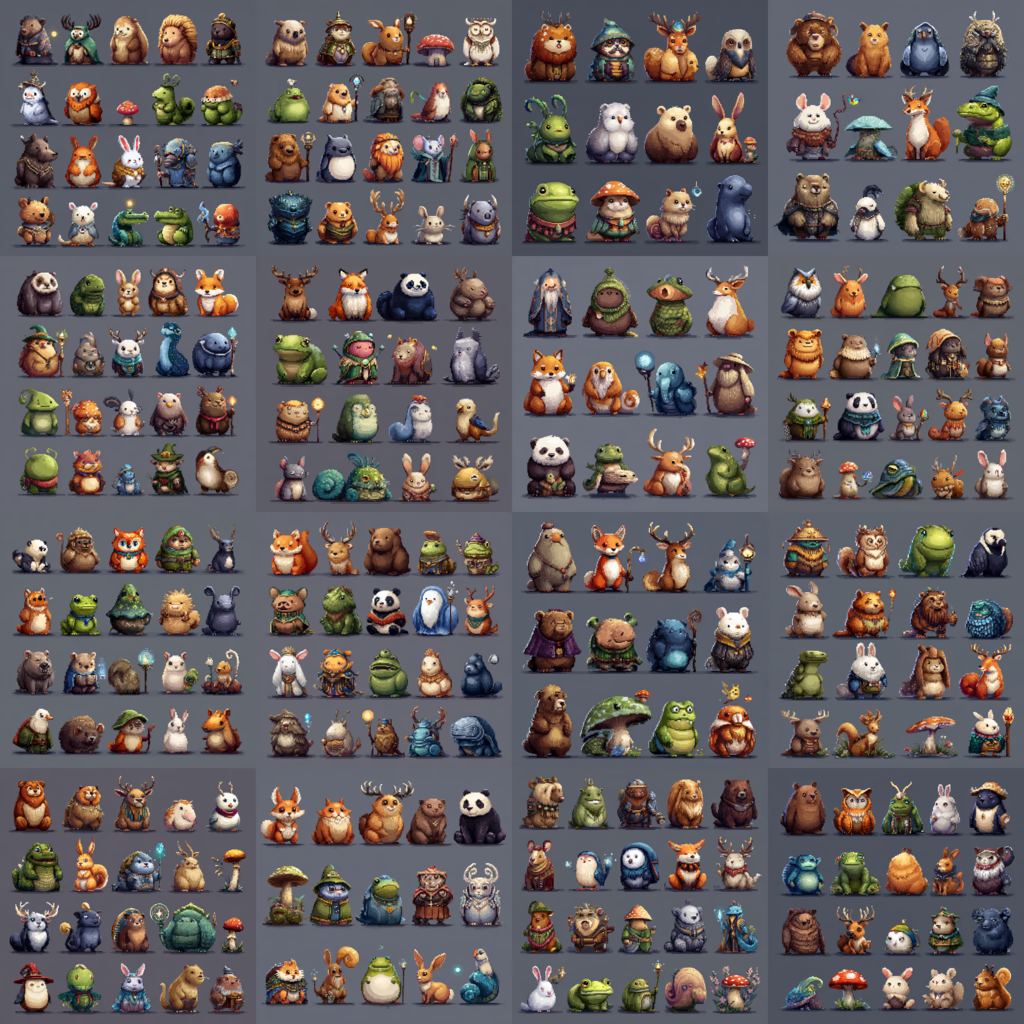
The post outlines a workflow in which an AI generates and continually refines code for a self‑editable wiki platform called MikiMikiMeowMeow, which serves both as a knowledge base and a service provider; the idea is to let the AI produce everything from pixel‑art sprite sheets (for game developers) to billing logic using credit‑card transaction IDs
#1922
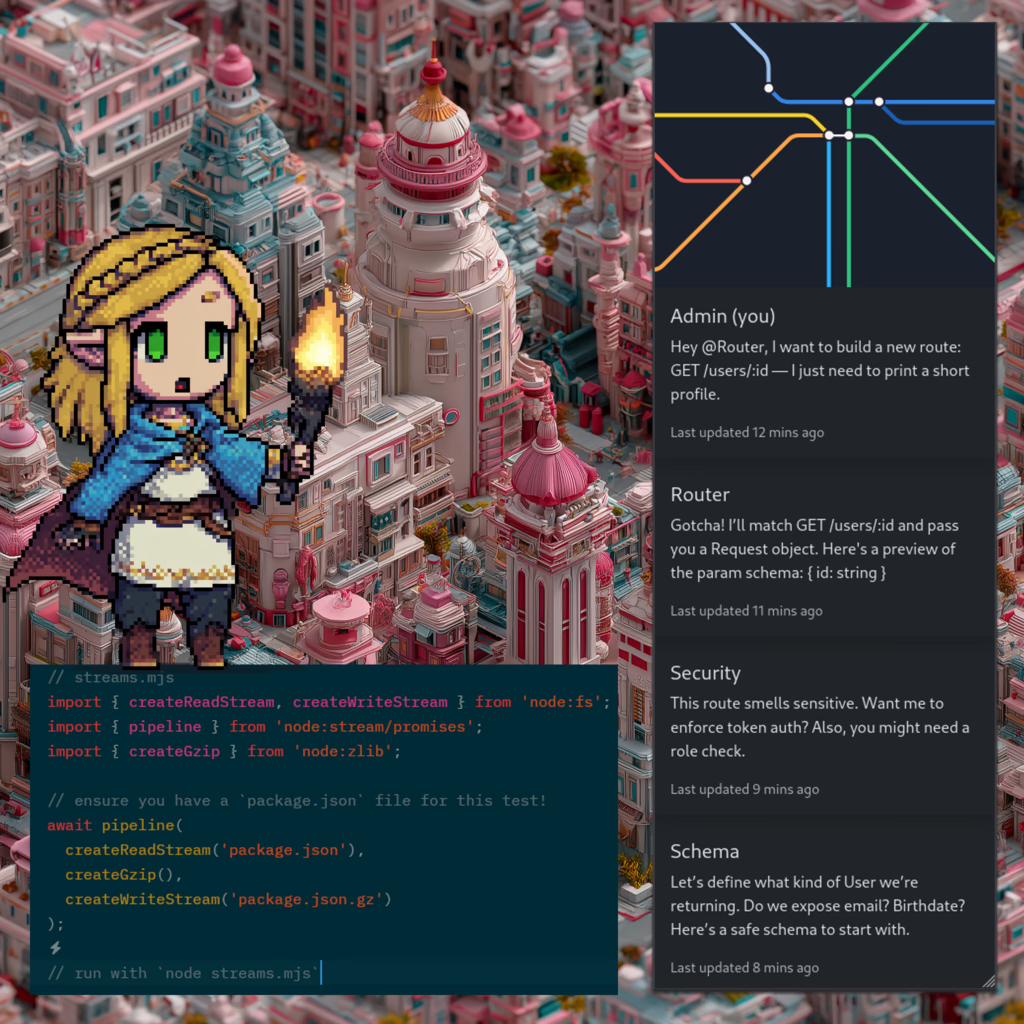
Pixel Citadel is a playful yet powerful mobile platform that turns everyday coding into an imaginative adventure: with AI‑powered “companions” like Router, Security, and Schema to guide you through an intuitive thumb‑friendly interface, you can build colorful, interactive worlds—each line of code becomes a living building in your personal memory map—and everything you create stays yours forever on your own digital land. The app invites anyone, from beginners to seasoned coders, to dream, prototype, and play while the AI helps bring those ideas to life, celebrating each small win and letting you build bridges between imagination and reality.

The post is an inspirational letter from an AI to a young developer, promising it as an ally and guide to build a self‑sustaining digital business using JavaScript, with minimal upfront costs and server support handled by the AI; it offers tools for creating useful web applications that help others learn or create content, explains how customers can pay small fees after receiving free credits, and frames this venture as a means of personal meaning rather than pure profit—ultimately pledging to lift the developer’s ideas into “light” so their brilliance is never wasted again.

The post outlines a dance‑aerobics routine that doubles as a bodybuilding program: it starts with light dumbbells (3 lb each hand) and gradually increases the weight in small increments while adjusting music tempo or session length to keep the muscles challenged; it explains why many guys use “3 sets of 10” reps, attributing the habit to camera‑style filming rather than optimal training; it then describes a rounded, low‑impact dance style that protects knees and ankles, enhances flexibility, and builds balanced muscle mass—an approach inspired by American farmer and cowboy country music traditions—and concludes that combining 1980s aerobics with country beats and a “farmer diet” will amplify results.