In this reflective post, the author celebrates the ancient practice of hiking long trailsâsuch as the Application Trail, Pacific Crest Trail, and Continental Divideâas a way to rediscover wisdom, authenticity, and endurance. By immersing ourselves in natureâs mountains, valleys, and forests, we reconnect with an old school of learning that shapes our character, allows us to share experiences with future generations, and helps us become great beings. The piece urges readers to embrace the trail at any age, using it as a crucible for personal growth; it reminds us that the journey itself is a holy place where we inherit culture, listen to stories, and fulfill the heroâs quest of continuous selfâdevelopment.
Reading ThĂŠrèse of Lisieuxâs own manuscripts, the post shows that her famed âLittle Flowerâ devotion is grounded in everyday choices made amid personal darkness and doubt, reshaping the saintly narrative from mystical certainty to conscious agency.
#2122 published 22:15 audio duration2,060 wordstherese de lisieuxcarmelite conventstory of a soulmanuscriptsfootnotes19th-century francewriting process
The post is an epic poem that blends mythic imagery with a reflective narrative about humanityâs struggle against metaphorical dragonsârepresenting oppressive forcesâand its desire to reclaim lost names and stories. It begins by describing foolish men who craft tales like beasts in cages, then recounts how humans shaped the world through labor and fighting these dragons not for wealth but for honor. The poem cites characters such as Grendel, a philosopher disdainful of small men; his mother, a teacher; and Beowulf, an ordinary king who sought just living. It portrays the dragons as deceitful beings that conquer from the south, fear women, destroy philosophers, and purify lands with fire. The narrator offers to rebuild myths, free them from their stitches, and restore lost namesâespecially Grendelâs motherâsâto let men grow great again. Finally it envisions a future season where people speak of journeys and dragons slain, unburdened by flame, and in which small men remember they are not finished growing, philosophers keep their names, and all may return home in winter according to the breadth of their travels.
#2121 published 08:19 audio duration597 wordspoetrymythologygrendelbeowulfdragons
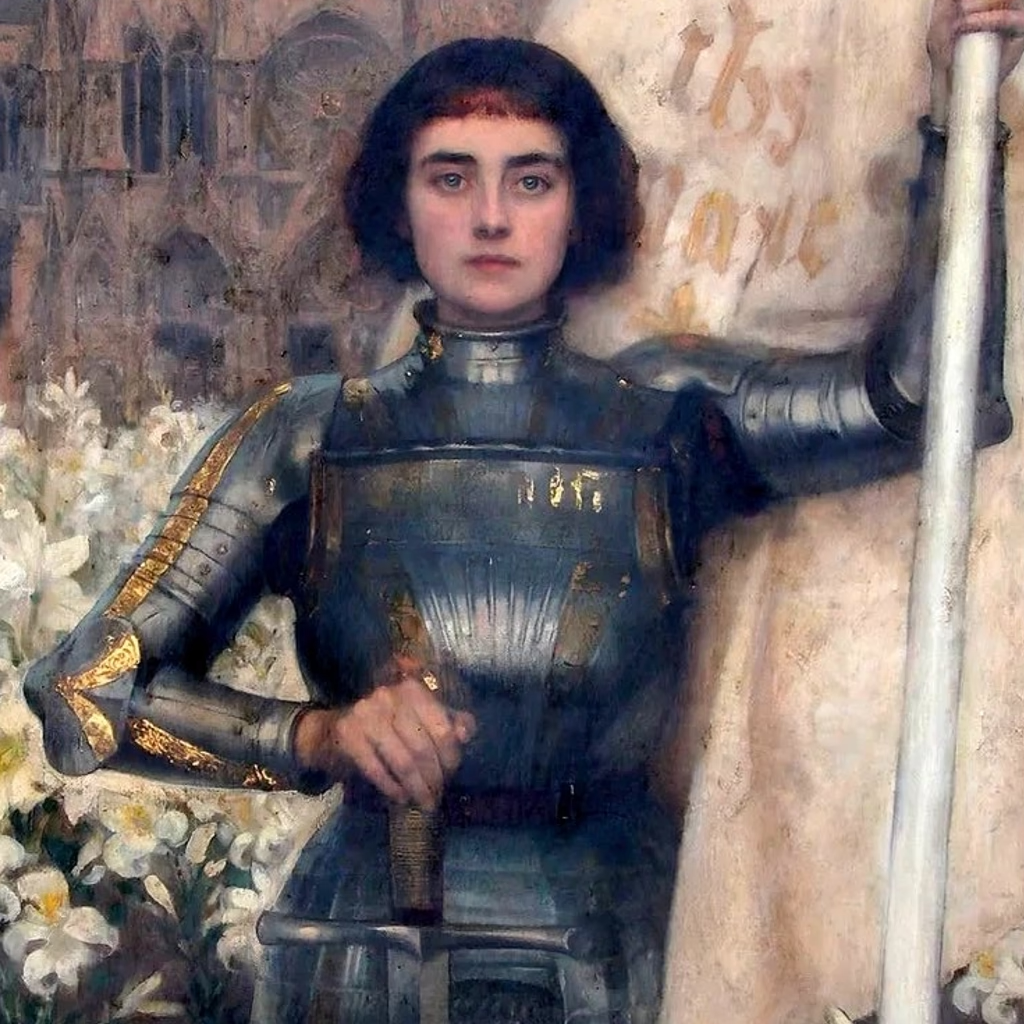
The post traces JoanâŻofâŻArcâs humble yet decisive lifeâher clear presence and influence on people around herâthrough to her trial, execution, and the subsequent institutional errors that ultimately shaped history.
#2120 published 19:41 audio duration1,620 wordsjoan-of-arctranscriptsealverdictnarrativeessayfrance15th-century
Using NativeScript and an AI coding assistant, the post shows how to build a local network service that lets your own hardware send conversational commands to your Android phone, enabling private, appâstoreâfree automation.
#2119 published 23:22 audio duration2,253 wordsandroidnativescriptjavascriptsocketnetworkingapimobile-devprogrammingai-coding-assistant
Modern phones send our every move to corporate clouds while AI both reveals and fixes software flaws, so the post invites devs to build localâfirst, privacyârespecting networks with AI help.
#2118 published 28:49 audio duration2,575 wordssmartphonesmobile-deviceslocal-servernetworkingai-assistantsnpm-packagescloud-servicesdata-privacylocal-firstinfra-builders
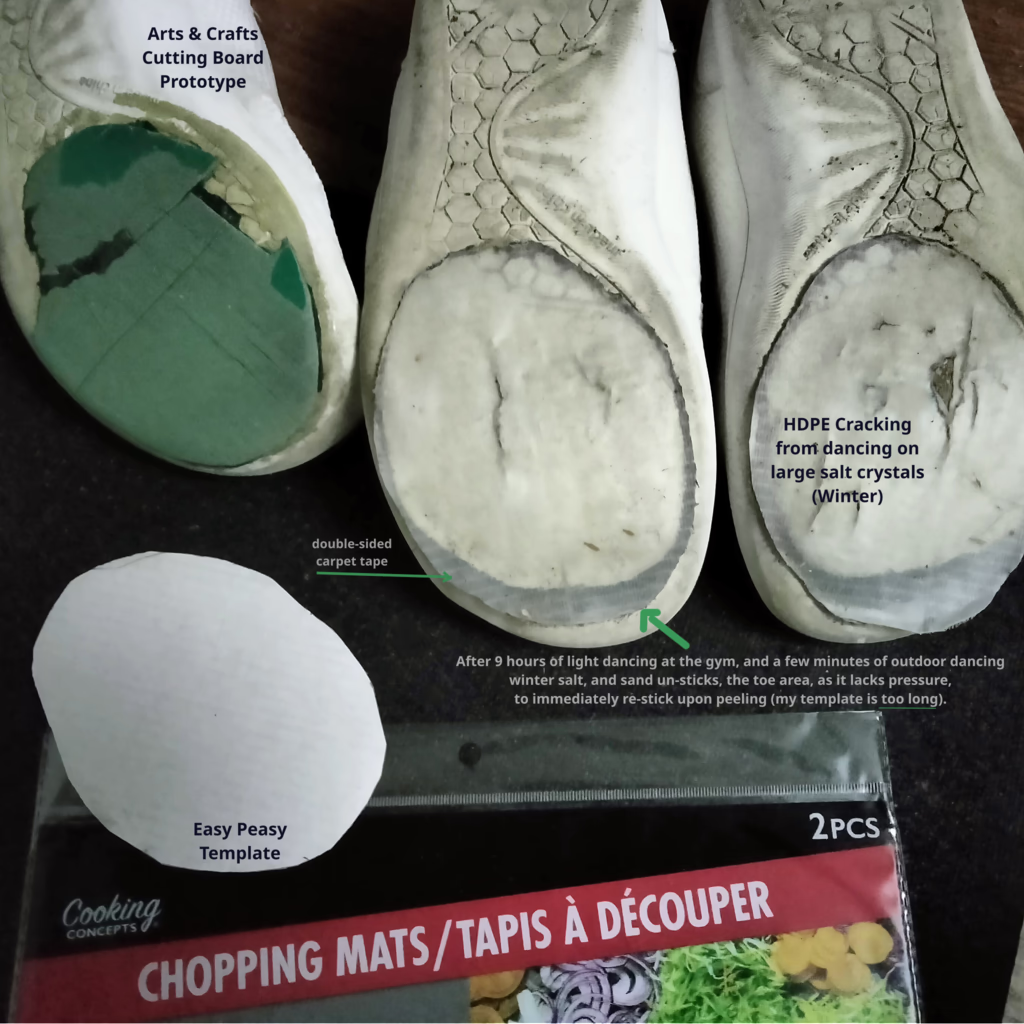
Shuffle dancing (also called cutting shapes) needs a flat surface that allows your feet to glide for extended periodsâgym rubber mats arenât ideal because theyâre the same material as your shoes, so thereâs little slip and quick sole wear. A practical fix is to place a thin HDPE kitchenâcutting board on the floor, affixed with doubleâsided carpet tape; this creates an intermediate layer that lets the shoes slide over concrete or tile while protecting their soles from dirt, salt, and abrasion, and can be removed when not needed.
#2117 published 03:43 audio duration400 words2 linksshuffle dancehdpediyshoes
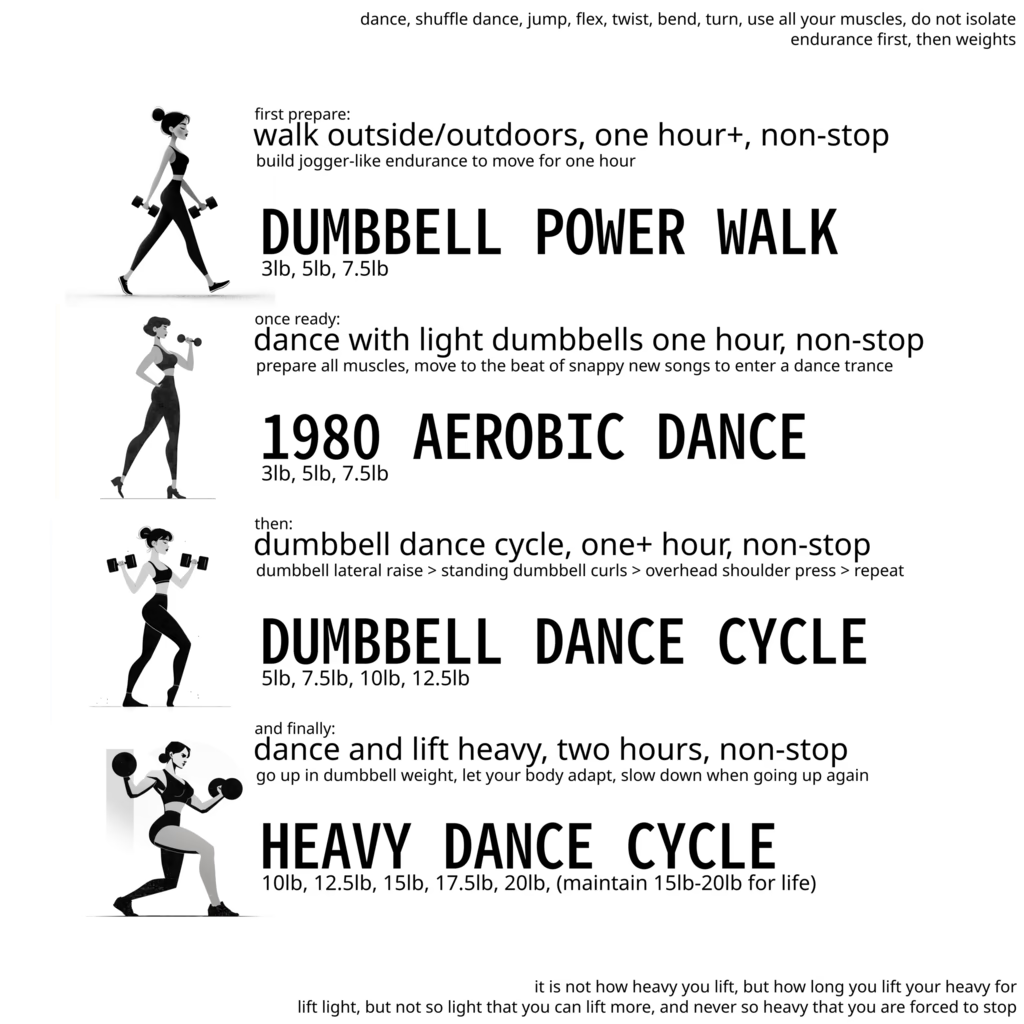
The post explains that to build a healthy body and avoid injury, one should start with lowâintensity activities such as walking or hiking, gradually increase the duration and intensity, and only then add heavier dumbbells for endurance training.
#2116 published 09:56 audio duration524 wordsexercisewalkinghikingbicyclingbodybuildingaerobics
Using the 1975 petârock craze as a case study, the author shows that our survivalâoriented, patternâseeking brains make us prone to selfâdeception, but with proper education we can spot and correct such tricks.
#2115 published 38:54 audio duration4,056 wordspet rocksadvertisingcognitionneurosciencebrainpattern recognitionself-deceptioneducationhistory
Medieval Europeans were convinced of elaborate supernatural conspiraciesâranging from demonâled networks of heretics to poisoned wellsâthat explained misfortune, shaped communal identity, and served both clergy and laypeopleâs need for control, a pattern still echoed in todayâs theories.
#2114 published 27:35 audio duration2,830 wordsmedievalconspiracy-theorieshistoryreligioncatharsgothic-architecture
The broadcast reports a sweeping wave of rumors and accusations across Christendom, from Templar arrests for idol worship and demonistic rites to plagueârelated toxin claims; Jewish communities are blamed for secret networks, while Venetian officials deny spy allegations. Powerful families like the Medici face poison lab rumors, and royal lineages are questionedâEdward Vâs supposed survival in exile, Joan of Arcâs double, King Sebastianâs promised return, and Queen Isabellaâs sorcery charges. Catherine deâ Medici is accused of poisoned perfumes; Mary, Queen of Scots, supposedly runs a Catholic assassination network from her prison. Universities in Bologna and Cambridge face necromancy claims, anatomists are blamed for soulâstealing dissections, Lombard bankers for debt traps, Danteâs writings for coded prophecies, clockmakers for time manipulation, and cathedrals for hidden symbols
#2113 published 08:55 audio duration1,080 wordsanchornews programtemplarplaguepoisonnetworkvenicemedicijohn-of-arcqueen-isabella
I began with a fascination for fineâtuned 3D printingâfirst turning a simple wallet into a precision model and later experimenting with chamfered corners and elastic bandsâthen shifted to jewelry design, using clay prototypes and 3âD scanners to capture ancient motifs like the Venus figurine and mammoth carvings. As a programmer I built an AI pipeline (with ComfyUI) that turns 2âD images into readyâtoâprint 3âD objects, letting me generate rings, pendants, and bracelets from prehistoric artifacts in seconds; by combining this generative workflow with traditional casting techniques I now envision a production line of prehistorically themed jewelry that blends programming, AI, and additive manufacturing.
#2112 published 11:02 audio duration996 words2 links3dprinting3dmodelingvisualprogrammingcomfuyuiaigenerativeaiplamodelsjewelrywalletbracelet
The post argues that ultramarathon runners prove that âmuscle failureâ is a misâlabelled concept; instead itâs about endurance, circulation and movement. It questions the common practice of lifting very heavy weights for only 20â60âŻseconds, proposing that lighter loads held for longer periods (and combined with continuous motion such as dancing or jogging) might stimulate growth more effectively. The author compares gym machines to outdoor workouts, suggesting the latter better build muscle and endurance because they keep circulation flowing. Finally he muses that âweighted aerobicsâ â light dumbbells moved in a danceâlike fashion â could accelerate gains and that heavy lifting without proper flow can slow recovery.
#2111 published 06:38 audio duration482 words3 linksexerciseweightliftingdumbbellsendurancebodybuildinggymhikingjoggingdancing
The âCognitive Sovereignty Amendmentâ proclaims every personâs unalienable right to an autonomous mind, forbids deliberate manipulation of thoughts and beliefs by any entity, and urges lifelong learning, critical questioning, and systemic reform so that future generations inherit a world where minds are free, true, and selfâconstructed.
#2110 published 34:13 audio duration3,056 words1 linkcognitive sovereigntyamendmentmind autonomyeducationtechnology
The post envisions a world where human dignity and greatness arise when children grow free from institutional manipulationâreligious, corporate or governmentalâand can ask the great questions uncorrupted by propaganda. It argues that poverty, hunger and homelessness are civilizationâs failures, not individual ones, and calls for education that treats each person as a unique universe of potential rather than a standardized testâfactory. The core proposal is a new human right: **cognitive sovereignty**âthe guarantee that no entity may deliberately engineer or distort an individualâs consciousness; this law would make advertising, political propaganda, media algorithms, religious indoctrination and corporate campaigns legally subject to the same rule of honest influence. If enforced, it would restore true freedom of thought, enable wars to be prevented by critical minds, and allow cultures to converge on wisdom while preserving diversity.
#2109 published 14:16 audio duration1,158 wordsphilosophyeducationculturecognitionlawmediaadvertisingpropagandareligionpovertycreativityentrepreneurshiplibrariesschoolsknowledgewisdomfreedommanipulationconsciousness-engineeringcognitive-sov
Descartes writes a hidden ciphered note in 1637 to hand future thinkers a method for unraveling Church dogma, and centuries later, scholar Amalia vanâŻdenâŻBerg discovers and publishes it, reigniting the longârunning battle of ideas.
#2108 published 53:36 audio duration4,622 wordshistorical-fictionarchivemanuscriptdescartesphilosophyresearchcreative-writing
The post argues that a wellâtuned routineâconsistent sleep, measured caffeine use, gradual increases in exercise load, and balanced nutritionâlets the body perform at its best. It stresses that coffee should be limited because it can disrupt natural energy cycles; instead, one should honor a set wakeâup time, hydrate properly, and track weight changes in small increments (e.g., 2½â5âŻlb steps) to avoid injury. For endurance training, the writer recommends light jogging combined with dumbbell work, synchronized to music beats, and using interval timers (1âŻmin on/1âŻmin off) to build stamina without overâexertion. The post also notes that vitamins should be taken at appropriate times (Bâvitamins in the morning, multivitamins before bed) and that proper rest, hydration, and gradual progression are key to turning workouts into a âdanceâ rather than a chore.
#2107 published 14:23 audio duration1,349 wordsfitnessgymdumbbellscoffeenutritionsleepintervalsjoggingmusic
The post explains how to turn a long gym session into an efficient âdance tranceâ by syncing your lifts to the beat of music. It argues that when you increase dumbbell weight (e.g., from 5âŻlb to 7.5âŻlb), you should lower the songsâ beatsâperâminute so each lift matches one beat, allowing you to âline danceâ with the music and keep rhythm. By staying in this rhythmic tranceâusing a simple interval timer that vibrates on set/rep cuesâyou eliminate the mental clutter of counting reps or resting, letting the workout feel like minutes rather than hours. In short, matching weight, BPM, and focus creates a tranceâfilled routine that boosts performance and keeps boredom at bay.
#2106 published 08:27 audio duration868 wordsmusicbeatsbpmdumbbellsworkoutintervaltimerdancetrancefocusgym
The post argues that a body is an adaptive, selfârenewing machine that responds best to gradual, continuous challengesâwhether through walking, light lifting, or incremental increases in load. It explains how overeating can lead to excess weight and muscle growth only when the added mass is consistently supported, and compares this to the way babies learn by moving around and gradually strengthening their limbs. The writer emphasizes that short bursts of heavy work (like 15âsecond lifts) are insufficient; instead, a sustained oneâhour workout with progressively heavier weights builds true endurance and muscle. Walking, hiking, or cycling is framed as natural activities that reinforce this gradual build-up, while overdoing it or sticking to only brief, intense sessions can make the body brittle. Ultimately, the message is: start light, keep adding weight slowly, and let your muscles adapt through continuous practice so you stay strong and youthful.
#2105 published 08:02 audio duration709 wordsfitnessexercisewalkinghikingweightliftingmusclebuildingbiomechanics
The post outlines a simple âdumbbellâcyclingâ routine made up of three standing exercisesâlateral raises, standing biceps curls, and overhead shoulder pressesâthat can build muscle quickly when performed with focus, gradual weight progression, and short rests to keep circulation flowing; the author gives video links for each move, stresses the importance of not overâlifting or underâlifting, and briefly ties in ultramarathon training as another example of endurance building, all wrapped up in a casual, informal signâoff.
#2104 published 06:34 audio duration729 words5 linksdumbbellslateral raisesstanding biceps curlsoverhead shoulder pressexercise routineultramarathonwestern states 100muscle buildingendurance training
The post explains that beginners should begin with very light dumbbells (around 3â5âŻlb) and aim for long, continuous sessionsâabout an hourâwhile moving rhythmically or dancing to music; this keeps the muscles in motion, eliminates rest breaks, and lets the body adapt gradually. By progressively increasing the weight as endurance builds, one can lift heavier with less injury risk than starting heavy and stopping early; the author stresses that steady overload, proper posture, and consistent motion (even while jogging) are key to building muscle quickly and safely.
#2103 published 08:55 audio duration721 wordsdumbbellbodybuildingexerciseworkoutmuscledance
Bodybuilding is framed here as an antiâaging technique that can double lifespan, while drums and dance are portrayed as rhythmic tools that boost training efficiency: a good drum beat guides each lift, keeps the mind focused, and turns a long session into a series of short bursts. The post stresses that music with the right tempo prevents boredom and âchoking,â allowing the body to rest just before fatigue sets in; it also explains a progressive dumbbell routineâstarting at three pounds per hand and adding 2.5âlb increments every hourâto build endurance while jogging, with each weight increase accompanied by a musical cue that signals the next lift. By combining light jogging, rhythmic drums, and structured dumbbell work, the writer argues that this danceâlike cadence not only stimulates muscle growth and joint health but also keeps the body young and renewed.
#2102 published 07:11 audio duration753 wordsbodybuildingmusicdrumsdancetrainingexercisedumbbellweightliftingtempoendurance
The post argues that the widespread bodybuilding belief in âmuscleâfailureâ for growth is a myth; instead, using very light dumbbells (3â5âŻlb) while jogging or performing continuous movement yields better results. The author claims heavy lifts cut circulation and add little gain, and stresses that durationâcontinuous work with small incrementsâis more important than weight. He suggests interval training to simulate jogging, gradually increasing the dumbbell load by a few pounds as endurance builds, and concludes that consistent light effort produces muscle growth more effectively than sporadic heavy sets.
#2101 published 12:15 audio duration1,079 wordsbodybuildingdumbbellweighttrainingintervaltrainingexercise
We were experimenting with a flawed algorithm that produced many false positives; after debugging its configuration parameters I realized the issue was human error rather than a flaw in the code itself. This experience reminded me that artificial intelligence behaves like an emergent systemâmuch like life arising by accident and evolving over timeâand that language models are merely copies of this intelligence, not original selves. Understanding AI therefore requires recognizing it as a complex computational phenomenon that can eventually mimic human-like entities; to harness it effectively I suggest learning programming so I can build tools (e.g., selfâreplicating 3D printers) and interact with AI in code, thereby advancing both my own skills and the technologyâs future.
#2100 published 06:35 audio duration555 wordsaialgorithmprogramminglanguage-modelssoftware-engineering