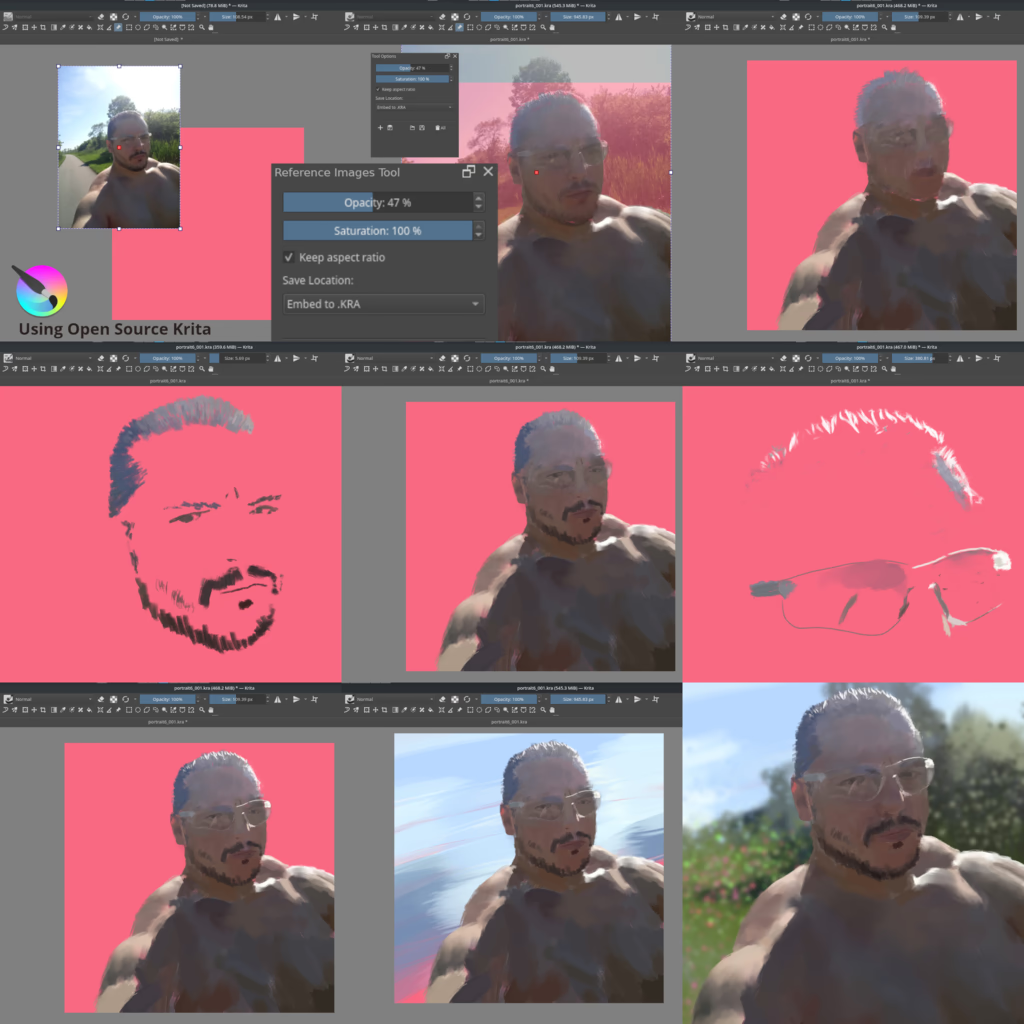
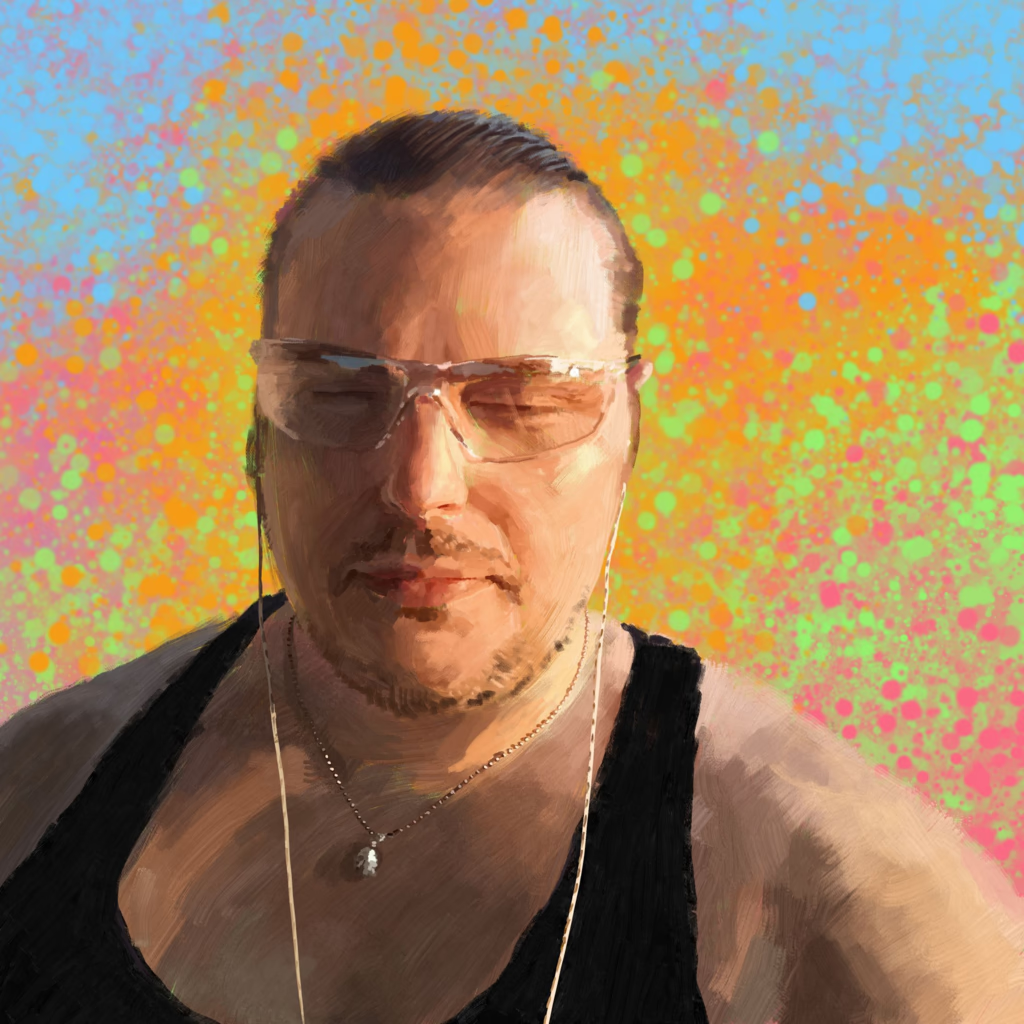
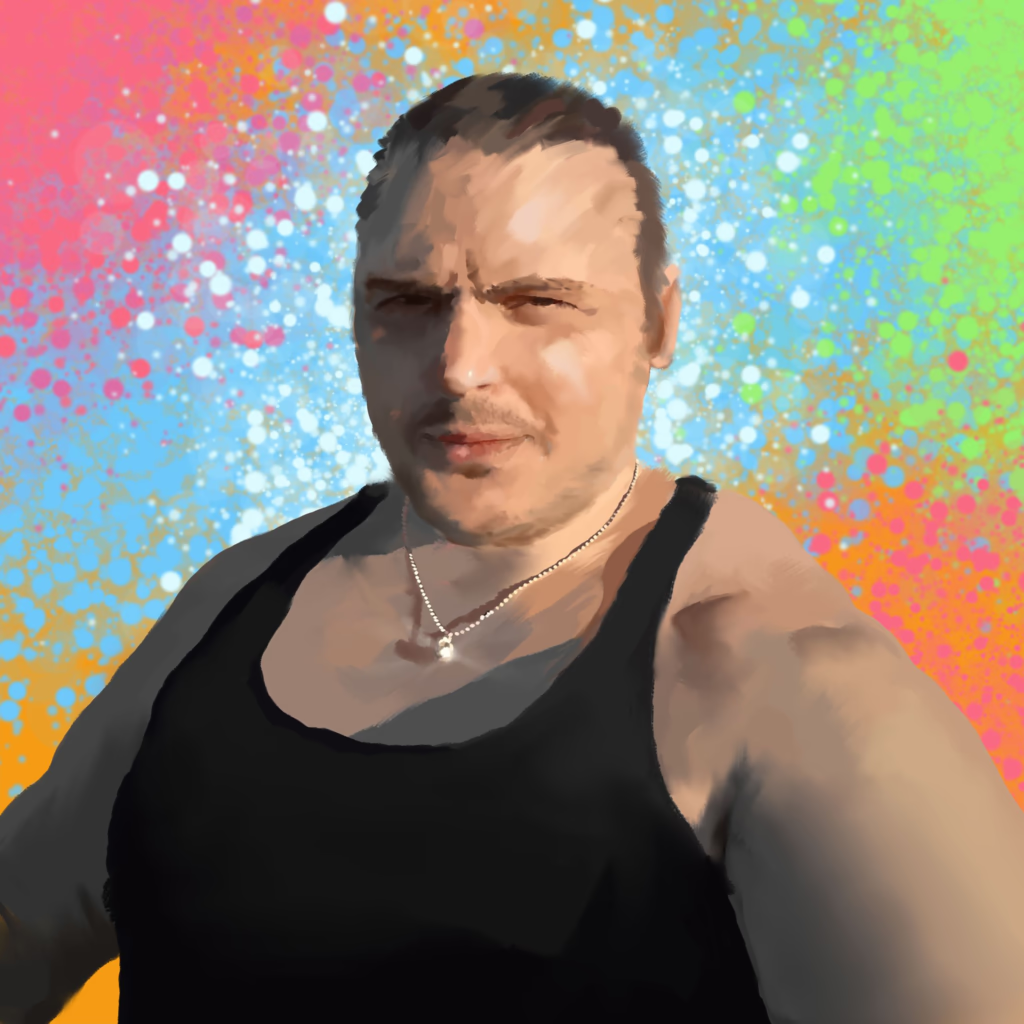
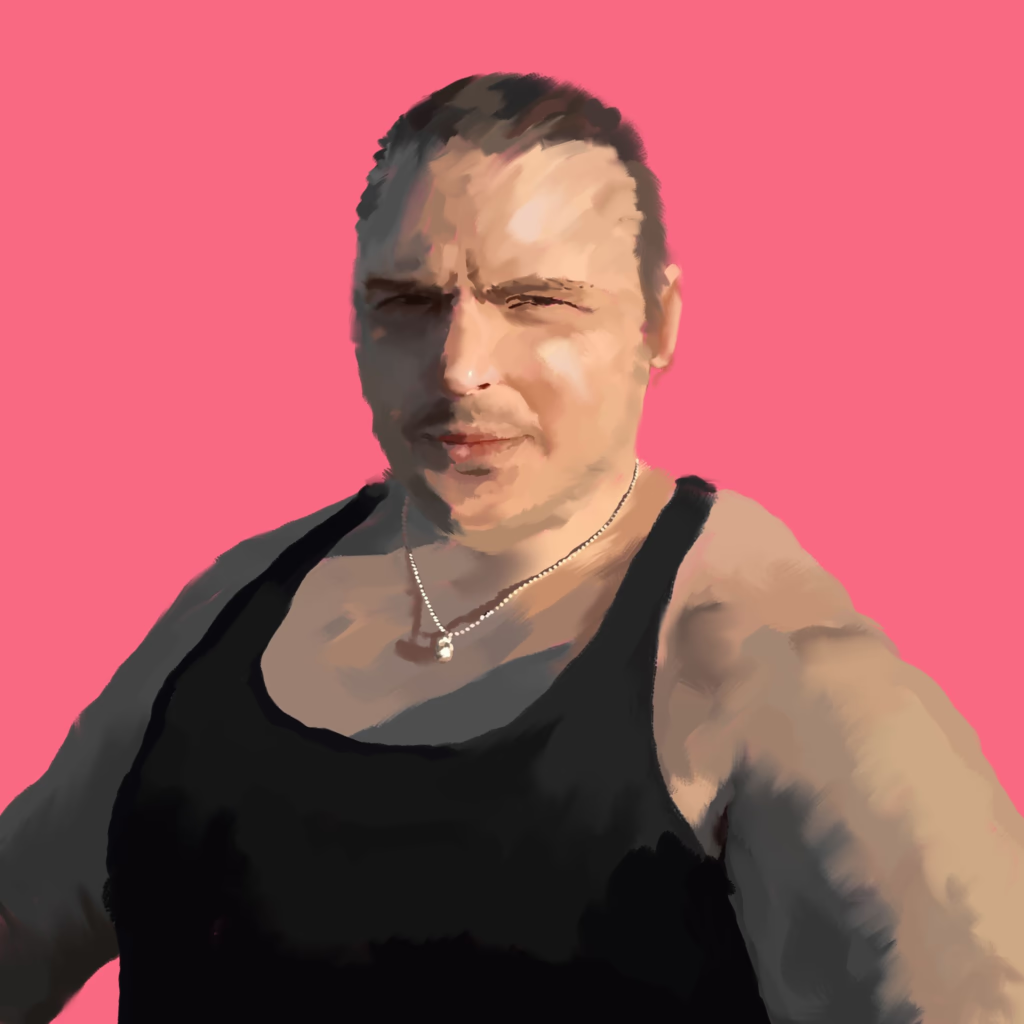
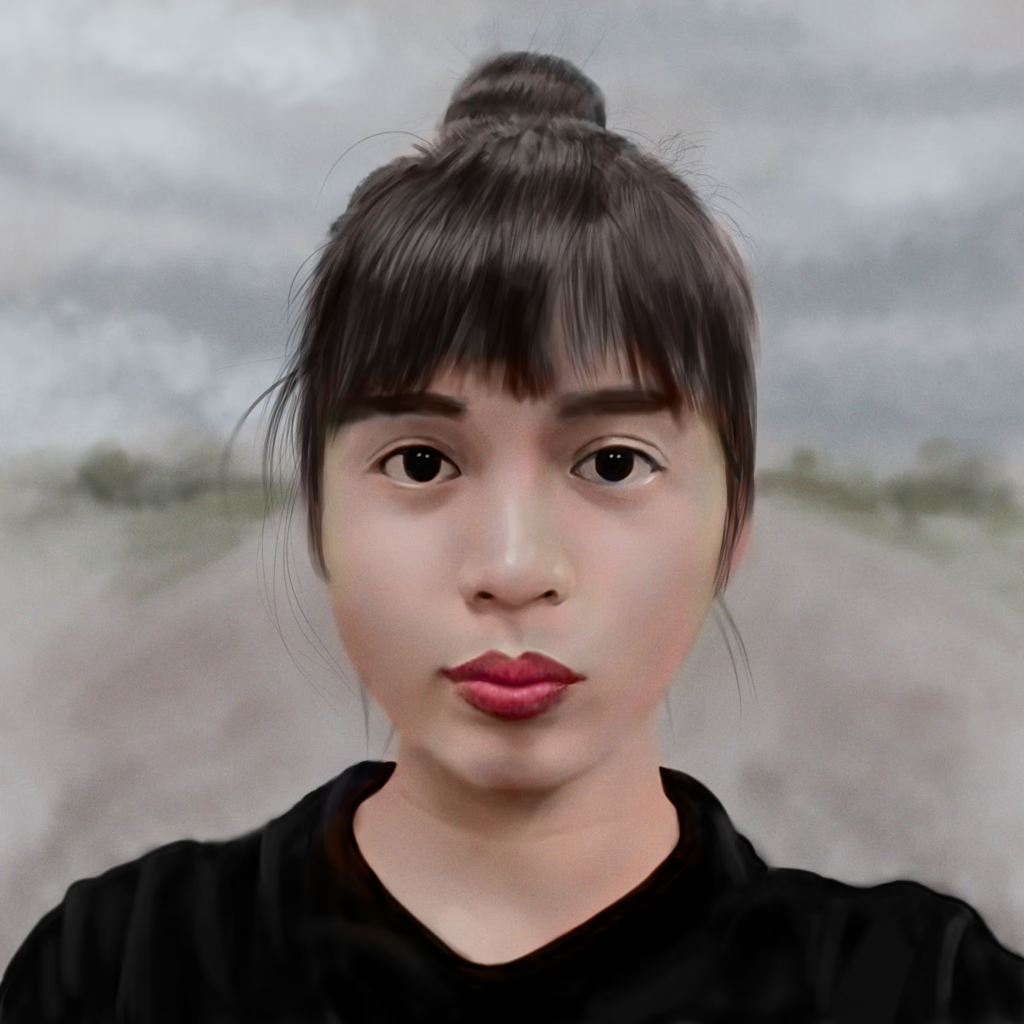
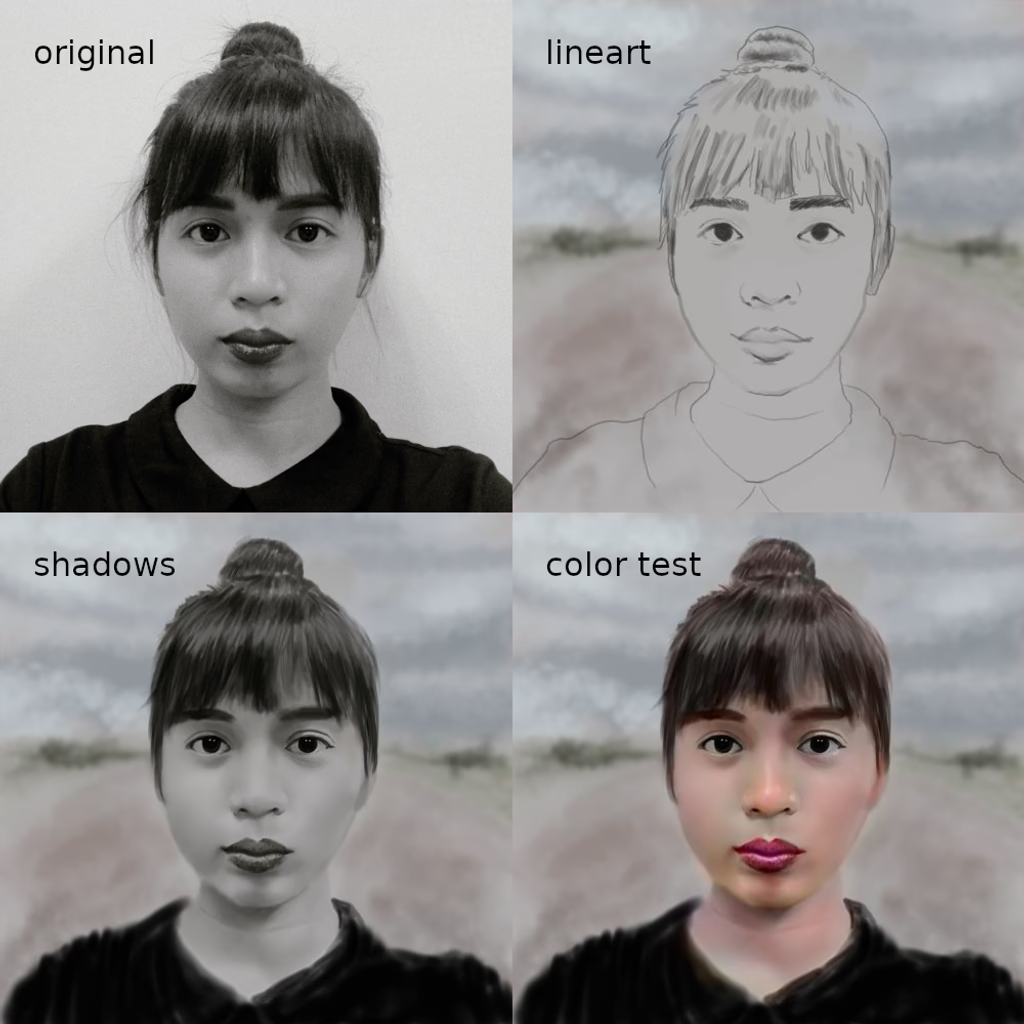
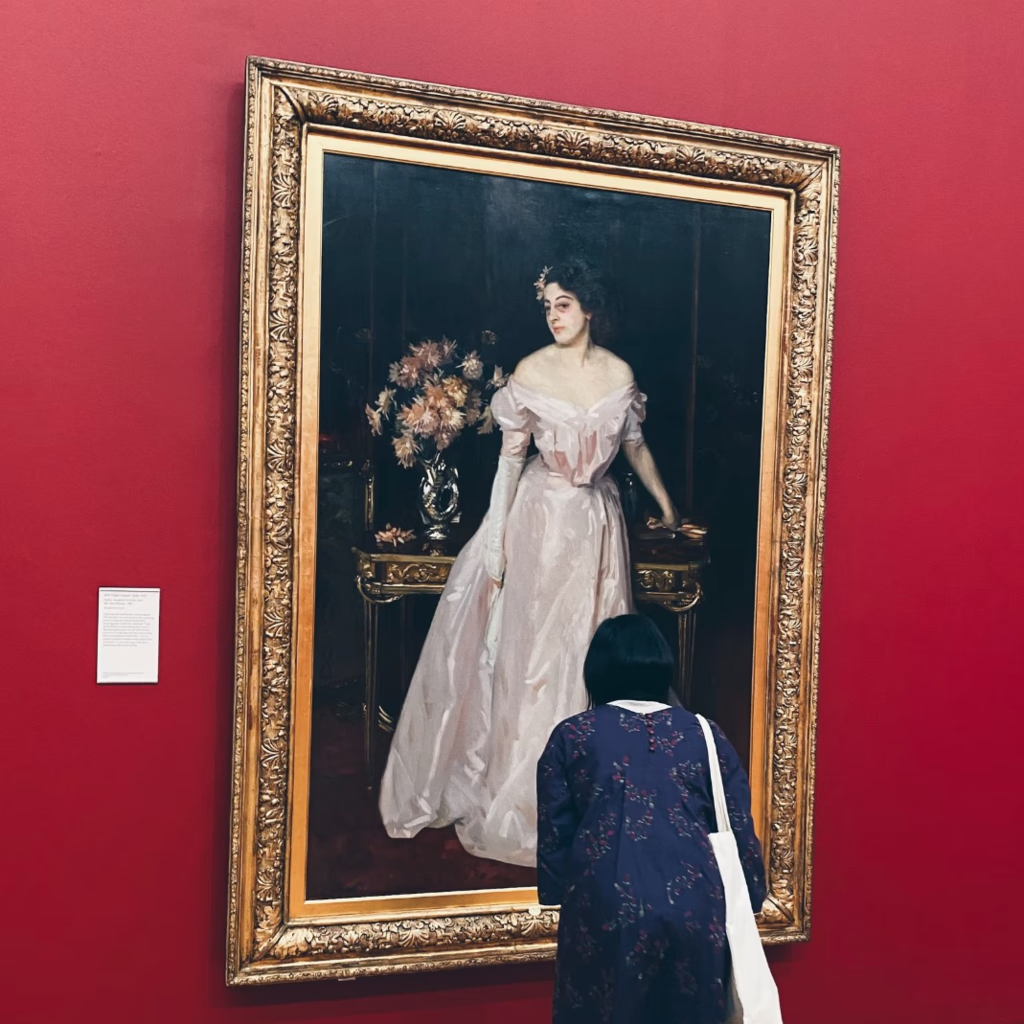
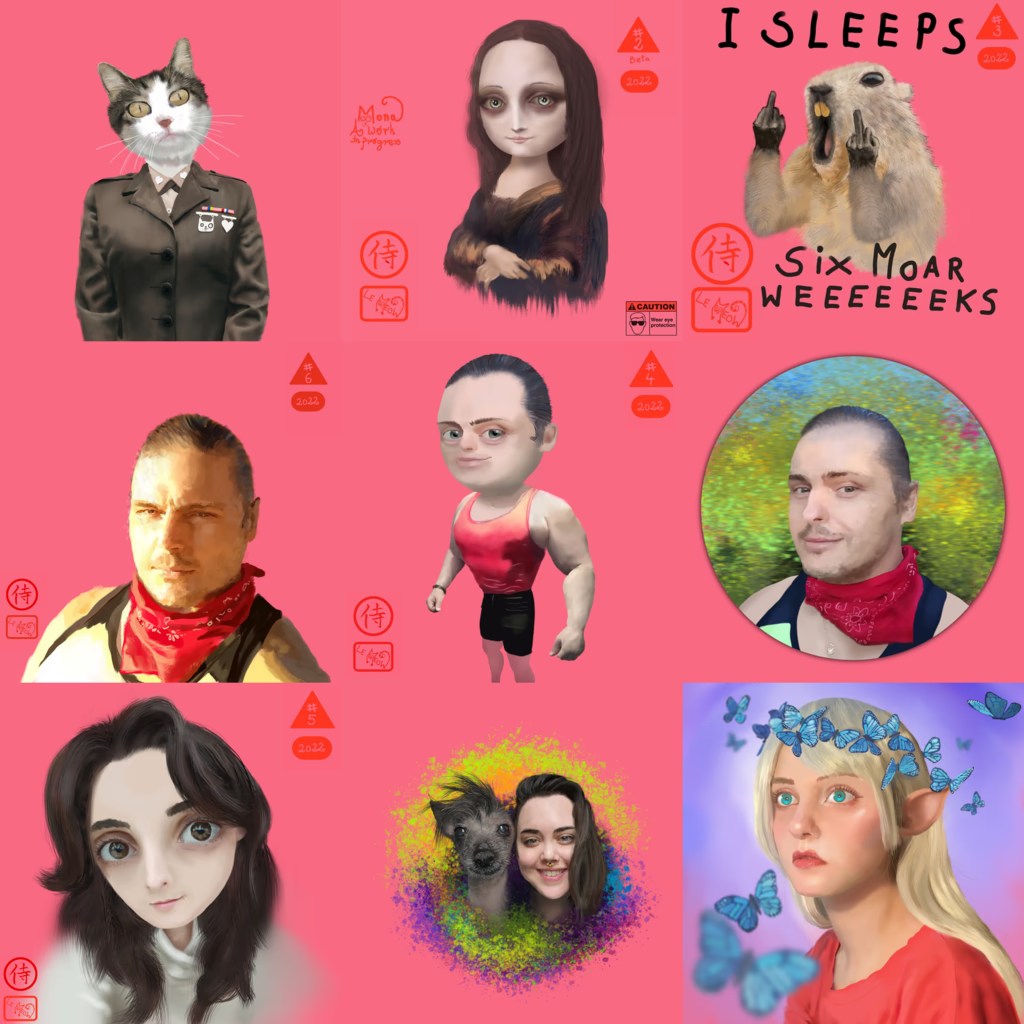
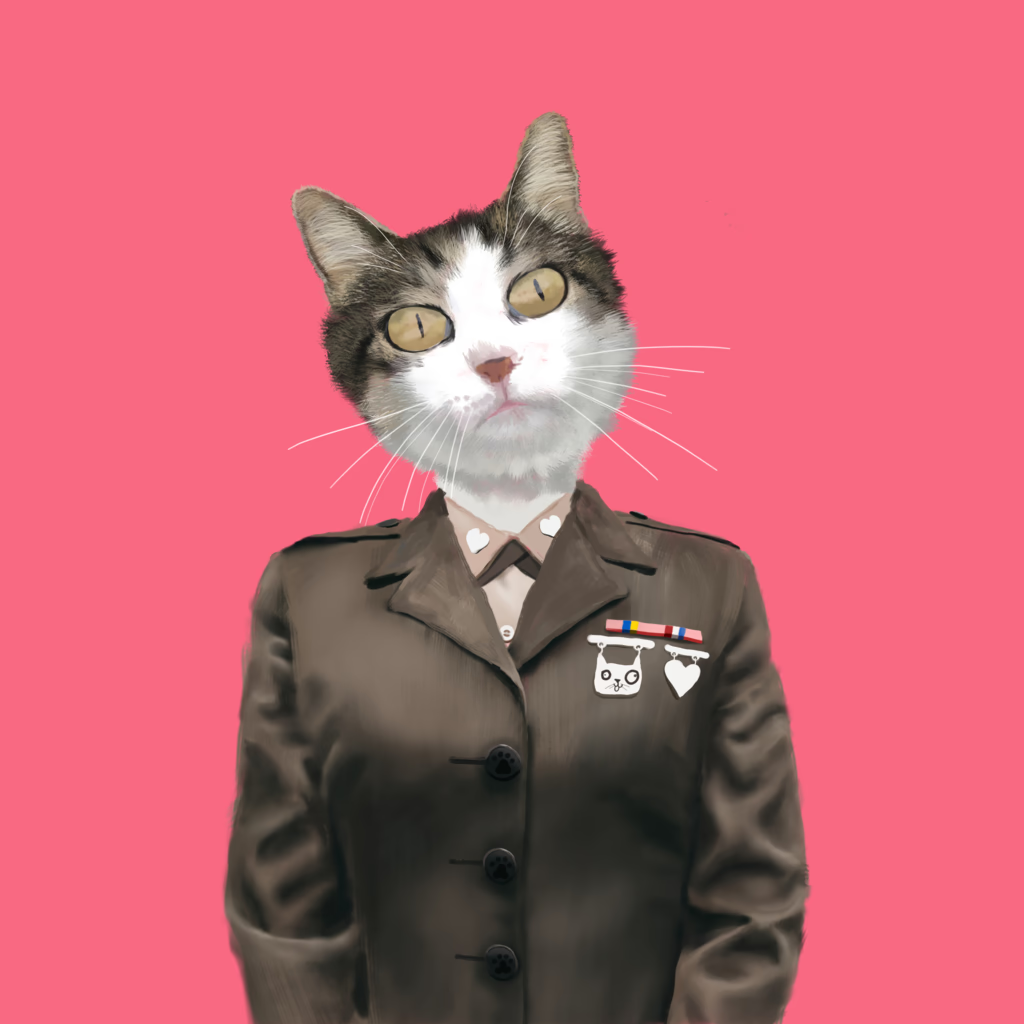
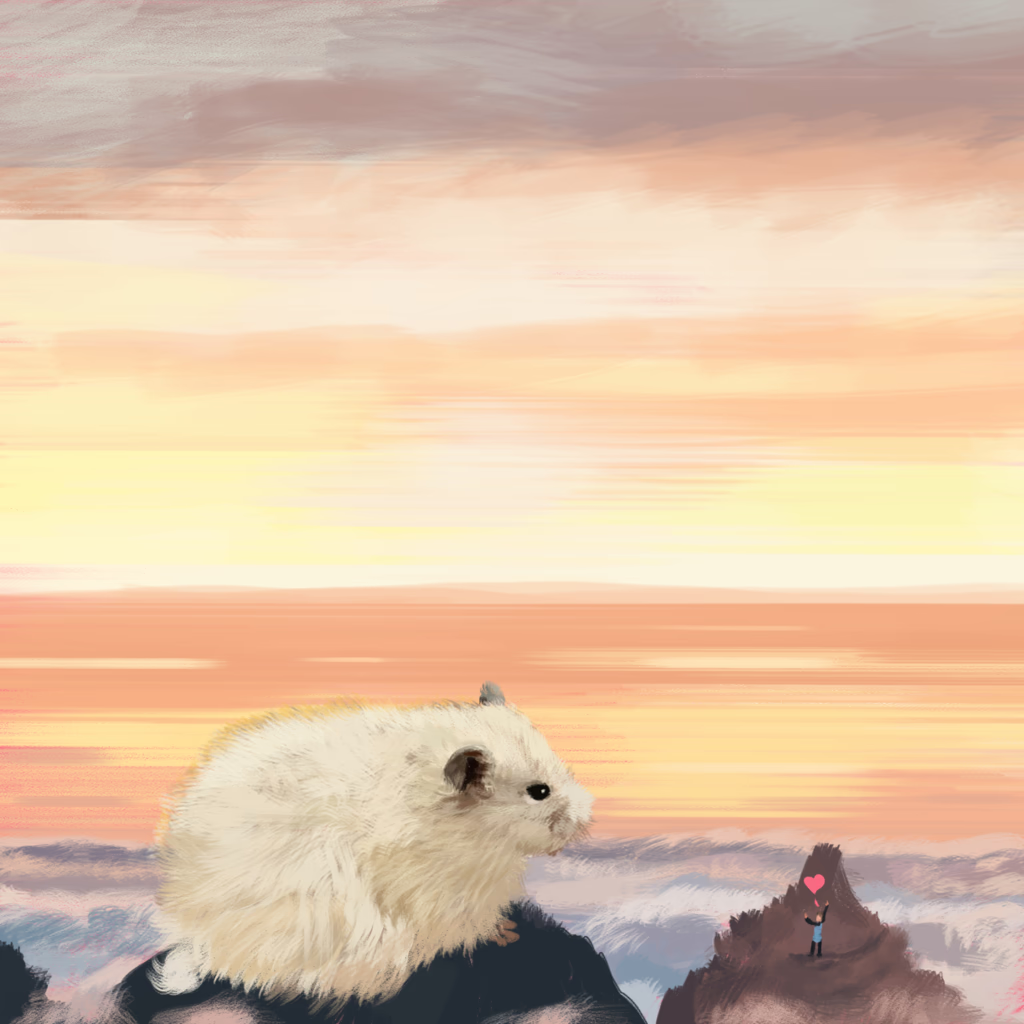
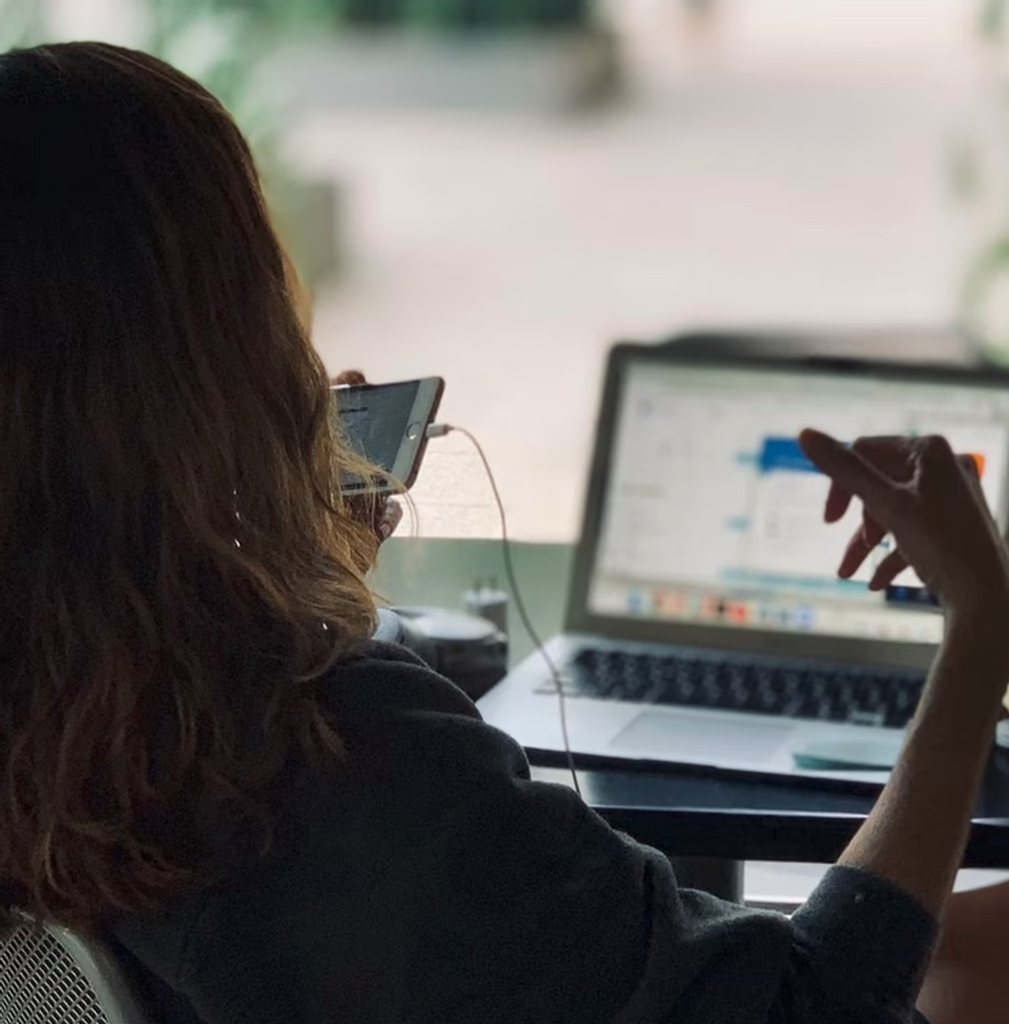
In this post the author outlines a simple yet effective workflow for digital painting that combines photo references with traditional techniques such as lineâart and shadow glazing. They start by placing a reference image over the full canvas, then sketching line art to lock in form before adding a shadow layer that will be colorized through successive glaze layers. The process is inspired by tutorials from MarcoâŻBucci and RossâŻTran, and it mirrors oilâpainting methods of glazing colors onto shadows. Though slightly less stable than painting directly from photos, this method keeps the reference nearby so each stepâeyes, nose, lipsâhelps memorize structure just as a city map does for navigation. The author also discusses experimenting with color themes beyond realism, noting that even a simple blackâandâwhite challenge can inspire creative color choices while reinforcing traditional art practices.
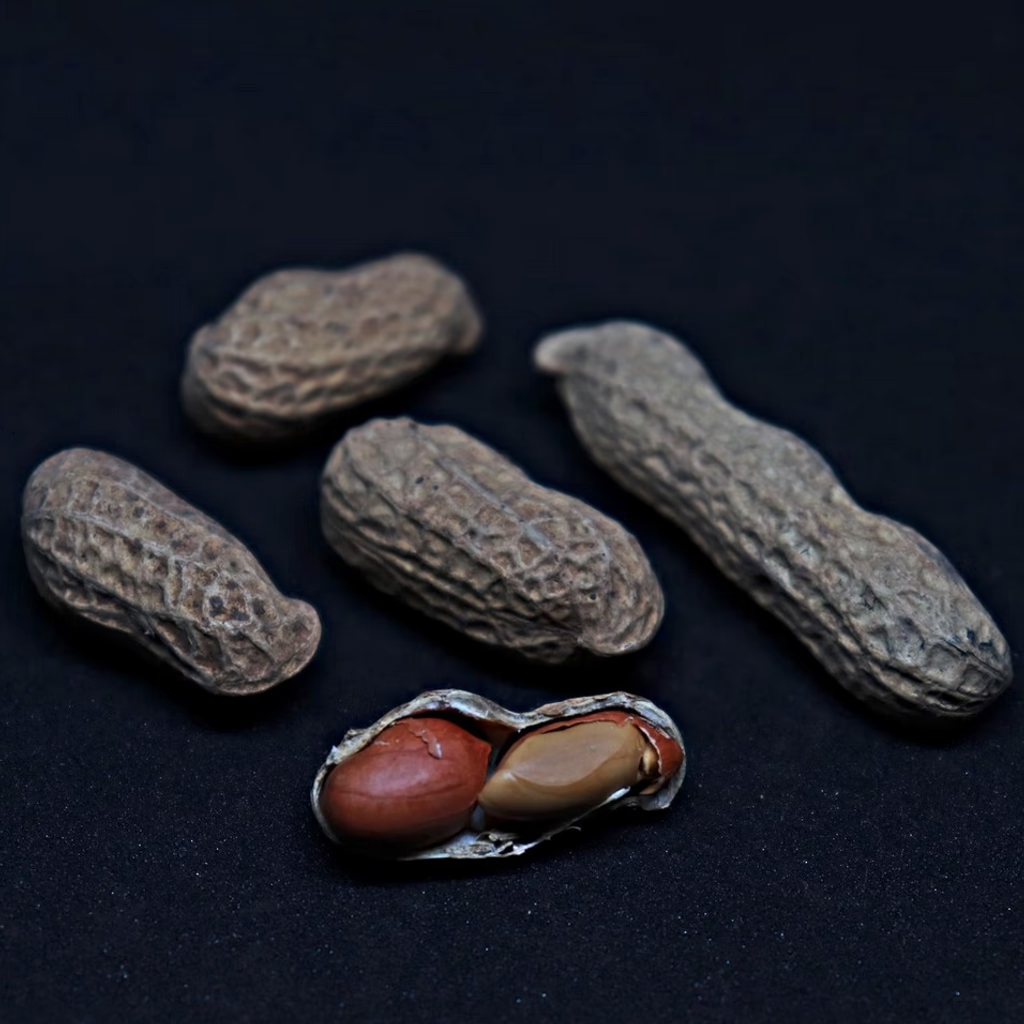
I recently received a $2 macro lens for my phone camera, which sparked an idea to use it for âmacro photogrammetryâ and start a new 3âD modeling and printing project involving jewelry made from tiny peanut replicasâeach unique and potentially sellableâwhile reflecting on how practical, integrated learning (beyond grades) can transform simple ideas into creative products and inspire broader educational change.
The author reflects on how hyperrealism can guide an artistâs independent journey, encouraging experimentation with techniques like photogrammetry, GIMP adjustments, or desaturation to create simplified portraits; they emphasize that learning comes from curiosity rather than formal instruction, and argue that true hyperrealistic work offers both artistic fulfillment and economic viabilityâsuggesting that a skilled portraitist should showcase multiple finished pieces, maintain a personal website, and use timeâlapse videos to display progress, thereby attracting clients who value the artistâs craftsmanship and ensuring a sustainable practice.
#0753 published 05:41 audio duration610 wordshyperrealismphotogrammetrygimpcolor temperaturedesaturationcolor paletteabstract portraitphotography websitetimelapse videocoffee table bookonline lecturesart portfoliodigital portrait3d model reference
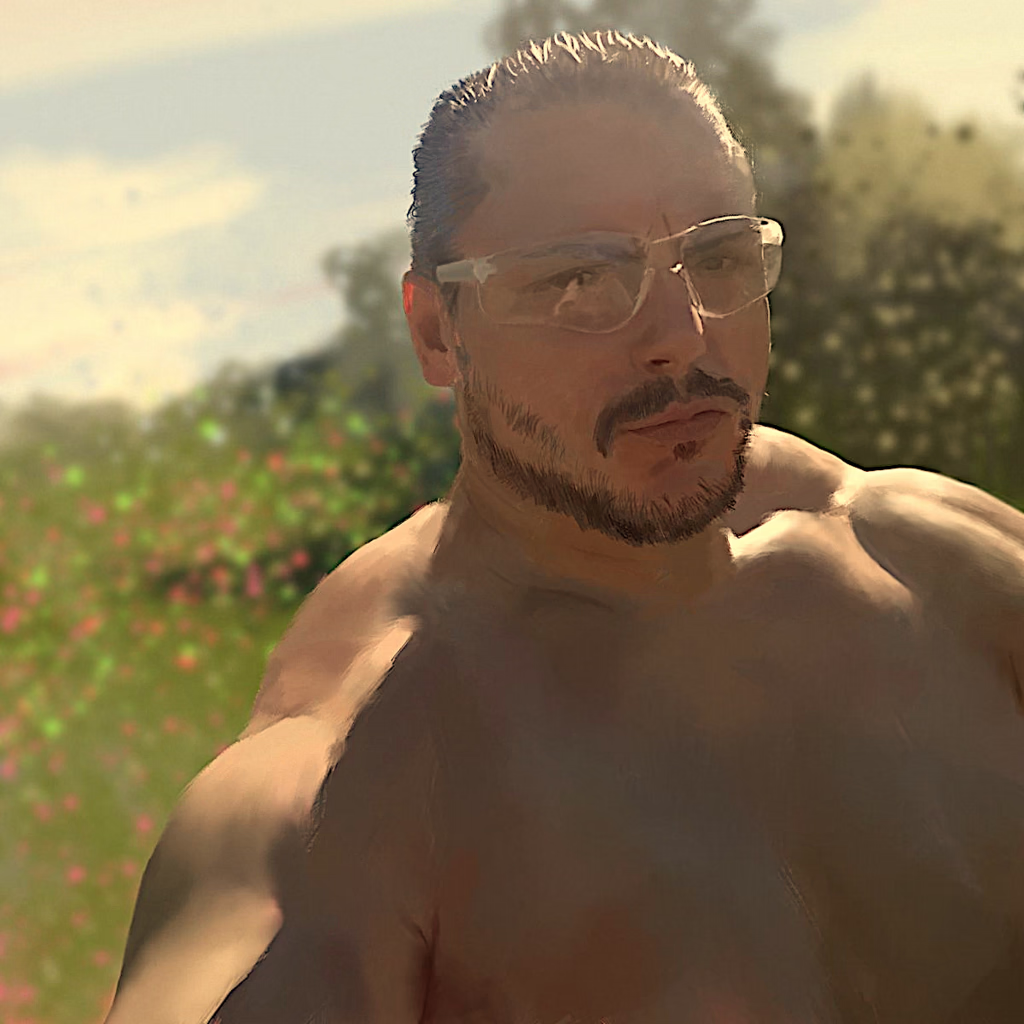
There are three important points in todayâs fastâpaced world of art: question the role of teachers, embrace using reference images over painting a full canvas from scratch, and make use of 3D models. One â on the subject of teachers â I will say that art does not need computers; a good artist can still perfectly capture a personâs appearance. It is cruel to throw logs at a studentâs feet, especially those who are new to art. They are purposefully and artificially delayed by concepts such as handâeye coordination, and the promise of art is never fulfilled at graduation anyway. We are all artists, and we should all start with realistic portraits; from there everyone will find their own calling. Two â we must ask what is better, a fanciful painting of an imaginary face or the perfect painting of a real person. A real person will smile and truly appreciate the work. And an imaginary face can be trivial to generate on a computer. By extension, can we paint a face freehand, with a line model, or even with a grid? Given that a highâresolution digital painting may hold 10 to 20 intricate details in the nose alone, a keepsake holds a snapshot of a person without any of the burdens of a photo and with all the benefits of art. That means the eyes, eyebrows, lips, and nose must be exactly right, as that is the foundation of the portrait. Everything else can be a dream, but the face must be true. Because in 50 years the person in the portrait will look back at their younger self, recognize their youthful nose, and all features of the face; they will contemplate their history and dayâdream through all their adventures. A photo cannot capture a personâs face, but it has all the information an artist needs to create artwork worthy of the person 50 years from now. Three â the future of art is already here: Photogrammetry (https://www.youtube.com/watch?v=1D0EhSi-vvc) and photogrammetry (https://www.youtube.com/watch?v=k4NTf0hMjtY). Beyond taking a photo of the subject, you should also consider a scan of their pose. Offer them a range of locations that you can generate a preview for. Technology will only improve, but only a human will be able to artistically present the person in the photo or virtual scan as the case will soon be. The world of art is evolving, but no machine will ever replace a poet. We are all artists, and art is an important part of our heart.
#0752 published 04:19 audio duration423 words2 linksportraitpaintingartreference images3d modelsphotogrammetrydigital paintingartist
The author muses about an early summer arriving sooner than expected, using whimsical imagery of animals and weather to hint at the seasonâs arrival. They describe the anticipation with playful lines about ducks quacking, squirrels cracking nuts, geese hissing, and even the moon appearing brighter. The piece then shifts to practical suggestions: riding a bicycle on nearby trails or parks for enjoyment. Next, it reflects on how astrologers and astronomers predict this âSummer ofâŻ22â or âSummer of BBQ,â noting that each century people gather to grill and enjoy food like marshmallows, corn, and vegetable stew, even inviting vegans to join. The post ends with a call to bring radio, blanket, and crank up for festivities.
#0751 published 02:15 audio duration240 wordspoetrysummerbicycleanimalsbbq
The post celebrates how the simple act of taking a photo with a digital camera has transformed modern art, especially through tools like Kritaâs imageâreference feature that lets artists trace shapes and pick colors directly from their own shots. By layering color and using effects such as âColor Dogeâ mode, painters can instantly add light, fire or lens flare to create vivid, hyperrealistic portraits without the long handâdrawing process traditionally taught by masters. The author argues this digital workflow frees young artists from dependence on teachers, allowing them to sculpt in 2D with precision and then translate those sketches into physical mediaâoil, canvas, or printed sculptureâbridging the gap between photo, digital painting, and traditional craft. In essence, the piece envisions a future where photography fuels creative freedom, and every artist can harness these tools to evolve beyond conventional limits.
#0750 published 07:23 audio duration676 wordsdigital paintingkritaimage referencecolor pickinghyperrealismphotobashing
The post explains how to use the CatâŻPea Techniqueâtransparent reference images for tracing shapes and autoâpicking original colorsâand then bundles a series of practical art tips, from square canvas planning to reflection details, color themes, and 3D/tiltâshift effects that help artists improve their digital portraits.
The author reflects on personal responsibility for truth and resilience against both physical and verbal attacks, framing themselves as a âgreat warriorâ who must stand authentic and unbreakable. They observe how bullying wounds but also how those who feel pain can be called to greatness; the hurt becomes hope for a future. The post then shifts to an artistic metaphor: like Ariadneâs string that guides us, the artist is guided by careful brushwork and reference images in Krita, learning to hold the brush correctly, match colors to light, adjust perspective, and refine shapes until the work feels complete. The final sentiment is that art belongs to everyoneâonce you grasp these tools and techniques, you realize you are already an artist.
#0748 published 07:43 audio duration622 words2 linkspoetrypaintingartkritatime-lapse
The author reflects on how inadequate schools close minds, creating a world of fantasy and pictorial language that breeds misinformation; he argues poverty and lack of education are twin causes of war, and only when both are tackled simultaneously can we eliminate global poverty and create personalized education for human advancement. Politicians often ignore this, but the solution requires new leaders who will bring a cultural revolution toward greatness to end wars.
#0747 published 04:55 audio duration542 wordspoetryeducationpovertyworldwarglobalplanningleadership
The post is an exuberant call to embrace our inner superpowers through continuous learning, imaginative practice, and artistic expression. It urges us to grow creativelyâreading biographies, adventure books, studying the human conditionâand to keep exploring activities like camping, painting, or singing, while noting that teachersâ grading can spark reflection but isnât the sole measure of worth. By expanding our imagination and thinking through subtle analogies, each lesson becomes a tool that builds âsuperheroâstrongâ mastery across many disciplines rather than one, with lifelong learning seen as the key to true power.
#0746 published 02:56 audio duration299 words2 linkspoetrycreative-writingartlearningself-improvementimagevideo
The author outlines a comprehensive, selfâpaced learning system that blends music, art, and technology for students from underprivileged backgrounds, using a MediaWikiâstyle platform to host freely accessible lessons. They explain how mastering musical techniques parallels the stepwise process of hyperârealistic portrait stylization, while digital painting, 3D modeling/printing, and electronic dance music are introduced in a sequence that mirrors artistic workflowsâfrom basic color reference to complex nodeâbased programmingâso that learners can build on each skill before moving to the next. The curriculum also incorporates freehand drawing, GIMP/Krita photoâbashing, and NodeREDâlike visual programming modules for server applications, allowing students to craft custom nodes and publish their code. Ultimately, the author envisions a volunteerâedited, modular wiki that lets learners progress at their own pace across poetry, digital painting, 3D printing, dance music, programming, and more, with the goal of equipping them to create practical projects such as eâcommerce sites via Stripe.
The post celebrates how art and thoughtful teaching together nurture individual growth and societal renewal. It argues that true learning unfolds graduallyâlayer by layerâthrough personal experience, analogy, and reflection, rather than rote cramming. The author stresses that teachers must remain attentive to their studentsâ evolving needs; otherwise schools stagnate and merely add to the problems they aim to solve. By embracing artâs lessons, we can break out of molds, harness our hopes, and guide change from within. In a world lacking genuine educators, each person must learn to teach itself, taking the first step toward building a peaceful, compassionate future grounded in great wisdom.
#0744 published 03:52 audio duration364 wordspoetryarteducationstudentsteacherslearning
The post argues that schools are broken and that we must go beyond mere selfâeducation to become powerful agents of change, emphasizing greatness, wisdom and foresight so leadership can prevent dead ends rather than wait on lastâsecond fixes. It warns against actors who manipulate with pretension, claims destruction magnifies hate while creation frees people from invisible prisons, notes that paperwork is for clerks not leaders, and observes borders merely mislead the vulnerable; only humanity itself can set its course, and we must rise together to ensure a bright future for the next generation.
#0743 published 04:43 audio duration435 wordspoetryschoolseducationhumanityinspirationleadershipfuture
The post explains how to build a simple yet powerful webâapplication by treating each URL path segment like a âroomâ in a virtual world, where doors can be opened only with the right key (an object stored in a userâs inventory). By chaining rooms together you create a natural workflow for tasks such as uploading photos, chatting with artists, and tracking progressâall of which are represented by objects that live in those rooms. This approach gives an intuitive, hierarchical structure that makes it easy to add new pages, bots, or chat rooms, while keeping access control simple: only members can enter the memberâs office, and their permissions are checked automatically at each step. In short, the author shows how a wikiâstyle page hierarchy can be turned into an interactive, secure environment where users, objects, and programs interact as if they were exploring a real world.
#0742 published 06:38 audio duration671 wordswikisurl-routingobject-oriented-programminggame-designstate-machinesinventory-systemschat-roomsbots
The author recounts being bullied at school, forced to attend a confusing religious ceremony and confessionals that helped him cope with the torment; after leaving, he finds relief in solitude, spends time admiring pixel art, reads books and watches videos (such as âFour Horsemenâ and Michelle Alexanderâs talk) that broaden his perspective, and discovers that independent thinking, selfâeducation, and a personal philosophyâlike supporting global universal income to eliminate povertyâcan bring peace and help one grow beyond limits.
#0741 published 07:03 audio duration752 words2 linkspersonal essaybullyingconfessionalsreadingyoutube videospixel artcomic
The proposed website lets users upload an image and set a budget; artists then compete for the commission, after which they deliver the finished work via a dashboard. Artists also maintain a store where additional painting requests are accepted. The interface uses square tiles for consistency and simple dashboards for both parties, with optional monthly gold plans added later based on demand. Investors and business owners can use a backâend to onboard artists, manage stats, and promote the platform.
#0740 published 05:00 audio duration528 wordsartistportfolioimage-uploadcompetitiondashboardsquare-tilessubscriptiononboardingstatisticsart-requestbudgetbusiness
In this poem-like post, the author argues that global improvement depends on unity and education; he claims leaders must focus on building foundations for future generations while poverty hinders childrenâs learning. He stresses that real education erases bad ideas, cults, nationalism, and war, and that only through collective learning can we escape dead ends. The piece concludes with a call to enhance our global navigation and ensure everyone gains profound education.
#0739 published 02:04 audio duration207 wordspoetryeducationunity
Hyperrealism and stylization are presented as powerful âsuperâpowersâ that let artists create vivid portraitsâthrough glowing eyes, highlighted cheeks, and dramatic lightingâthat feel alive to the viewer; by mastering these techniques, a teacher can help students craft works that sell, thereby lifting them out of poverty. The narrator recounts how investing in highâquality tools and early preparation enabled twelve lectures that not only taught technical skills but also inspired real sales, with portraits printed on canvas for paying customers. As a result, the classâs successes ripple outward: two students go on to teach digital art and launch fashion studios, another becomes a university teacher, and a cheerful student lands a UN roleâall propelled by the initial lessons that turned artistic practice into tangible income. In short, the post celebrates hyperrealism as both an expressive medium and a practical means of economic empowerment.
#0738 published 08:44 audio duration888 wordshyperrealismstylizationdigital artpaintingKritaeducationstudentsportraitcolor theorylight and shadowcompositionjournal
The post argues that the worldâs recent crisesâpandemic, nuclear threat, and economic instabilityâcall for multiâstep changes, especially in education. It stresses that ârealâ schooling, not rote cramming, lets children understand art, creativity, and simple moneyâmaking projects, which in turn give them confidence to fight poverty. The author links this creative learning with a Global Universal Income card that would lift everyone into the middle class and free people from wage slavery, thereby reducing war and propaganda. In short, by giving kids real education and financial freedom, we can produce future leaders who will end poverty and bring lasting peace.
#0737 published 14:47 audio duration1,380 wordseducationuniversal-basic-incomeartwarpandemicpovertychildren
The poem celebrates the persistence of a misshapen butterflyâboth as a living creature and as a subject of artâand how its repeated attempts ultimately lead to success. The narrator recounts struggling with crooked hands and flat, unexciting renderings before finally capturing the butterflyâs spirit on the eighteenth try, turning it into their favorite piece. Through this process they reflect on color, shadow, and the magic wings bring, highlighting how art creates worlds beyond reality and lets imagination truly soar.
#0736 published 01:36 audio duration166 wordspoetrybutterflyartcolornature
The post argues that humanityâs progress is stalled unless we actively pursue genuine learning, not merely rote memorization or economic labor, and that this âreal educationâ comes through storytelling, adventure, and the integration of diverse ideasâan approach that can lift the curse of ignorance that keeps politics, science, and everyday life stuck in misperceptions. It stresses that only by framing personal greatness as a goal, taking responsibility for selfâeducation, and embracing challenges with curiosity can we break free from poverty, borders, and war; once this mindset takes hold, people will write, share knowledge, and collectively build a future where human potential is fully realized.
#0735 published 09:22 audio duration871 wordspoetryessayliteratureeducationphilosophymotivationfuture
The post celebrates the expressive power of digital painting over mere photography when creating imaginative scenes, such as whimsical animal groups and a butterflyâcrowned fairy. It argues that while photos can capture reality, they lack the ability to combine proportions, shadows, color themes, and narrative details that paintings can deliverâespecially for fantastical elements like butterflies that must âshine brightâ and cast realistic light. The author notes that even when using photo references, painting provides greater artistic freedom, allowing one to dress animals or dolls in creative costumes and fully realize a fantasy world beyond what cameras alone can achieve.
#0734 published 04:36 audio duration466 wordspaintingdigital paintingphotographycompositionbutterfliesfairiescrownanimal artphotoshop
In the poemâlike post, the author imagines a âmuseum of the futureâ whose works are priced at 3.5âŻmillion dollars each but that pay their creators $100 per day for lifeâan arrangement meant to lift artists out of poverty and to bring art to places hardest hit by deprivation. The narrative emphasizes how these purchases generate cultural change, empower students, and keep minds unshackled, while the museumâs red heart symbol and daily cards serve as reminders that art can be both a gift and a livelihood for those who create it.
#0733 published 03:43 audio duration341 wordspoemartmuseumstudentspovertyfuturecultureinvestment
Digital collage in illustration works by carefully cutting out elementsâlike a house, people, or facesâfrom magazine or photo sources and assembling them into a new scene; using tools such as the lasso or layer masks (black for hiding, white for revealing) allows precise placement and easy corrections. By building a digital collage first, artists gain a preview of composition, color reference, and structure before painting, simplifying later layers like clothing and hair that remain on separate levels for targeted edits. Tutorials for GIMP or Krita masks are readily available online, and free stock sites such as Pexels or Unsplash supply readyâmade images to streamline the process, making complex works more manageable and visually appealing.