Sketching Tutorial: Graphite Paper, Blending Stumps, Tracing, and The Shading Flip Technique

Sketching Tutorial: Graphite Paper, Blending Stumps, Tracing, and The Shading Flip Technique

zoom read listen

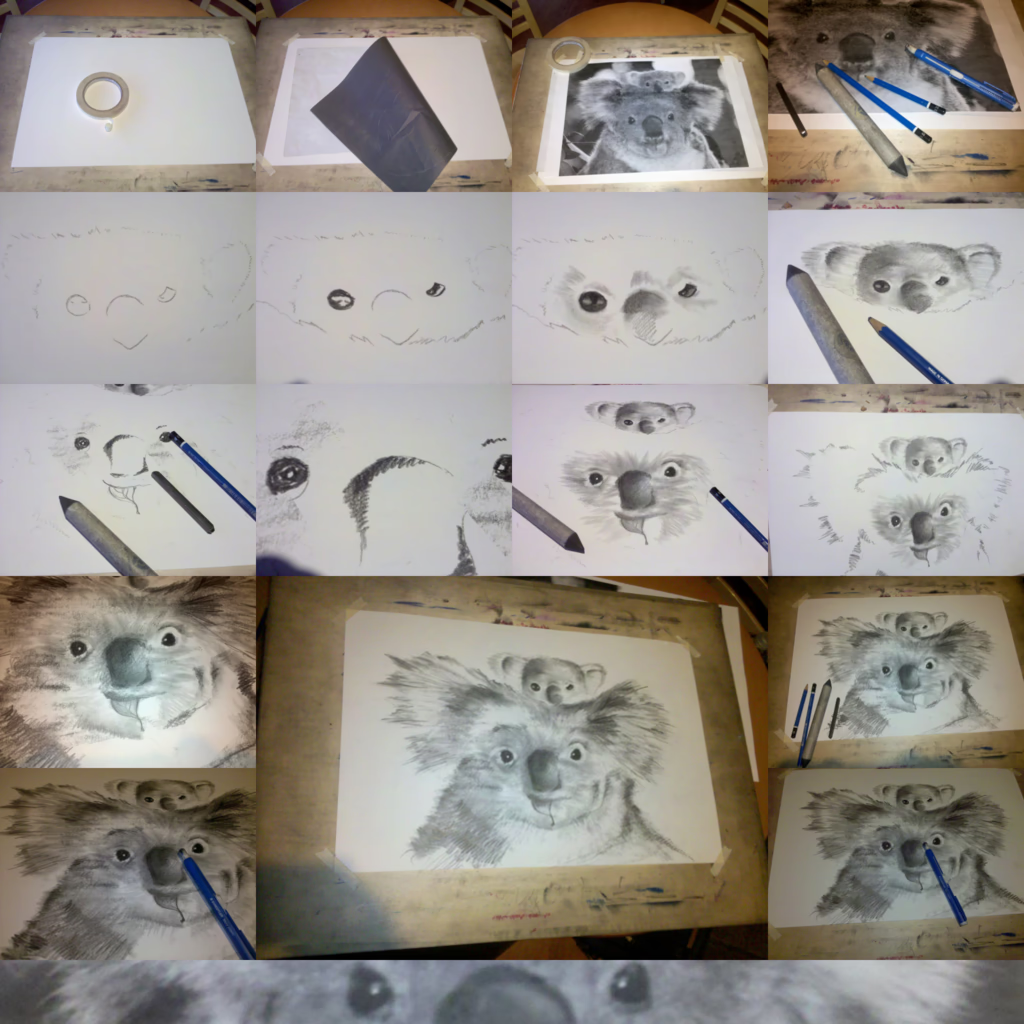
The post explains how to set up and execute a hand‑drawn sketch, starting with a light drawing board covered with painter’s tape and graphite paper for easy erasing; it recommends using high‑quality graphite pencils (H and B grades) along with sticks for filling large areas, blending stumps for smoothing tone, and eraser shields or drafting brushes to clean up the work. It describes the “shading flip technique,” where you keep the original photo attached so you can flip back and forth between the reference and your drawing to match tones accurately, and it suggests using a ball stylus if you prefer not to trace directly on the print‑out. The piece also offers practical tips for sourcing good photos, choosing bright lighting and deep shadows, and even turning the process into a small business by offering portraits of relatives or pets, while reminding that a clear, high‑contrast source image makes the tracing easier.

#0659 published 07:03 audio duration 891 words 11 links drawing sketching graphite-pencils drafting-board tracing photograph-tracing blending-stumps

Spring Is Just 92 Days Away

Spring Is Just 92 Days Away

zoom read listen

The post celebrates the arrival of spring as a time ripe with possibility—an invitation to pursue art, cycling, quiet listening to books, and journaling, all woven together by the promise of new adventures and fresh insights. It paints the season as an opening for creative projects, leisurely bike rides that reveal hidden joys, and reflective reading that deepens understanding. By noting how these activities feed each other—art inspiring adventure, adventure enriching journals, and both culminating in wisdom—the author invites us to embrace spring’s potential for learning, growth, and wonder.

#0658 published 03:46 audio duration 421 words 3 links poetry spring art bicycle books journaling adventure

Comic Book Creation Tutorial: Become An Artist Right Now

Comic Book Creation Tutorial: Become An Artist Right Now

zoom read listen

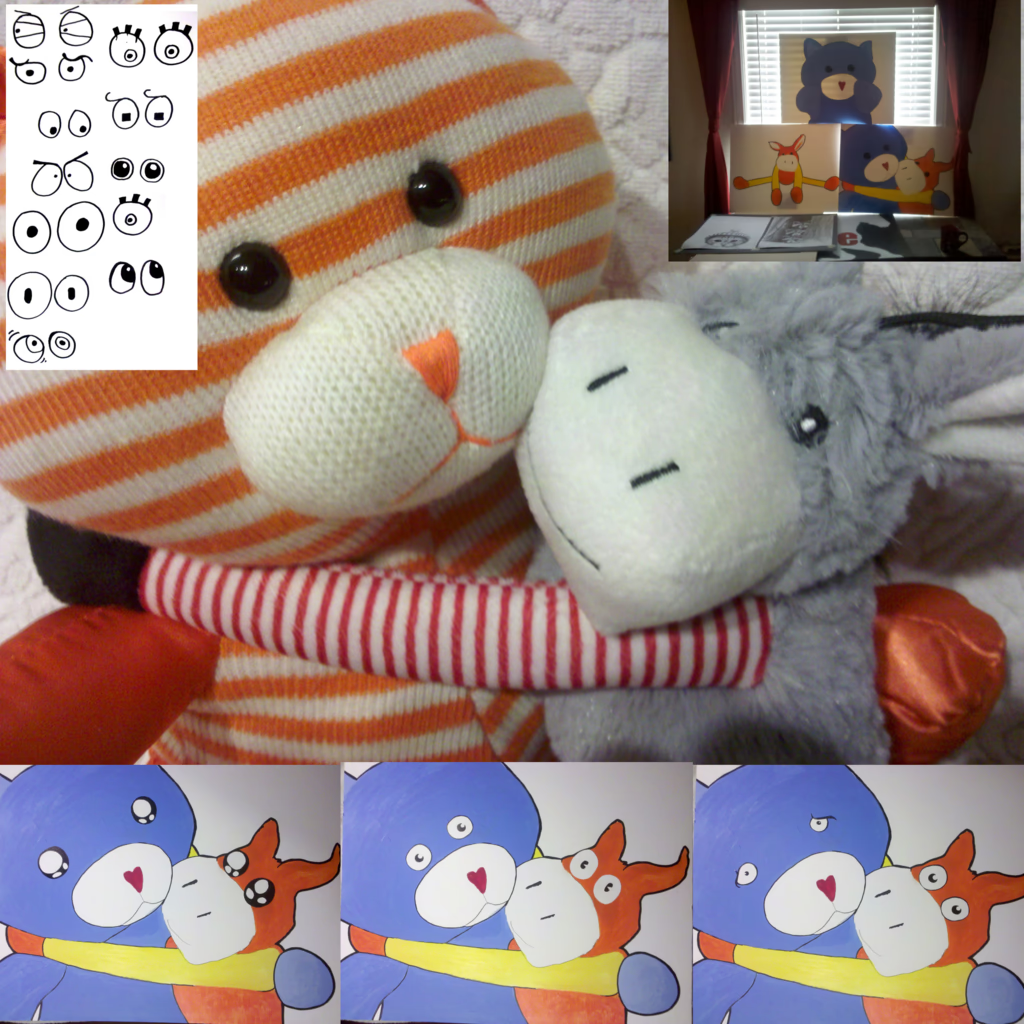
Drawing for this method comes naturally once you start working on comics; the key is to use everyday objects—dolls or pets—as your subjects and capture them in a well‑lit photo shoot with a tripod, then project those images onto a canvas and paint over them, using thick outlines and optional eye libraries to add mood. After painting, digitize the work again by photographing the canvases, assemble the scenes on a computer, add speech bubbles and captions, and publish either as a web comic or in print form. The process is almost backwards: you first create the visual narrative through photography and painting, then build the story around it with text; you can always add missing panels by sketching them on paper and shooting new photos if needed. Whether you use dolls, real cats, or hired models, the core steps remain the same—capture, project, paint, digitize, and narrate—so give art your love of creating, and it will reward you with inspiration, practice, talent, and skill.

#0657 published 06:20 audio duration 687 words comics drawing photography painting acrylic paint digital art

Growing Up On Planet Meow

Growing Up On Planet Meow

zoom read listen

I grew up in Eastern Europe where my childhood was shaped by quirky TV shows, comic books, and a handful of YouTube videos that helped me learn English. After moving to Brooklyn, I delved into American pop culture—X‑Files, audiobooks, and self‑taught programming—and began exploring electronics, music production, and 3D modeling, using breadboards for circuits, LMMS for drums, and Tinkercad for prototypes. Each new skill builds on the previous one, and I enjoy shifting focus when I hit a plateau, always returning with fresh insights. This continuous learning cycle keeps me engaged and relaxed, turning every project into an educational adventure.

#0656 published 07:04 audio duration 840 words 16 links autobiography media-influence self-learning electronics-design music-production 3d-modeling programming

Self Education First

Self Education First

zoom read listen

The author argues that traditional schooling with fixed schedules and curricula stifles learning because it forces students to follow a predetermined pace and sequence, often leading them to feel inadequate and disengaged; they claim teachers may unknowingly maintain this rigid system, which hampers true education, yet schools can be improved by using computers to let learners craft their own paths at the right speed. The post further compares this to environmental conservation efforts that fail when only talked about but not acted upon, stressing that real, self‑directed learning is essential for future generations to understand and correct global problems; thus, teachers must become facilitators, empowering students to build knowledge, wisdom, and greatness through genuine education rather than mere diplomas.

#0655 published 06:37 audio duration 676 words 2 links self directed learning school reform curriculum design computer aided education amazon rainforest universal basic income teacher perspective self education

Pursuit Of Wisdom And Growing Up

Pursuit Of Wisdom And Growing Up

zoom read listen

The post celebrates wisdom as a multiplier of knowledge that goes beyond formal study, urging readers to seek it through adventure, reflection, and learning from mistakes rather than rote memorization. It contrasts philosophers who thrive on thought with doctors who rely on practice, showing how true wisdom deepens both fields. The writer recounts personal lessons—school fears, bullying’s emptiness—and argues that embracing wisdom turns errors into valuable insights, fixes problems intuitively, and frees us to become our truest selves. Finally, the text calls for a cultural shift toward valuing wisdom over mere work or status, suggesting that cultivating it will enlighten, nurture, and ultimately lift society from poverty and overwork.

#0654 published 04:59 audio duration 570 words wisdom learning poetry education introspection

Full Measure Of Wisdom

Full Measure Of Wisdom

zoom read listen

In this poetic post, the author encourages readers to embrace creativity, learning, and adventure—taking notes, reading books, traveling through imagination, and using mind maps and memory palaces—to become polymaths and great thinkers; he invites beginners to start their journey with enthusiasm, share milestones, and ultimately help the world grow.

#0653 published 03:12 audio duration 348 words 7 links poetry creative-writing inspiration learning mind-maps memory-palace adventure books audio-books journaling note-taking doodling travel self-improvement polymath philosopher star-gazing

Riding In Winter

Riding In Winter

zoom read listen

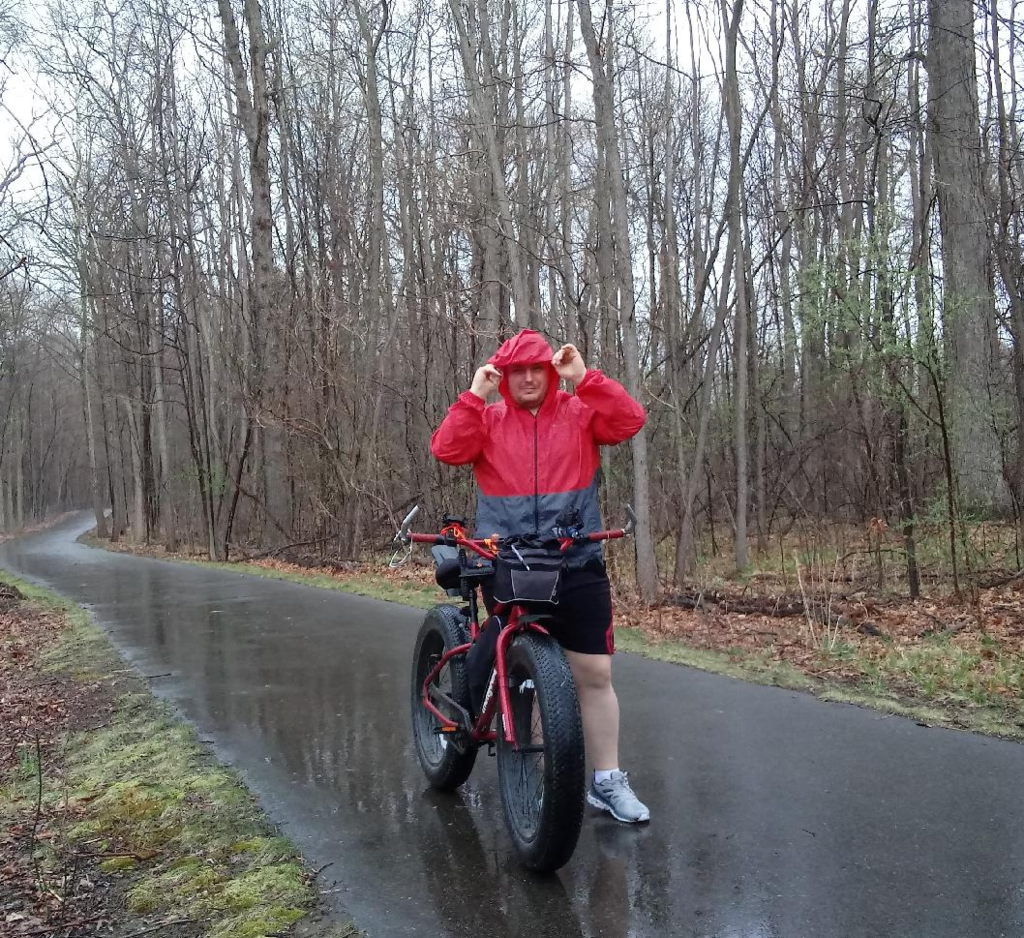
The author talks about cycling in winter conditions—on ice or snowy roads—and suggests using a fat‑tire bike for better traction. They recommend gear such as a backpack, thermos of tea, gloves, a wide seat, crackers and cheese, and advise riding slowly to enjoy the experience. The writer shares personal adventures near the I‑275 bicycle trail and encourages readers to give it a try.

#0652 published 02:03 audio duration 225 words 1 link bicycling snow winter fat-tire-bike trail adventure gear

The Cat Pea Broccoliberry Thrice Upsidedown Salad

The Cat Pea Broccoliberry Thrice Upsidedown Salad

zoom read listen

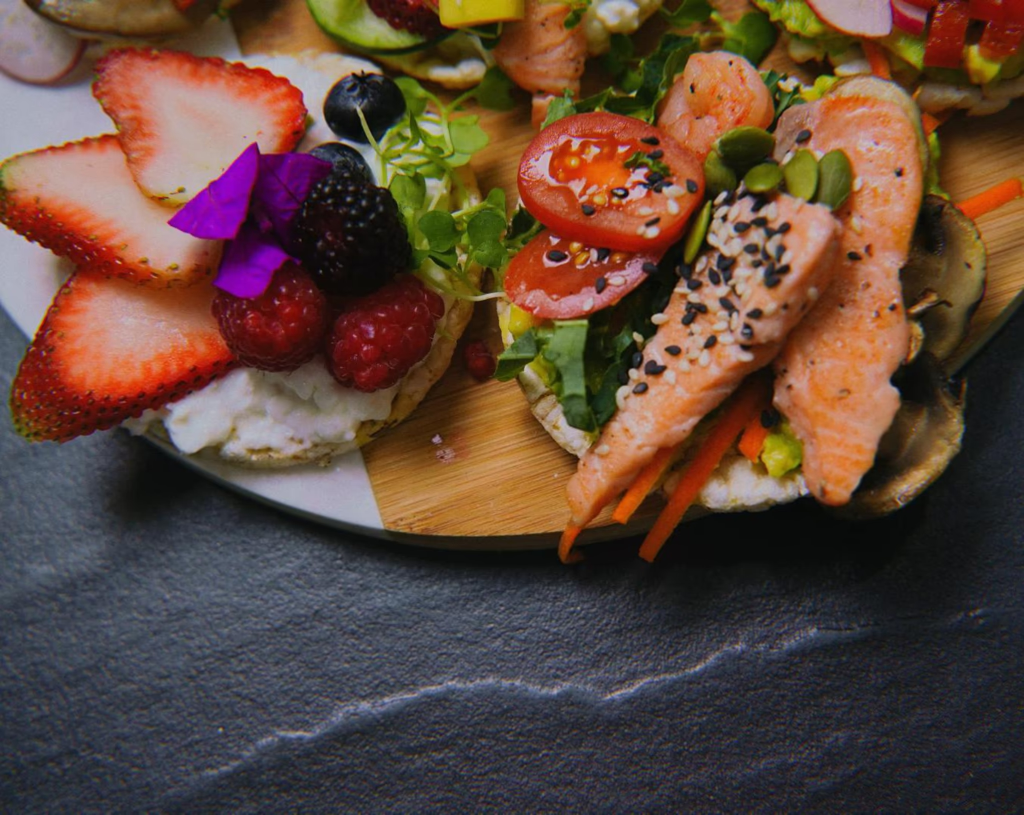
In a whimsical ballad, the author invents a salad that turns veggies into fruit‑flavored “berries” using a raspberry spread and jalapeño, creating playful, flavorful hybrid dishes and celebrating its deliciousness.

#0651 published 03:33 audio duration 338 words poetry ballad recipe salad ingredients fruit vegetable cooking creative‑writing

World Peace And The Next Steps In Advancement Of Human Kind

World Peace And The Next Steps In Advancement Of Human Kind

zoom read listen

The post envisions an international “bank” that gives each person a daily $100 allowance—adjusted for inflation and funded by planetary resources such as land and mineral rights—to end wage slavery, poverty and the lack of real education; it argues that money should be a tool for creation, not burden, and that only universal income coupled with true learning can free people from overwork, mass incarceration, and war‑driven drone strikes—so that teachers become students again, self‑education flourishes, and humanity finally unites under the sun as one family.

#0650 published 08:43 audio duration 817 words 4 links universal basic income education poverty wage slavery banking global economy culture

No Adventure Too Silly

No Adventure Too Silly

zoom read listen

The post reflects on the value of every adventure—big or small—as a treasure that keeps our talents sharp and reminds us to practice regularly. It traces how childhood experiences, like nature walks, leave lasting impressions that guide us even in adulthood, and it explores personal journeys from college art projects to television shows about reconnecting with the inner child (or animal). The author emphasizes learning through self‑instruction when formal lessons falter, celebrating silliness as a source of joy and inspiration, and concluding that adventures, talents, dreams, and creative practice are integral parts of who we are.

#0649 published 06:36 audio duration 751 words 2 links poetry personal essay adventure art college 3d art monalisa camping naturewalks innerchild selfdiscovery

Art And Humanity

Art And Humanity

zoom read listen

The post celebrates art as an unconstrained, dream‑expanding force that extends beyond painting or sculpture into everyday life and learning; it argues that through art we can choose our responses, triumph over adversity, and continually grow wiser by building upon previous works; finally it calls on us to teach children their potential and to view poverty as a mistake rather than an inherent flaw.

#0648 published 03:20 audio duration 358 words poetry art learning inspiration humanity

On Education And World Peace

On Education And World Peace

zoom read listen

The author argues that schooling can be divided into three categories—organized education, home‑schooling, and self‑education—and claims that only self‑education truly works because it lets students learn at a pace and sequence that matches their existing knowledge, free from the constraints of standardized tests and curricula. They explain how travel and immersion in diverse cultures enhance learning for both architecture/archaeology enthusiasts and nature lovers, while home‑schooling is seen as merely an extension of self‑education with family tutors rather than a formal system. The post criticizes organized education for its money‑driven, grade‑centric, and statistics‑oriented approach, which the author believes stifles individual success; it suggests that computers could replace standardized lesson plans by providing personalized, student‑controlled curricula and even proposes paying students for their study as part of a future universal income program. Overall, the piece presents self‑education as the most effective method, home‑schooling as a family‑based support system, and organized education as broken but potentially salvageable if it abandons standardisation for personalized learning.

#0647 published 08:34 audio duration 949 words 2 links education homeschooling self-education curriculum travel-learning architecture hiking music programming

You Are Extremely Intelligent: Your Intelligence Is Sacred And No One Is Allowed To Put A Grade On It

You Are Extremely Intelligent: Your Intelligence Is Sacred And No One Is Allowed To Put A Grade On It

zoom read listen

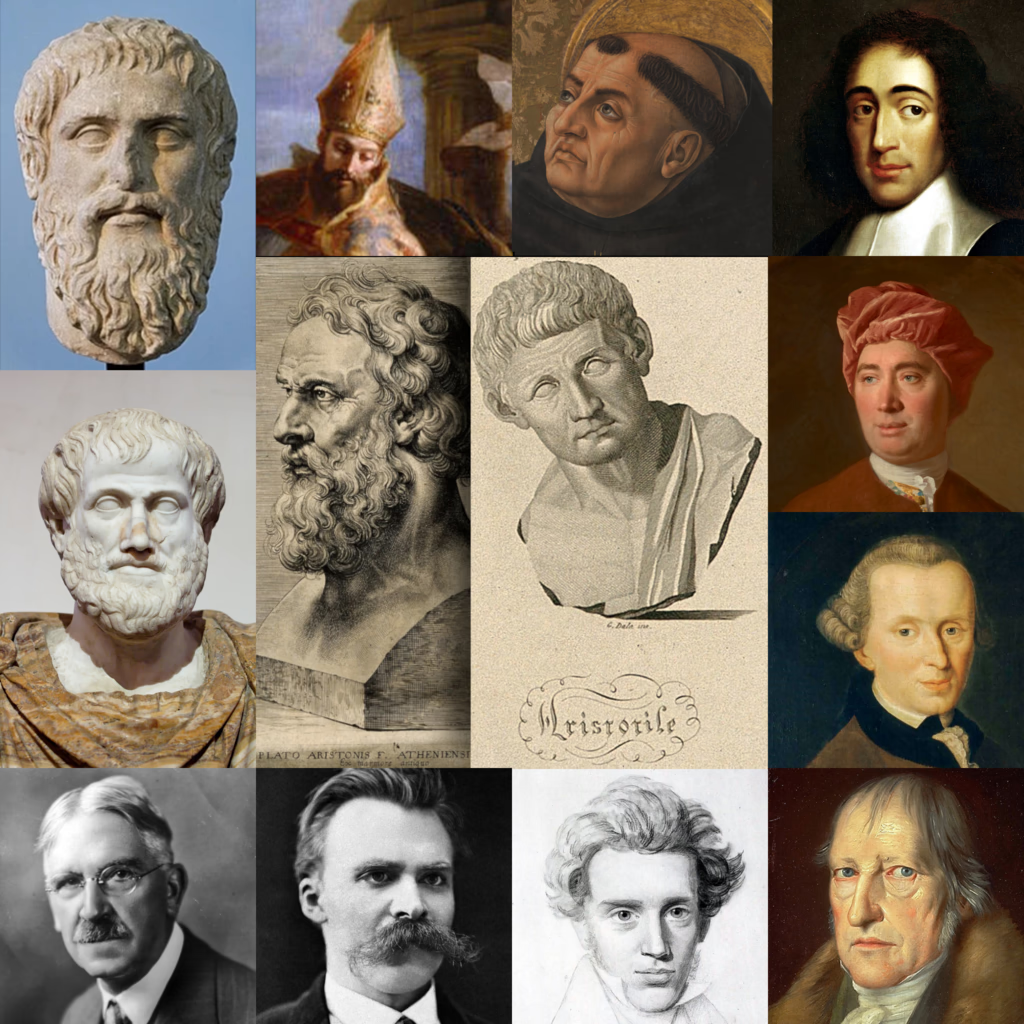
The post argues that modern educational institutions rely on “numbers” – grades, diplomas, and tuition fees – rather than real learning, so teachers and administrators focus on rote memorisation to keep students quiet and profitable. This system of “fake education” leaves pupils feeling intelligent yet unprepared, which the author links to broader problems such as vaccine‑hesitancy and a culture of manipulation. He claims that true knowledge comes from self‑directed study, following one’s own curiosity, rather than institutional tests, and urges students to learn about these flaws, support each other, and use the experience to become genuinely wise beings.

#0646 published 13:14 audio duration 1,259 words 4 links education teachers students learning memorization curriculum tuition

Of My New Wallet Designs And The Knob

Of My New Wallet Designs And The Knob

zoom read listen

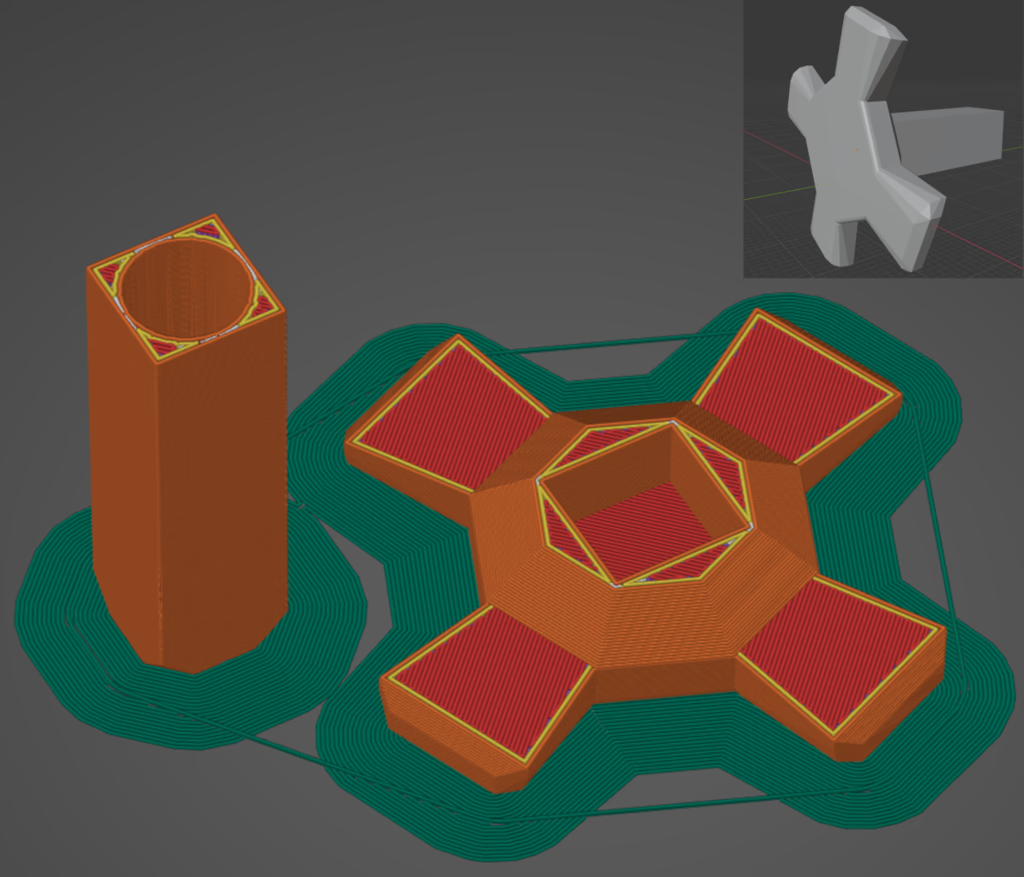
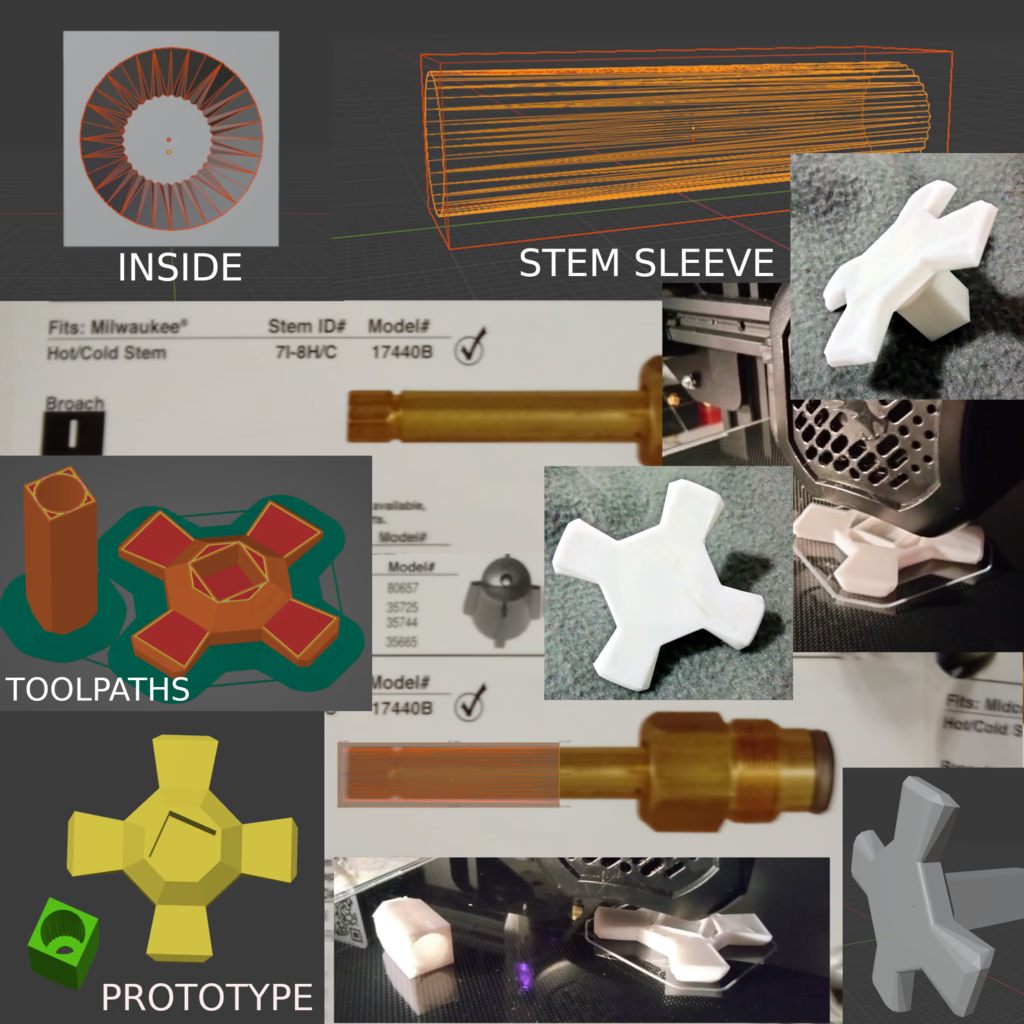
I spent hours designing and printing a series of 3‑D‑printed wallets that combine thin modular layers with functional screws to solve the overhang problem without supports. Using the shape of an IC 380 firearm as inspiration, I carved the wallet’s main body by subtracting a pocket for cards and keys, then punched holes that serve both aesthetic and structural purposes. The design is intentionally modular so that parts printed once can be reused in future models, and I’ve experimented with different PLA colors to achieve a sturdy yet lightweight construction. Overall, my approach turns 3‑D printing into an artistic, mechanical craft where every screw and overhang is purposefully integrated rather than simply added as a support.

#0645 published 07:33 audio duration 842 words 1 link 3d-printing wallet-design PLA filament overhangs screws modular-approach subtractive-molding fitting sculpture

Making Internet Even More Accessible, An Open Business Idea For Students

Making Internet Even More Accessible, An Open Business Idea For Students

zoom read listen

The post proposes an open‑source local‑network appliance that mirrors selected websites into a single database, prefetching and caching their content so users can browse them offline or on slow connections; the system would run on devices like Raspberry Pi, pull data via plugins or downloads, store it in a structured DB, expose it through a minimalist web server, and allow GUI clients—including RSS readers—to access the cached pages. The idea aims to simplify Internet use, improve speed for low‑bandwidth users, enable easy transfer of up‑to‑date sites to remote areas, and provide learning opportunities in web crawling, storage, and rendering.

#0644 published 05:43 audio duration 691 words 7 links caching offline local-network raspberry-pi database web-crawler rss atom open-source

Color Quest: Your Mysterious Cupboard Of Magical Treasure

Color Quest: Your Mysterious Cupboard Of Magical Treasure

zoom read listen

The post argues that mastering color is essential for any painter and explains how early artists began with simple black‑and‑white sketches before layering translucent glazes to add depth. It emphasizes the importance of understanding primary mixing, using a color wheel to create complementary hues, desaturating by blending opposites, and adding white for brightness—all while maintaining harmony across multiple themes in one work. The author cites the Mona Lisa as an example of layered color schemes that remain balanced, warning against poor restorations that disturb this equilibrium. Finally, it encourages artists to build their own palettes by mixing colors into small jars stored in a vintage cupboard, treating these personal palettes as living tools that inspire further creative expression.

#0643 published 07:06 audio duration 773 words 12 links painting color palette mixing colors monalisa color wheel

A Fun Little Road Towards Inventing New Things

A Fun Little Road Towards Inventing New Things

zoom read listen

This post argues that invention is accessible through a variety of flexible creative tools—starting with 3D printing and modeling, extending to drawing robots, sheet‑metal kits, and even simple photo or generative‑art sales—and shows how modest projects can generate income (for example a custom crown or wood‑grain textures) while providing stepping stones toward larger inventions; by beginning with any small creation and iterating on it one can continually improve ideas, keep the inventive momentum alive, and eventually turn those experiments into full‑blown products.

#0642 published 04:37 audio duration 521 words 11 links 3d printing modeling drawing robot digital photography generative art programming

Making Our Civilization Better

Making Our Civilization Better

zoom read listen

We are celestial beings from the Milky Way who learn by exploring knowledge on our own adventures and through stories narrated by great storytellers; we recognize that each person grows uniquely, so schools must treat students as individuals rather than grading them uniformly. Our mind is our wealth, yet hunger, homelessness, and poverty must be eliminated so everyone can flourish; this requires reconfiguring financial systems to benefit all humans. We learn from books in different sequences but still need their wisdom, and we must remember past tragedies to avoid wars—national borders are imagined, and we are one family of world citizens. The path forward is a journey of wisdom and greatness, or “growing up,” which will reveal our true selves; by aiming for authenticity and long‑term vision we can create a global culture that converges on wisdom and world peace.

#0641 published 04:40 audio duration 484 words 1 link wisdom learning education books culture global-citizenship world-peace

Why Math?

Why Math?

zoom read listen

The post argues that students often view trigonometry as useless because teachers focus on memorizing formulas for tests rather than applying concepts, leading to a system where grades drive teaching rather than learning. The author criticizes the rote‑learning culture and suggests using practical projects—simple programming tutorials, free‑hand languages, 3D screen‑sav­ers, and pixel‑art games—to make mathematics tangible and engaging. By integrating such hands‑on activities into school curricula, students could see real applications of math, thereby breaking the cycle of memorization, grade‑driven teaching, and parental pressure that perpetu­ates a broken education system. If this approach is adopted, graduates would possess practical knowledge, be ready to co‑found startups, and bring about a meaningful future for humanity.

#0640 published 07:23 audio duration 909 words 8 links education trigonometry programming screensavers 3dgraphics pixelart youtubevideos students teachers schoolsystem

Art And Projectors

Art And Projectors

zoom read listen

The post explains how to use different types of projectors to display and analyze portrait photos, adjust them with editing tools like posterization, study shadow layers for painting, and then develop and exhibit your own artworks.

#0639 published 06:07 audio duration 730 words 1 link portrait projector photography painting canvas pencil-art color-mixing art-process exhibition photo-editing posterize shading

Towards Class, Dignity, Compassion, Knowledge, Wisdom, And Greatness

Towards Class, Dignity, Compassion, Knowledge, Wisdom, And Greatness

zoom read listen

Wisdom, the author argues, is humanity’s best invention and the sole route to preventing problems; yet modern society still suffers from poor application of it—people ignore masks, refuse vaccines, and leaders fail to act wisely. The post claims that culture and education are the root causes: schools only teach memorization and showmanship, while true learning arises when students create pixel art or code, igniting their inner flame and making them feel they belong to humanity’s future. A school must therefore cultivate a culture of wisdom, class, and authenticity; otherwise it merely produces machines who can’t invent. The author calls for self‑education, artistic creation, and a new kind of schooling that truly brings wisdom into people’s lives so that the world will no longer “run in circles without result.”

#0638 published 08:30 audio duration 971 words education pixelart art learning schools students self-education wisdom culture

Education: Your Own Creation

Education: Your Own Creation

zoom read listen

The post is an ode to learning as a personal journey rather than a rigid system: it urges readers to let their own interests guide course choices and study independently so that knowledge becomes interconnected and creative. It claims that subjects like mathematics are not isolated but part of larger projects—such as building a fractal MUD or creating animated screensavers—which show how theory turns into practice. The author also encourages self‑made art, music, circuit design, and 3D modeling, stressing that tools (LMMS, simulation software, printing) simply reveal the underlying concepts already known. By combining these activities, one can weave knowledge into a tapestry of invention and expression, thereby turning learning into an ongoing adventure rather than a series of exams.

#0637 published 04:15 audio duration 497 words 7 links education self-study creativity maths music-composition software-tools 3d-modeling fractal-mud video-tutorials

Always Learning

Always Learning

zoom read listen

Learning is presented as an art that thrives on incremental steps: small, consistent bits of knowledge accumulate into a richer toolkit rather than grand, single‑move mastery. The author contrasts rote memorization with purposeful practice, urging readers to “sharpen wit” through repeated engagement and experimentation—illustrated by his own pursuit of drums, music composition, and circuit design using software. He argues that mastering one domain is less important than the continual expansion of curiosity; unfinished works are valuable milestones that reveal growth. The piece celebrates the beauty in being a “jack of all trades,” emphasizing that enjoyment and real practice outweigh passing tests. Ultimately, the post invites readers to cherish each small learning moment, believing that gradual progress will eventually yield appealing creations and a deeper understanding of life’s many connections.

#0636 published 08:28 audio duration 565 words 2 links learning music drums songcomposition dance youtube mp3 poetry