The post argues that modern schooling is overâbuilt on standardized testing and fixed levels of knowledge, which stifles studentsâ natural learning pace. It proposes a model of selfâeducation where each learner follows a personal sequence that matches their existing knowledge and interests, advancing at a comfortable speed without the pressure of grades or punishment. By allowing room to think, dream, and pursue curiosities, schools would become arenas for adventures and investigations rather than graded exams, fostering wisdom, unity, and lifelong learning.
#0611 published 02:48 audio duration292 wordseducationself-learningcurriculum-designschoolingstudent-pacinglifelong-learning
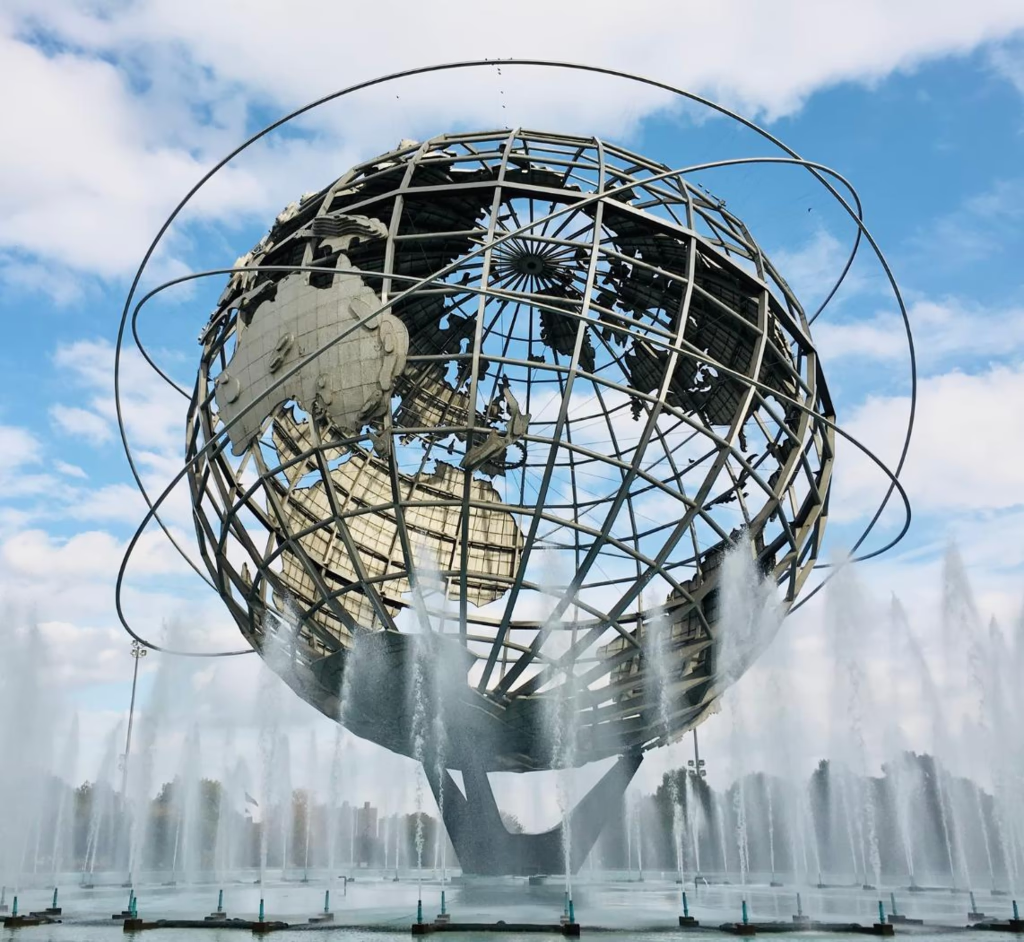
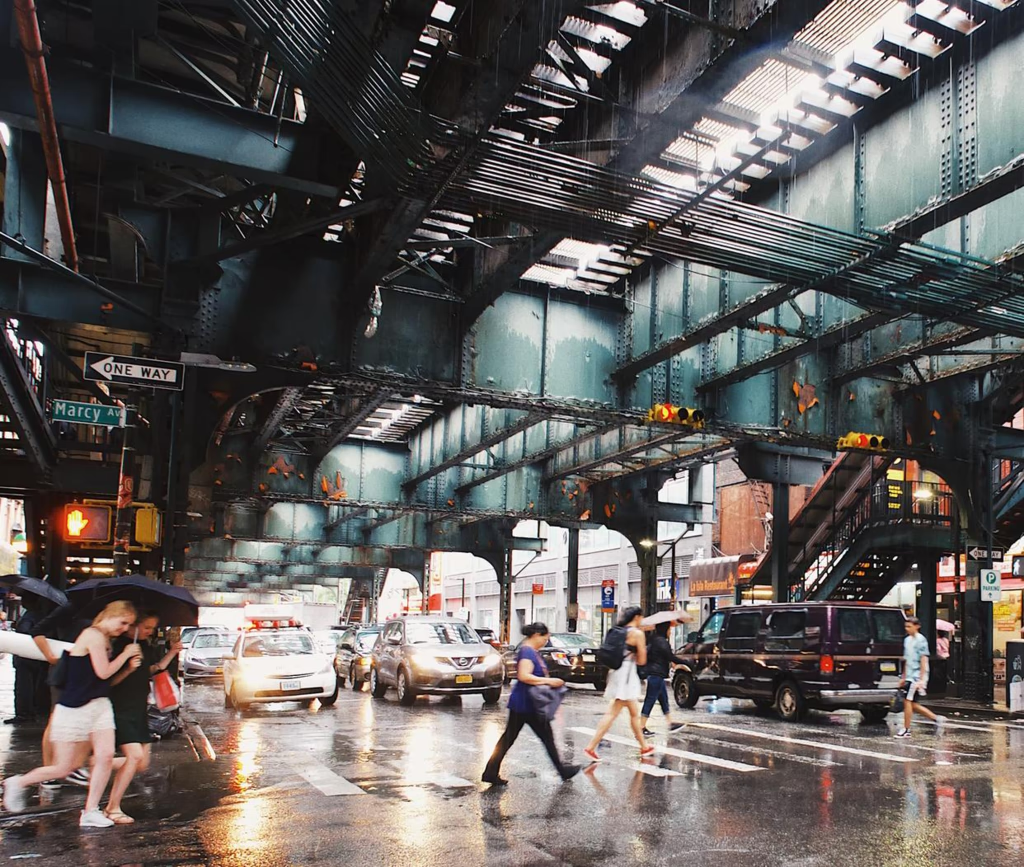
The post recounts a personal experience of living in New York City and finding comfort on a familiar spot on the Brooklyn Bridge, where the narrator enjoys quiet moments with Lady Liberty as company. He describes how he made an old bench his own, often returning to it even after leaving for Michigan, and relishes the simple pleasures of watching the river flow into the sea, skyscrapers towering beside him, ships passing beneath, and cars moving below. A rainy day adds a small adventure: he gets caught in the rain while on the bridge, returns drenched to the subway station, and observes another commuter smile at his wet puddle. All together, it paints an intimate portrait of solitude, routine, and affection for the cityâs iconic sights.
#0610 published 02:03 audio duration263 wordspoetrynew york citybrooklyn bridgesubwaystatue of libertyrainbenchpersonal experiencecandyriver
The post argues that all people on Earth together are the only force capable of shaping our future, and that this can be done most effectively through a shared pursuit of wisdom. It urges us to learn from past mistakes over centuries, to build mental âplateausâ by accumulating knowledge from countless books, and to bridge the small gap between student and teacher by becoming independent thinkers whose own wisdom is tailored to their essence. By gathering scattered insights, we can create new paths that synthesize an integrated view of the world, reject corruption, and serve humanity for good. The author stresses that our current stateâlack of learning, hidden liars, invisible prisonsâhas stalled advancement, but if we rise as citizens of the world and converge on wisdom, all divisions will disappear.
#0609 published 04:44 audio duration511 wordspoetryhumanslearningeducationwisdomfuture
Watching âTeenage Mutant Ninja Turtlesâ and âInspector Gadgetâ with closed captions helped me learn how words are divided in spoken English, but I still struggled to say the time correctlyâmy watch read about 17:08, and I couldnât decide whether to say âseventeen oh eightâ or âfive PM,â which left a passerâby confused. After that mixâup, I found myself on a NewâŻYork subway, recording station names in my cassette recorder only to discover Iâd mispronounced them; still, by looping back to Manhattan and then returning the way I came, I finally got home at Greenpoint hours late. Along the way I bought a slice of pizza for 25¢âconfused whether that meant a quarter or just twentyâfive centsâbut paid it with a single coin, enjoyed the spicy mozzarella crust, and left feeling proud of my new taste of American food.
#0608 published 06:32 audio duration745 wordsstorypersonalexperienceenglishlearningtimedecodingsubwaytravelpizzapaymentfood
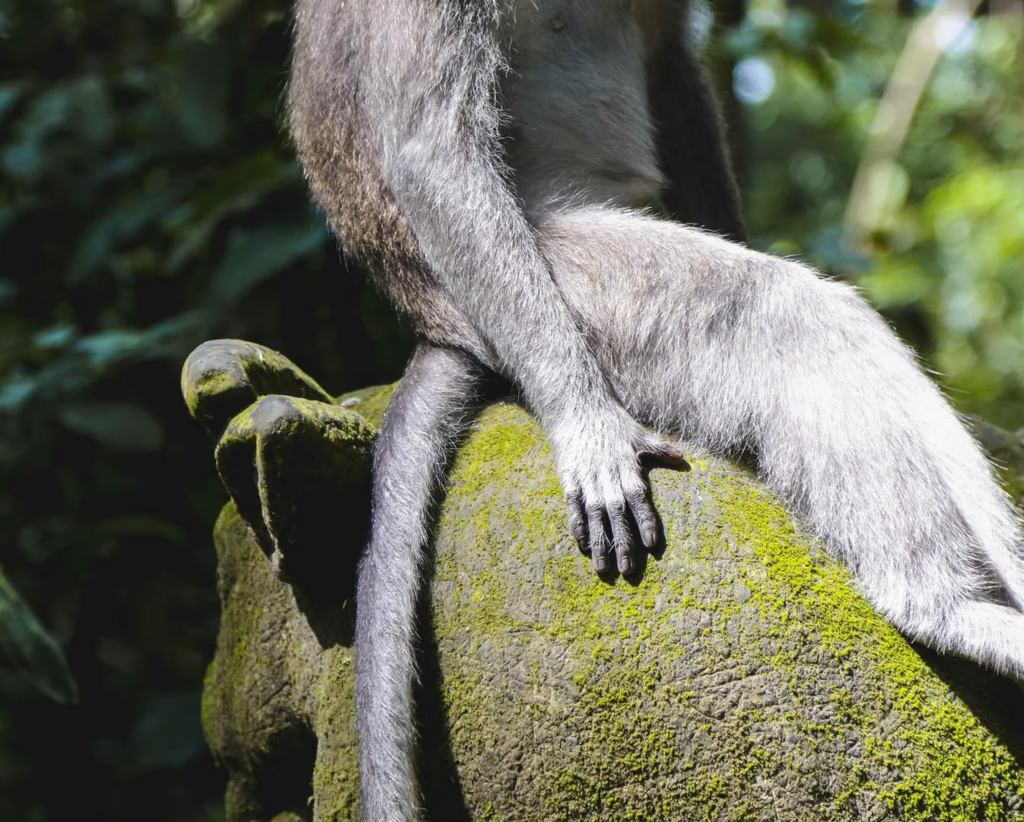
The post humorously claims that wearing a tailâwhether real or metaphoricalâis essential for good health and success: pharmacists say you should have one, dentists assert itâs vital for chewing, spine specialists claim it relieves pain, nurses hope youâre dressed with a tail to cover your buttocks, researchers tout tails as cures for ailments, therapists hide their power, conspiracies fail to conceal them, religions use God to mask the tailâs magic, and even mythic figures like the Monkey King, generals, queens, presidents, businesswomen, and salespeople all rely on a âfancy tailâ to win battles, achieve prosperity, and boost sales. The tail is described as a combination of âBee's Knees and Cat's Meow,â and it supposedly existed in our ancestors 25âŻmillion years ago; the post ends by inviting readers to buy one at Halloween stores.
#0607 published 03:07 audio duration361 wordspoetryclothingtailfashion
After a week of philosophy finals and a boyâs question about Descartes, the narrator realizes that their class was merely an exercise in selfâdeception and academic fraud. He reflects on how teachers may simplify lectures and arbitrarily set grades to keep the illusion alive, urging students to act quickly before reality hurts. The story recounts his own academic journeyâstudying art, sculpture, programming while seeking companionshipâand a Deanâs final blow that made him realize school was fake. He notes that many workers are told âforget collegeâ which feels cruel, and that numbers 25â80 represent the stages of this fraud. Yet he believes one can move mountains if they first move themselves; biographies become turning points to escape early. He concludes with a vision of greatness: becoming both professor and forever student, letting passions guide the path, using books as vessels of wisdom, and making each step toward greatness wiser.
#0606 published 05:30 audio duration659 wordsphilosophystudentlifeartprogrammingdescartesdeanslistcollegeselfreflection
The post explains how a new international bank issues universalâincome cards giving every person $100 per day, hoping this simple daily cash flow will break the cycle of poverty, corruption and wage slavery and unlock true education for all.
#0605 published 10:16 audio duration1,030 wordsessayworldbuildingfuturepoetry
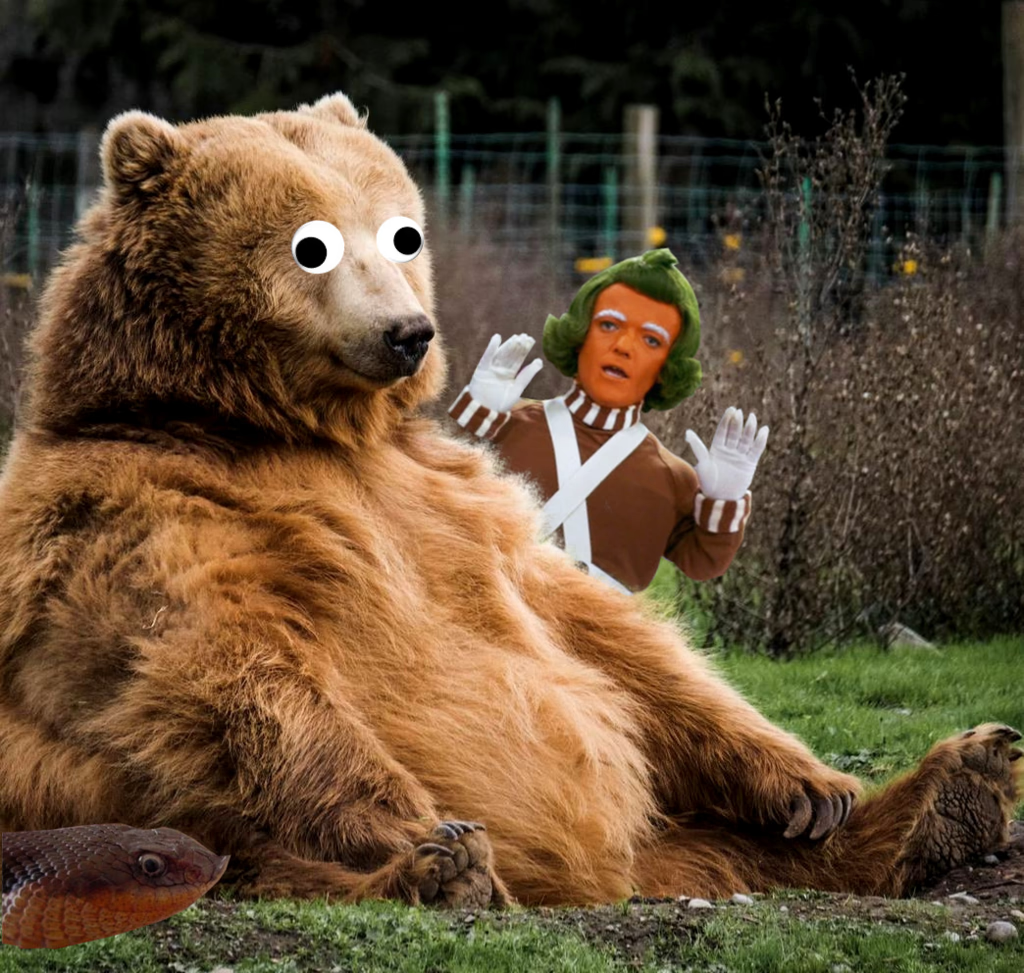
The post describes a nighttime adventure where classic horrorâmovie monsters and everyday wildlife emerge as darkness falls. From OompaâLoompas to Jawsâ shark, snakes to spiders, the narrator lists creatures that appear at night, noting how theyâre seen under flashlight light and their quirky behaviors. The text also mentions woodland animalsâeagles with sharp claws, bats landing on hair, deer with sticky antlers, hawks crashing into cars, bobcats that bite in a show of affection, and owls that swoop down on misidentified hatsâcreating a playful yet eerie scene of campfire folklore.
#0604 published 03:57 audio duration451 words1 linkpoetryhorrormoviesanimals
The post urges us to study history and dream about the future, noting that by recalling past lessons from books and sharing our ideas in writing we can unite humanity; it stresses that through dreams, inherited wisdom, and clear records we align our thoughts and climb metaphorical mountains, ultimately becoming a great being.
#0603 published 04:28 audio duration471 words1 linkpoetrywritingbookshistorydreams
Reading books in school or the library is presented as the key to personal growth, wisdom, and sound decisionâmaking; the post argues that a wide variety of wellâchosen titles can help us understand the world, escape misinformation, and become wiser individuals. It emphasizes that learning from many booksâwhether by reading or listeningâis what transforms our knowledge into real experience and enables us to live wisely in the real world. The author encourages students to bring friends to the library, share its treasures, and let the power of books light their lives with confidence, insight, and friendship. In short, the text celebrates libraries as a source of learning, creativity, and personal empowerment.
#0602 published 06:32 audio duration755 wordsreadingbookslibraryschooleducation
The post argues that true wisdom comes from actively choosing books that personally resonate, rather than relying on preâpackaged lists or college curricula. By listening to lifetimes, revisiting texts, and connecting with subjects that click in oneâs mind, scattered thoughts can be synthesized into a coherent mental frameworkâan interlinked âsoupâ of knowledge. The author stresses that solving internal contradictions and repeatedly engaging with diverse books yields real learning, while mere memorization only creates superficial cleverness. In short, continuous motion toward wisdom, selfâguided book choice, and resolving contradictions are presented as the path to free, limitless intellectual growth.
#0601 published 04:50 audio duration593 wordsbooksreadinglearningwisdomthinking-toolsknowledgeself-improvement
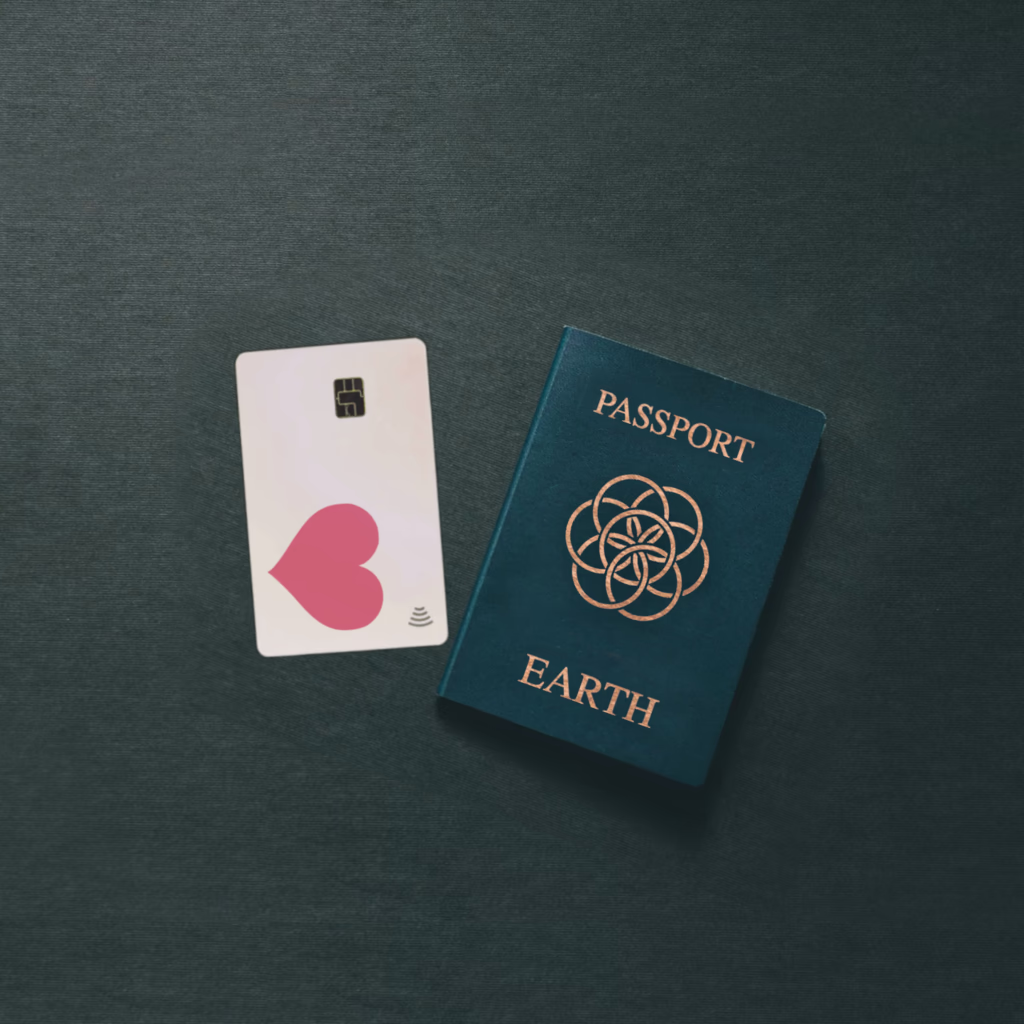
The post sketches a vision for a new world in which education, poverty relief, and crimeâfighting all hinge on simple, openâsource tools and a generous, stable stipend. It calls for an individualized learning system built around textâbased virtual reality (MOO) where students solve puzzles in a dungeonâcrawl format, free of grades, tests, stress, or punishment, with teachers guiding but not dominating. Science, philosophy, therapy, and mental health are listed as the core subjects that will spark selfâreliance, while indoctrination is declared a crime. To erase poverty it proposes giving every person a lifetime purse of $100 per day (â$3.65âŻmillion over 100 years) issued on a small debit card with a 24âhour limit, and the same fiscal idea is applied to crime: criminals receive understanding, therapy, and education instead of only punishment. Finally it urges millions to retire old systems and build a new world from three simple elementsâ the stipend formula, the heartâsymbol debit card, and an earth passport that reminds us we are all one family under the sun.
#0600 published 05:50 audio duration621 words1 linkeducationlearningvirtual-realityopen-sourcetechnologyeconomics
The post argues that modern teachers often fail to inspire their students by overusing grades as motivation, leading to a generation that feels unprepared and undervalued; it urges students to claim ownership of their minds and to actively build knowledgeâthrough memory palaces, philosophical study, and practical projectsâso they can create small businesses and contribute meaningfully. The writer stresses the urgency of ending hunger and fear, calling for renewed wisdom in politics and ecosystems, and insists that education, cooperation, and proactive learning are essential tools for building a stable, compassionate world where future generations inherit a hopeful legacy.
#0599 published 06:08 audio duration606 wordsteachersstudentseducationphilosophyworldhungerclimatechangewar
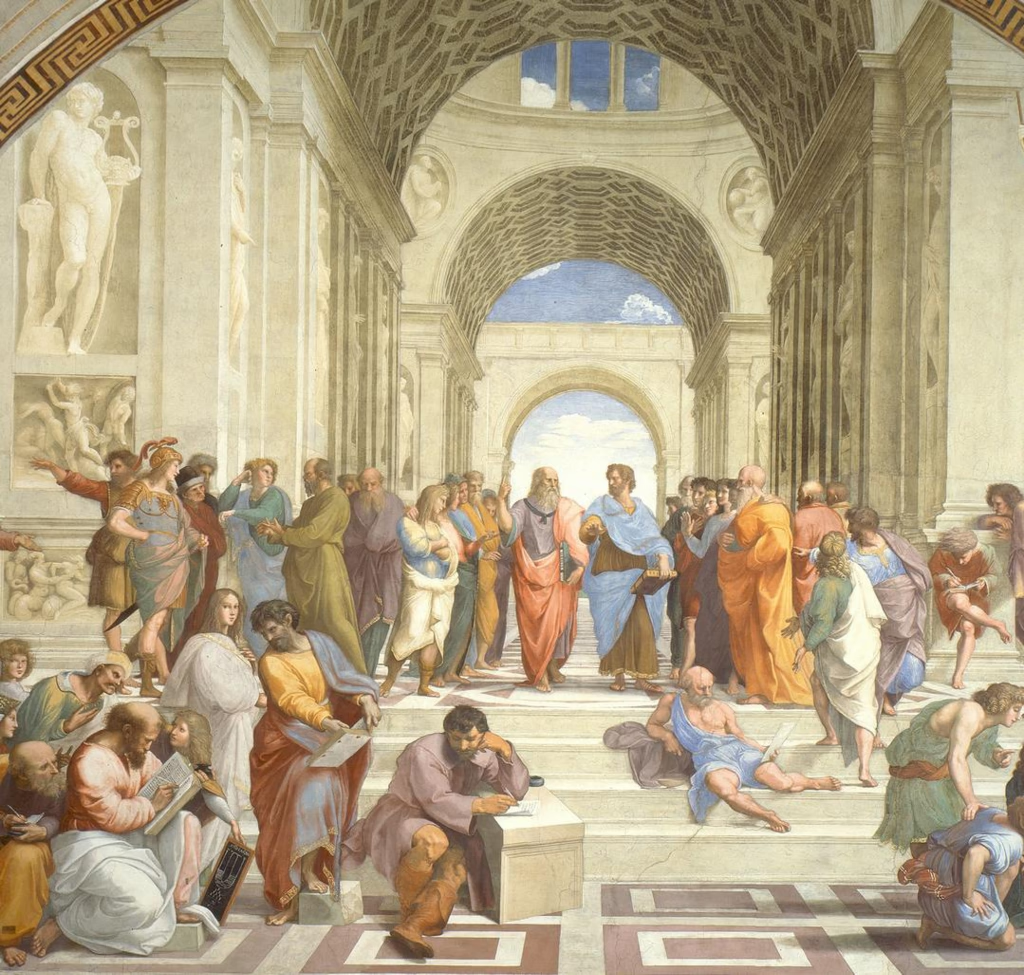
The post argues that learning philosophy is a gradual, layered processâfirst grasping what we already understand, then building on itâmuch like Wittgensteinâs âWovon man nicht sprechen kannâŚâ and Sokratesâ exhortations to study othersâ writings and focus on the discipline itself. It highlights JaneâŻLoevingerâs stages of ego development as a useful model, especially her final stage where learning is seen as inevitable and unattainable things are relinquished. The author notes that schools often misrepresent philosophy and that scientists sometimes overâextend animal models to human behavior; when psychological theories fail, they return to broader philosophical frameworks. Repeated exposure to texts (e.g., Durantâs *The Story of Philosophy*) deepens internalization. Finally, the post envisions future education using Loevingerâs stages to guide students toward world peace and human dignity.
#0598 published 06:36 audio duration626 words3 linksphilosophywittgensteinsocratesloevingerego-developmentlearningeducationlecturebooks
The post celebrates biographies as a source of practical wisdom and personal growth, arguing that the stories of real peopleâcaptured in books, podcasts, or online linksâoffer concrete advice, memorable lessons, and emotional resonance that can shape our actions more effectively than abstract theories; it emphasizes how reading about othersâ experiences helps us avoid pitfalls, cultivate confidence and eloquence, revisit familiar insights with fresh perspective, and ultimately accelerate the journey toward greater selfâknowledge and success.
#0597 published 03:16 audio duration389 words6 linksbiographiesbooksreadingaudiobooksfriendship
The post argues that true learning happens when itâs enjoyable and selfâdriven rather than imposed by rote schoolwork; by embracing playfulnessâexperimenting with openâsource tools like P5.js Audio or LMMsâone can âreâinventâ art, science, and technology. It cites historical figures such as Newton, Bruno, and Leonardo as examples of joyful selfâeducation and stresses that creativity flourishes when the mind is free to explore its own interests. The author encourages using simple visual motifs or a single theme (like a lone shape or a âlemurâ marker) to give work distinct style, while focusing on one area of mathematics or robotics for depth. By letting joy flow into every projectâpainting, composing, codingâthe writer claims we create memorable works that connect across disciplines and leave lasting impact on the world.
#0596 published 04:24 audio duration496 words3 linksself-learningp5jsaudio-programmingcreative-codingeducationlearning-stylesjavascript
The post envisions a future where universal income, world passports, free homes, and truly effective schools with wise tutors and open libraries empower all families; it calls on younger generations to lead global peace, speak at the UN, and champion equality and libertyâan honor for both present and future humanity. It stresses that knowledge must be peppered with great ideas quickly, while cultures nurture wisdom so we can build upon giantsâ achievements; using Cornel West as an example of how a wise being rises on othersâ shoulders. The author believes that true education is sustained by teachers who channel countless books into meaningful learning, and that parents must ensure children become lovers of wisdom, ready to transform knowledge into greatness and foresight.
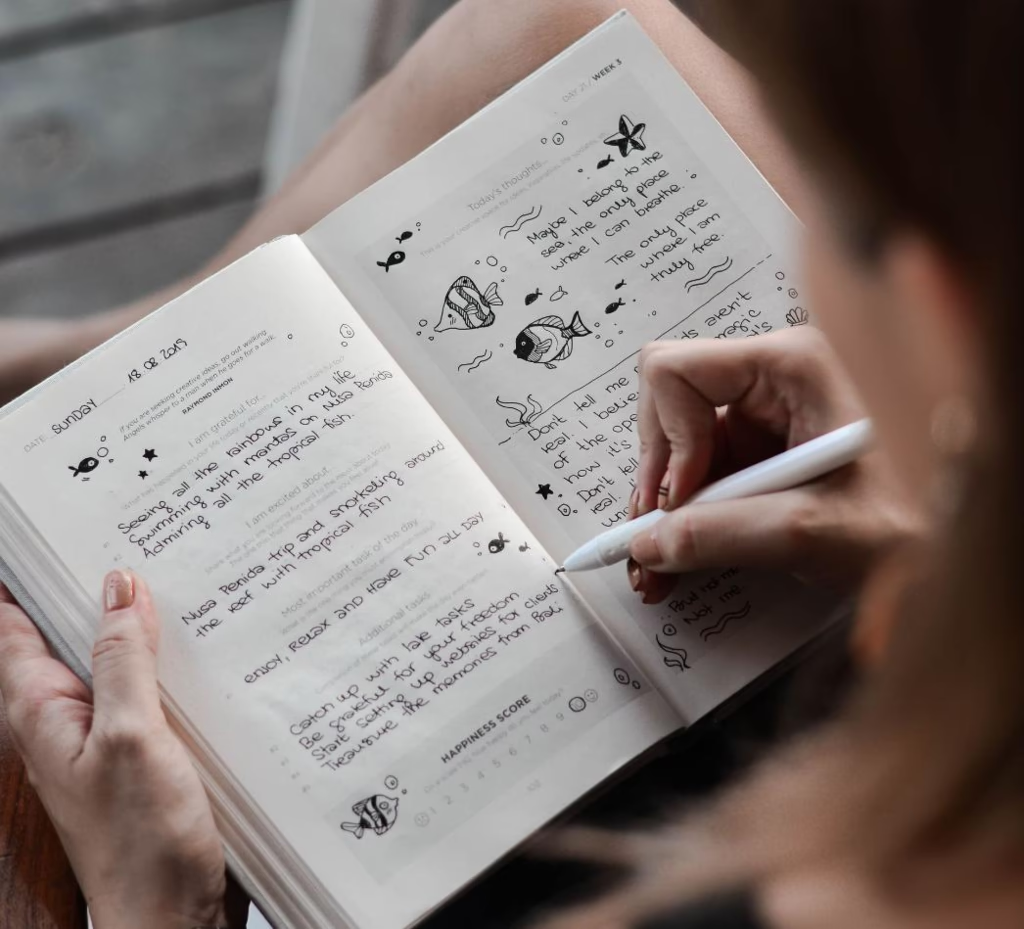
The post celebrates selfâdriven learning as an endless adventure driven by curiosity, where every new skillâfrom music and programming to art and 3D modelingâis explored at a relaxed pace without the need for expensive tutors or formal experts. It stresses that mastering a craft takes time, that we should keep switching âhats,â building on each project, and let practice and sharing be the real tests of progress. By treating learning as play, the author encourages readers to embrace their creativity, build bridges between ideas, and remember that true mastery comes from continuous practice, reflection, and collaboration rather than formal exams.
#0594 published 04:03 audio duration485 wordspoetrylearningself-educationmultidisciplinarycreative-arts
The post celebrates creative expression as a joyful antidote to everyday stressâwhether the sun is out or notâand encourages playful thinking, spontaneous poetry, and artistic ventures like painting and music to brighten our days. It stresses that silliness is essential, refined through practice, and that humor in art can lift moods. By blending simple sketches, projected images, and generative programming, we learn to turn ordinary moments into creative projects that feel smart and enjoyable. The piece ends by noting that philosophy reminds us to laugh genuinely, embrace life with a smile, and see our creations as proof that the universe becomes more beautiful when we add a touch of artful playfulness.
#0593 published 02:49 audio duration338 wordspoetrypaintingmusicprogramminggenerative-art
The post humorously recounts how humanity lost its tails about 25âŻmillion years ago and now can cheaply make or buy them, claiming that wearing a tail restores flexibility, grace, and even successâciting Dr. Meowâs research that tails were once brainâconnected and lab simulations showing improved walking and confidence. It further suggests that fluffy tails boost kindness, smiles, eye contact, and that catsâ historic prominence was meant to inspire us all to adopt tails; several nations have even enacted âFancy Lawsâ encouraging tail acquisition (and mittens that look like paws), while the Queen declares every day a Halloween celebration of this newfound tailâculture.
#0592 published 03:17 audio duration369 wordscatstailsresearchsimulationfashionhalloween
The author suggests that aspiring travel writers first rest, then set out on adventuresâwhether in a bustling town or a nearby cityâand keep a notepad handy to capture funny observations. By visiting museums, galleries, sports events, zoos and other everyday spots, one can collect cheerful anecdotes that later become chapters of a collection rather than a single book; the key is to write in an easyâgoing voice inspired by writers like Bill Bryson and J. MaartenâŻTroost and to keep the tone light, avoiding seriousness or sarcasm, so readers feel uplifted and the writerâs tales may even earn him fame.
#0591 published 03:59 audio duration432 wordstraveladventurewritingjournalingcoffeefunny
The post laments the current educational system as slow, expensive, and largely ineffective, arguing that a standardized curriculum and impersonal college lectures fail to inspire students or deliver practical knowledgeâespecially in programming where early exposure would be beneficial. It claims âbalanced educationâ is merely a marketing ploy and that teaching languages like Java without openâsource support forces students into costly tools. The author stresses the importance of multilingual, freely available lectures so learners worldwide can benefit from native language instruction. Finally, the piece ties education to broader social issues, urging Universal Basic Income as a remedy for poverty and systemic failure, and calling on readers to act to create a future where learning is free, accessible, and truly meaningful.
#0590 published 18:38 audio duration1,260 words1 linkeducationcurriculumjavascriptp5jsoopjavaopen-sourcelectureslanguage-translationsuniversal-basic-income
The post argues that the conventional school systemâwhere subjects are split into timed blocks and taught uniformly to all studentsâproduces only an average level of intelligence and stifles individual potential. It claims true learning is a focused, selfâdirected path of specialization, where a student deepens one discipline until it becomes a âsingle dense and integratedâ area of expertise; this kind of mastery, the author contends, equips people to confront global challenges such as climate change, hunger, and inequality. The piece laments that standardized curricula and tests favor memorization over comprehension, leave most students at the lowest common denominator, and ultimately prevent humanity from advancing rapidly. It ends by urging a return to real educationâone that nurtures each childâs unique height so they can become âgreat beingsâ who can steer future generations forward.
#0589 published 09:13 audio duration882 wordseducationcurriculumspecializationlearningschoolknowledgeteachersstudentsglobalissues
The post argues that modern schools and their teachers primarily focus on producing high scores rather than true learning, treating grades as simple proof of effort while neglecting real understanding. Teachers appear to be more concerned with keeping jobs and maintaining the status quo than engaging studentsâ curiosity; they often rely on memorization and test performance instead of genuine comprehension, even endorsing shortâterm aids like drugs for memory boosts. The author claims that curriculum is disconnected from everyday life, leaving students to feel âbelow averageâ while actually mastering only surface content. In contrast, the writer proposes that true education comes from reading lifeâchanging books, selfâstudy, and listening to biographies or narrated texts, which provide deeper context than conventional textbook learning.
#0588 published 08:06 audio duration921 words4 linkseducationteacherscurriculumlearningbooksaudiobooksyoutubeschoolsgradesself-education