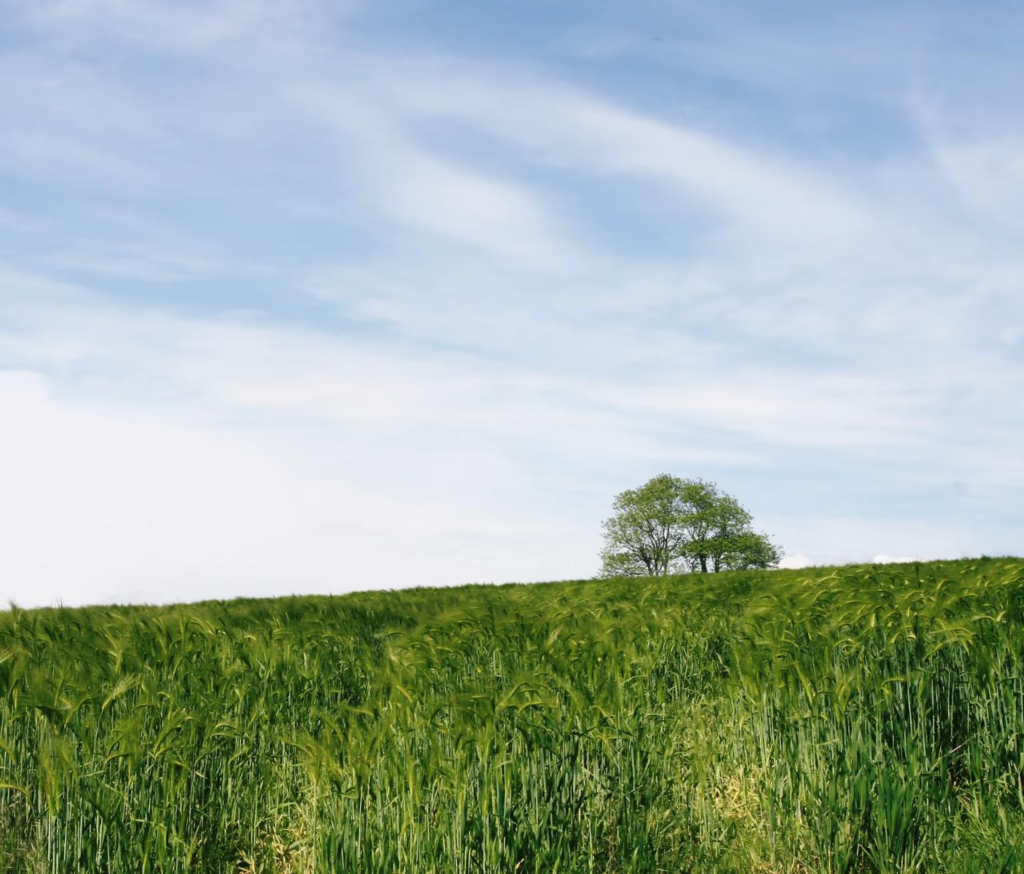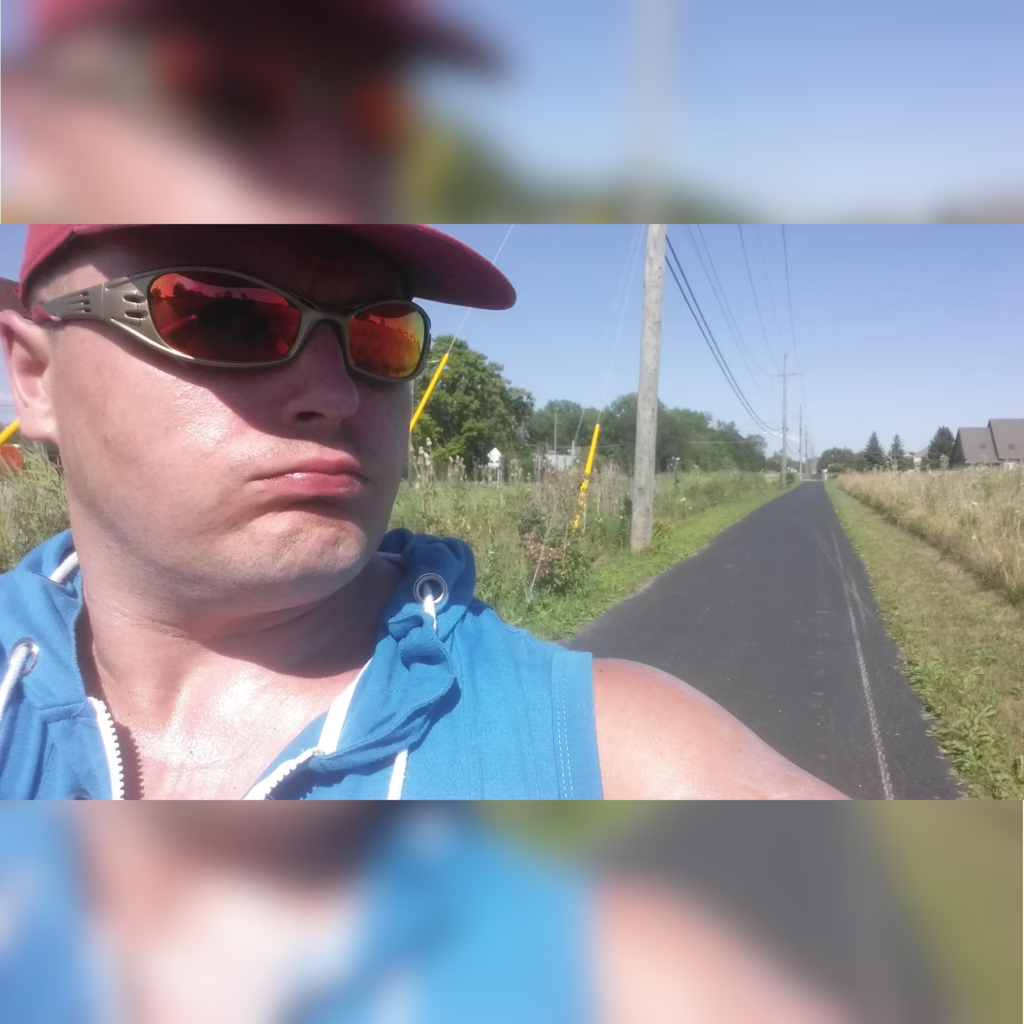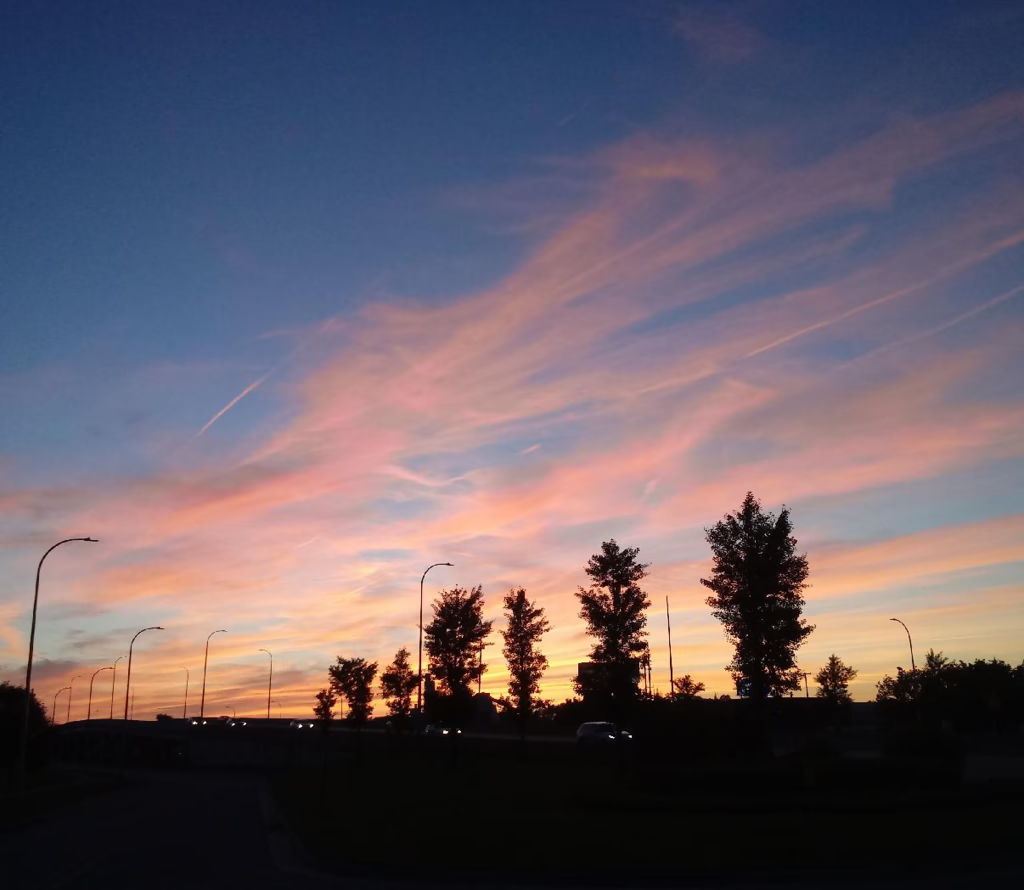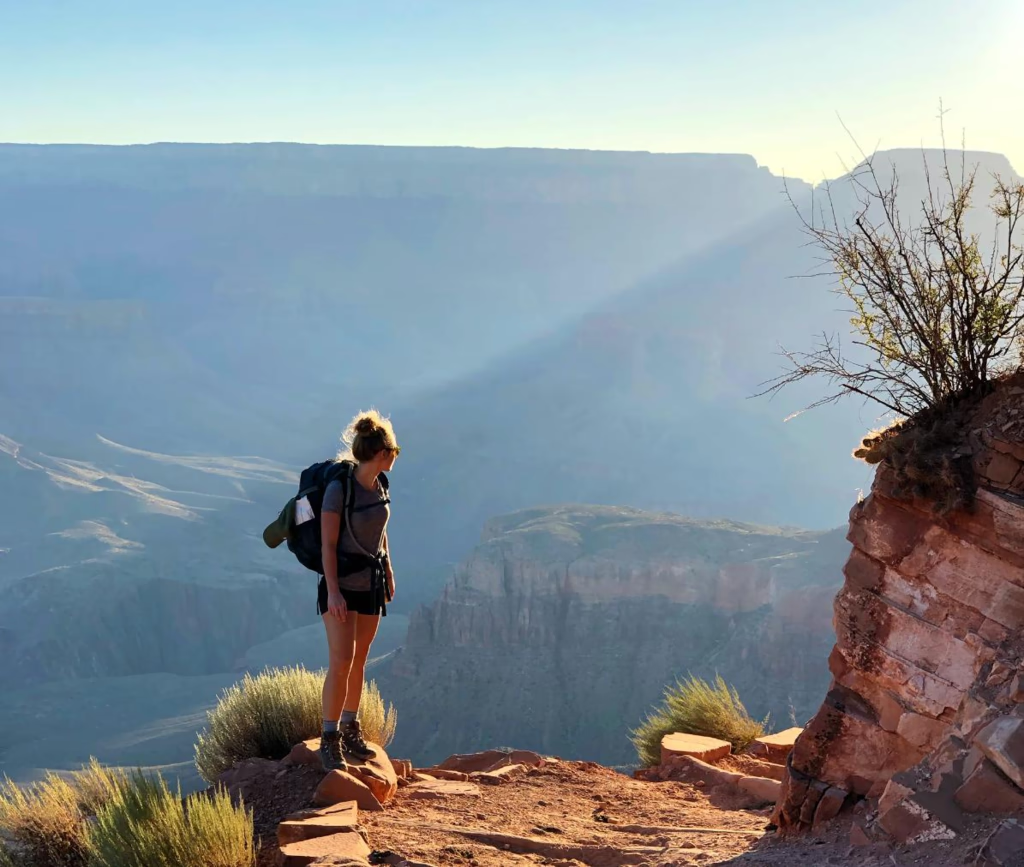
When I was a little child, I became fascinated by a distant hill that looked like a mountain and dreamed of reaching it. Years later, I organized a small expedition with knives, binoculars, a Russian monocular, and provisionsâkompot, pierogies, bacon bits called skwarkiâand set out on a long trek. Along the way I spotted mice, rabbits, deer, and wild boars; I crossed a river by leaping across a narrow spot, navigated a wheat field, and eventually reached trees I named âRain Makersâ that became my shelter and friends. The journey taught me perseverance, inspired my early learning of English and German, and even helped me develop basic programming skills on a Commodore 64. Measuring the round-trip distance with a meter gave about 2.03 miles (3.26 km), proving the adventure was indeed far but wholly worth it, as it began with that first daring stepâand perhaps a bottle of kompot.
#0539 published 06:13 audio duration694 words1 linkstoryadventurenaturefoodtravelchildhood
I challenged myself to learn Blender for millimeterâscale 3D printing, initially thinking it would be hard enough to build my own program. After two days of trial and error I discovered key shortcuts (Shift+S for statistics, Tab/Mode switch) and learned how to move objects precisely by axis with G, X/Y/Z, then typing a value in mm units; the confirmation box on the lower left lets me
The author proposes adding three new school classesâLove, Poverty & Money, and Fake Educationâto revamp education by focusing on healthy relationships, economics, and selfâlearning, with the goal of solving poverty, improving knowledge, and caring for climate and animals.
#0537 published 20:30 audio duration2,057 words6 linksschooleducationclasseslovepovertymoneybankfinancevideocollege
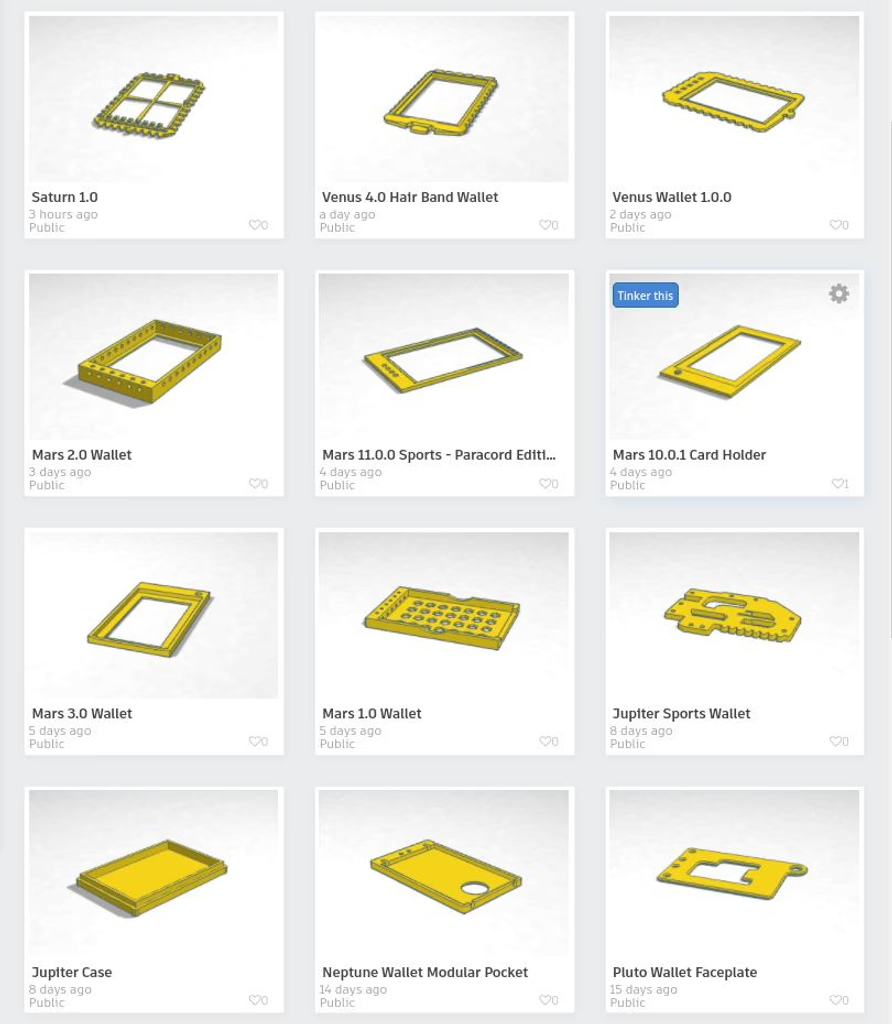
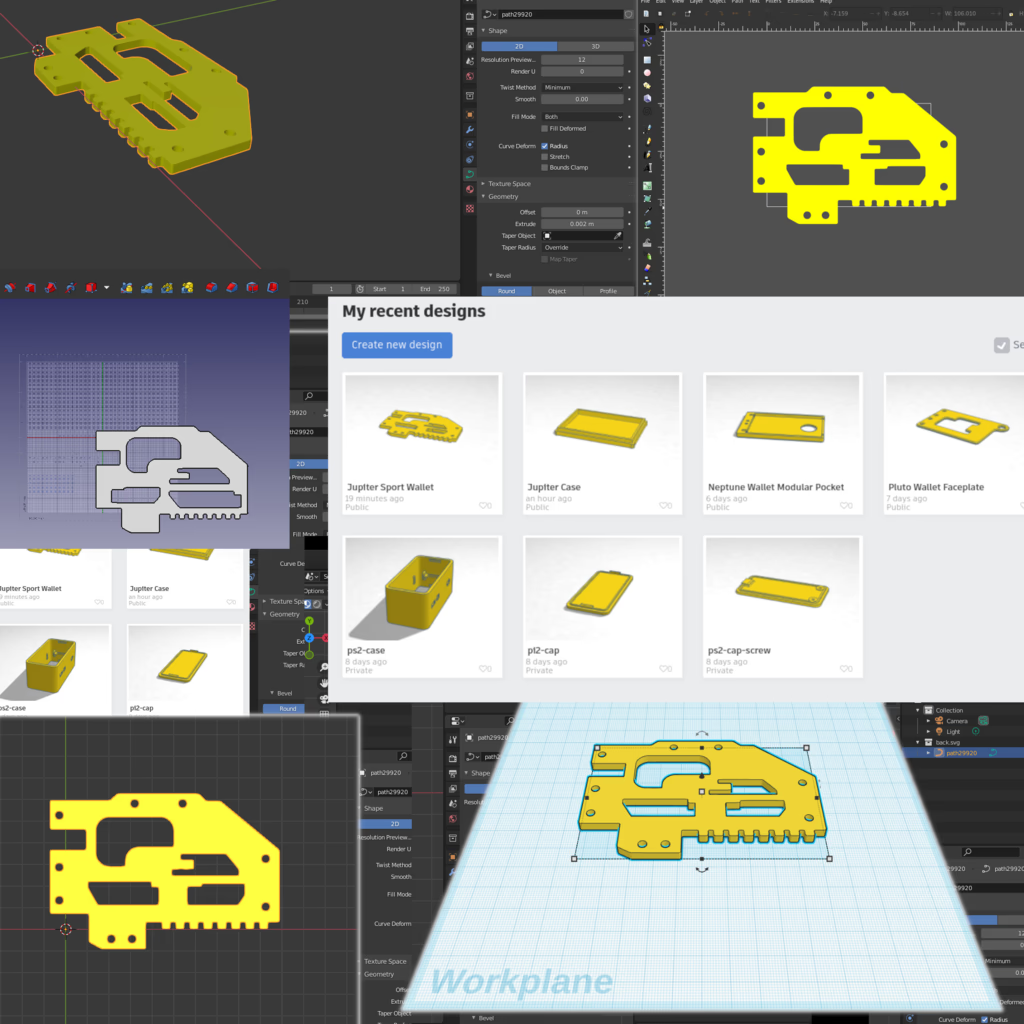
I started by exploring a Blender Doughnut tutorial and found its keyboard shortcuts and interface clear, which prompted me to use Blender as a backup to FreeCAD while also enjoying the patience it builds; I then shifted to Inkscape for 2âD design work, taking advantage of its snapping and line tools to create precise shapes that can be exported as SVGsâSVG files that translate into FreeCAD sketches requiring many constraints but can instead be imported into Blender where extrusion turns them into 3âD objects ready for slicerâgenerated Gâcode and printing; I also experimented with simple wallet concepts, adding LEDs and elastic hinges, and considered a generative wallet design system that would randomly assemble features from an SVG outline to produce multiple options for users to choose from, illustrating how 3âD modeling can turn creative ideas into tangible products and serve as a practical lesson in both design and entrepreneurship for students.
#0536 published 08:58 audio duration981 words7 linksblenderinkscapefreecadsvgtinker-cadslicergcode3d-penwallet-designgenerative-designextrusion2dto3dmodeling
A lone cyclist begins his day at 4âŻam, eager to ride toward Lake Erie and explore the surrounding area. Along the way he follows a hidden passage in a park, spots a coffee shop, navigates train tracks and abandoned bars, and eventually finds a paved trail that leads him to the lakeâs shore. After enjoying the scenic view from a pier, he sets out againâthis time heading back westward toward homeâmaking his return journey twice as hard but ultimately arriving safely at nightfall, feeling accomplished and rating the adventure tenâtoâten.
#0535 published 02:33 audio duration358 words2 linkspoetrybikinglake-erietripadventuremaps
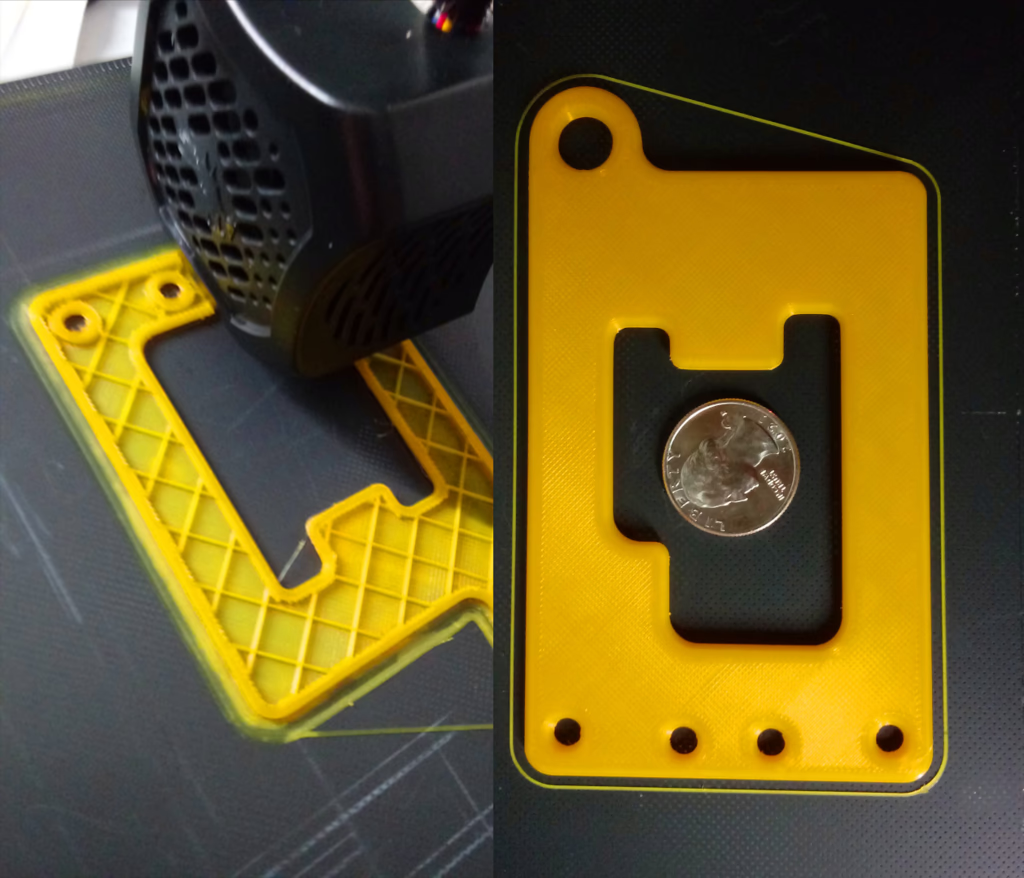
The tutorial guides teens through building 3âD printable models with free software such as FreeCAD, Inkscape and PrusaSlicer, turning SVG shapes into extruded bodies that can be turned into products like wallets or RaspberryâPi cases;
#0534 published 10:32 audio duration1,259 words7 links3dprintingcadfreecadinkscapeprusaslicerp5jsraspberrypisvgwalletcaseproductdesignon-demandsmallbusinesstutorial
This post celebrates the innate genius of every individual and frames education as a lifelong, selfâpaced quest for wisdom rather than mere memorization or gradeâcentric success. It asserts that true growth springs from connecting historical knowledge, weaving crossâdisciplinary ideas, and sharing insights with others, while acknowledging poverty and institutional failures as obstacles to be overcome. The author calls on readers to become leaders who nurture confidence, collaboration, and continuous learning so that both personal and global realms flourish in wisdom and peace.
#0533 published 05:40 audio duration544 wordspoetryeducationinspirationlearningknowledge
The post recounts an adventurous attempt to cross a railroad track that is blocked by parked trains: after waiting for a while, the narrator climbs onto a train car using a ladder, lifts their heavy bicycle and other belongings onto the platform, then leaps off the platform with enough confidence (and a little misâjudgment of height) to land safely on the ground below. The narrative blends whimsical detailsâlike the âHawww!â shout and the feeling of becoming a train engineerâwith practical steps: using the ladder, grabbing the bike, and finally landing and retrieving it, all while describing the whole episode as a thrilling but ordinary part of lifeâs adventures.
#0532 published 05:13 audio duration598 wordsstorybicycletrainadventure
The post argues that lifelong learning should begin early, be pursued at oneâs own pace, and be driven by curiosity rather than just career goals; it stresses that each person is unique and that selfâeducation fuels personal growth in both mind and body. The author illustrates this idea with concrete examplesâlearning to use the free CAD program FreeCAD for 3D printing a RaspberryâŻPi case and designing a walletâand shows how such projects can lead to small, independent businesses that provide financial stability and creative satisfaction. By framing these DIY ventures as pathways to wisdom and greatness, the writer invites readers of all ages to view selfâeducation as both a personal and entrepreneurial adventure.
#0531 published 06:05 audio duration622 words8 linksself-education3d-printingfreedcraspberry-pidesignsmall-businessvideotutorial
The author laments that conventional grading and lectureâbased instruction stifle studentsâ creativity, urging teachers to become active facilitators of selfâeducation rather than mere cogs in a system.
#0530 published 13:52 audio duration1,365 words29 linksstudentsteacherseducationlearningclassroom
The author argues that the true âkeyâ to mastering design lies not in formal grades or tools but in a genuine, personal curiosity that drives one from childhood museum visits through 3âD modeling, printing and handsâon clay work into a lifelong passion for art. This authentic desireâfueled by exploring, connecting ideas, and experimenting with materialsâbecomes the scaffold that keeps designers moving forward, far beyond any degree or career title, and ultimately turns every creative project into a joyful act of selfâexpression rather than mere homework.
#0529 published 05:16 audio duration559 words3 linksdesign3d-modelingmuseumsarttechnologypersonal-journey
I began experimenting with 3âD computer-aided design (CAD) on an old DOS machine that had a simple CAD program installed. Over the years I explored several toolsâPOVâRay for generative art, ZBrush for sculpting, TinkerCAD for basic modeling, and finally FreeCAD for more advanced Boolean operationsâand through these experiences built up my skills in 3âD design. The culmination of this learning journey is a wallet that I designed from scratch in FreeCAD and later refined in TinkerCAD; the prototype combines subtractions, Boolean operations, and an elastic locking mechanism inspired by Trayvax wallets, demonstrating both functional and artistic aspects of my first real CAD project.
#0528 published 04:58 audio duration578 words12 linkscad3d-modelingfreecadtinkercadzbrushpovraydos-cadgenerative-artvideo-linkswallet-project
The author argues that selfâtaught learningâespecially in fields such as astrophysics or medicineâproduces deeper understanding than rote test preparation, because universities reward grades over real knowledge and often ridicule independent learners; he cites the high rate of medical errors to illustrate how formal schooling can fail, and concludes that true education should integrate new concepts with existing ones and precede formal instruction.
#0527 published 06:58 audio duration732 words2 linksself-taughtlearningastronomy3d-modelingmusicprogramming
The post argues that a variety of social problemsâpoverty, nuclear weapons, mass incarceration, police brutality, warâare âerrorsâ we must correct in the next generation and that our political system has done little to address them. It claims the root of many failures lies in âfake education,â where teachers teach disconnected facts instead of building on existing knowledge; real learning should be handsâon, analogical, and creative (e.g., using programming or generative art for math). The writer urges that students learn practical skills such as music composition, electronics, 3D modeling, and radio constructionâskills that prove intelligence in the spirit of Shostakâs radio testâand that schools should reward creation rather than grades. In short, the piece calls for a renewed, knowledgeâdriven education that equips youth to fix societal errors and contribute meaningfully to future generations.
#0526 published 07:15 audio duration766 words1 linkeducationbooksaudio bookbill brysonshort history of nearly everythingprogramminggenerative art3d printingmusic compositionradio makingself-learningschool curriculum
The post argues that traditional schooling relies on grades and memorization rather than real learning, causing students to pretend theyâre learning for the sake of numbers. It suggests a new model where lessons begin with handsâon projectsâmusic compositions, art pieces, generative math programsâand end when pupils feel proud of their creations, not merely an exam score. The author envisions schools that let music lovers build synthesizers or 3Dâprinted sculptures, and art students produce large installations, while math is taught through programming and creative visualizations. In college the focus would shift from tuition fees to philosophy, science, and real problems such as nuclear weapons and poverty. Overall, the post claims selfâeducation with tangible milestones and creative output leads to true growth, better health, and lasting contributions, whereas the current system merely churns out âfakeâ education.
#0525 published 07:23 audio duration727 words4 linkseducationself-learningcurriculum-designmusic-educationart-classesmath-teachingprogramminggenerative-art3d-printingproject-based-learning
This post invites readers to embrace humble beginnings by planning two types of weekend adventures: a casual outing to a beach or campsite where you can roast sausage or marshmallows while enjoying natureâs simple pleasures, and an artistic retreat that involves setting up a projector, visiting a museum, learning drawing techniques from online tutorials, and practicing portrait photography with friends, family, and petsâcalling them âfur kids.â It wraps up by recommending a selection of narrated books across diverse subjectsâfrom philosophy to scienceâto enrich the listening experience while you relax after your creative or outdoor activities.
#0524 published 06:56 audio duration653 words20 linkstravelcampingartdrawingphotographyaudiobooksweekend-activitiesblogpost
The post is an exhortation to young people that they must believe in themselves as âGeniusâ and actively pursue wisdom and greatness; it proposes creating a symbolic âpassportâ whose front bears the wordâŻEarth and which includes a credit card marked with a red heartâsymbolizing family, unity, and an abstract bank that guarantees food and freedom from debtâto be distributed to children alongside birth certificates. It links this device to a universal Bill of Rights, claiming that its full body can only be understood collectively but that a new generation can publish an initial version within a year. The text stresses that poverty must be eliminated before education so that minds can dream freely, and it calls on the current generation to unite the world through these symbols, correcting past mistakes such as those of the 1740 South Carolina Act and 1819 Virginia Code, while urging people to read philosophy, science, and leadership to become wise, great beings.
#0523 published 09:19 audio duration902 wordsessaypersonal-developmentcultureeducationphilosophypassportcredit-cardworld-unity
The author recounts the joy of hearing cicadas in NewâŻYork and then details their latest project: a compact RaspberryâPi MP3 player that can adjust playback speed for workout tempos while monitoring Bluetooth devices on Linux. They describe how they use simple code to handle device sleep, tune music tempo for three distinct workout speeds (140, 150, 160 BPM), and experiment with background noise and reverb in their song compositions. The post then turns to the physical case designâan aluminum enclosure built with CNC milling and 3âD printingâto house a small battery, custom buttons, and USB ports. Finally, they reflect on how this handsâon build has opened new learning pathways in electronics, software, and fabrication, illustrating their ongoing selfâeducation journey.
#0522 published 09:43 audio duration885 words5 linksraspberry-pimp3-playerbluetooth-monitoringjavascript3d-printingcnc-millingreverbbeats-per-minutesound-compositionself-educationaluminumdremel
The author shares practical tips for painters who travel to find inspiration: bring a portable easel but plan ahead so you can set it up in the right spot; use photography as a reference rather than always riding out again; study color theory and replicate hues from source images; employ tracing, projection, and meticulous copying of shapes to build skill; and finally, remember that good art often comes after experimenting with different techniquesârules exist but are meant to be stretched.
#0521 published 06:38 audio duration789 words3 linksartpaintingeaselcolor theoryphotographytracinginspirationnaturetravelmonalisa
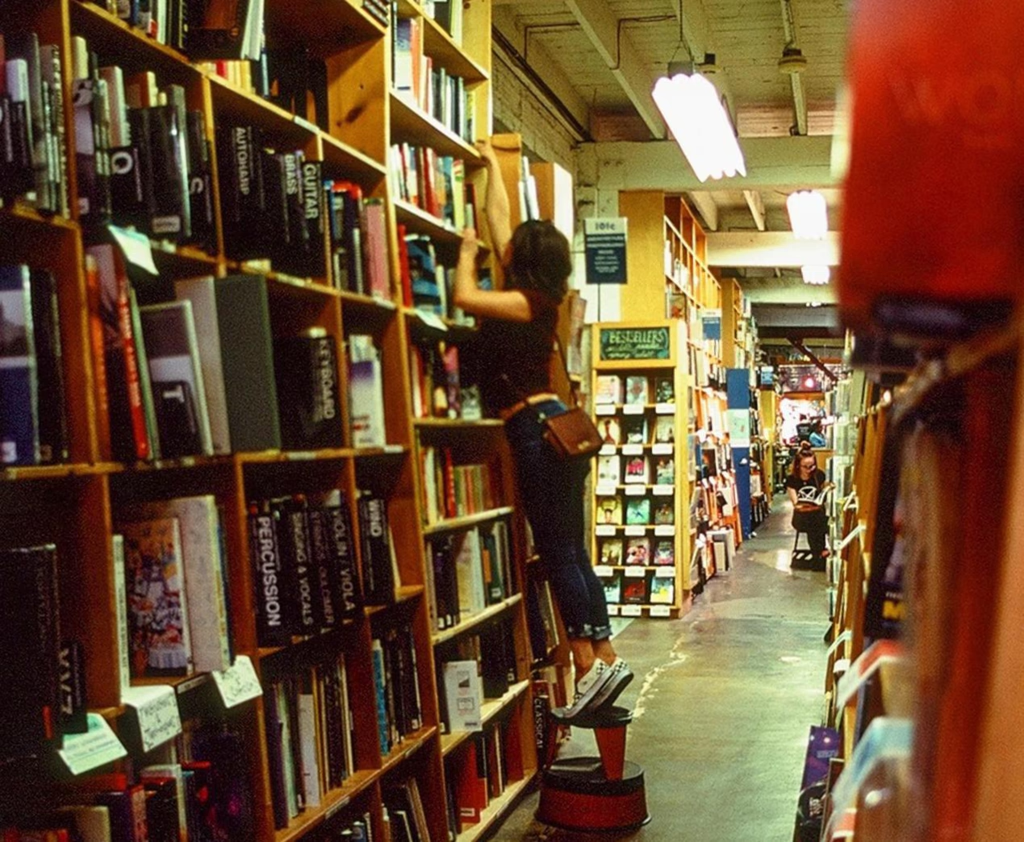
The author reflects on his creative process by recounting how he writes three poemsâabout inspiration turning into wisdom, about meaningful education, and a metaâreflection on the first twoâand notes that even when he feels un-rhymed, the work steers itself. He describes the difficulty of finding visual inspiration for art, recalling a college incident where a naked model posed amid odd classroom details, which sparked an insight that inspiration often emerges from âlittle adventures.â He then narrates a personal stroll through a Plymouth bookstore, discovering Dan Millamâs *Peaceful Warrior*, which rekindled his affection for antiques and storytelling. From this experience he outlines how he would translate the scene into sketches and paintings, using everyday encounters to fuel creative output. In closing, he affirms that art requires only the spark that moves one to produce new works rather than a universal muse.
#0520 published 05:21 audio duration601 words1 linkpoetryinspirationartwritingbookstoretravelplymouth-michigan
The post encourages painters to slow down and observe everyday colors, recording them in a journal so they can be recreated later; it stresses building color through transparent layers (especially in watercolor), avoiding arbitrary hues that add nothing, and selecting harmonious combinationsâlike purple & orange or gold & scarletâto give an artwork life. It suggests learning from established artists and even borrowing effective palettes as a shortcut, while encouraging the creation of small sketches to test these combos before committing them to larger works, ultimately guiding the artist toward mastery through observation, careful layering, and thoughtful color choice.
#0519 published 06:38 audio duration716 words3 linkscolorwatercolormixingpaletteartjournalartistreferencepaintingtechniquelayersketchingposter
The post explains how to render graphite portraits: first locate the darkest parts of your image, work with midâtone pencils such as B or 2B, avoid hard strokes that damage paper, and keep indentations light so you can erase later; emphasize that shadows give a subject its soul, suggest photographing them in good natural light (sunrise/sunset), projecting the photo onto large paper with a pico projector, then sketching quickly while adding shadow details, adjusting gradients with erasers, and finishing by highlighting eyes and other key features; it also encourages using multiple angles, signing your work, practicing outdoors, and sharing tools to inspire others.
#0518 published 07:37 audio duration891 words1 linkgraphiteportraitshadingphoto-to-paperprojectorb-penciltortillondrawing-techniquemonalisa
A concise guide that argues tracing is an art form, explains how to faithfully reproduce the MonaâŻLisa by handâdrawing it onto drawing paper with homemade carbon transfer, and urges artists to practice this method before tackling their own portraits.
#0517 published 04:47 audio duration565 words4 linkstracingdrawingpencilmona lisatortilloncarbon paperprojectoroil paintingart
The author reflects on the fleeting nature of human achievementsâtrees cut down unnoticed and the fragile window in which we thriveâand urges that we use this time wisely by cultivating knowledge, courage, and dignity rather than merely chasing titles or wealth. He laments how poverty and misused money create climate, war, and hunger as symptoms of a system lacking true education, and proposes a âHeart Cardâ banking idea to simplify spending so people can focus on learning and solving systemic failures. In short, he calls for new generations to learn from past mistakes, understand the chain reactions behind global problems, and build a future where humanityâs wisdom and creativity guide its path rather than chance or poverty.
#0516 published 10:43 audio duration954 words7 linksfreeformnatureculture