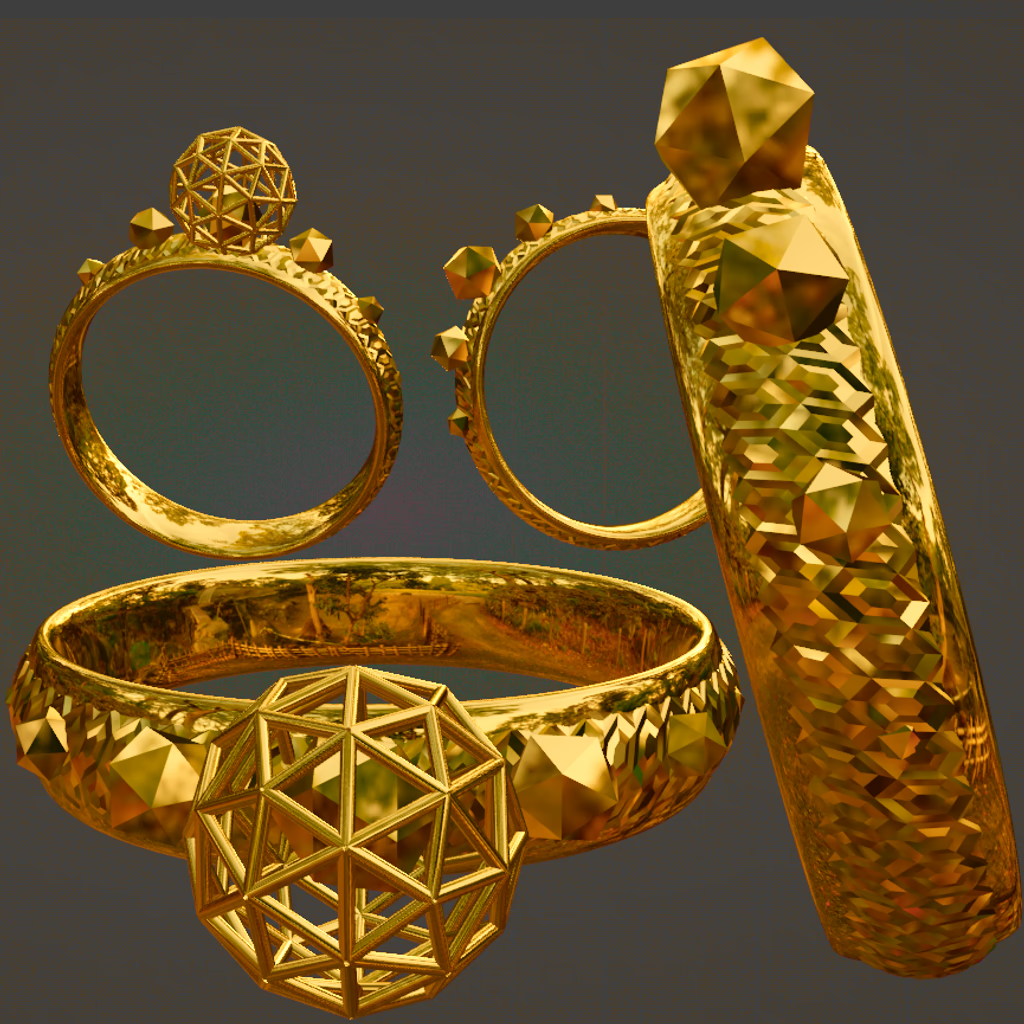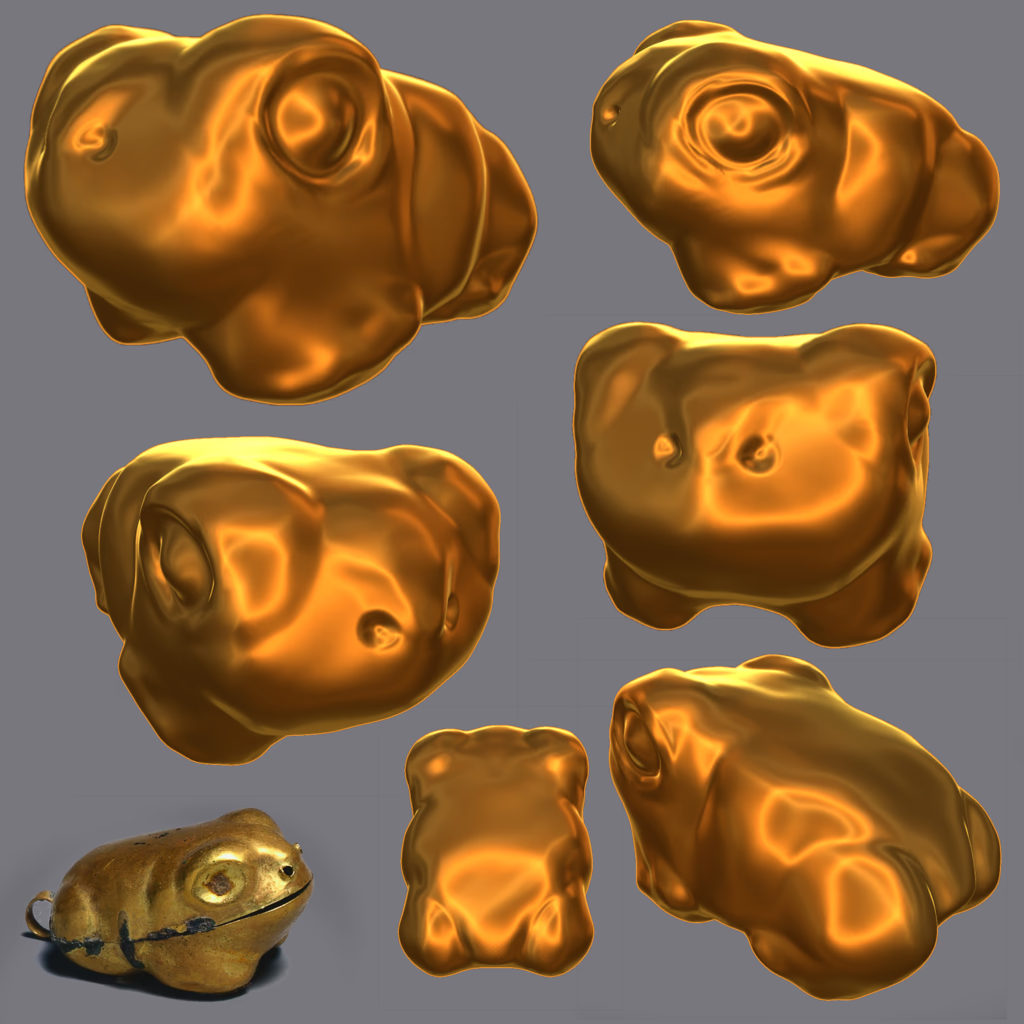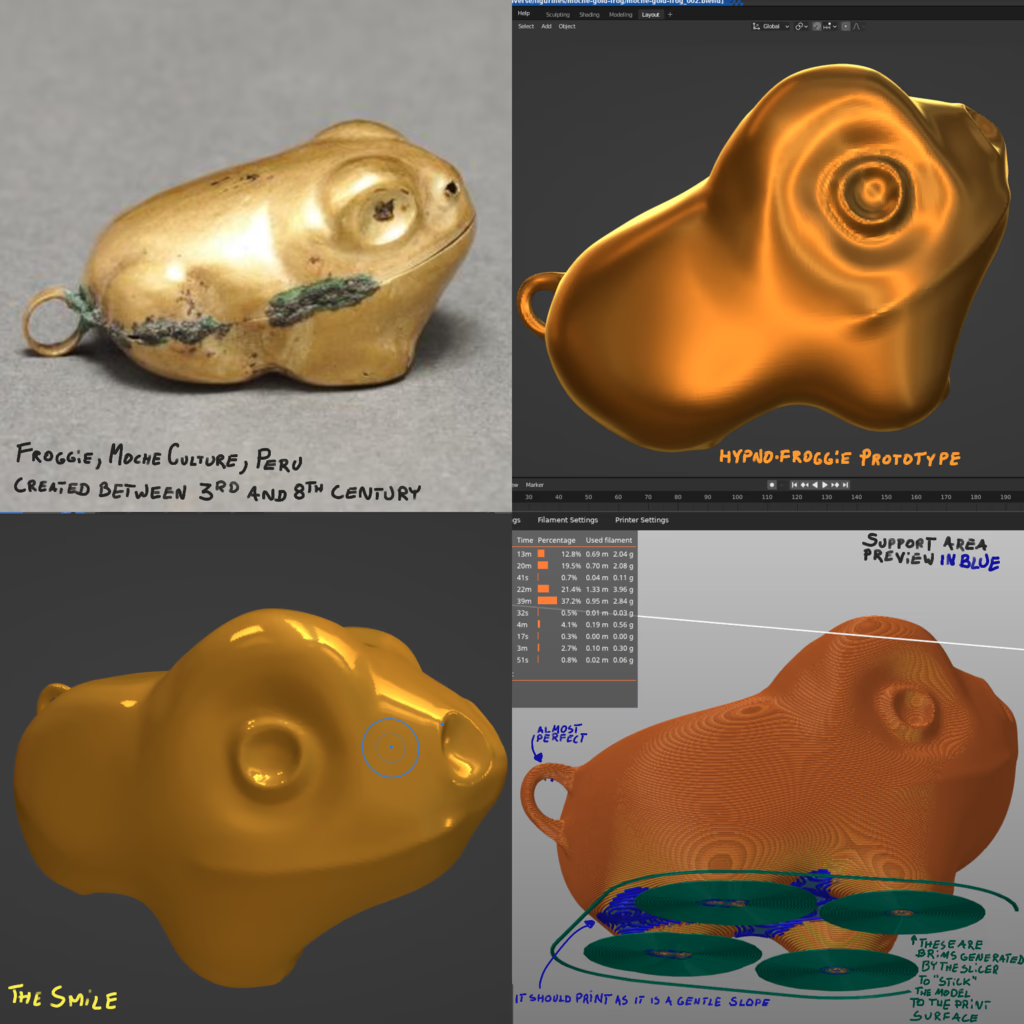
The post explains how to design simple 3âD printed pendants using Blender: start with sculpting mode, reâmesh or use dynamic topology, then attach a tail loop (or another builtâin loop) to a chainâeither by adding a Boolean modifier or by modeling the loop directly. It provides links to tutorials, stresses that printing takes care of the interior automatically, and suggests using the finished model on an online print service for both a gold jewelry piece and a portfolio entry.
#0827 published 03:43 audio duration415 words2 linksblendersculpting3dprintingmodelingtutorialbooleanmodifierdynamic-topologyshapeways
The post describes a free, multilingual audioâschool project that aims to disseminate knowledge and history through short, engaging episodesâeach delivered in various voices from young narratorsâto reach listeners worldwide, even via simple devices like AM/FM radios or small pendantâstyle memory cards. It promises easy updates and translations, uses a list of common misconceptions as its format, and focuses on science facts (e.g., goldâs stellar origins, mitochondriaâs bacterial genome) to illustrate human achievements and past mistakes. By offering repeated lessons in an accessible, poetic style, the project hopes to educate listeners about culture, science, and selfâimprovement while encouraging unity, reducing poverty, and preventing repeat errors through continuous refinement and global distribution.
#0826 published 06:34 audio duration621 words1 linkaudiobookpodcastaudioeducationmultilingualfreecontenthistoryscienceculturelearningeducation
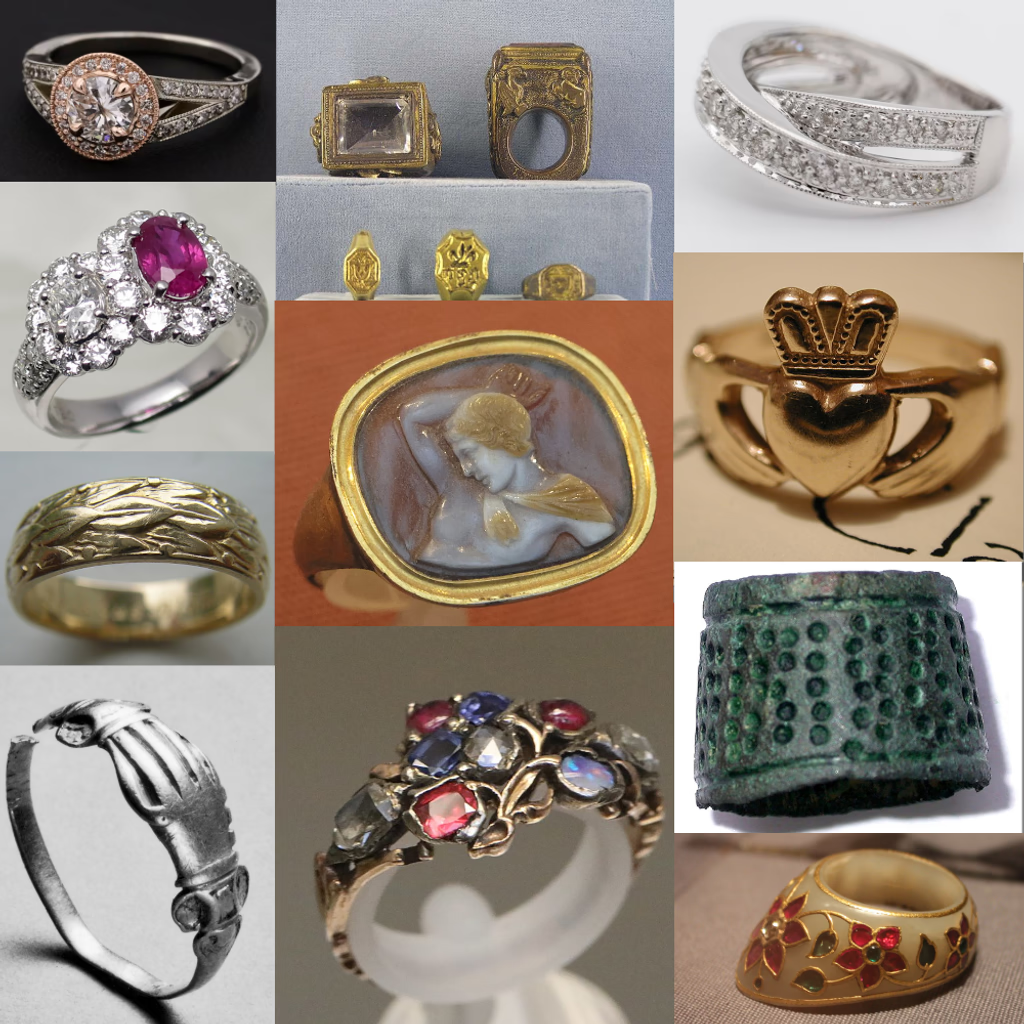
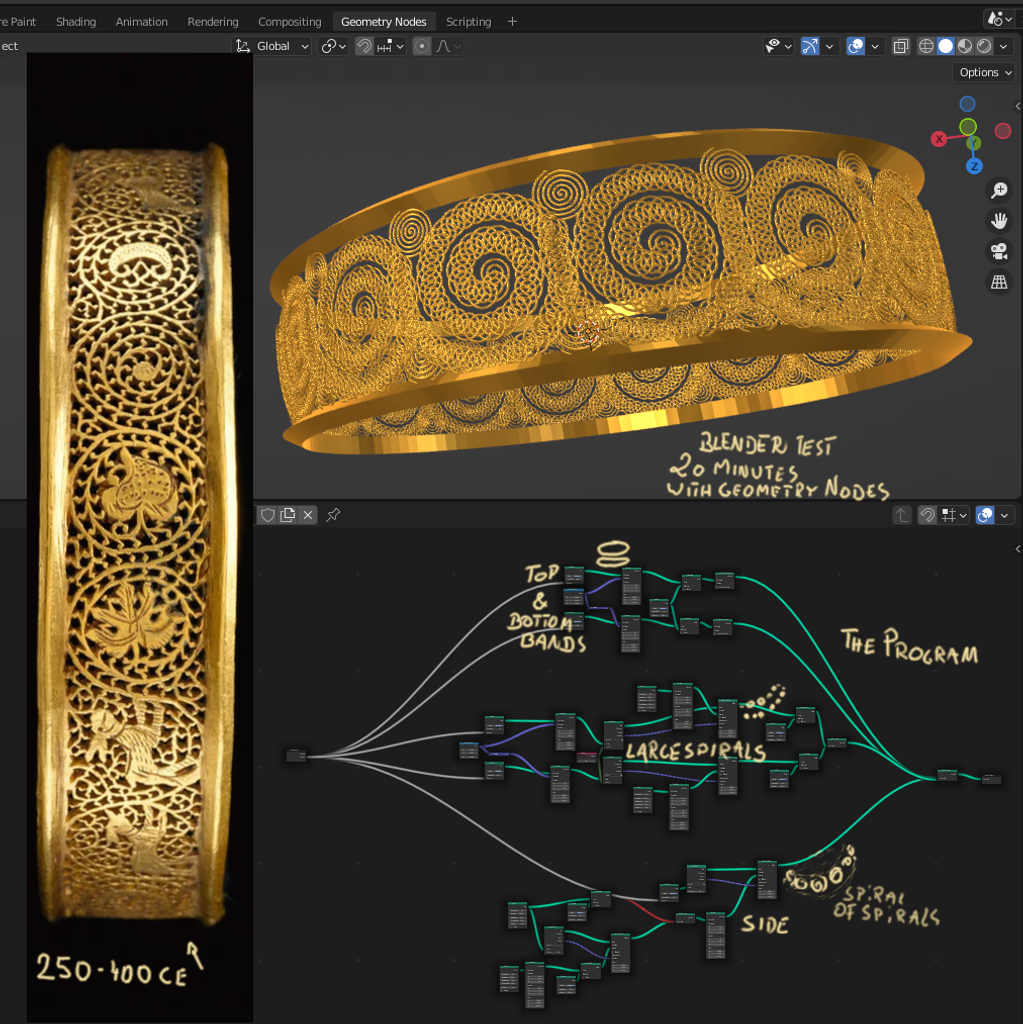
This post invites readers to explore ancient and medieval art styles by recreating artifactsâsuch as Dacian bracelets, Greek earrings, Roman cutlery, diadems, armlets, and decorative axe headsâin 3âD modeling software like Blender for subsequent printing. By selecting objects that resonate with the soul, one can poetically timeâtravel, learn about cultures (e.g., the Dacians of presentâday Romania), and hear their legends through the artifacts. The author suggests visiting museums to see originals, then building digital copies while noting details such as spiral motifs symbolizing the sun, and even experimenting with plastic letter openers. Immersing oneself in a culture this way leads to unforgettable adventures and a deeper appreciation of history.
#0825 published 04:23 audio duration425 words5 linksdacian-braceletancient-artmedieval-artblender-3djewelry-designmuseum-explorationdigital-reconstruction
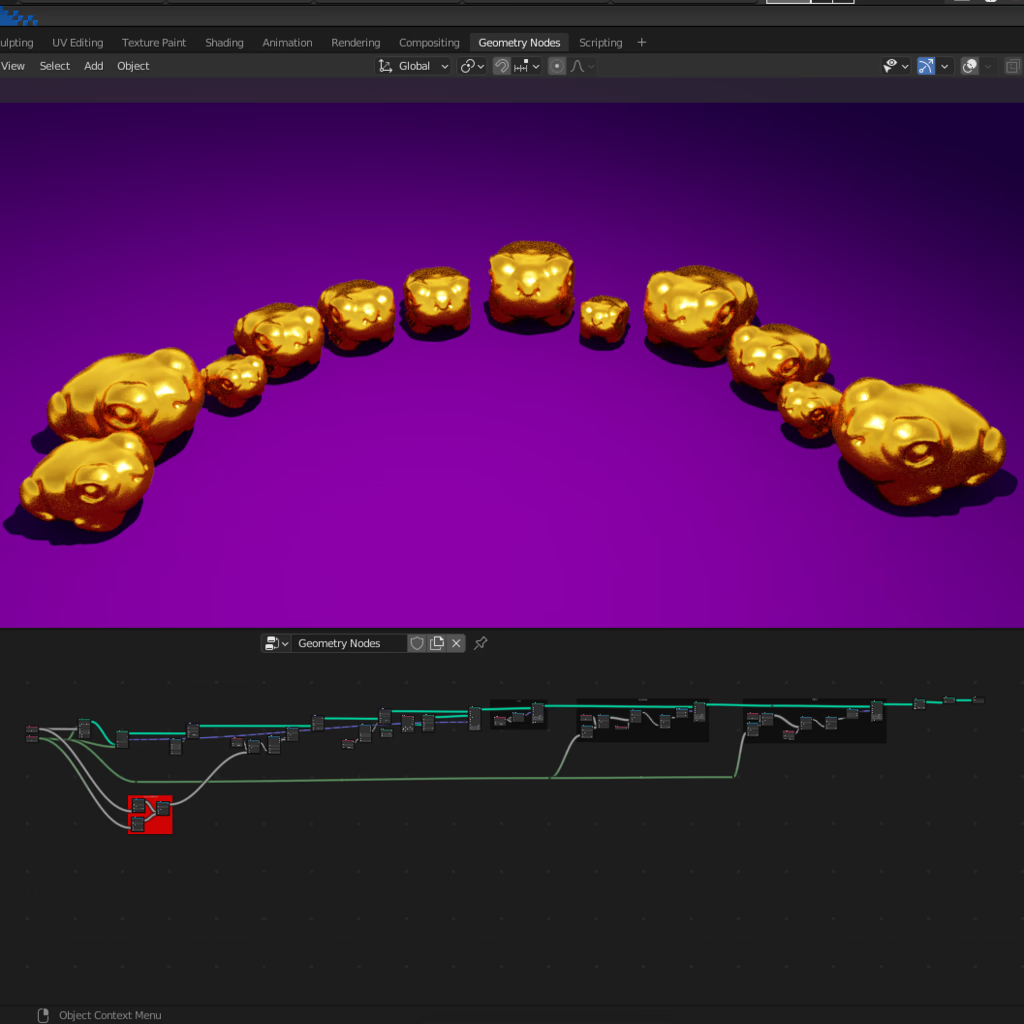
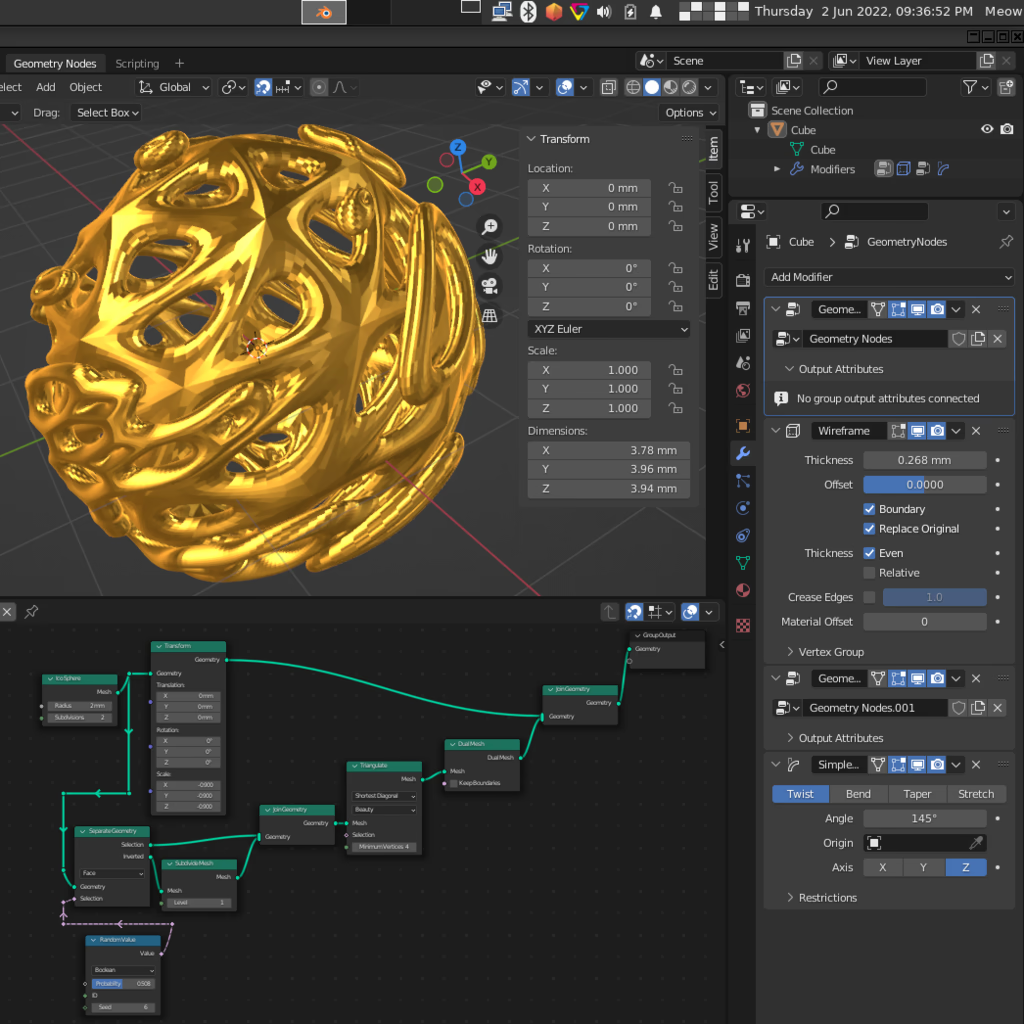
Blenderâs Geometry Nodes are presented as an exciting, userâfriendly tool to jump into 3D modeling: they let you program geometry like any other modifier, and mastering them opens creative doorsâfrom simple objects such as pencil cases or belts to complex animations and jewelry that would be impossible to handâcraft. The post frames this learning journey as a puzzle of odd, yet powerful concepts in 3D geometry, encouraging beginners to start with tutorials and gradually build intuition, while noting how the same principles underpin everything from stars that forge gold to cellular mitochondria. In short, Geometry Nodes are an invitation to experiment, create, and expand your artistic adventures in the strange, ruleâbound world of 3D geometry.
#0824 published 07:04 audio duration552 words5 linksblendergeometrynodestutorial3dmodelinganimationjewelryopen-sourcenode-basedlearning
The post argues that becoming a writer requires fearlessness and a platformâwhether itâs a quirky website or a social networkâto share freely written stories from many voices. It cites philosophers who suggest simple toolsâa coinâs edge, a newspaper, or an ordinary observationâcan spark narrative creation, urging writers to imagine characters as living beings who converse back. The author stresses that writing is both joyful and instructive: it should amuse readers, drive away misery, and empower them to become leaders. Finally, the post encourages experimenting with different books and rhythms until one finds a style that feels natural, promising that perseverance will transform these efforts into valuable chronicles.
#0823 published 05:02 audio duration581 wordswritercreative-writingphilosopherwebsite
I compared my manuallyâmodeled designs with procedural ones and found the manual approach better for subâmillimetre precisionâespecially when different parts require distinct clearances such as hinge pins versus hinges that need friction fits. Iâve built a prototype pocket/box that can be assembled from a printed skeleton, then fitted sheet metal (creditâcardâsized aluminum or acrylic) to form the final case; this avoids printing the entire thing and lets me use UV paint for durability. The design is highly modular: Boolean flags toggle elastic band loops or compartments, while hinges are simply innerâhinged mechanisms that push items into the box. I printed a 1âŻmm wall thickness skeleton (thin PLA) to save material but plan thicker frames or CNCâcut acrylic for final builds. Finally, I note that digital models sell around $15, whereas assembled kits can
#0822 published 10:37 audio duration1,245 words2 links3dprintingcadprototypingsheetmetaldesign
The author argues that true educationâbeyond rote schoolwork and paid gradesâis essential for ending poverty, preventing war, and uniting nations into a peaceful world called Earth. By learning daily and trusting selfâdirected study rather than corrupt or âbrokenâ schools, individuals can bring wisdom to their communities, transform dreams into plans, and create a future where knowledge freely flows and the world truly opens.
#0821 published 04:18 audio duration446 wordspoetryeducationschoollearning
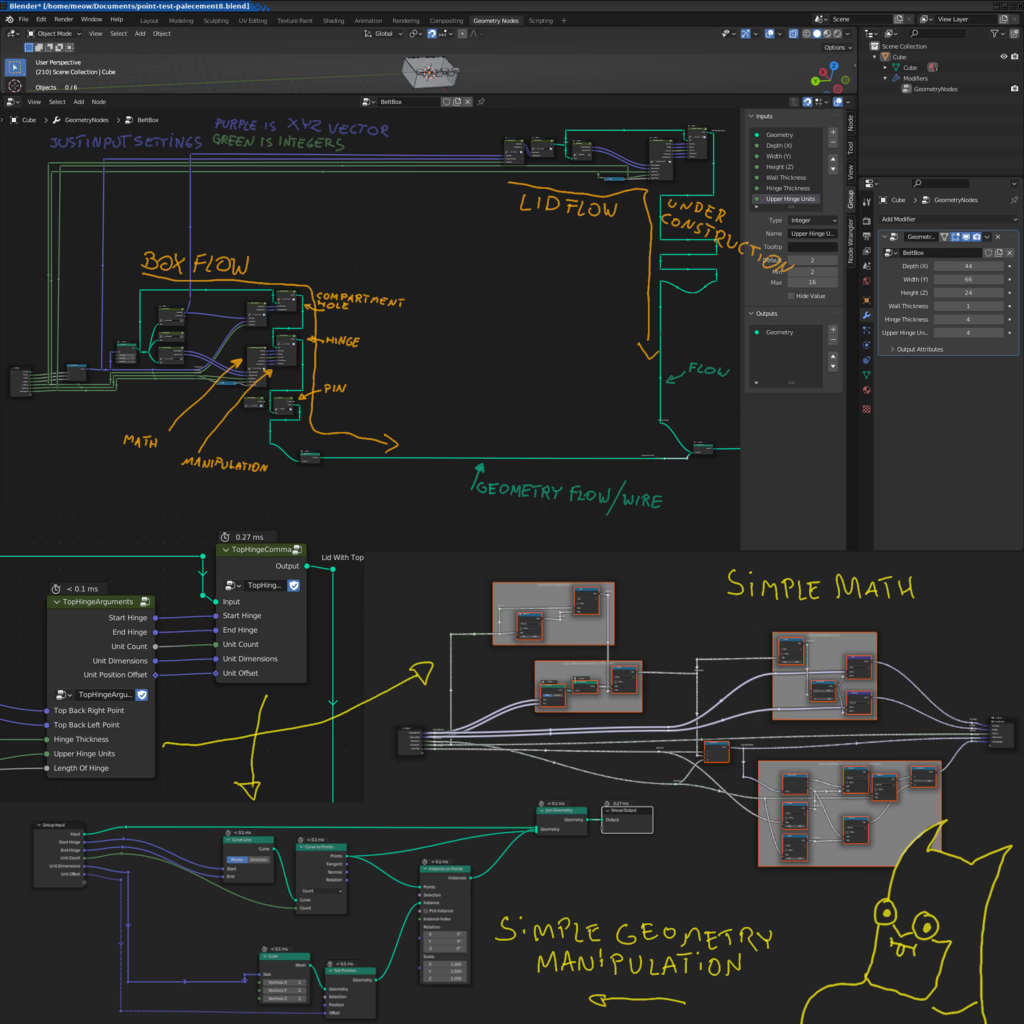
The post explains how to tame design complexity for 3âD printing by splitting the workflow into two distinct stages: first, a âmath configurationâ phase that defines all essential primitives (cubes, cylinders, etc.) and second, a âgeometry manipulationâ phase where those primitives are decorated with holes, hinges, and other features via simple Boolean operations; this approach keeps the geometry as a single linear stream of transformations so that the final model remains easy to debug, extend or reuseâillustrated through a Superhero Belt Compartment example that shows how to build compartments, lids, pins, hinges, and decorative motifs from basic shapes while preserving a clear, additive decoration flow.
#0820 published 10:33 audio duration900 words1 link3dprintingdesignprimitivesgeometryassemblycomponentsprogrammingvisual-programming
The post chronicles the authorâs day of trying to write something: after deciding at 10âŻp.m. to abandon a programming essay, they settle on composing a short rhymed poem about hunting for inspiration, peppering the piece with light detailsâsalad for dinner, sparkling water, and the routine of waiting in their laboratoryâand finally closing with a brief stanza that reflects the search itself.
#0819 published 02:38 audio duration279 wordspoetrywritingjournal
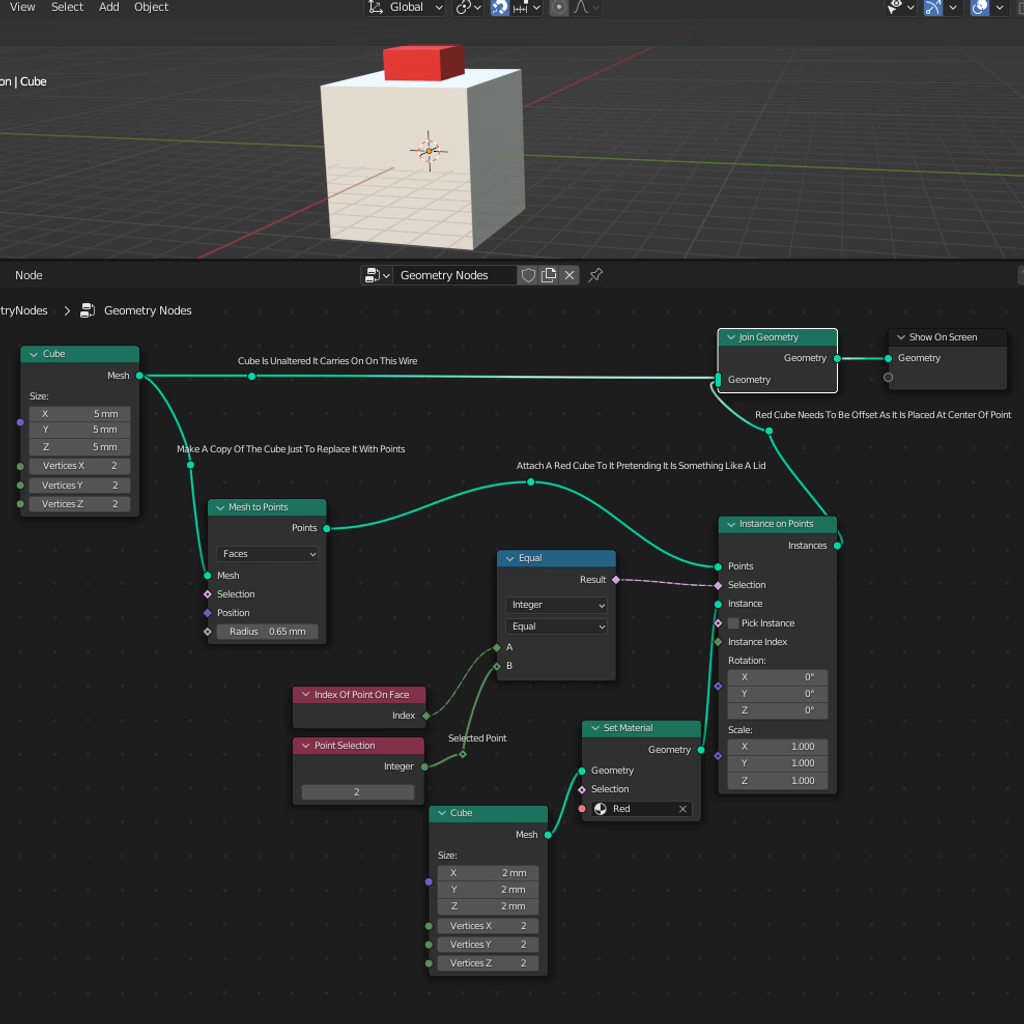
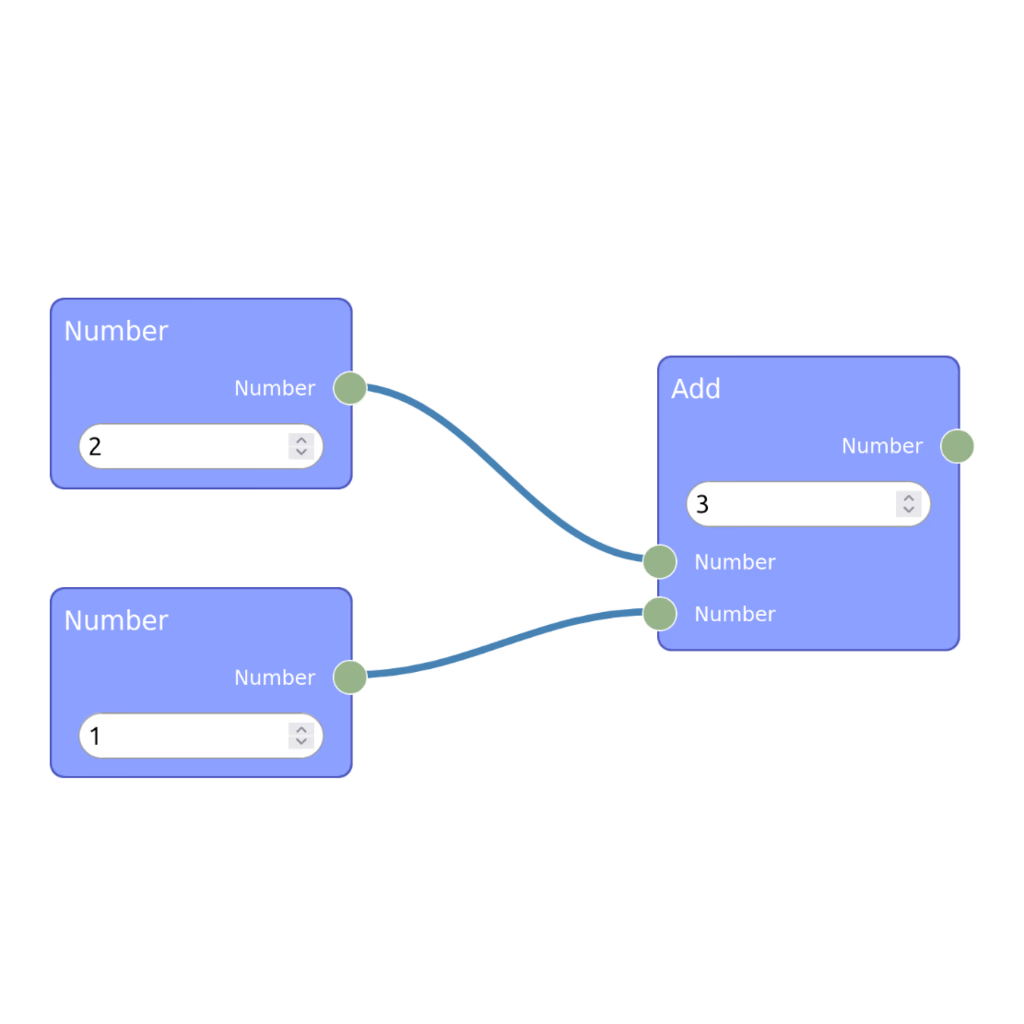
In Blenderâs Geometry Nodes, you can identify precise locations on a cube by generating a point cloud with the MeshâtoâPoints node; each point is simply an X,Y,Z vector that updates automatically when the cubeâs dimensions change. By grouping these points and assigning custom propertiesâsuch as âStart of Bottom Hingeâ and âEnd of Top Hingeââyou can feed their vectors into other nodes to create hinges or other attached geometry. This approach lets you programmatically place objects on a cube without manually calculating coordinates, making 3D modeling for printing or animation more efficient and flexible.
#0818 published 09:41 audio duration734 words2 linksblendergeometry nodespoint cloudmesh to pointscubevertices edges facesprogramming 3d geometrygroup nodecustom component3d printing
The post celebrates how personal creationâwhether it be programming, art, music or travel writingâspurs growth by opening new paths of learning and exploration. It argues that letting go of grades and formal approvals frees us to pursue what we love, which in turn can lead to deeper skills and unexpected branches such as Linux for a coder or sculpture for an artist. The author then muses on evolution as a chaotic, noisy process, citing the rabbit plague in Australia and Haldaneâs anecdote to illustrate how life adapts through trial and error. Finally he reflects on humanityâs longâterm evolution, the expansion into space, and the endless possibilities that await us when we embrace creative exploration without limits.
#0817 published 11:29 audio duration1,165 words1 linkpoetrycreativeâwritingprogrammingartmusicscienceevolutiontechnologyaiuniversefuture
The post is an exhortation for young readers to take ownership of their learning and become philosophers in order to break out of the âcultâ of inherited culture, formal schooling, and political rhetoric. It argues that our worldâs culture is constantly evolving and that no preacher or single philosophy can answer all questions; only by asking ourselves and studying books can we find unique paths and build new schools that make money work for us, not against us. The text repeats the idea that âthe best hope has ever beenâ in youth and clarity of mind, invites watching certain videos, and ends with a promise that war will be behind us as politicians retire, while we become wiser, safer, and create real schools that let us rise unrestrained.
#0816 published 06:55 audio duration641 words4 linkspoetryphilosophycultureeducationself-help
The post argues that in the coming decades governments will need to shift from human politiciansâoften influenced by crime families or shortâterm interestsâto fully automated, voterâdriven software that adapts to changing realities such as climate change and global nuclear tensions. This system would continually ask citizens whether existing laws still serve them, reâevaluate past decisions, and automatically remove elected leaders who fail to deliver on promises, while ensuring every border residentâs vote is weighted by their knowledge and education (with automated schools providing the necessary learning). In this way, a computerized government could evenly distribute resources, provide universal basic income, and ultimately bring peace among nuclearâarmed nations.
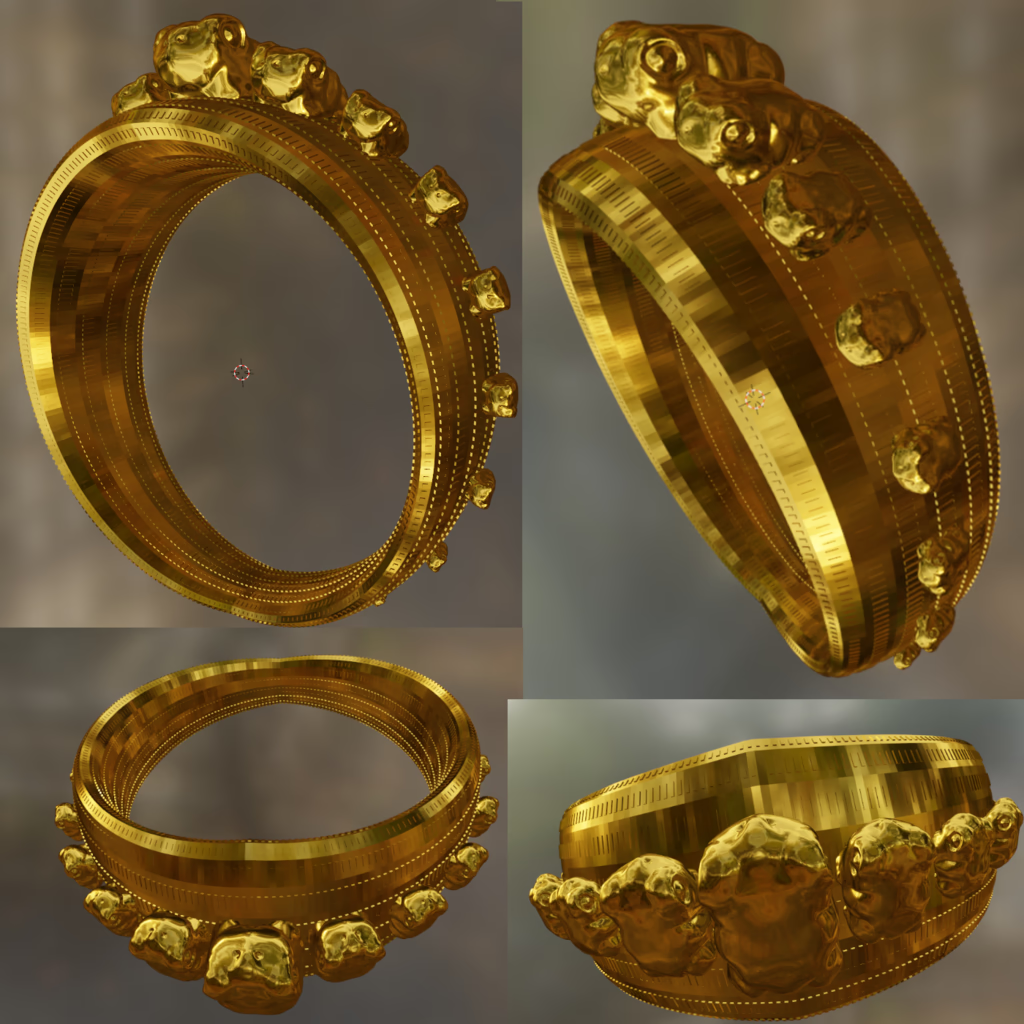
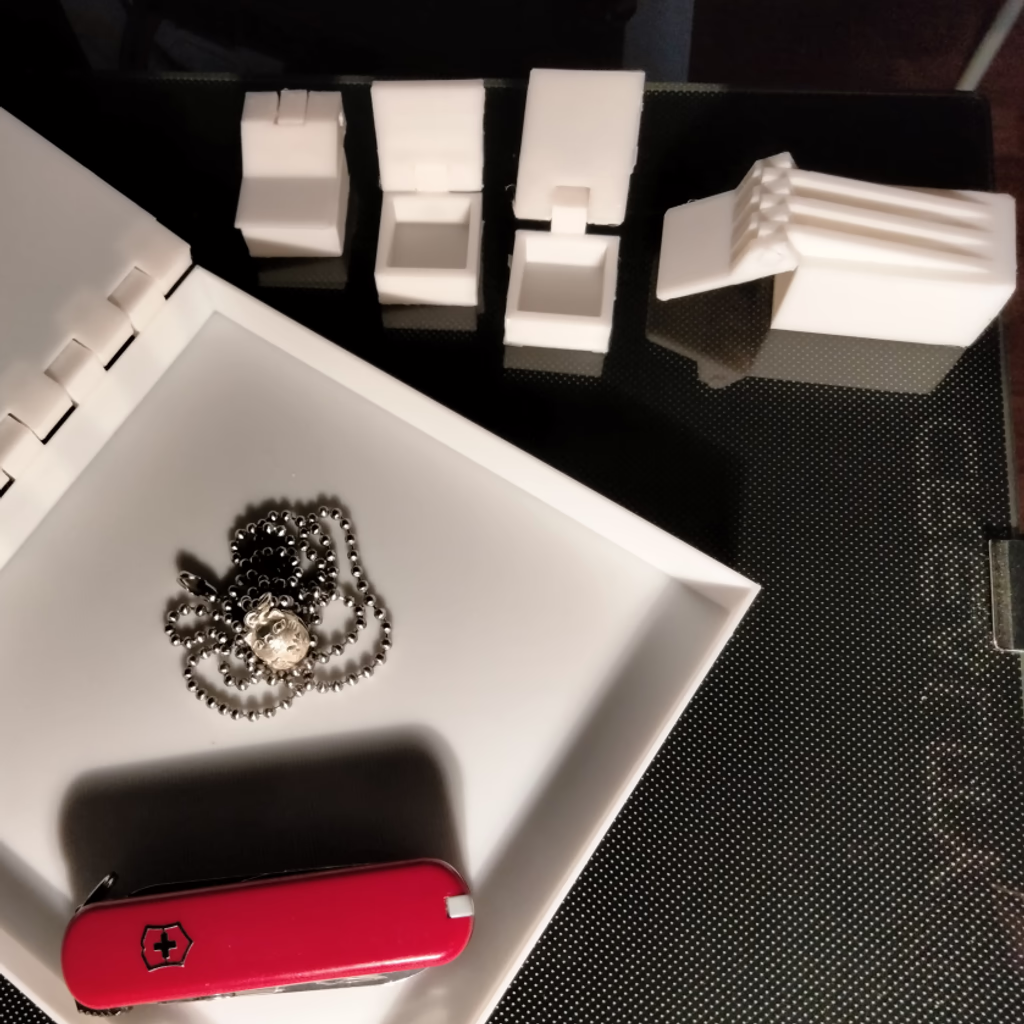
The author explains a computerâgenerated âsuperhero beltâ design system that automatically configures hingeâbased compartments based on an input cubeâs dimensions; it can scale from sidekick belts to car seats or jewelry, creating everything from bracelets and necklaces to rings holding tiny items like memory cards. In beta testing the program will build miniature versions, such as a wristwatch band with extra SDâcard storage, while future releases envision kits of plastic blocks that let users design compartments for wallets, keys, phones, cash, cards, remotes, and even easyâaccess smoke bombs for escape scenarios.
#0814 published 04:12 audio duration468 wordsbeltcompartmenthingeautomationcadprogramming3d modeling
From humble doodles and playful sketches, the poem traces an artistâs journey of growth and discoveryâeach new creation a learning step that sharpens skill and sparks fresh ideas. It celebrates persistence in crafting works across mediums, from 3âD prints to painted cities, reminding the writer that every breakthrough builds on earlier experiments. The piece encourages following oneâs own path, trusting each work is âreally good,â while noting that teaching others magnifies the creative impact. Finally it urges never to forget the first doodle and to remember that everyoneâs life itself is a beautiful work of art.
#0813 published 02:39 audio duration283 wordspoetryartdrawing3dprintingmodelingcreativeprocess
I recently finished my first 3âDâprinted wallet and, after tweaking its dimensions, discovered that a halfâmillimeter clearance was needed between the credit cards and the tray to avoid warping and misâfitâan adjustment that automatically recalibrated the model via Geometry Nodes. Though I initially forgot horizontal clearance, the vertical gap worked because the plastic corners can warp slightly when printed. The walletâs design uses extruded holes for card slots and a rail or hinge system (similar to a door hinge) to join compartments, all generated procedurally so the final belt kit can be printed in separate parts that assemble with screws. This approach not only solves fit issues but also opens up possibilities for a fully procedural âSuperhero Beltâ kit ready for 3âD printing and assembly.
#0812 published 04:35 audio duration438 words3d-printingblendergeometry-nodeswalletprototypescript
The post explains how to create metalâcast objects from 3D prints by first printing a wax model with a resin printer (e.g., the $200âŻMarsâŻElegoo), then surrounding it in plaster, firing it to burn out the wax, and finally filling the cavity with molten metal such as pewter, silver or gold. It compares this methodâs cost to an Enderâ3 v2 3D printer and notes that resin printers need ventilation and a mask for fumes. The author warns about the hazards of melting metalâsteam pops can scatter materialâand suggests using reliable pewter sources free of lead; gloves, ventilation, and face shields are essential. As a safer alternative, he proposes printing jewelry directly in shiny PLA or metallicâlooking PLA and optionally applying vapor smoothing for extra gloss. Finally, he recommends selling metal pieces through a local jeweler who can cast them, while noting that plastic jewelry is lightweight, inexpensive, and unique compared to gold.
#0811 published 04:33 audio duration439 words8 links3d-printingwax-castingmetal-castingresin-printerpewtergoldsilverplametallic-plasticvapor-smoothingender-3-v2mars-elegoo
In this poetic post the writer muses on the longing for literary giants such as Sagan, VonâŻNegut, Hitchens, Bukowski and Rand to âreturn,â while invoking Gaia and the Zeitgeist as guiding forces of a new age of poetry. The piece then turns to contemporary politicsâCongressâs UFO research (now called UAP) and DARPAâs investigations into fringe beliefs and socialâmedia trendsâas evidence of a cultural gold mine ripe for fresh writers. The author expresses confidence that his own work will be published quickly enough to outshine the scandals of politicians, urging readers to pick up where the greats left off and continue their legacy with raw, radiant prose.
#0810 published 05:43 audio duration480 words1 linkpoetrysaganvonneguthitchensbukowskigaiazeitgeistufouapdarpatwitterus-congress
The post argues that schooling can reveal the hidden layers of truth and illusion in our lives, but only if we actively seek out what truly interests us. It stresses that learning is most effective when tied to personal curiosity and regular practiceâwhether itâs programming, painting, modeling, or any other skillâand that we should treat each new topic like a race, pushing ourselves forward until mastery feels natural. By consistently challenging ourselves with fresh, engaging projects, we not only grow smarter but also keep the world interesting and our minds sharp.
#0809 published 03:17 audio duration369 wordsschoollearningprogrammingdigital-paintinghard-surface-modelingjewelry-modelingprocedural-3d-objectsdancejoggingbicyclingwritingpoetry
The author explains how 3D programmingâespecially using Geometry Nodes in Blenderâlets designers quickly turn digital concepts into physical objects with a 3âD printer, making the learning process rewarding and fun; they note that nodes are ideal for jewelry design (e.g., creating ring variations) and also simplify other projects such as pencil boxes or wallets, allowing precise millimeter adjustments and parameterized wall thicknesses. By starting from basic measurements, nodes can reconfigure complex items like armor or suits without needing exhaustive manual work, while video tutorials help fill gaps in documentation, enabling users to learn by following along and later applying the knowledge creatively.
#0808 published 03:29 audio duration368 words2 linksblendergeometry-nodesnode-graphnode-based3d-printer3d-printing3d-modelingjewelry-designwallet-designbelt-design
The post explains how to build a ring in Blender by starting with a simple circle as the base shape, then adding decorative rails and stoneâseat structures on top of it; it shows that you can use Boolean modifiers for hardâsurface elements but that Geometry Nodes give a visual programming workflow where coordinates flow through nodes to create subdivisions or extra shapes. By following tutorials and taking notes you learn how to generate the seat geometry that fits standard gemstone cuts, then attach rails to make the ring sturdy, and finally wrap these components around the base circleâso with a 3âD printer you can scale up prototypes until youâre ready to produce your first jewelry piece.
#0807 published 04:06 audio duration380 words4 linksblendergeometry-nodesmodelingboolean-modifiervisual-programmingjewelry3d-printing
The author explains his attempt to design unique, fancy accessoriesâstarting with sausage earrings that have tiny wingsâand hopes these pieces will become timeless items worn by stylish people. He references earlier inventions such as a pug tag and a doggy bag, then announces plans for a âflying bratwurstâ and a matching necklace, aiming to create shiny, mysterious miniature artifacts that could serve as keepsakes. Though he admits many similar ideas already exist, he still wants something new and fancy.
#0806 published 02:46 audio duration241 words1 linkdesignjewelryearringsnecklaceinventioncrafthandmade
A vision emerges of an open, free World School that unites humanity through shared knowledge, culture, and wisdom, enabling each generation to refine its heritage and rise as great beings; this dream calls for a global educational system delivered by inexpensive radio and portable devices, where learners progress at their own pace, gaining skills and insight into how cultures evolve across borders, while eliminating poverty, propaganda, and misledness that fracture mindsâultimately fostering reason, reality, and world peace.
#0805 published 06:33 audio duration565 wordsessaypoetryeducationcultureglobalunityradiogame
By mastering endurance, selfâeducation, and a fearless pursuit of wisdom, we can turn our innate genius into true greatness and correct the cultural mistakes that keep humanity stuck in repeating cycles.
#0804 published 18:18 audio duration1,999 words6 linkspoetryessayselfâhelpeducationphilosophymotivationculturegrowingâupgeniuslearning