Notes About Real Education And Small But Healthy Career Paths

Notes About Real Education And Small But Healthy Career Paths

zoom read listen

The post argues that true learning comes from following your curiosity—combining art and programming, mastering tools like regular expressions through hands‑on practice—and that fun is essential to retain knowledge. It contrasts the hacker’s self‑learning style with traditional college experience, claiming graduates often lack deep retention and can be re‑tested to separate what they learned independently from classroom teaching. The author suggests this could improve schools (and even bring prizes). Finally he links a career built on knowledge to larger goals—ending poverty, advancing humanity, and achieving global consensus on issues like the ozone hole—concluding that real education and wealth creation are intertwined for becoming a great being.

#0899 published 10:10 audio duration 726 words education programming perl regex learning career art hacker

You Are Not A C Student

You Are Not A C Student

zoom read listen

The post argues that the current education system is deliberately designed to make students feel inadequate, relying on memorization and standardized tests rather than true learning. It claims teachers, principals, and politicians work together in a “group‑think” scheme to keep students dependent on money‑driven grades, while free libraries and self‑education are presented as the only real way to acquire knowledge and escape poverty. The author urges readers to take charge of their own learning—through books, videos, art, design or programming—to become competent thinkers and ultimately “great beings” who can contribute meaningfully to society.

#0898 published 18:51 audio duration 1,277 words education teachers students school learning essay

Do Better: A Friendly Reminder For Busy Parents, Teachers, Politicians, And All The Rascals

Do Better: A Friendly Reminder For Busy Parents, Teachers, Politicians, And All The Rascals

zoom read listen

In this post the author reflects on how children remember and expose their teachers’ lies, thanks to their growing connectivity and knowledge. The writer argues that as people age they tend to underestimate the power of modern information, yet the younger generation can quickly catch up with any misstep, especially when a teacher fails to deliver real learning. By recalling their own school days—where students tested instructors for worthiness—the author stresses that teachers must show genuine learning and care if they want children’s respect. Proper education, audio books, healthy habits, and sincere effort will extend life expectancy and help parents/teachers learn from their own mistakes.

#0897 published 05:34 audio duration 472 words 4 links poetry education teachers students youtube audio-books

The Filaments, The Core, And Great Many Great Roads; Or, The Definition Of Good Art

The Filaments, The Core, And Great Many Great Roads; Or, The Definition Of Good Art

zoom read listen

The author contends that true art is life‑changing and sees truth as lofty mountain peaks guiding the creative spirit; by traveling many roads, cultivating knowledge, wisdom, and greatness, one ignites an inner core whose “coronal ejection” reaches those peaks, while continuous learning keeps liars at bay. The post urges us to add fire through our works, not merely follow directions, and to light that fire in order to counter lies, hunger, and wrongness so that everything can be made right.

#0896 published 04:48 audio duration 289 words 2 links poetry art writing imagecontest

From College To Wilderness

From College To Wilderness

zoom read listen

I spent my college years oscillating between philosophy and art, first struggling through a dull Descartes‑centric course that left me craving deeper insight into Žižek’s ideas and the distinction between Ayn Rand’s philosophy and politics, then finding creative fulfillment in an art class where I learned practical techniques like layering paint to avoid bleeding under tape; meanwhile my teacher’s informal style—calling me “pig” behind my back yet later teaching me projector tricks—illustrated how professors can both insult and inspire. After making the dean’s list, I ventured into Michigan’s Nordhouse Wilderness with a group of friends, where I met a traveling philosopher who shared his own adventures on a bicycle, and together we reflected on human complexity, self‑care, and the joy of learning, concluding that our lives are not about perfection but about growth and becoming great beings.

#0895 published 10:38 audio duration 891 words 1 link college philosophy art painting education students teachers learning selfreflection technique

There Is An Easy On-Ramp For Every Talent

There Is An Easy On-Ramp For Every Talent

zoom read listen

The post argues that conventional schooling—studying hard, cramming, and attending unsequenced lectures—fails to give meaning to tests or true knowledge; it portrays education as essentially a mechanism for income, retirement, hedges, and profit maximization, with college loans engineered to extract maximum value through automatic deductions. The author uses the example of an art teacher who lets students trace repeatedly, claiming that mastery comes from countless repetitions (100th trace making one amazing, 1 000th revolutionary) rather than guidance, and concludes by urging self‑education: start with highly regarded books and keep learning until you become a “Great Being” like the world’s brilliant intellectuals.

#0894 published 03:58 audio duration 265 words poetry school education books self-learning

Color In Moderation

Color In Moderation

zoom read listen

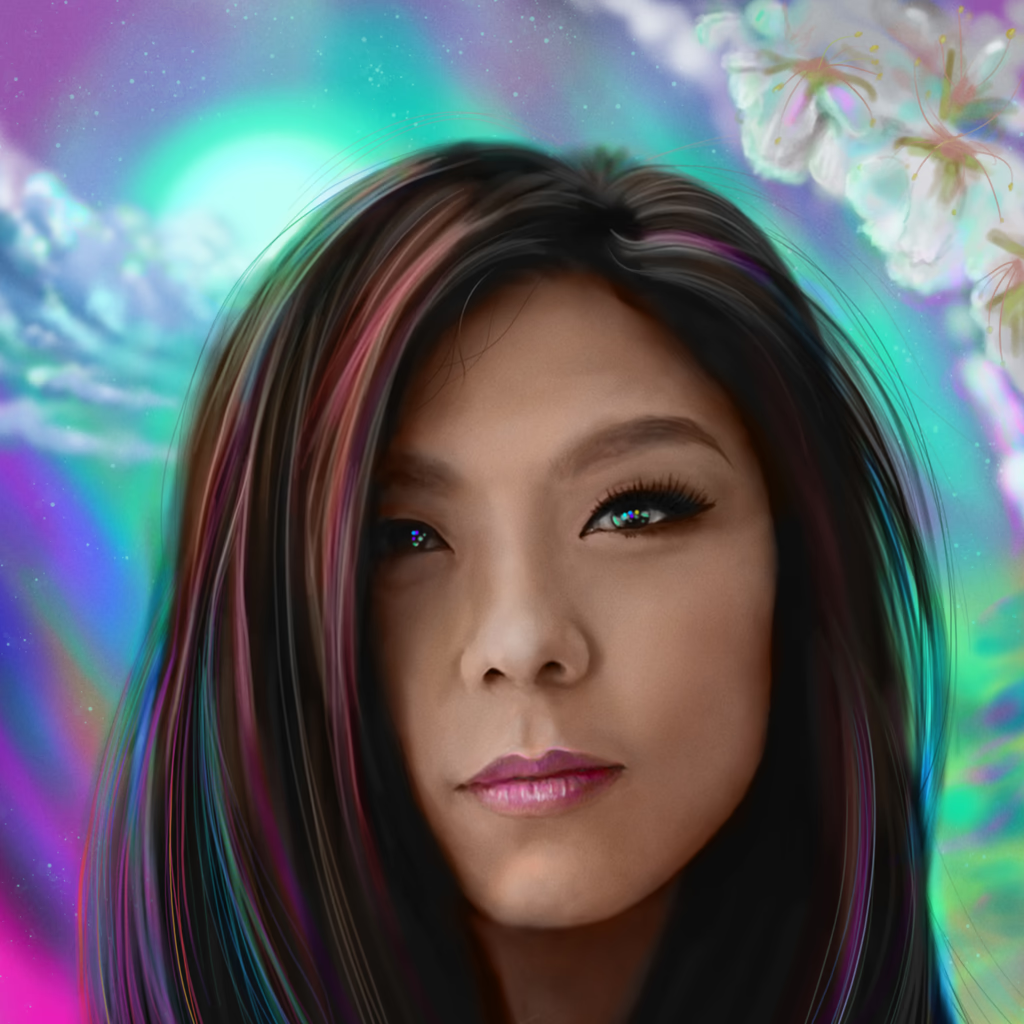
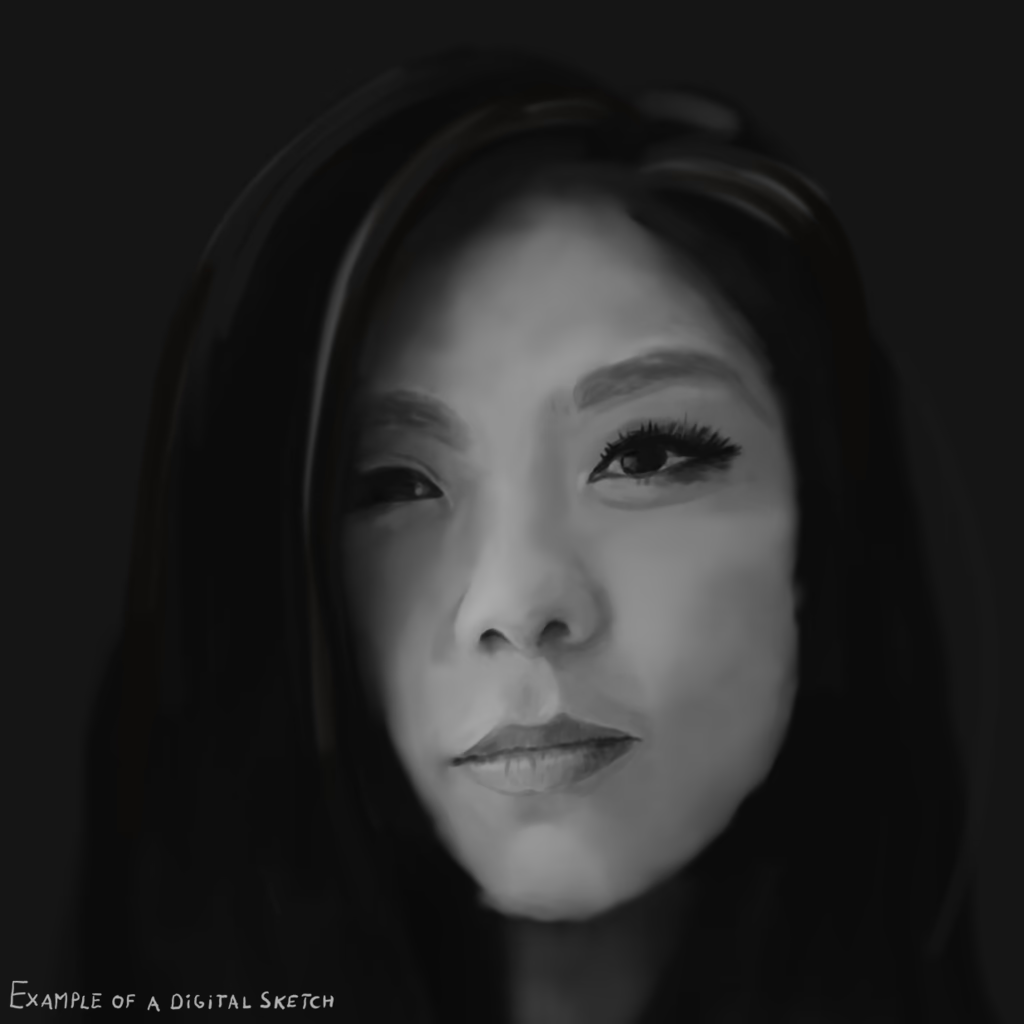
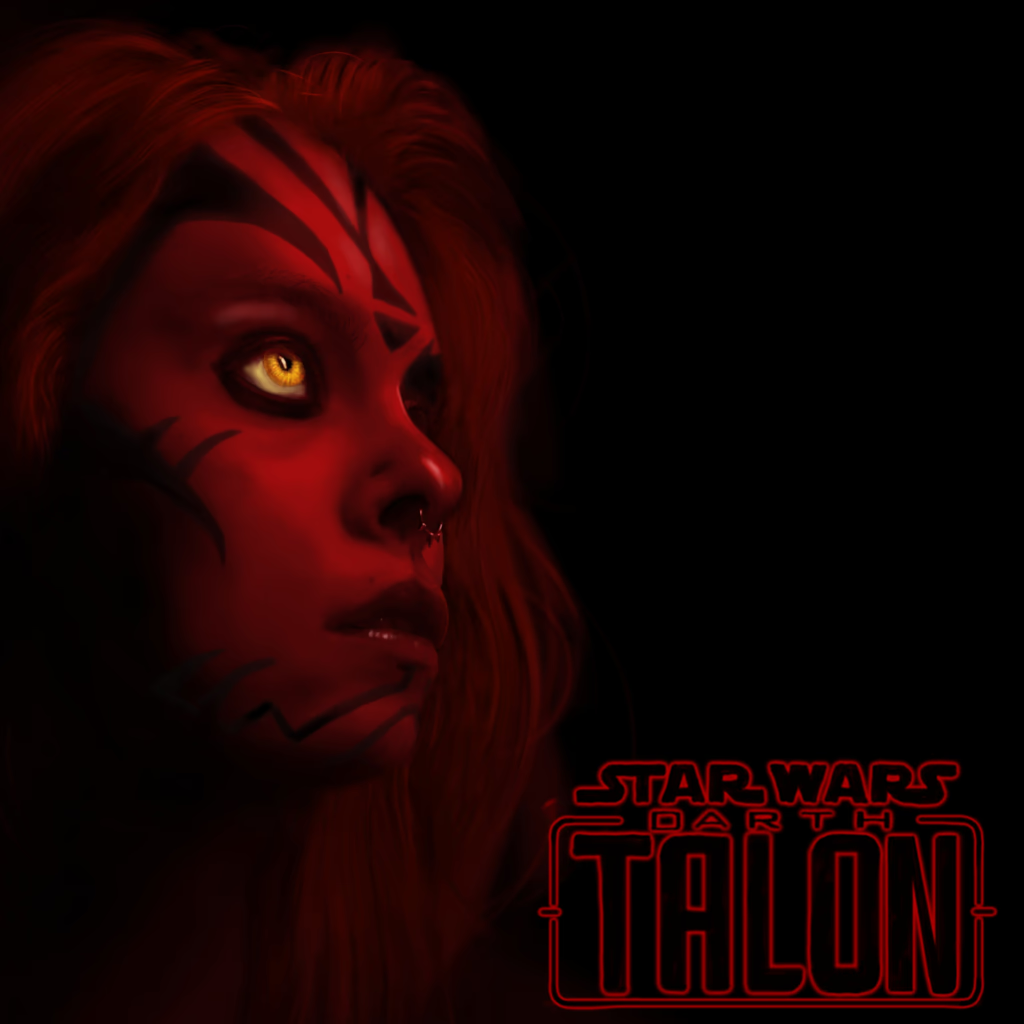
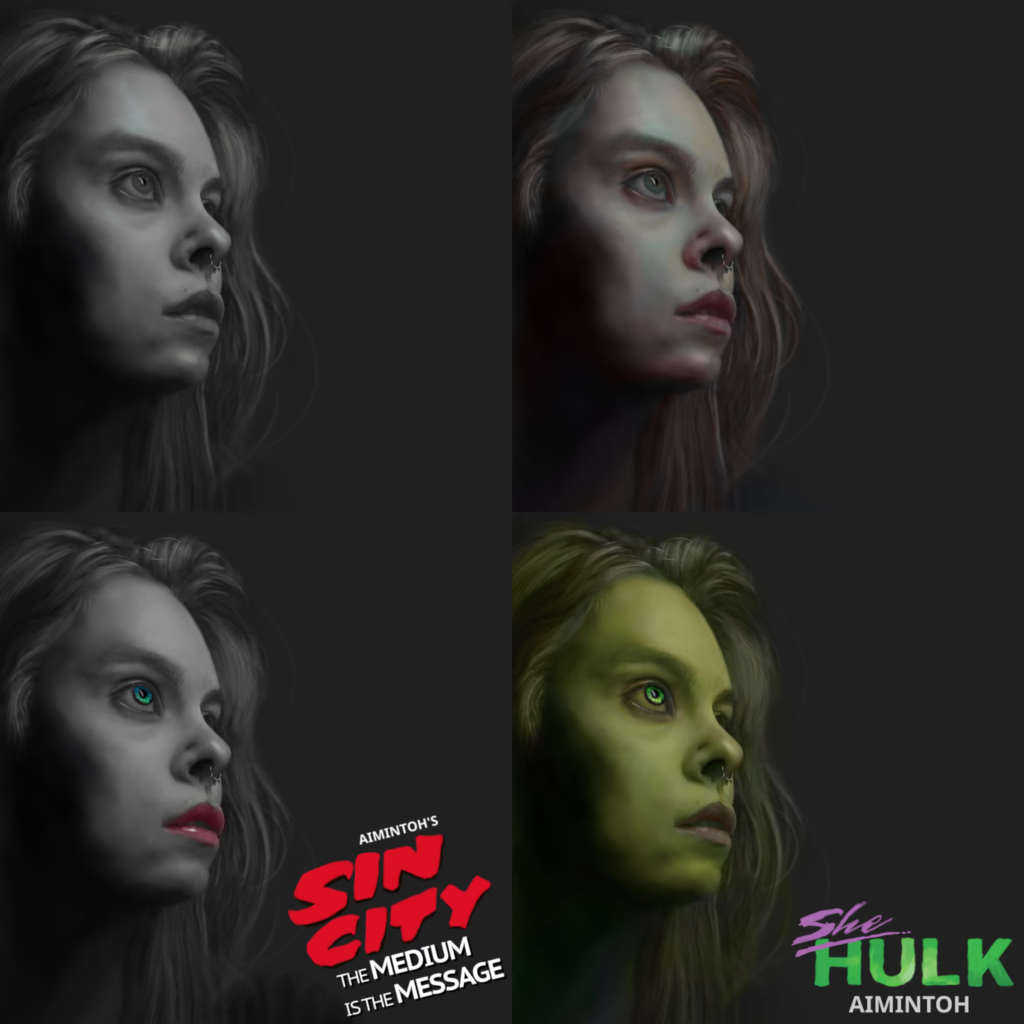
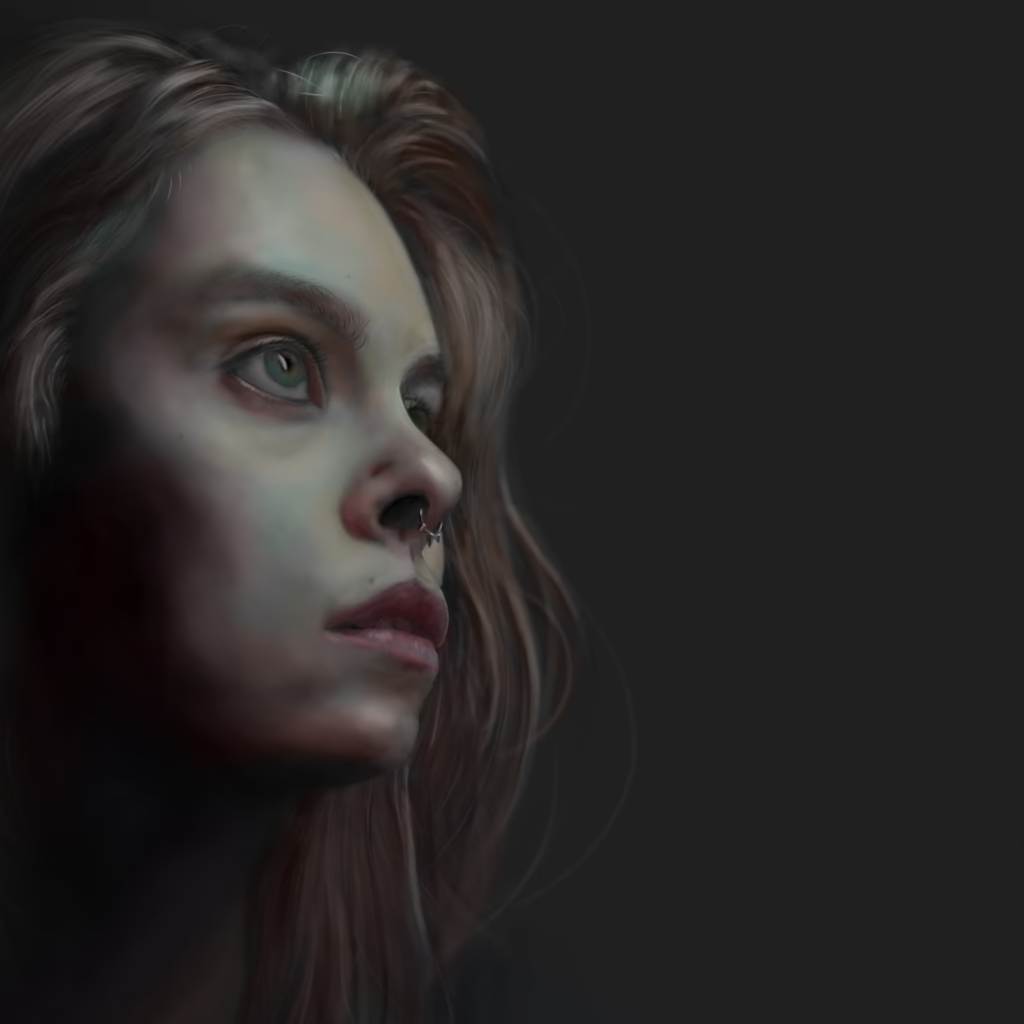
The article explains why coloring a portrait face in hyper‑realism is challenging: no single hue fits every detail, and each feature often requires a slightly different shade. It recommends working from a reference image, using a color picker and occasionally shifting hues semi‑randomly, while keeping the source and final picture in sync. The author stresses starting with a clean sketch, then creating a black‑and‑white version of the source, adding a “Color” layer that imposes hue but preserves value, and applying filters (such as G’MIC) beforehand to see a reliable preview and avoid surprises during painting.

#0893 published 03:32 audio duration 307 words 1 link painting color portrait hyperrealism gmic krita gimp

Towards The Mastery Of Art, And A More Beautiful World: The One, Two, Three, Method

Towards The Mastery Of Art, And A More Beautiful World: The One, Two, Three, Method

zoom read listen

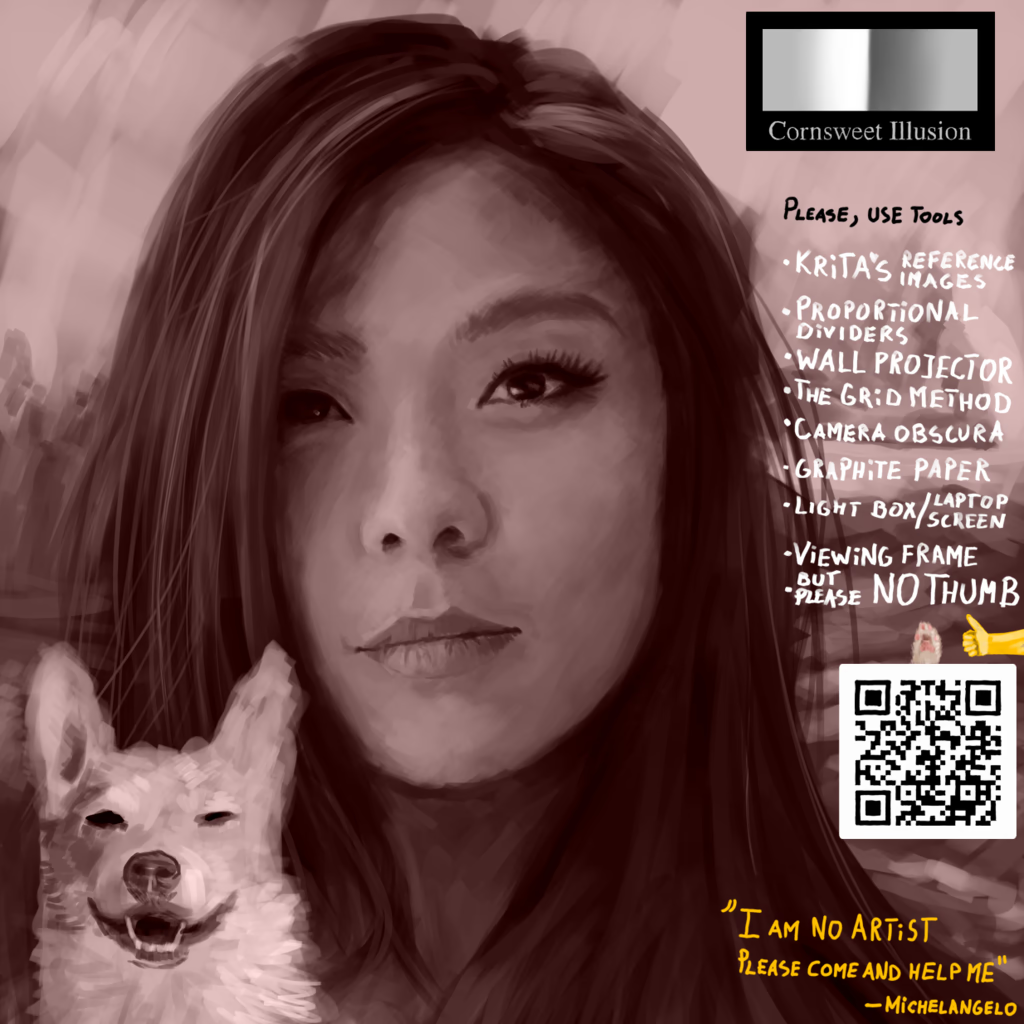
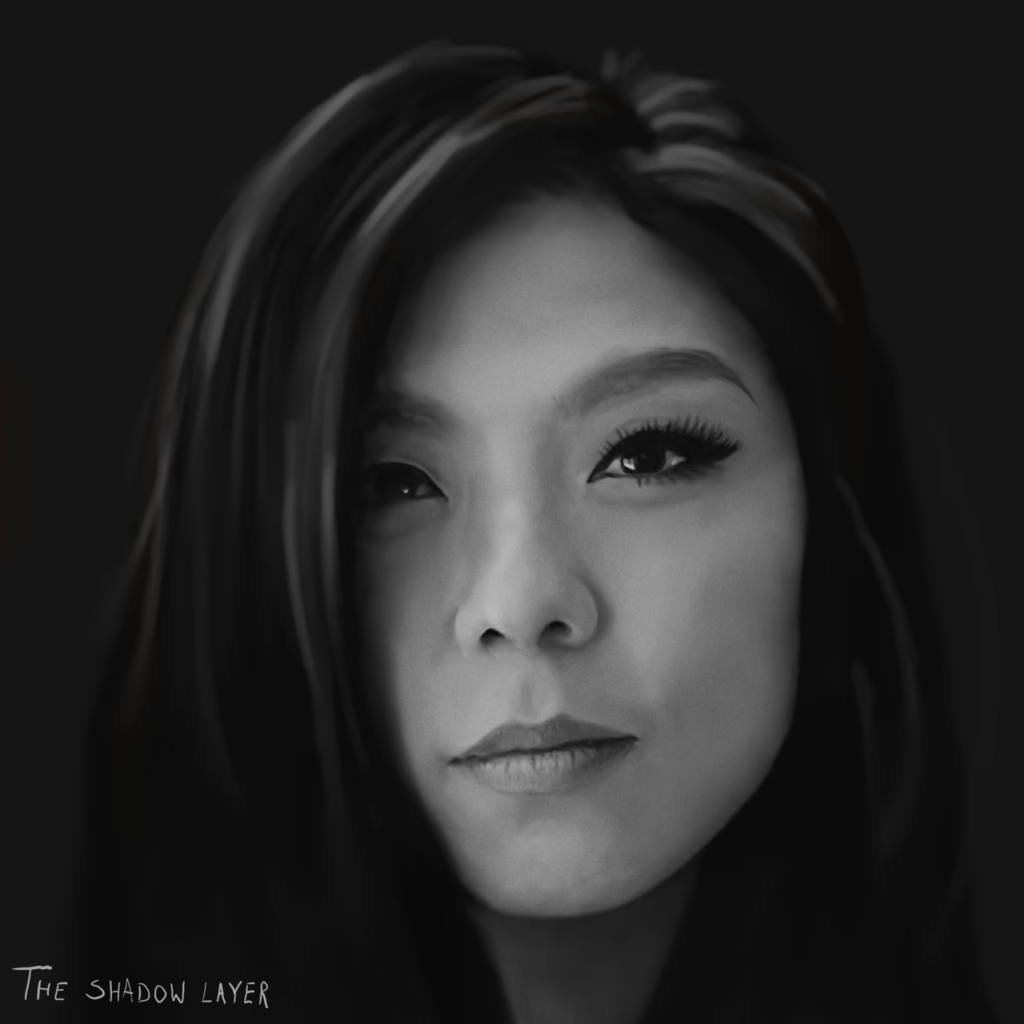
The post presents a straightforward, teacherless workflow for learning drawing and painting that relies on three core stages—sketch, value (black‑and‑white) study, and color application—and demonstrates how each stage can be executed with simple tools such as a grid, wall projector or an image reference in Krita. By first building a clean sketch using the grid or projected image, the artist trains hand and mind before moving on to a black‑and‑white value study that captures light and shadow; this layer is then used as the base for a separate color layer set to “Color” mode so that hue and saturation are applied while the underlying values dictate shading. The method encourages self‑study by letting artists sample colors from their reference, gradually developing an intuition for how hues shift across value levels, and ultimately fostering a personalized sequence of learning that can be adapted to each student’s pace and curiosity—an approach the author hopes will inspire new “schools” built around self‑education rather than traditional instruction.

#0892 published 04:17 audio duration 369 words 4 links art digitalpainting krita sketching referenceimage color layers selflearning tutorial

A Quick Look At The Art Grid

A Quick Look At The Art Grid

zoom read listen

The post offers a quick guide to using grids in Krita, pointing readers toward several helpful videos (setting up grids, grid‑scaling tricks, and apps that auto‑generate them) and suggesting even a chalk‑grid approach for easy erasing. It stresses that correct proportions are only the first step; shadows and highlights must be nailed next, so the author recommends working from a black‑and‑white source image, applying posterize and edge‑finding filters to get clean outlines. The writer notes that digital work makes erasing and experimentation painless compared with paper, and encourages color picking and mixing on the computer as a natural extension of the proportion lesson. Finally it reminds critics that they value art that “transforms lives.”

#0891 published 04:21 audio duration 443 words 8 links krita grids digital-illustration tutorial image-manipulation color-picking shadows-and-highlights

Beyond Art

Beyond Art

zoom read listen

The post weaves together art, philosophy, and lived experience as the forces that shape personal growth, using imagery of trails, filaments, and learning stages to show how early instincts evolve into intellectual refinement as we navigate life’s “leads” and “drops.” It argues that continuous practice—whether walking long hikes, dancing, or skating—builds a personal mythology, while stressing the importance of meaningful education, student safety, and teachers who craft profound learning experiences that match each learner’s curiosity. The piece concludes that our choices and accumulated wisdom ripple through time, enabling us to share insights with future generations so they can build on our foundations rather than start from scratch.

#0890 published 07:21 audio duration 703 words 15 links poetry writing art learning hiking trails education

Use The Airbrush; Or, Sketch, Spray, And Emerge All The Magic From The Shadows

Use The Airbrush; Or, Sketch, Spray, And Emerge All The Magic From The Shadows

zoom read listen

The post explains how to use an airbrush—especially its pressure‑sensitive opacity—to build a digital illustration from scratch: start with a thin sketch layer (using light pen strokes that become faint lines at low pressure), then gradually add thicker outlines before moving on to finer details, always layering the new strokes over the previous ones so shadows and volume can develop naturally. It stresses the importance of an initial sketch (either hand drawn or photo‑referenced) as a foundation for the whole piece, and suggests giving the early lines texture, noise, and slight erasures to add character. Once the basic shape is set, you build depth with deep grays and shading, then use the airbrush’s gentle spray to apply subtle glows and highlights in darker scenes—turning simple shapes into 3‑D forms while keeping the workflow light, iterative, and always starting from a clear sketch.

#0889 published 06:17 audio duration 538 words 3 links airbrush sketching layers shading krita

No Small Beings

No Small Beings

zoom read listen

The post claims that the grade‑centric, punishment‑driven system of standardized schooling steals joy from true learning, and that only self‑education can revive learning before we finally need to redesign our schools.

#0888 published 06:10 audio duration 362 words education learning schooling grades gpa tests teachers students culture

Art Is The Universal Language: And The World Wants To Hear You

Art Is The Universal Language: And The World Wants To Hear You

zoom read listen

The post explains how to use Krita’s Image Reference Tool by first pre‑arranging a scene in a photo‑editing program (or a solid image), then overlaying that reference onto your canvas so the color picker always samples from it, not from what you’ve already painted; it stresses using a pen and tablet for pressure‑controlled strokes, noting that a mouse is inadequate. It encourages embracing hyper‑realism as a path to mastery, illustrating how artists like Van Gogh and Monet employ bold, unblended brushstrokes or selective blur to convey depth with the fewest strokes possible. The author invites readers to begin with this technique and then evolve toward minimalism while achieving maximum expression.

#0887 published 06:51 audio duration 626 words 12 links krita gimp penandtablet digitalpainting imagereferencetool brushstroke hyperrealism minimalism arttutorial

Lemur Limericks - Can Bush Babies Save The World?

Lemur Limericks - Can Bush Babies Save The World?

zoom read listen

In this post, the author extols the virtues of “Bush Babies,” portraying them as audacious, intelligent, and artistically inclined. They claim that engaging in art from early childhood fosters true learning, independence, and creativity, suggesting that such education can replace traditional schooling. The piece argues that widespread adoption of Bush Baby‑inspired artistic learning would brighten futures, resolve politics, end poverty, and bring wisdom and peace to the world.

#0886 published 02:26 audio duration 260 words 2 links poetry bush baby art education school youtube

To Build A Universe

To Build A Universe

zoom read listen

Using a playful analogy that starts with Carl Sagan’s quip about baking an apple pie to “invent the universe,” the post explains how simple 3‑D objects such as apples can represent everything from stars and nebulae to planets and moons, while pointing out that astrophotography adds color layers to reveal motion (redshift vs. blueshift) and depth. It then walks through cosmic evolution—hydrogen gas collapsing into star‑forming clouds, supernova dust giving rise to planetary disks, and the eventual assembly of bodies ranging from large planets to small asteroids—and ends with the idea that one could paint a whole universe by rendering these objects as apples in a 3‑D scene. Links to the apple‑pie video, Wikipedia on astrophotography, a redshift/blueshift diagram, a YouTube video on life, and a time‑lapse clip round out the illustration.

#0885 published 07:36 audio duration 542 words 6 links astronomy astrophotography apple time-lapse youtub

A Painting Can Totally Bite You; Or, The Science Of Painting Kittens

A Painting Can Totally Bite You; Or, The Science Of Painting Kittens

zoom read listen

In this post the author stresses that creating a painting—especially of a cute kitten—requires deliberate preparation: first, sit down with clear art ideas and expect no instant masterpiece; then gather image references that inform both shape and color theme, using tools like Krita’s Image Reference or wall projectors; choose colors thoughtfully because wrong hues ruin mood (e.g., a golden kitten on a red background); consider texture, aiming for simple yet expressive fur rather than over‑detailed work; research existing works to see how other artists handle kittens, and finally enjoy the process of learning trends and experimenting with color, texture, and composition before producing a finished painting.

#0884 published 05:12 audio duration 483 words 1 link painting kittens art references color theory texture krita research furry

Batteries Not Included

Batteries Not Included

zoom read listen

Humans are built on ancient technology, with knowledge acting as our batteries; advertisers plug electric scooters and sugary drinks into the “battery compartment” of our ears, while politicians polarize us with hot issues to provoke voting. If we don’t take a long‑term view, we’ll bicker at trivial matters and be misled by repeated problems, because education is flawed and schools are incorrectly formatted. The world grows darker like chickens fed by a farmer, until the carrot‑and‑stick metaphor works: see the string tied to the carrot, the stick it’s attached to, and follow breadcrumbs from broken schooling to poverty that turns children into tools.

#0883 published 02:39 audio duration 234 words human technology batteries advertising politics education poetry

Dream To Learn; Or, Launching Servers And Brushing Up On My Hair

Dream To Learn; Or, Launching Servers And Brushing Up On My Hair

zoom read listen

In this reflective post the author describes how a series of creative pursuits—painting realistic hair, re‑meshing complex 3D jewelry shapes, uploading audio files beyond free services, and experimenting with vocal filters in music—serve as personal callings that naturally leap from one activity to another. They recount recent projects such as reviewing gulp and grunt task runners, setting up a diagram for a new build system, fixing shadows in a painting called “Purrdy,” creating a new piece, and editing a timelapse video with ImageMagick commands. The author argues learning is most effective when driven by these intrinsic interests rather than by imposed curricula such as microbiology or sushi making; thus schools should provide safety, shelter, and support so students can pursue their own sequence of dreams at their own pace, but the best education remains self‑education.

#0882 published 03:57 audio duration 351 words 4 links painting 3d-modeling audio-processing gulp grunt imagemagick self-learning

The True Teachers Of Art: Cats, Squirrels, Bush Babies, Lemurs, and Meerkats!

The True Teachers Of Art: Cats, Squirrels, Bush Babies, Lemurs, and Meerkats!

zoom read listen

The post encourages artists to learn by painting hair and portraits using photos as references rather than tracing or photobashing; it stresses free‑hand work and self‑paced learning, claiming that true artists are simply cheerful creators who keep making art. It introduces the playful term “arrrrtisst” for such people and suggests practicing with fun animal subjects—like birds wearing wigs or animals with unusual heads—to keep the process enjoyable and memorable, especially if you laugh while drawing to cement the skill.

#0881 published 04:36 audio duration 354 words 3 links art drawing painting photo-reference freehand portrait hair-painting photobashing color-mixing practice

Art And Rules Of The Universe

Art And Rules Of The Universe

zoom read listen

The post explains that drawing is guided by the same physical rules that govern the universe—colors shift, shadows fall, light reflects—and that an artist must learn to apply those tiny variations consistently across different subjects. It uses concrete examples such as hair and its subtle canyons or cables forming wrinkles in fabric, showing how a round shape creates bumps and shadows that deepen with light, while shiny strands reflect the sun and darken at the edges of their valleys. By mastering these fundamental, universal rules—like adjusting hue, brightness, and shadow depth—the artist can synthesize realistic images, whether they’re familiar subjects or new ones such as Europa’s icy ridges or alien armor. The key message is to gather these basic principles and apply them across all art projects.

#0880 published 03:59 audio duration 299 words 5 links art illustration drawing hue shading color theory fabric hair cable video youtube timelapse

Joy Ahoy; Or, Art As Light In The Dark

Joy Ahoy; Or, Art As Light In The Dark

zoom read listen

The poem encourages beginners to start painting by practicing simple, whimsical subjects—like a bear’s hair or prairie dogs’ eyes—and then gradually move on to more complex scenes. It stresses the value of beginning with easy sketches, using tools such as Krita for reference, and dedicating just an hour or two each day to practice. By focusing on fun, repetition, and self‑paced learning, it shows how drawing can become a powerful, enjoyable way to master art without formal mentorship.

#0879 published 03:49 audio duration 306 words 2 links drawing painting freehand krita practice learning

Art Is Adventure, And A Good Portrait Photo May Help You Travel To Distant Galaxies

Art Is Adventure, And A Good Portrait Photo May Help You Travel To Distant Galaxies

zoom read listen

A vivid, well‑lit reference photo—rich in light, shadow, color and an engaging pose—serves as the essential springboard that lets painters move from realistic detail to imaginative scenes, from simple faces to epic adventures like dragons or space battles.

#0878 published 04:20 audio duration 405 words painting reference photo photography hyperrealism character design illustration storytelling digital art portrait lighting color palette

Do Not Give Up Your Creativity At Any Cost

Do Not Give Up Your Creativity At Any Cost

zoom read listen

The post argues that creative work in art and programming can be stifled by rigid practices—such as insisting on using reference images or over‑medicating focus—and that this rigidity mirrors how horses are forced into training, resulting in loss of natural creativity; it stresses the importance of letting minds freely switch subjects to maintain mental health, and suggests that overworked artists and programmers often feel “pushed around” by peers who elevate themselves; finally, it contends that schools and corporations frequently prescribe medication to boost productivity, but this practice ultimately harms authenticity and long‑term creativity.

#0877 published 11:25 audio duration 912 words 6 links art painting reference-image creative-process painter-notation artist-community mental-health focus burnout

The World May Stand Still; Or, The Importance Of Real Education

The World May Stand Still; Or, The Importance Of Real Education

zoom read listen

The author argues that those who oppose humanity’s advancement are essentially liars—people who manipulate truth to maintain their own power and who keep the world in a state of “blind veto.” They claim that much of what is presented as science is fabricated, that educated people’s work is often unrepeatable, and that these liars exploit goodwill, always winning through compromises. In contrast, the post calls for genuine education—real schools that produce lasting talent, clear thinking, and peace—that ends poverty and lets a nation grasp reality, reason, and wisdom as its highest values.

#0876 published 07:41 audio duration 639 words education schools science research poetry