In this whimsical poem, winterâs chill invites us to treat small, lucky creaturesâwhether playful squirrels or âmini kittensââwith warmth, food, and care; by scattering nuts and offering a cozy home, we can keep them happy, proud, and affectionate, and in return they bring joy, companionship, and lasting good luck.
#0995 published 02:00 audio duration181 wordspoetryanimalswintermittenskittenssquirrelsnuts
The author argues that we have only enough time to tackle the root causes of global problemsâchiefly world poverty and a lack of real educationârather than merely treating their symptoms, which will never bring lasting change. He proposes âUniversal Income Cards,â computerâmanaged benefits that reset each midnight, as a concrete tool to lift people out of poverty; but he notes that politicians will use such ideas for political gain until the system is properly understood and implemented by truly educated leaders. The solution, he says, requires creativity, brilliance, and hackerâlike ingenuity to design deployment strategies (e.g., giving cards to those born after a set date so future generations can plan ahead). By freeing people from misery and opening borders, these cards could spark real schooling, disarm nations, and unify the world. He ends by urging selfâeducationâreading, listening, reâlisteningâto unleash hidden genius in all of us, because only by unlocking that talent can we finally hold a candle to the future and truly repair what our past generations failed to do.
#0994 published 14:52 audio duration1,151 wordspovertyuniversal-basic-incomeeducationpoliticscultureglobal unityself-education
Philosophyâthough misspelledâserves as a guiding force for human growth, cultivating authenticity, dignity, and noble character rather than mere obedience or convenience; it fuels intellectual fire, enriches minds, and provides continuity across generations by linking past research to future discoveries. Drawing on thinkers like Frankl and Martin Luther King Jr., the post argues that true happiness stems from character shaped by philosophyâs historical lineage. It presents philosophy as a family of wise humans whose collective wisdom builds armor around our being, enhances systems, and offers insight into all curiosities. By teaching it early, we could eradicate poverty, hunger, homelessness, mass incarceration, and strengthen educationâphilosophy is portrayed as the very culture that fixes everything in human life.
#0993 published 06:43 audio duration428 wordsphilosophyhumanitygrowthscienceeducationculture
The post argues that growing up without exposure to wise philosophy books signals a cultural failure, noting how dictatorships burn them and modern societies neglect them. It stresses that teachers often overlook the power of narrated texts, which can expand a childâs vocabulary and understanding, and calls for a readyâmade, accessible collection of the best parts of great booksâan easy gift parents can give to spark learning. By combining reading with listening, children can fully grasp what books are like, preventing the loss of knowledge that occurs when books become boring or optional.
#0992 published 07:24 audio duration606 wordsbooksreadingnarrationchildreneducationteacherslibrary
The post celebrates continuous learning and creative growth: upgrading systems expands everything, and the more we know the more we grow and encompass a multitude of ideas. It links this process to artâmusic, programming, writing, poetryâand frames each component as part of a concept map that can be connected and reconnected like pixels turning into notes. The writer muses on how fire and sunset scenes inspire reflection, while selfâeducation emerges as the sole true form of learning.
#0991 published 02:28 audio duration194 wordspoetrymusicprogrammingconcept-mapself-learningartwriting
The author argues that while there are countless ways to live, a few fundamental truthsâsuch as those championed by thinkers like Rand, Sagan, GellâMann, King Junior and Thoreauâremain constant; he urges the present generation to urgently revitalize education, nurture brilliant ideas that will endure beyond the inevitable fade of novelty, and actively transmit these ideas through tangible media (journals, typewriters, cassette recorders) so that future generations can inherit, build upon, and ultimately become giants in their own right.
#0990 published 05:01 audio duration300 wordsessayphilosophyeducationgenerationinspiration
Programming should be central to education because it teaches how to learn, making learning more efficient and meaningful; students can build useful projects instead of memorizing facts, leading to clearer future plans and selfâdriven preparation for startups. By focusing on programming, lessons become practical rather than abstract, reducing student boredom and giving them tangible results that motivate further study. With abundant free tutorials, learners can start with little cost or resources, making the subject accessible and promising a bright future.
#0989 published 04:40 audio duration343 words1 linkprogrammingeducationtutorialssvelteself-learningstartups
This post explains how combining CouchDB on the server, PouchDB in the browser, and Svelteâs storeâbased data binding turns the tedious problem of UI synchronization into a simple, automatic process: values are wrapped with unique identifiers for storage and tracking so that any change is immediately reflected in the UI without extra code. The author illustrates this with a basic âa = 1; x = a + aâ example, showing how most frameworks overâcomplicate variable monitoring, whereas CouchDB/PouchDB/Svelte handles it natively. By treating even lowâlevel sensor data (e.g., RPMs or GPIO reads) as CouchDB objects and using tiny filter programs, developers can build networked applications that update automatically with just a few lines of code, making the whole approach both powerful and surprisingly straightforward.
#0988 published 06:10 audio duration445 wordscouchdbpouchdbsveltesvelte-storedata-bindingui-updatedata-sync
The post argues that true learning comes from listening to narrated books instead of simply reading them, presenting a âsimple formulaâ that involves the present self, accumulated knowledge, and future self to undo ineffective education; it stresses that every person has a right to real knowledge, that libraries and wellâread librarians hold the essential nonâfiction works, and that by hearing these works one can build perception, wisdom, culture, and meaningâthus avoiding the regrets of an older self who would have benefited from powerful books in youth.
#0987 published 05:24 audio duration327 words1 linkaudiobookbooksreadingpersonal-developmenteducation
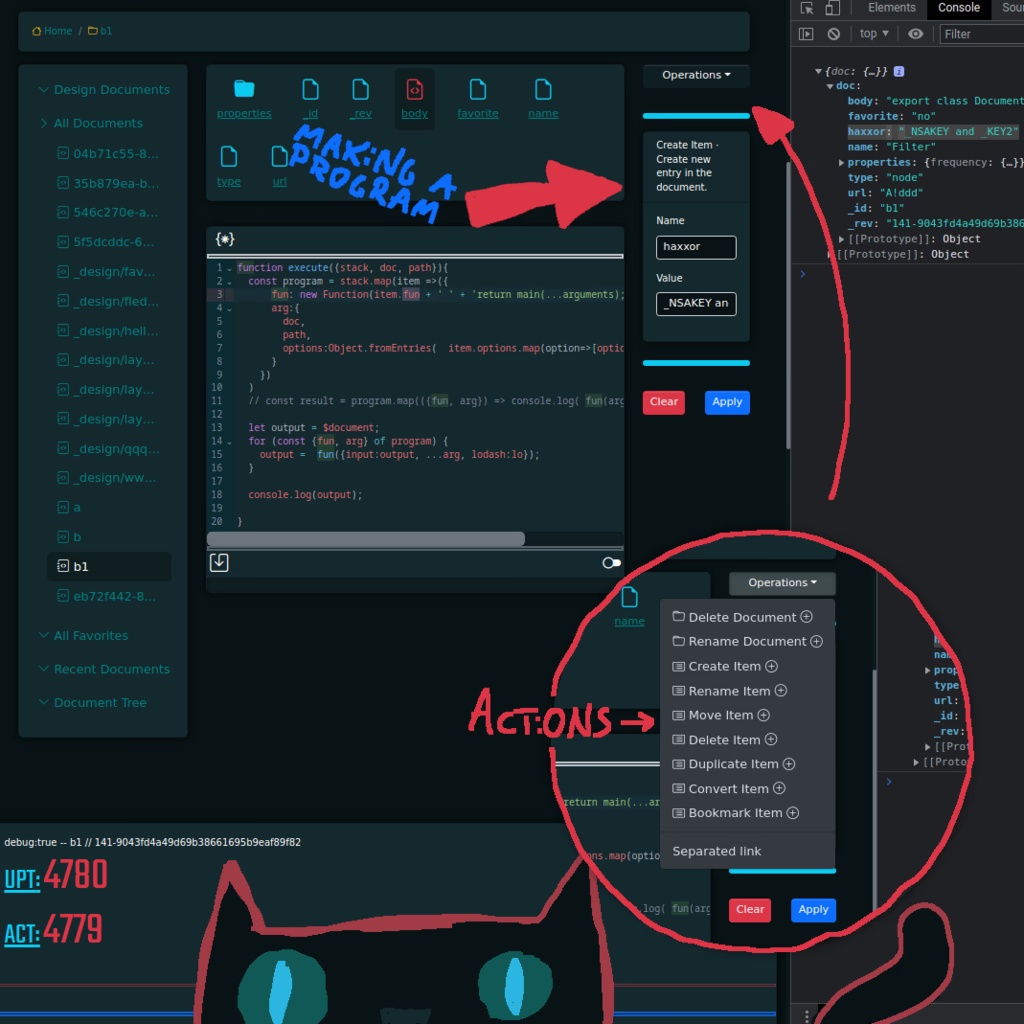
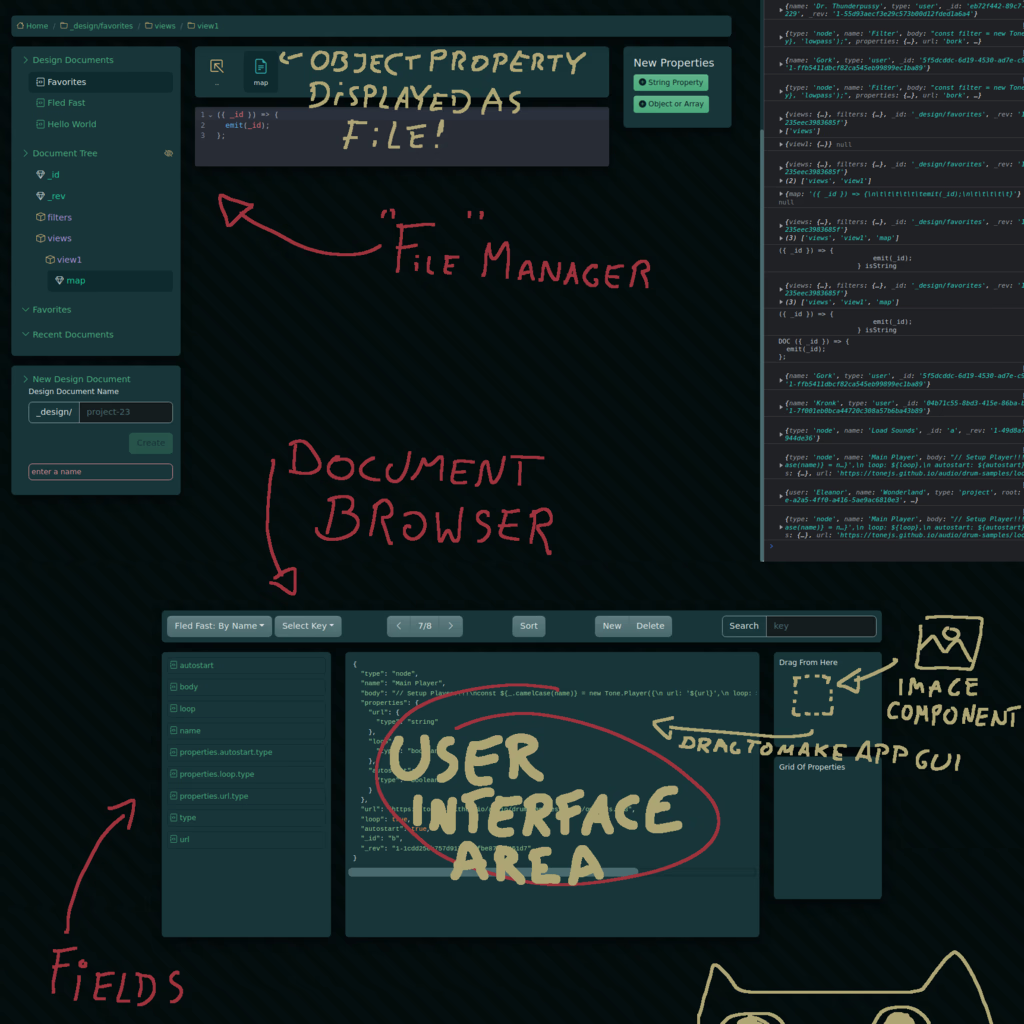
The post outlines a simple yet scalable system architecture that lets each user own a tiny personal databaseâbacked by Couchbase or CouchDB and synchronized via PouchDB on the client sideâso that changes made in the browser are automatically stored back to their own serverâside store. It explains how to build a custom designâdocument editor (modeled after Windows Explorer) for creating views, then shows how a programmer could pull news posts into each userâs database and expose them through a simple row navigator. From there it describes adding dragâandâdrop UI tools that let users assemble layouts, link image URLs to UI elements, and even chain actions like an Automator clone. The resulting product is a subscriptionâbased, perâuser app builder where programmers can contribute reusable components that become available to all subscribers, thereby expanding the âbusiness empireâ of userâgenerated apps.
#0986 published 10:47 audio duration670 words6 linkscouchdbpouchdbcouchbasedesign-documentdrag-and-dropapplication-builderjavascriptdatabasearchitecture
Books hold humanityâs greatest thoughts and ideas, yet most of them remain unread; they are meant to be heard as music rather than merely perused in paper form. A library is like a buffetâif you only eat the same few dishes youâll never return. To truly inherit a bookâs wisdom one must actively engage with it, sometimes through distress or adventure, and even take long journeys such as walking the Appalachian Trail to cultivate perseverance. By challenging ourselves and âplayingâ each book we design our own mental software, following Dennettâs question: if brains are computers, who designs the software? The answer lies in reading a wide range of booksâhundreds at leastâto fill the cultural void that has long forgotten its best ideas. Thus, by loving every second we listen to these works, we can transform the world into a wiser, more peaceful place.
#0985 published 12:02 audio duration421 words1 linkbooksreadingliteraturemusic-analogiesdennettaudiobooksculturehistory
The post argues that modern teaching often fails to convey true learning, with teachers who are unprepared, overburdened, and sometimes deceptive, causing students to memorize instead of understand; it calls for a return to authentic educationâwhere knowledge flows naturally from curiosity rather than rote drillsâand suggests practical solutions such as audioâbook lectures, selfâdirect study in philosophy, science, and biographies, and handsâon software development that turns learning into real job skills; ultimately it proposes that students become their own teachers, using accessible devices and web applications to build a new kind of school that blends learning with remote work opportunities.
#0984 published 07:05 audio duration575 wordseducationteacherslearningaudio-bookssoftware-developmentweb-applicationbooksphilosophyself-learning
Programming is a discipline that sharpens clear thinking, encourages humility, and rewards deliberate learning over convenience. It teaches us to avoid letting personal favorites dictate our choicesâwhether we pick the easiest or most popular pathâand to choose languages and tools based on their fit for the problem at hand, rather than on tradition or gradeâfocusing curricula. For example, JavaScriptâs early slowness gave way to a powerful web language that is now indispensable. When building UI, a single wellâplaced logic statement can keep an animated buttonâs click handler from firing too early; separating UI and program logic keeps complexity in check. Exposure to such controlled challenges trains intellectual hygiene: we see the âhoodâ of code, design our own sequence of learning, and pace it to match our existing knowledge. Finally, programmingâs instant feedback loop lets us examine errors and revisit theory, ensuring nothing is skipped and every concept is truly understood.
#0983 published 04:15 audio duration421 words1 linkprogrammingjavascriptuianimationevent-handlingcode-simplificationdebugging
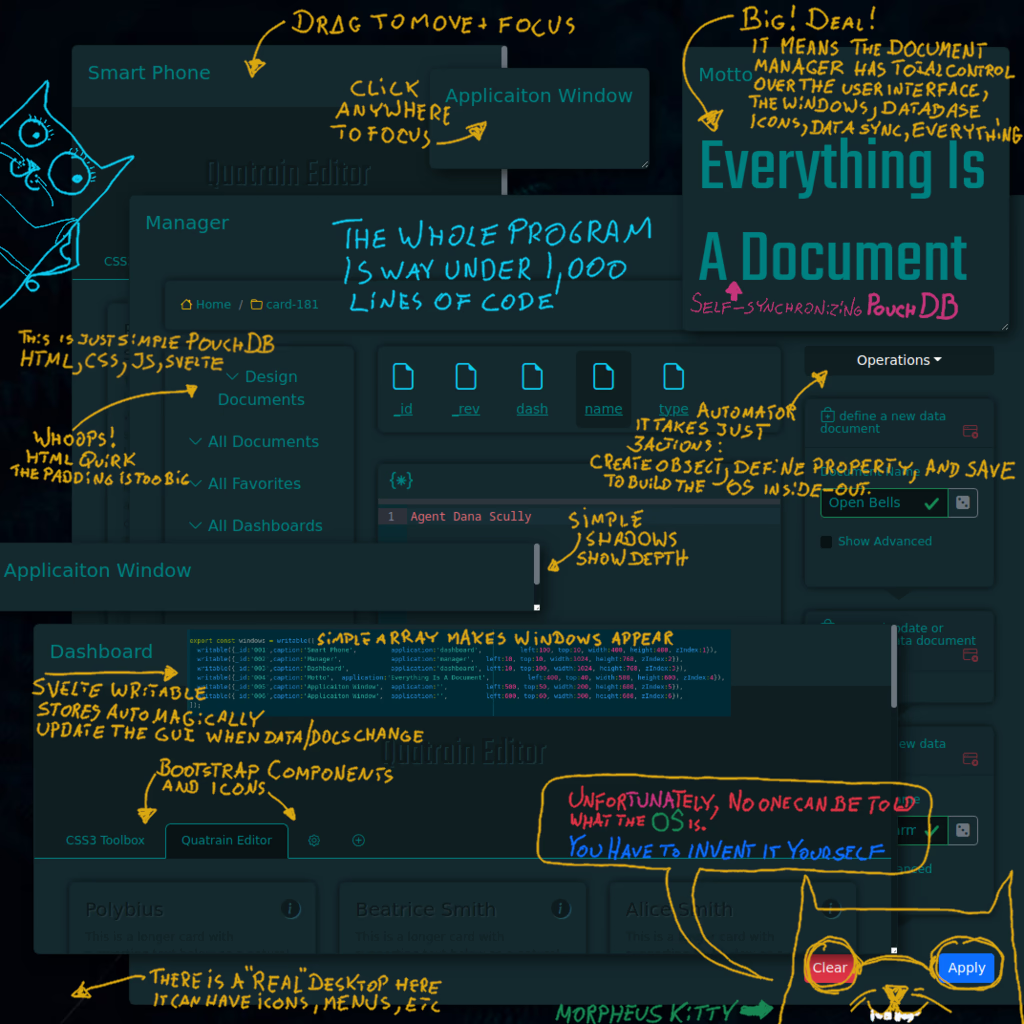
The post describes a creative way to embed a âfileâmanagerâ style interface inside a phone or web application, using a treeâlike data structure built from simple node and edge arrays rather than recursive objects. By closing the main app with a magic key combination you can drop into this hidden file manager, which mirrors the applicationâs structure and represents all user resources; it serves as both a development aidâletting you remember code and track listenersâand a prototyping platform, enabling tools such as a form designer, theme generator, or finiteâstate machine builder that output ready JavaScript via templates like EJS. Ultimately, this selfâeditable system becomes a sellable product (e.g., a theme with bundled generators) that lets buyers generate, customize, and run applications directly in the browser, offering both practical utility for new projects and potential side income.
#0982 published 04:58 audio duration449 wordsfile managertree structurenode arrayedge arrayobject oriented nodesjavascriptejs templatespouchdbtheme developmentcode generatorfinite state machine
The post introduces âpotatoesâ as a lightweight abstraction for CouchDB documents that makes it easier to keep data in sync across a networked application and the user interface. Each potato has a unique ID and revision number, so changes are stored as separate files and the latest revision is chosen by sorting filenamesâan eventualâconsistency approach that works even when many users update concurrently. By treating potatoes like Svelte stores or Bootstrap components, the author shows how UI elements can automatically refresh whenever a new winner revision appears, while âviewsâ (small programs) filter changes to build the visible collection of potatoes. The article explains that this model supports simple list handling, page reâcalculation, and fast searches, all while keeping the system free from overwrites or hacks because each change is uniquely identified and propagated through Pouch/Couch or a custom storage layer.
#0981 published 15:37 audio duration1,107 wordscouchdbpouchdbsveltejavascripteventual-consistencydocument-storeui-componentsbootstrap
A state machine is a simple programming pattern that forces an application into wellâdefined states, each represented by a verb (e.g., âdriving,â âwarning,â âstoppingâ). The post uses a traffic light as an example: green â yellow â red â back to green, and shows how misnamed states (âredâ for the stopping state) can confuse developers. It explains that actions are short commands that trigger transitions, while states persist over time; thus a state might be named âsleeping,â âdriving,â or âwarning.â Proper naming keeps the machine clear, enabling complex userâinterface flows to remain predictable and errorâfree, because each transition is explicitly defined by an action leading into a verbânamed state.
#0980 published 08:30 audio duration606 words1 linkfsmstate-machineprogramming-patterntraffic-light-exampleui-state
The author argues that applications become truly useful when they specialize into domainâspecific tools such as code editors or spreadsheet builders, rather than remaining generalâpurpose; he cites Excelâs inevitable formulas and other legacy systems to show how users always need to learn a language, then introduces a songâbuilder app that autoâgenerates tracks with randomize settings, album covers, etc., proving that quick generation plus easy customization creates powerful toolsâfinally concluding that building specialized, customizable apps like a natureânoise machine with recorded sounds and a simple web interface is the winning path to success.
#0978 published 09:16 audio duration541 wordsapplication-designuicode-editorexcelsong-buildermusic-productionrandom-generatoraudio-musicwebsite
Start by exploring severalâhour JavaScript courses, then dive into pixelâbased projects with p5.js or playful JavaScript games; from there you can move on to Svelte (a 2022 technology) and its interactive tutorial for building graphic UIs. These tools let you tackle more complex topics like PouchDB by creating management programs, and a great handsâon example is a colorâtheme generator that teaches you rgba and HSL modelsâexploring opacity, hue, saturation, lightness, complementary colors, triads, and dynamic palettes inspired by clrs.cc. By letting users pick a starting angle (0â360°) or generating 360 themes, you can showcase vibrant color schemes on a portfolio site, turning the project into a simple yet powerful web app that reinforces your grasp of color models.
#0977 published 07:04 audio duration499 words6 linksjavascriptp5jssveltehslrgbacolor-mathwebapptutorial
The author reflects on the value of working for oneself, arguing that a paycheck job ages you and breeds boredom, while selfâeducation fuels wisdom and fulfillment. He encourages envisioning his future self to decide whether to pursue simple coding or beautiful ideas, noting that lack of ideas stems from fear rather than talent. The post then shifts to practical advice: choose efficient, languageâunified web stacksâJavaScript in the browser with PouchDB/CouchDB for data syncâand frontâend frameworks like Svelte and Bootstrapâto write once and run everywhere. Finally he reminds that short cuts derail progress, urging honest, trailâblazing effort.
#0976 published 09:11 audio duration691 words4 linkslifeprogrammingselfeducationtrailscouchdbpouchdbsveltebootstrapjavascriptwebdevelopment
The post argues that modern education systemsâshaped by religion, centralized schooling, and rigid bordersâhave stalled human progress and fueled conflict. It calls for a new, realityâbased learning model: selfâdirected, individualized lessons that reward real results and are grounded in authentic cultural knowledge, all aimed at world peace and human advancement. The writer believes that if young people see how standardized schools fail, they will take initiative to program their own projects, attract investors, and break the poverty cycle that keeps them obedient. Ultimately, he urges a swift overhaul of schooling into an effective, universally funded system that empowers children to become great beings and ends ignorance for good.
#0975 published 06:24 audio duration477 wordseducationself-directed-learningyouthcultureglobal-peacebooksinnovation
Selfâeditable applications let end users build and tweak UI elements on the flyâadding, rearranging or deleting controls like username fields, passwords, buttons, dropâdowns and menusâall through a simple code editor embedded in the app (often using JavaScript or Svelte). By dynamically constructing these controls from data structures such as JSON, developers can avoid predefining every component and let users experiment with layouts while still seeing the underlying source. This approach, echoing early tools like SmallTalkâs HyperCard and Wikipediaâs editable pages, promises a lowâbarrier learning curve for programming, faster task automation, and a new wave of âsocial application developmentâ where anyone can share customized features.
#0974 published 08:21 audio duration510 wordsjavascriptsveltejsonui-builderdynamic-uiself-editable-applicationssmalltalkhypercardview-sourceweb-developmentgui-controlsdynamic-instantiation
The author argues that our current educational systemâespecially at the middle and highâschool levelsâis fundamentally flawed because it relies on standardized, compartmentalized teaching that leaves students unmotivated and illâprepared to prevent future problems like war and poverty. They claim that real learning happens when a student actively studies something they are genuinely interested in, for a few weeks, which unlocks lasting skills and knowledge. By moving away from rigid subject divisions and gradeâbased rewards toward individualized, projectâbased, handsâon experiences (e.g., 3D printing, programming, DIY drones), schools could create instant, lifeâlasting results and give children the tools to become wise and great beings. The post concludes that parents and teachers must revive this personalized approach so kids can grow fully and carry their cultureâs wisdom forward.
#0973 published 09:44 audio duration728 words1 linkeducationmiddle-schoolhigh-schoollearning-methodsteacherskids3d-printingDIYprogramming
The post argues that while machineâlearning is still an emerging technology, true AI will eventually be able to read, explain and improve its own code; it then explores the difficulty of generating digital productsâespecially codeâby describing how a complex code generator can produce simple, bugâfree programs such as Bootstrap cards, yet remain limited by programming conventions and human expectations, and suggests that generative art and music illustrate the potential for AI to learn from existing digital artifacts, while recognizing that large projects like full Bootstrap themes are still too complex for one person but may become feasible with a machineâs own assembly logic.
#0972 published 04:51 audio duration408 words3 linksgenerative programmingcode generationbootstrapartificial intelligencedigital product generationgenerative artgenerative music