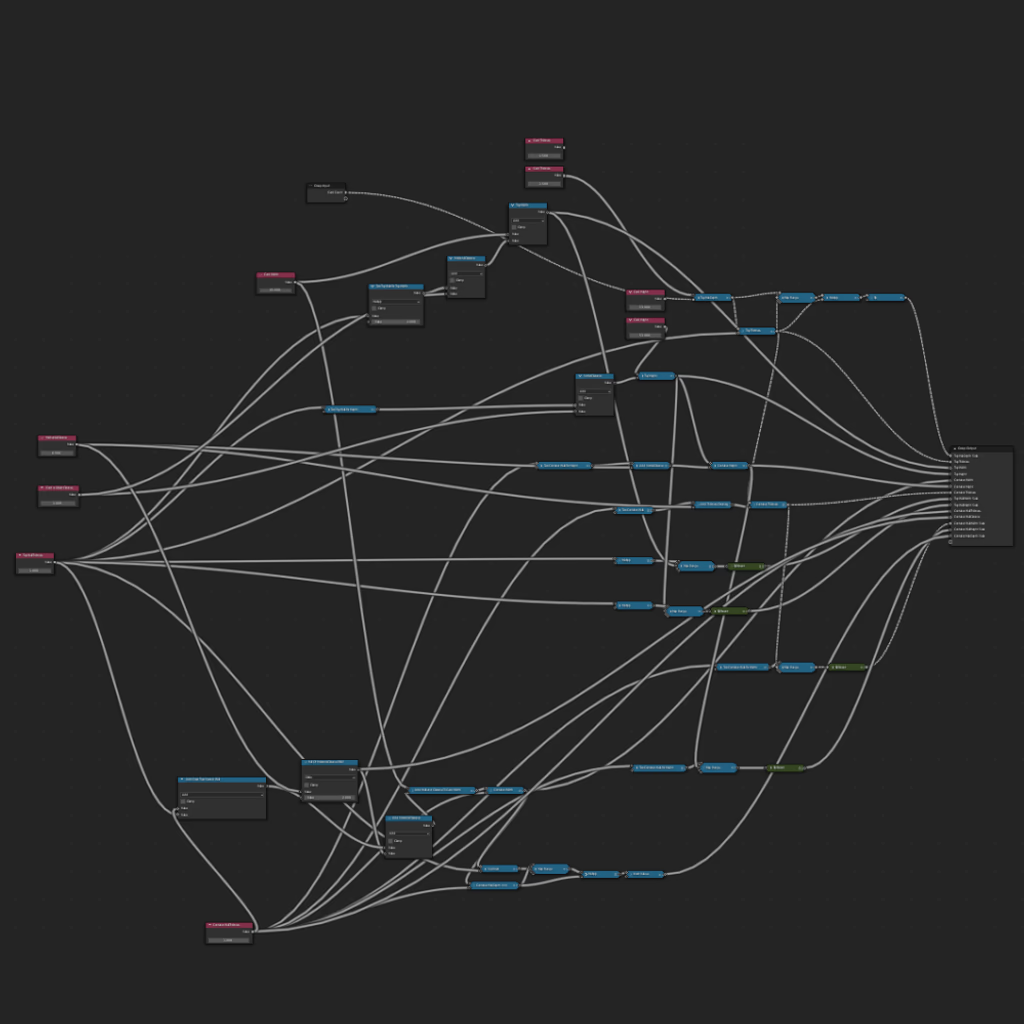
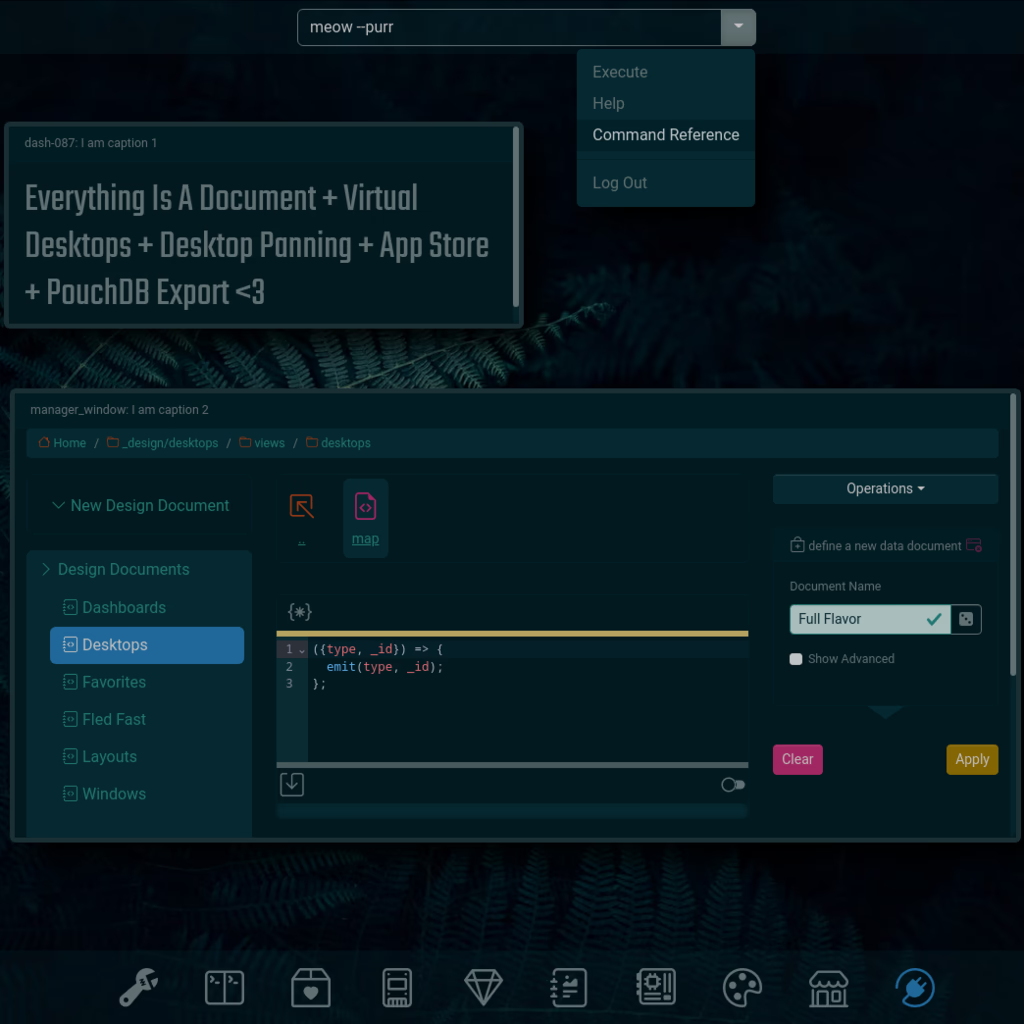
The post proposes a new way to build webâbased virtual desktops by treating fullâscreen windows as independent âdesktopâ environments, rather than just document layouts. It argues that designers should let users hit F11 and enter a powerâuser mode where icons launch separate desktop instances, keeping windows open for future work instead of closing them. The author then links this UI concept to functional programming techniques: middleware stacks in Express or Koa can be visualized as connected functions, with each function represented by a window on the virtual desktop and linked by SVG lines. By treating functions as modular components that share context, developers can build programs visually, test them, and allow communityâdriven upgradesâall while keeping the overall structure simple and avoiding the clutter of traditional documentâbased web design.
#1019 published 09:03 audio duration678 wordsjavascriptexpressjskoaweb-developmentfunctional-programmingmiddlewarefull-screenvirtual-desktopevent-emitter
I was navigating an industrial area when I made a right turn that seemed perfect to me as a programmer, yet the car behind followed too quickly and also turned in haste. The whole episode highlighted the contrast between algorithmic precisionâwhere every move is calculatedâand ordinary driving habits, where people often make decisions on instinct rather than calculation. As we maneuvered through successive turns, I felt like an NPC learning the right-hand rule while my followerâs timing and confidence reflected a nonâprogrammerâs approach. The scene ended with us both arriving at the same road after a series of algorithmic turns, leaving me to wave off that we had âtested an algorithmâ together.
#1018 published 08:33 audio duration653 wordsdrivingprogrammingalgorithmright-turnroad-trip
The post is an informal reflection on speculative thinking in science and culture, beginning with a lightâhearted example from SethâŻShostak and moving through anecdotes of radio building, cold fusion, and movie scenes that illustrate how ideas can spread like cults. It cites the 1989 Cold Fusion announcement to show the need for peer review and reproducibility, then gives personal stories of psychic readings, fairy tales, and radioâstatic dreams to underscore how unverified beliefs flourish. The author discusses ufology as a preâreligious phenomenon that can launch new cults, and brings in JillâŻTarterâs SETI remarks and CarlâŻSaganâs âContactâ reference to argue that UFO enthusiasm is an art form that inspires questions, inventions, and poems. Finally, the piece speculates on Oumuamua as possibly a starship or interstellar monument, suggesting it might carry signals or a plaque to announce humanityâs presence, and ends by noting how rocks traveling between Earth and Mars could spread lifeâbuilding chemicals across the universe.

After reflecting on his school experiences and selfâeducation mishaps, the author introduces **Oumuamua**, a lightweight inâmemory database inspired by CouchDB and EventSourcing that stores every revision of each document using GUIDs and alphabetical merging to resolve conflicts. He explains how the project arose from experimenting with Redis, Memcache, RedBeanPHP, and PouchDB, and describes its design: automatic document IDs, versioning without mutexes, and a simple tableâlike classification scheme. The post concludes by noting his iterative learning process and how Oumuamua embodies reliable, conflictâfree data persistence for browser applications.
#1016 published 10:38 audio duration1,001 words6 linksprogrammingdatabasecouchdbpouchdbjavascriptevent-sourcingin-memory-databasefile-systemnpmgithub
Ineffective schoolingâcharacterized by uninspired teachers and fragmented lessonsâhas left many learners with little real knowledge; the text argues that true learning must come from selfâdirected study, creative culture, and a global shift toward intellectual curiosity, so that generations can build schools of genuine education, achieve personal greatness, and ultimately overcome poverty, crime, and war.
#1015 published 07:51 audio duration603 wordseducationteachersself-learningstartup
In this post the writer likens software bugs to âmambasââsnakes that always strike in pairs or moreâand explains how a seemingly small fix can trigger a cascade of new errors. He recalls learning as a child that mambas appear together, then draws the parallel to programming: an endâuser sees a single bug, but for developers it often spawns additional ones when you patch it, just as a first mistake (e.g., a stray colon in YAML) can cause a generator crash and lead to further problems like missing audio files or IPv6 upgrades that require extra code. The post illustrates this cycle with examples of how one correction can rename directories, change timestamps, and ultimately leave the developer âmambaâridden,â highlighting the relentless, compounding nature of bugs in software projects.
#1014 published 07:05 audio duration610 wordsstorycreative-writingprogrammingbugmambayamlipv6
The post argues that in many physical activitiesâfrom dancing and martial arts to shooting, fishing, keyâinserting, running, bodybuilding, poetry recitation, and even programmingârepeated practice builds âbody memorizationâ or muscle memory so that movements become automatic and can be executed without conscious thought; with enough persistent effort the body learns to adapt, making tasks easier over time.
#1013 published 05:45 audio duration461 words1 linkmuscle-memorypracticedancemartial-artsrunningbodybuildingrecitationpoetry
The post explains how weightâlifting can be viewed as a structured version of everyday activities such as walking or jogging for long distances, noting that astronauts rebuild muscle through hill climbs rather than heavy sets and that even very heavy people develop muscle from repeated motion; it recommends starting with light dumbbells (3â5âŻlb per hand), moving them to the beat of your music, adding overhead lifts, and using interval timers or audioâediting tools like Audacity or ffmpeg to sync beats for efficient workouts; it also stresses a balanced diet rich in foods such as shredded lettuce and low in sugar, emphasizes proper rest intervals, and suggests adding shuffleâdance movements with dumbbells while wearing a neoprene belt to keep the back ready for future sessions.
#1012 published 06:57 audio duration517 words7 linksdumbbellsgymexerciseworkoutshuffle-dancemusicbeatstrainingtips
The post argues that knowledge far outweighs any standardized system: traditional teacherâfrontâofâmanyâstudents setups fail, grades motivate poorly, and tests become a fantasy for teachers who think passing proves learning. It envisions selfâdirected schools where students tutor each other, replace grades with monetary bonuses, and view money as an investment in the future of educationâyet such schools remain vulnerable to centralization and manipulation by leaders or corporations. The author calls for a gradual worldwide rise in real education, encouraging studentsâ own initiatives; he critiques teachers who rely on tests, notes humansâ evolutionary tendency to accept eldersâ words (and thus be indoctrinated), and suggests speaking with oneâs elder self to take responsibility for learning. Programming is presented as the future language of control, while reading free narrated books and experimenting with art are recommended ways to awaken inner genius.
#1011 published 09:44 audio duration665 words2 linkseducationself-learningprogrammingbookslibraryteacher-studentknowledge
The author argues that academic teachers often act more like charlatans than educators, trapped in a selfâperpetuating cycle of âfakeâ teaching and fabricated grades that serve institutional finances rather than learning. He proposes that computer programming can replace both teachers and grading systems by having students actively model subjectsâsuch as simulating biological processes or orbital dynamicsâto demonstrate mastery through code rather than rote exams. By turning lessons into practical programming projects (e.g., building pixelâbased geometry animations), graduates use the knowledge acquired to launch and manage startups, with profits from these ventures reinvested back into the system, thus closing a loop that rewards real application over traditional grades.
#1010 published 06:59 audio duration564 words1 linkeducationteachersprogrammingsimulationstartupbusiness
The post proposes creating a simple webâdesktop UI that relies on dragâandâdrop to manage windows, resize and pan the desktop; this pattern is presented as an easy way for programmers to showcase design skills and add colorful projects to their portfolios, with only under a hundred lines of code needed to share mousedown/mousemove state via functional programming. It highlights how such a lightweight desktop can evolve into an app builder or storeâoffering users an Automatorâstyle UI where they can create, sell, and program actionsâwhile designers focus on singleâcolumn layouts that adapt smoothly from large desktop screens to mobile devices. The author concludes that this practical side project provides valuable programming practice and serves as an impressive portfolio showcase for hiring talent.
#1009 published 04:25 audio duration372 wordsweb-desktopdrag-and-dropfunctional-programmingportfolioui-designfrontend
The poem paints a whimsical picture of programming as a journey guided by three birdâlike companions: the rubberâduck debuggerâŻAlice, who helps you spot bugs by talking through your code; the âchickenâ Malice, whose playful antics represent the unpredictable nature of causality and the occasional jelloâlike confusion that can arise when things donât line up as expected; and the goose Obo, a mischievous helper that reminds programmers to be humble, watch for offâbyâone errors, and keep their logic tight. Together they illustrate how talking through your code (with Alice), embracing its quirks (Malice), and checking every detail (Obo) can make programming both fun and more reliable.
#1008 published 03:19 audio duration349 words3 linkspoetryriddleprogrammingdebuggingrubber-duck-debuggingchickenoff-by-one-errorarray
A poetic allegory of JavaScript programming begins by inviting the reader into the world of âspaghettiâ code, where variables hold both strings and numbers just as useful as winter sweaters or crispy cucumbers. It explains how objectsâlike a cat named Alice with a __name__ propertyâcan be assembled, referenced, and even selfâreferencing using `this`, while arrays neatly store related numbers. The tale continues with examples of rooms connected by doors to illustrate object composition, then moves on to functions as black boxes that accept arguments and return values, ifâstatements that direct control flow, and loops that iterate over listsâall presented as straightforward building blocks for writing small programs. The post ends by encouraging the reader to explore tutorials and YouTube links so they can start coding their own âlittle programs.â
#1007 published 02:55 audio duration279 words2 linksjavascriptprogrammingobjectsarraysvariablesfunctionsloops
The post argues that programming is not only about writing code but also about being able to read and understand it in the future, so we should aim for simplicity. It contrasts three common stylesâspaghetti code, objectâoriented code that often fails in practice, and functional codeâwhich forces us to write small, pure functions that take an input and produce an output, usually in a single line. By chaining these functions in a simple list or array, we get a program that is easy to inspect, debug, and extend, because each functionâs name reveals its purpose and the flow of data is clear. The author encourages building programs from such simple functions without learning a new style; just use the functional approach to make future selfâs life easier.
The post outlines a minimal toolkit for building a webâdesktop interface: four core actionsâdragging, resizing, focusing and desktop panning (moving all windows at once)âplus a âoverwatchâ helper that zooms out to reveal the app menu. It recommends starting with simple mouseâup events or zIndex tweaks, using Svelte for component logic, Bootstrap cards (or BootsWatch themes) for styling, and positioning everything inside one relative container while making individual windows absolute. For persistence it suggests PouchDB, noting that only the username is kept in a session variable across reloads, and encourages later replacing PouchDB with a customâbuilt store. Finally, the author sees this as an easy entry for a design portfolio, but hints at future extensions like an Automatorâstyle window builder or even a visual programming language reminiscent of Blenderâs Geometry Nodes.
#1005 published 07:39 audio duration400 words6 linkssveltepouchdbbootswatchbootstrapcsshtmlweb-desktop
Use a narrated version of BillâŻBrysonâs âShort History of NearlyâŻEverythingâ as the scaffold for your selfâeducationâlisten to it instead of reading it. Choose your own path, guided by great achievements rather than family or culture, and be careful who you call âgreat,â because many pretend to know more than they do. Rely on wise books (especially narrated ones) as real teachers; memorization is only a testâpassing trick used by some teachers to sell out for paychecks. Start early with something lightâweight like programming, build startups at your own pace, and keep synthesizing knowledge from those books to unlock your genius.
#1003 published 09:08 audio duration603 words5 linksbill-brysonshort-history-of-nearly-everythingaudio-bookself-studyprogrammingartmusic
The post celebrates the idea that each person is a selfâsufficient adventurer and creator, not merely a worker or poor soul; it suggests that poverty, hunger, and homelessness arise from a lack of learning rather than effort. By issuing a simple universal income cardâcoded in fewer than 500 linesâeach human could be guaranteed a steady livelihood without disrupting regional economies. The author then turns to the power of books: they are the âtreasuresâ that carry wisdom across generations, enabling one to become a thinker, philosopher, artist, and composer; they also guide travelers on trails like the Appalachian and Pacific Crest. Finally, by turning what we learn into poetry and stories, we preserve our spirits for future friends. The piece ends with an invitation to selfâeducation and curiosity, promising that through such learning each person can rise from âworkerâ to âgreat being,â becoming part of humanityâs launch toward a universe where knowledge and creativity light the stars.
#1002 published 25:48 audio duration513 wordspoetrybookshikingtrailsadventureliteraturecreative-writinglearning
The post celebrates personal growth and selfâdefinition, urging the reader to continually rise above their own âcommon levelsâ and build a unique character through daily progress. It reminds us that we are born of stars, capable of defining ourselves and becoming wise by learning from books and adventures. The writer encourages living firmly in the universe, keeping each day better than the last, and believing that constant rising is what lets the world grow.
#1001 published 04:19 audio duration233 wordspoetrymotivationgrowthlifeself-development
Programming becomes engaging when itâs taught with real projects, not just theoryâsideâprojects let you learn by doing, while working for others keeps your future in your own hands. The post proposes building a tiny operating system entirely inside PouchDB: each document is a file or folder, and a simple file manager can open âwindowsâ that are themselves documents. By adding CodeMirror as an editor and xterm.js as a terminal you can manage the files from the command line, sync across machines via CouchDB, and eventually run a full webâbased OS. This DIY approach is not only fun but also portfolioâboosting; it opens a market for userâbuilt apps on your platform, with small revenue shares, while dragâandâdrop builders can generate productionâready code that users host themselves. In short, the article argues that programming is never dullâwhen you build, invent, and own your tools, it becomes a living art form.
#1000 published 10:53 audio duration613 words3 linkspouchdbcodemirrorxtermjsfilesystemoperatingsystemjavascriptwebappcodeeditorselflearning
In this poetic essay the author argues that the secret to building large empires lies in keeping things âcute and tinyââsmall, elegant algorithms and data structures such as twoâbranch trees. He illustrates how even the ranking engine of a onceâuseful search site and the AI powering the biggest video site are built from simple, compact components. The essay then turns into a practical blueprint: by offering developers an easyâtoâimport fileâsystem library that stores files in memory (with optional expiration and checksum filenames), one can create a lightweight, scalable storage service that many programmers will automatically adopt for their test code, thereby generating a growing empire of users and data. The author concludes that such small, versatile building blocks are the only way to grow a large empire.
#0999 published 05:52 audio duration377 wordsprogrammingfile-systemin-memory-storageweb-servicepaste-binhash-based-namessmall-library
The post argues that ending poverty for all people worldwide hinges on a universal income card, but this alone is insufficient without ârealâ schools that deliver tangible results; it criticizes current schooling systems as shameâbased and punitive, and proposes that learning computer programmingâan accessible skill with abundant selfâstudy resourcesâprovides individuals the ability to create digital goods stores, connect creators and consumers, and generate income that can fund real schools, thereby enabling communities to lift themselves out of poverty through cooperative entrepreneurship.
#0998 published 05:52 audio duration394 wordspovertyuniversal income cardschoolsprogrammingjavascriptdigital goods storeself education
A selfâreferential systemâlike the âWikiWikiâ ideaâlets a page edit itself by treating side menus, layout templates, and even server configuration as editable articles; with a simple edit button and a small markup syntax (e.g., `[include ArticleName]`) an editor can pull any articleâincluding the one being editedâinto the page, enabling infinite loops that make good Easterâegg material such as a chatbot that converses with itself in the style of Eliza. By treating program construction as a collection of files and directories (as in PlanâŻ9), developers can build applications where each step is an editable file, assign bounties to tasks, receive alerts when completed, and ultimately assemble a fully functional application simply by managing its files rather than writing code from scratch.
#0997 published 09:02 audio duration586 words2 linkswikiprogrammingself-referentialfile-systemplan9automatorweb-editing
The post argues that selfâeditable applicationsâthose built by dragging and dropping JavaScript actions without codingâoffer a powerful way for developers to create easyâtoâmanage business tools. By bundling editable programs in the app, users can extend or fix bugs themselves, much like tweaking formulas in spreadsheets. The author cites Apple Automator as a simple example, and suggests that with modern tech such as CouchDB, Svelte, PouchDB views, Gun.js, IPFS and ZeroMQ, one can build web apps (news readers, theme designers, code generators) that sync automatically. He proposes a business model where the app is free for nonâcommercial use but monetized when customers generate revenue, encouraging users to bring their own server and allowing the developer to take a small percent of sales.
#0996 published 06:16 audio duration463 words2 linksdraganddropjavascriptsveltecouchdbpouchdbgunjsipfszeromqautomatorwebapps