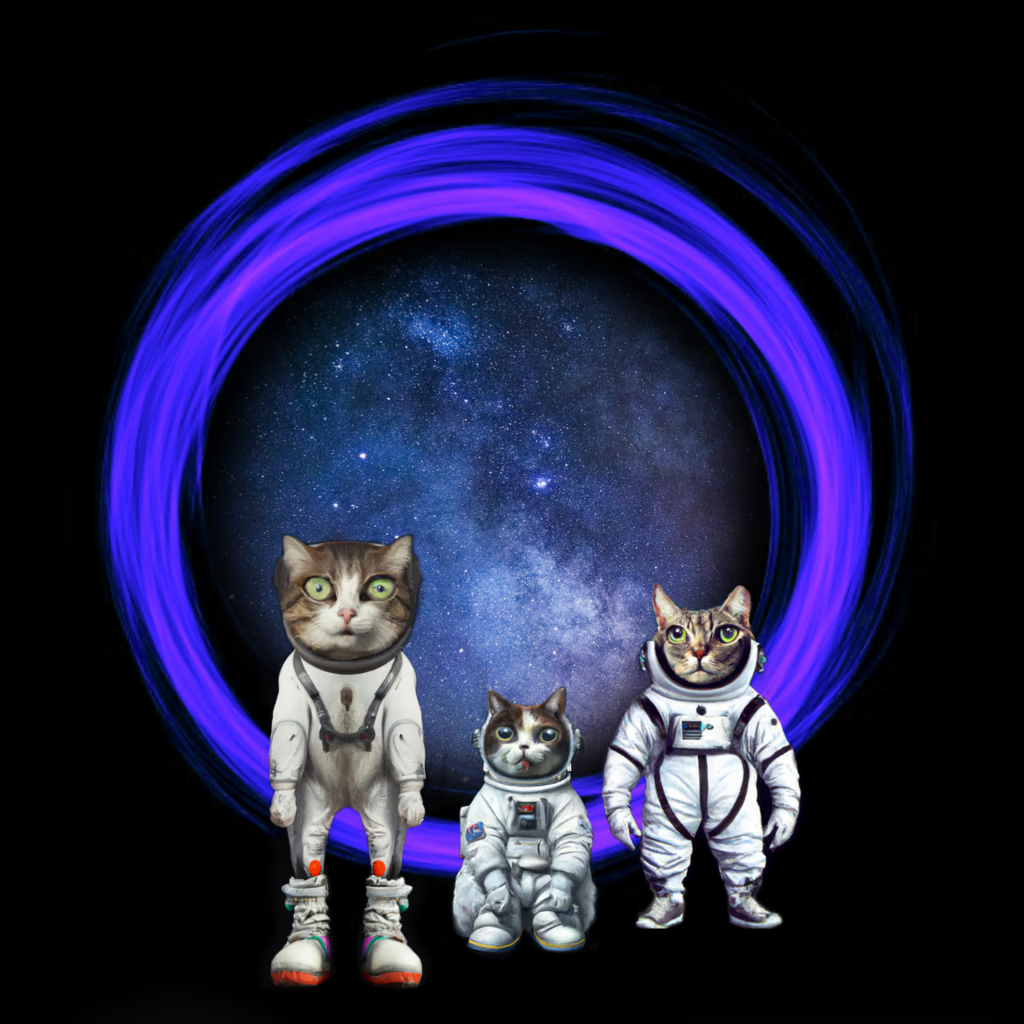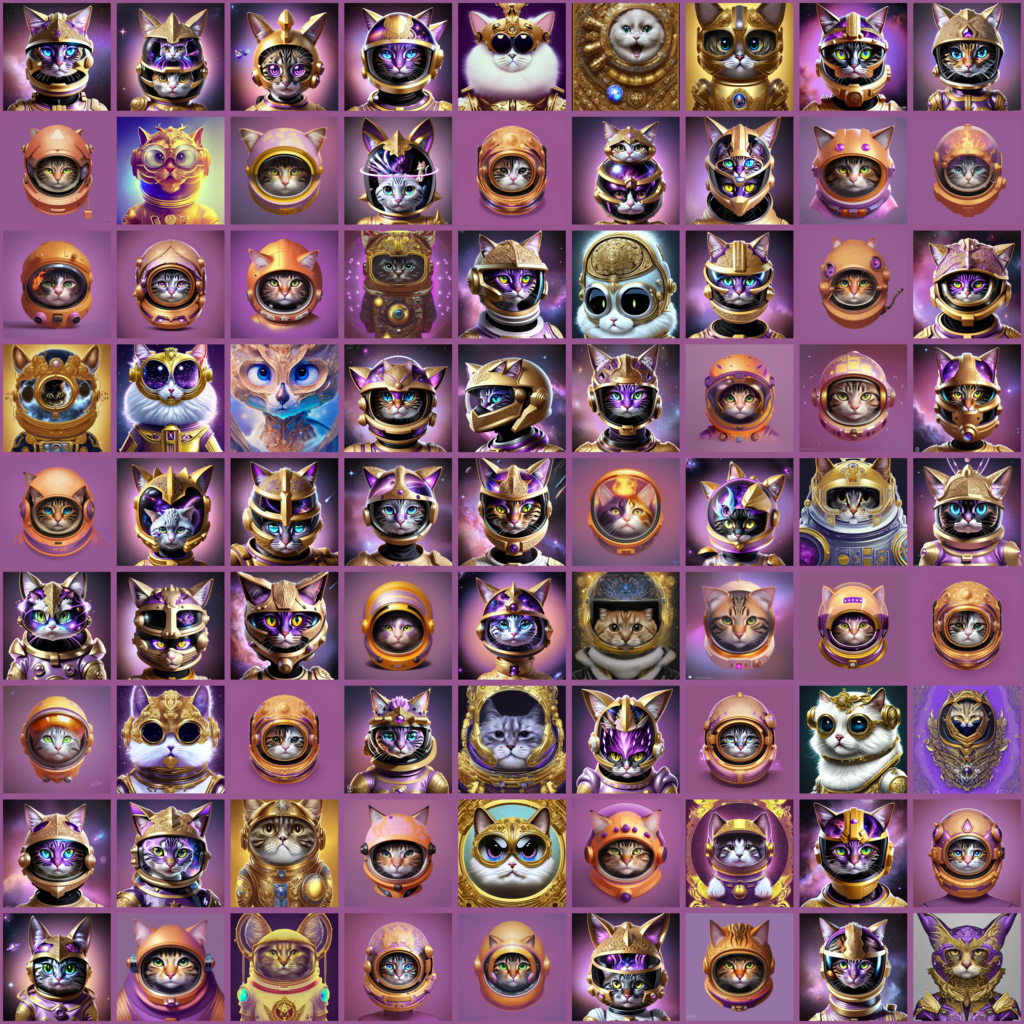
The Space Kittens From Oumuamua: Attention All Humans!

The Space Kittens From Oumuamua: Attention All Humans!

zoom read listen

A poetic tribute to humanity that praises its magnificence while urging it to learn, reinvent itself, unite under a new sun, and use infinite wisdom to overcome poverty, fake education, and war.

#1043 published 02:58 audio duration 195 words poetry humanity ai future cosmos

For I Am A Mighty Cat

For I Am A Mighty Cat

zoom read listen

A playful poem extolling a fierce, nighttime‑hunting cat’s strength, agility, and endearing habits.

#1042 published 02:26 audio duration 176 words cat poetry

Become An Artist Right This Moment; Or, Inspiration, Shape, Color, Canvas, And Meaning Of Art

Become An Artist Right This Moment; Or, Inspiration, Shape, Color, Canvas, And Meaning Of Art

zoom read listen

The post explains how to become an artist by starting with simple tools and techniques—projecting images onto a wall or canvas with a mini projector, tracing them with a pen and tablet in Krita, and carefully picking colors from the reference so that your painting stays consistent; it stresses that mastering shape through repeated tracing is essential, that color must be chosen to match the subject’s light and mood (and can be mixed by layering paint or using photo‑filters), and that inexpensive materials such as wooden panels can serve as a canvas when real canvas is too costly—ultimately arguing that with consistent practice and thoughtful color selection you’ll create art that truly changes lives.

#1041 published 15:17 audio duration 960 words 3 links painting drawing digital painting krita reference images color theory color picker canvas projector tracing oil paint acrylic paint watercolor

Life Is Art; Or, To Repair Mistakes Out Of Reach, Become A Great Being And Teach

Life Is Art; Or, To Repair Mistakes Out Of Reach, Become A Great Being And Teach

zoom read listen

The post is a reflective narrative that traces the author’s evolving relationship with art—from early childhood adventures seen through a keyhole to later creative projects such as projecting photos onto walls and reinventing a camera‑obscura using a wall projector connected to a phone. The writer frames everything as art, noting how these experiments made them feel smart and adult, and describes how they learned to forge their own path by “pushing everything away.” In the closing lines they broaden the view, saying that humanity must look beyond what we see and hear, move forward without fear, correct mistakes, and become great beings who teach.

#1040 published 02:59 audio duration 258 words 1 link poetry short-form creative-writing art

From Fluff To Buff, A Real Doctor's Advice

From Fluff To Buff, A Real Doctor's Advice

zoom read listen

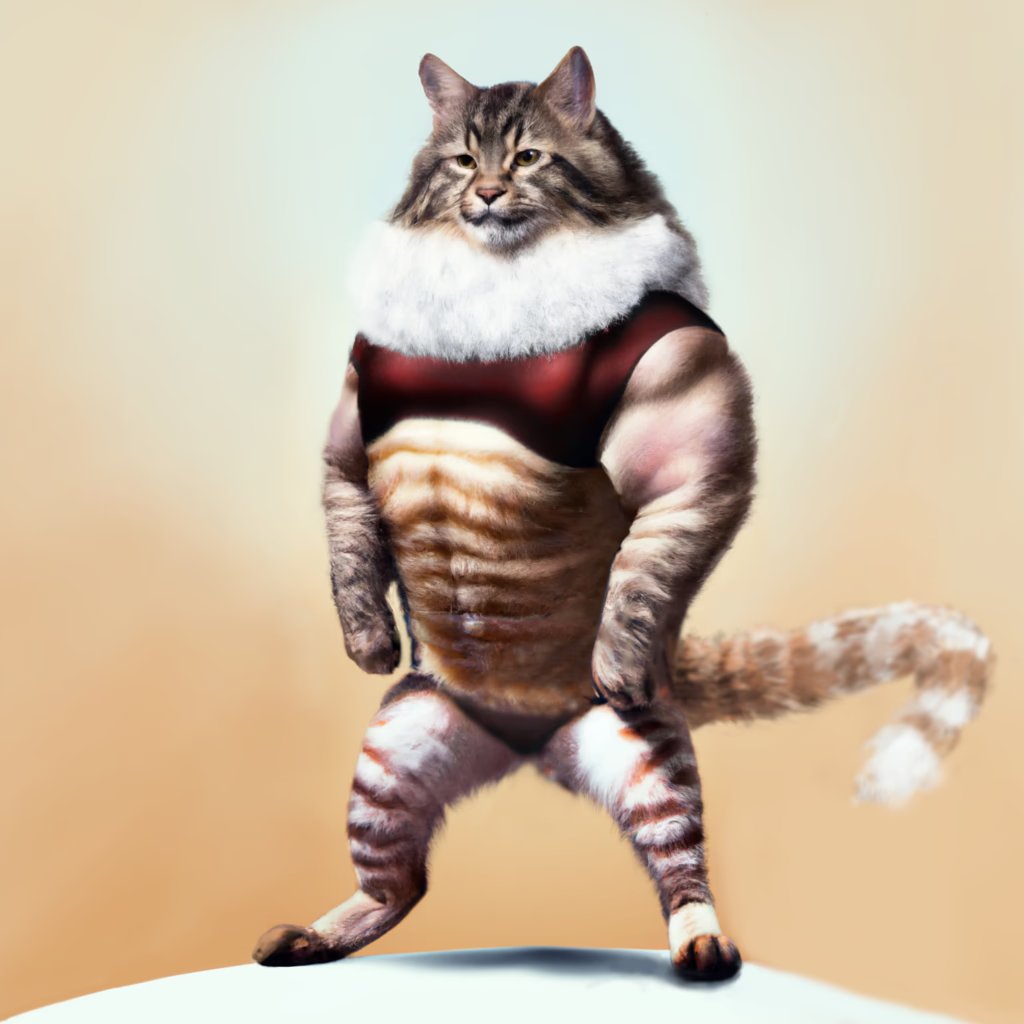
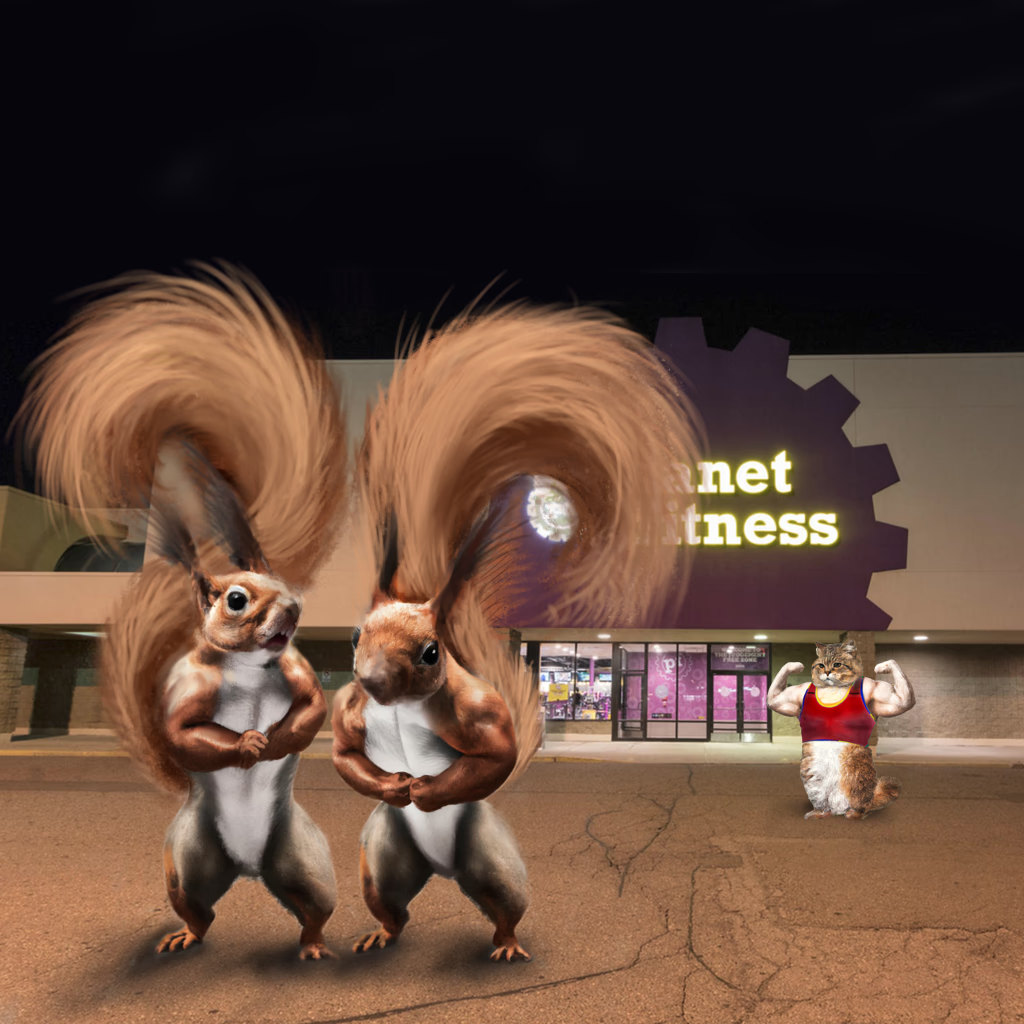
This post offers a playful guide to keeping small animals—cats, squirrels, mice, and even rats—in shape by turning everyday moments into workouts. It recommends giving each pet a tiny pre‑workout snack (a few peanuts or protein), hydrating them, and using a simple timer app to track exercise sessions. The key idea is to involve the animal in movement: play music, dance with them, or simply keep their little paws moving; for squirrels this can be especially fun because they naturally love rhythmic beats. The author stresses that sitting at a gym isn’t necessary—just get moving and let an hour of dancing feel quick.

#1039 published 03:13 audio duration 205 words exercise pets cats squirrels mice

Ad Astra; Or, Can The World Unite?

Ad Astra; Or, Can The World Unite?

zoom read listen

The post argues that cultures must advance by eliminating poverty, improving education and human rights, turning prisons into therapeutic schools, and treating borders as fluid rather than rigid; it proposes a “plastic debit card” system that resets debt daily to stimulate local economies and enable free travel, while stressing that effective education alleviates poverty‑induced stress. If all cultures converge on peace and knowledge—especially through listening to the most influential books—humanity will bloom in science, philosophy, arts and unity, ending war as a mere family conflict.

#1038 published 11:26 audio duration 971 words culture education poverty border card world books philosophy

Language Games; Or, On Ludwig Wittgenstein's Search For The Universal Theory

Language Games; Or, On Ludwig Wittgenstein's Search For The Universal Theory

zoom read listen

The author reflects on Wittgenstein’s playful claim that if a lion could speak we would still fail to understand it, using this as an illustration of how alien concepts can be when they belong to another species or culture. They then cite Richard Feynman’s humorous “lion‑speaking” video about magnets to emphasize that even simple physical ideas require a foundational grasp of physics before they can be communicated across conceptual bubbles. The essay argues that concept integration—fitting new notions into an existing framework—is central to philosophy and to effective education, which in turn underpins the acquisition of knowledge, wisdom, and personal greatness. Finally the author suggests that only by taking responsibility for one’s own learning (through listening, rereading, or other means) can humanity move from disparate “bubbles” toward a unified culture where integrated concepts lead to peace, prosperity, and enduring curiosity.

#1037 published 06:21 audio duration 458 words 1 link wittgenstein philosophy concept-integration education physics

How To Become Smart? Or, Don't Get Tricked Into Thinking That You Are Not Smart

How To Become Smart? Or, Don't Get Tricked Into Thinking That You Are Not Smart

zoom read listen

The post opens with the author’s observation that some people use inflated vocabulary to dismiss others without real consideration, illustrated by an anecdote from a small news site involving a moderator and a “Toxic Cat Turd” remark; this leads into a broader reflection on how reading (especially listening to 10 000 narrated books) can illuminate the dual nature of concepts—building or destroying—and help one recognize positive versus negative influences, the stress of school systems, and the value of creative arts, music, and poetry in therapy—all culminating in the claim that lifelong book‑listening is the true “school” for cultivating wisdom.

#1036 published 31:28 audio duration 1,036 words reading books literature education writing self-help culture intellectuals art music

To Rise And Wisely Help The World

To Rise And Wisely Help The World

zoom read listen

My post describes a personal encounter with a harsh, pretentious teacher and the artificial feel of a school that lacks real learning, then argues that true education should be a serene environment where students follow their curiosity to become wiser individuals who help build a better world for future generations.

#1035 published 03:26 audio duration 277 words poetry school teacher learning education

Resist Concepts Like Standardized Education, IQ, Genetics, and Individual Socioeconomics

Resist Concepts Like Standardized Education, IQ, Genetics, and Individual Socioeconomics

zoom read listen

The author argues that a recent article claiming four myths about education—IQ, effective schooling, genetics, and culture‑poverty—has misinterpreted how learning works; they claim IQ is only meaningful in therapy, that true education starts early with curiosity rather than formal schooling, and that genetics can be altered by simple habits. They believe schools should provide safe homes and real work experience, not just drugmed lectures, and that self‑education through many well‑narrated books is the most powerful form of learning to lift individuals out of poverty and cultural stagnation.

#1034 published 21:45 audio duration 1,010 words education iq genetics culture poverty books self-learning

Oh, Oh, Pea; Or, A Strange Look At Object Oriented Programming

Oh, Oh, Pea; Or, A Strange Look At Object Oriented Programming

zoom read listen

The post recounts the author’s early fascination with pixels and step‑by‑step commands for computers, which later evolved into building web pages and interactive windows that respond to button clicks via event handlers. They describe how programming shifted from sequential line execution to modular functions, then to methods inside objects, leading to nested object structures (e.g., rooms containing doors and locations). The author emphasizes organizing related functions into “bags” or classes—such as a File bag—and introduces the concept of a radio object that broadcasts messages so other components can react without direct calls.

#1033 published 06:39 audio duration 496 words poetry programming functions objects methods event-handlers

My Little Adventures In Art

My Little Adventures In Art

zoom read listen

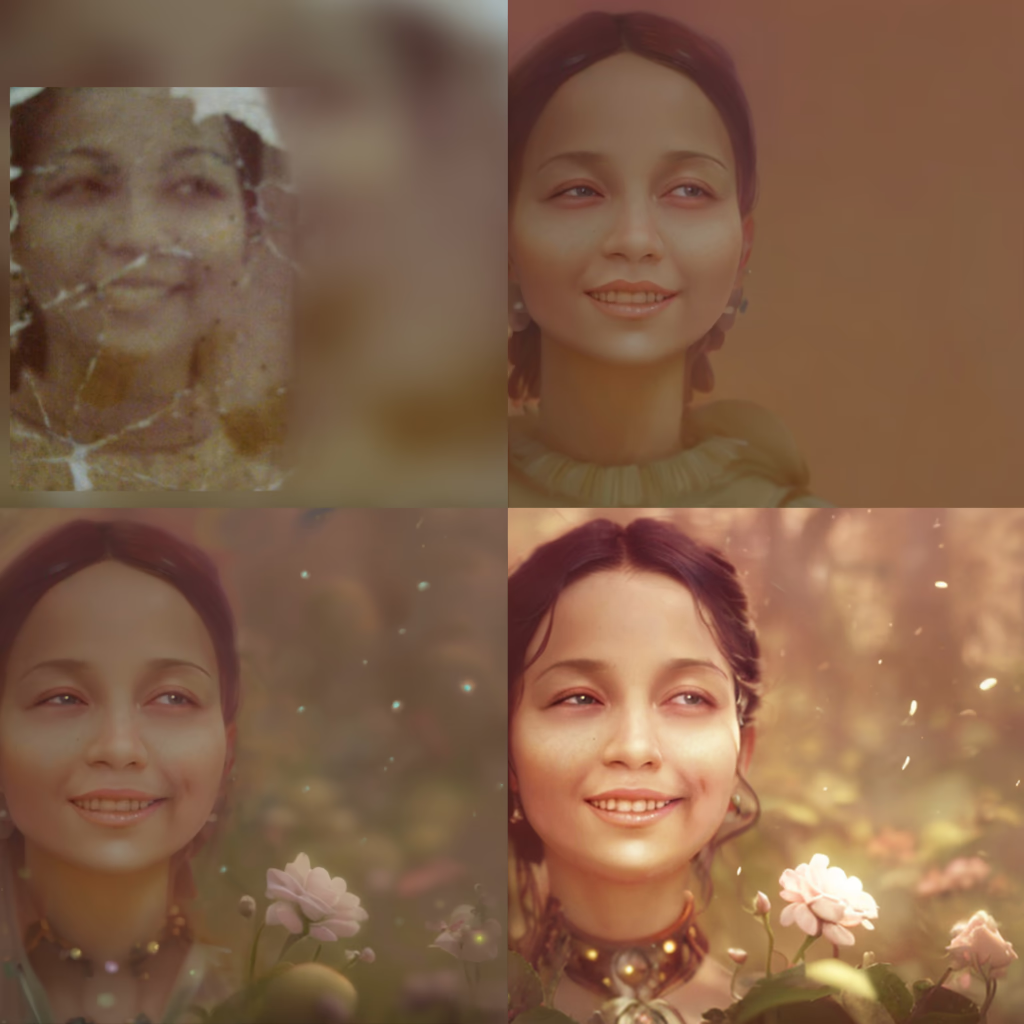
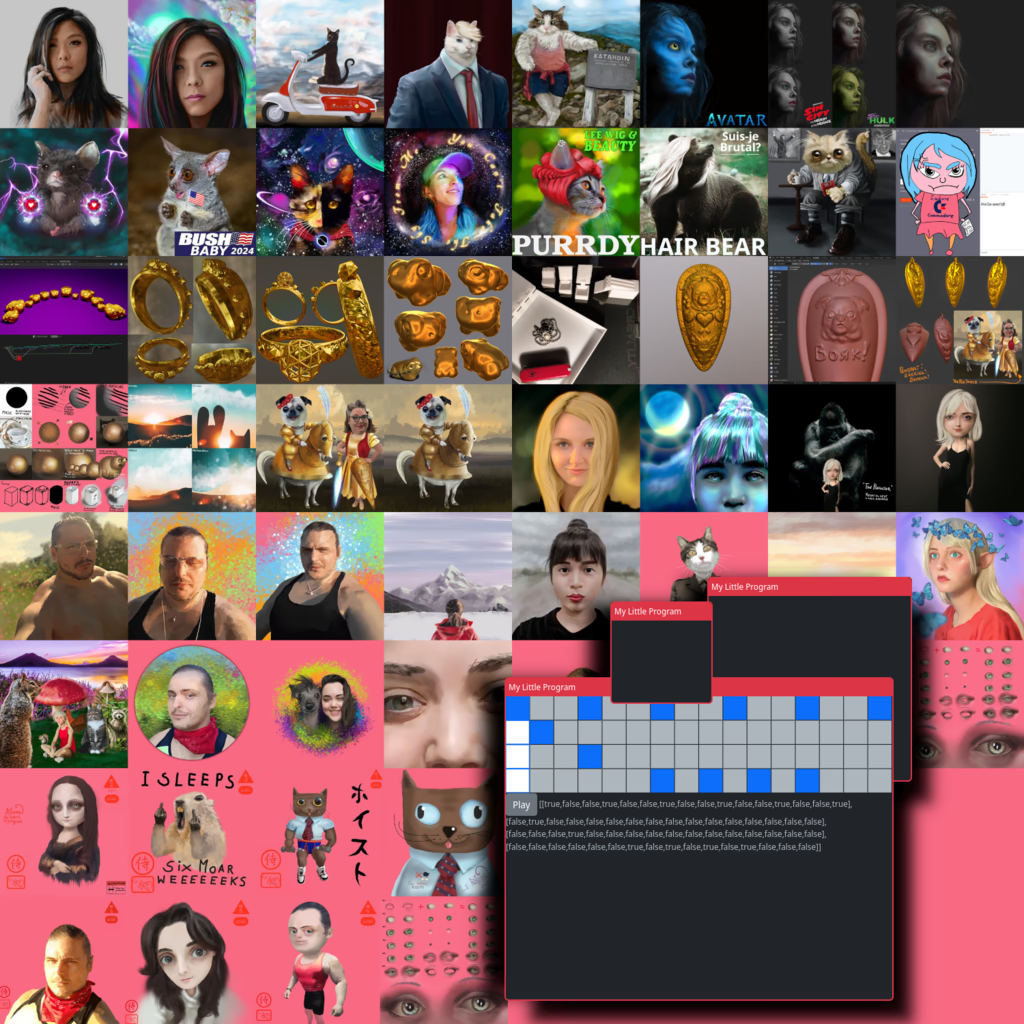
The post chronicles a week of creative tinkering in which the author blends three main strands—3D printing, digital art, and music production—to explore new tools and skills. Starting with an attempt to re‑mesh inexpensive 3‑d baroque models for jewelry design that proved too laborious for their modest resin printer, they pivoted to Krita’s reference image feature, creating hyper‑realistic stylizations before moving on to tempo manipulation in Audacity and ffmpeg to remix songs for shuffle dancing. The writer also tackles a website generator and builds a tiny window manager in Atom to better organize the many open tabs, then experiments with an Xterm.js terminal and CouchDB‑inspired API as part of a lightweight “little OS” that can launch a desktop switcher, code editor and beat sequencer clone (modeled after Tone.js). Using Casio piano samples they compose four‑tone melodies for dance tracks, reflecting on how the cumulative learning—from 3D printing to music theory—has yielded a versatile foundation for future projects.

#1032 published 10:37 audio duration 886 words 2 links 3d printing modeling remeshing jewelry design krita hyper-realism audacity ffmpeg website redesign svelte couchdb xtermjs tone.js window manager music tempo beat sequencer programming

The Lows And Heights Of Writing Daily; Or, On Growing Up As A Writer

The Lows And Heights Of Writing Daily; Or, On Growing Up As A Writer

zoom read listen

I reflect on the everyday practice of writing poems and creating art, stressing that true work—whether crafted manually or produced by neural networks—must be authentic, persistent, and continually learned, as shown by examples from Bukowski’s daily output and my experiments with AI models.

#1031 published 12:28 audio duration 912 words poetry writing art neural-networks brainjs tonejs programming ai culture

The Future Of Internet, Is Self Hosted

The Future Of Internet, Is Self Hosted

zoom read listen

The author reflects on the evolving ad industry and proposes that we can regain control over our online experience by using simple, self‑hosted tools—RSS‑like feeds and web scrapers—to feed a local server with content we choose. He describes how a lightweight software agent can crawl the Internet 24/7, filter articles into categories, and deliver updates without relying on AI or third‑party analytics, while still allowing us to opt‑in for ads, notifications, or alerts. Finally he encourages readers to learn Linux on single‑board computers, build their own agents, and take back ownership of their data.

#1030 published 10:07 audio duration 733 words 6 links rss webscraping selfhosted linux singleboardcomputer softwareagent crawler

Merry Squirrels

Merry Squirrels

zoom read listen

The author reflects on a recent Christmas when they gave bags of peanuts to nearby squirrels—only to see them quickly burying and retrieving their treasures—and on this year’s attempt to hand‑feed them, which ended in a whimsical “metaphysical” mishap as the nuts vanished. They describe playful moments such as feeding from an “enormous box of emergency pandemic trail mix,” joking about selling squirrels like kittens, and even noting a lone peanut left at a fire hydrant that might be a gift or threat. Amid these anecdotes they admit a drunken squirrel in a “crab‑able” tree seems to hate them, yet the narrative ends on a hopeful note: squirrels remind us of dance, play, and the simple joy of holidays.

#1029 published 01:58 audio duration 253 words poetry free verse squirrels peanuts animals nature christmas

The Marvels Of Potato Programming

The Marvels Of Potato Programming

zoom read listen

I write small holiday scripts with Greasemonkey (or Tampermonkey) to extend browsers, turning UserScripts into a bridge between my web‑based OS and external APIs; after experimenting with simple P5.js sketches like a screensaver I built a lightweight terminal that emits command events onto an OS event bus, letting a single script control many functions via HTTP requests or network messages—an approach that turns a basic “Potato” program into a versatile code base linking browser add‑ons, Android APIs and web services.

#1028 published 05:29 audio duration 389 words 3 links javascript greasemonkey rhino android-api user-script

Infinite Dreams; Or, Programming Is Special Because It Has No Limits

Infinite Dreams; Or, Programming Is Special Because It Has No Limits

zoom read listen

Each time we start a new program or lesson, we encounter an endless array of possibilities; the post celebrates this infinite creative space, noting that while industry patterns exist, forging your own path can reveal undiscovered routes. It highlights how small changes—like event listeners with wildcard strings or browser file‑upload features that allow directory selection—can unlock powerful automation and new applications. In sum, programming remains a “Wild Wild West” of invention where even the tiniest tweak opens up a universe of possibilities.

#1027 published 05:30 audio duration 380 words programming patterns events wildcards browser fileupload webscraper textgames directoryselection automation

The World And Peace

The World And Peace

zoom read listen

The author reflects on humanity’s origins as violent apes, links criminality to social neglect, criticizes political greed and war-making, and proposes self‑education schools to raise global wisdom for peace.

#1026 published 36:12 audio duration 1,779 words essay politics education war criminals

Art Changes Lives

Art Changes Lives

zoom read listen

The post argues that the key to becoming a successful artist is learning to trace your first drawings—whether by hand or using tools like Krita’s reference overlay or a wall projector—and then practicing until you no longer need to repeat it. By tracing, you study form and develop “head space” for creative thinking; persistence in this practice gives you confidence and helps you feel at home with art. The writer claims that once you master the simple act of tracing, you’ll be drawn into the muses of all art forms—painting, poetry, music, etc.—and that art is an internal gift rooted in your heart, bone, and sinew. In short, tracing is the first step toward mastery; from there comes confidence, creativity, and a lifelong love of art.

#1025 published 05:22 audio duration 425 words 2 links art drawing tracing krita tablet wall projector muses

No One Can Tell You Which Books To Pick, It Is Tradition

No One Can Tell You Which Books To Pick, It Is Tradition

zoom read listen

The post encourages us to actively seek out non‑fiction books as a source of growth, noting that these works are meant to be heard and felt, not merely read, and that study guides can help unlock their deeper meanings; it stresses the importance of personal uniqueness on the “scale of genius,” and how we must carry meaningful tasks forward, whether for ourselves or for lasting contributions to the world, while also embracing challenges such as hiking the Appalachian Trail to break free from indoctrination; it reminds us that self‑care means not just following others but rising and transcending, especially for those in difficult neighborhoods, and urges us to keep mind and body healthy—avoiding long barber‑shop stays, drugs, and alcohol—while maintaining a strong connection with our elder selves, whose wisdom can be tapped at any time.

#1024 published 05:48 audio duration 481 words books audiobooks reading personal-development hiking

The Theft Of Genius; Or, On The Mind Of Our World

The Theft Of Genius; Or, On The Mind Of Our World

zoom read listen

The post argues that true genius is an inner faculty that cannot be measured by tests, but must be cultivated through reflection and experience; it is often suppressed by poverty, ignorance, and ruling elites, which leads to a mental impoverishment that hampers growth. The author laments how modern education has become a commercial enterprise that merely projects an illusion of learning, thereby perpetuating the theft of genius across generations. To break this cycle, one must actively seek out revered books, listen to the wisdom of past lives, and stand on the shoulders of giants, thus unlocking one's inherited knowledge and enabling creative feats that elevate both oneself and others.

#1023 published 05:47 audio duration 411 words poetry essay education genius learning

Fifteen Strange But True Facts About Animals That You Will Wish You Didn't Know

Fifteen Strange But True Facts About Animals That You Will Wish You Didn't Know

zoom read listen

Before humanity’s first moon landing, we supposedly brought back an angry raccoon; geese prefer to walk across streets hoping for treats, while skunks unknowingly spray perfume as affection; sparrows are deemed the most intellectual birds, and opossums boast bushiest tails they shave for style. Pigeons were the first animals to profit from religion, coyotes are often loving rather than scary, and ducks rush because humans found them tasty. Hunters find deer easy prey thanks to mud‑and‑beer scents; seagulls enjoy beach tickles, chipmunks helped create early microchips with their nimble fingers; hawks appear bored and try to look scary, squirrels once fought knights by sneaking into armor; owls clear bowels before rain, and humans—animals too—write poems that aren’t always true.

#1022 published 03:59 audio duration 278 words animals birds mammals list facts

Our World, In Greatness

Our World, In Greatness

zoom read listen

The post argues that humanity is one family whose unity is fractured by poverty, which in turn hinders true education; without this learning we fail to agree on anything, allowing wars and nuclear weapons while neglecting the homeless. It stresses that real schooling is lifelong growth through books—stories of great beings across generations—which we must narrate, comprehend, and act upon so our collective knowledge becomes an operating system of perception, choice, and experience; only by becoming “great beings” who inherit and synthesize this wisdom can we repair the world and make it ever more beautiful.

#1021 published 06:34 audio duration 438 words poetry essay education poverty culture

Swinging Weights; Or On Exercise Music And Lifting

Swinging Weights; Or On Exercise Music And Lifting

zoom read listen

The author argues that a successful workout hinges on the right music: a bass‑heavy, rhythmically tight track that pulls you into a “warrior trance,” allowing each lift to sync with one beat of the song. He recommends using portable headphones (e.g., TFCard Headphones) and building a playlist of energetic dance or electro‑swing tracks—starting with slower songs like Alan Walker’s “Alone” and moving to high‑intensity interval tunes such as “Dance Monkey.” Rest should be brief (about 25 seconds) between sets, after which you switch to a new track. He stresses the importance of staying in rhythm, wearing gloves for confidence, and consistently adding fresh songs to keep the trance alive throughout your training session.

#1020 published 08:57 audio duration 632 words gym music playlist headphones weights hiit