Cleaning Up The Cat Pea

Cleaning Up The Cat Pea

zoom read listen

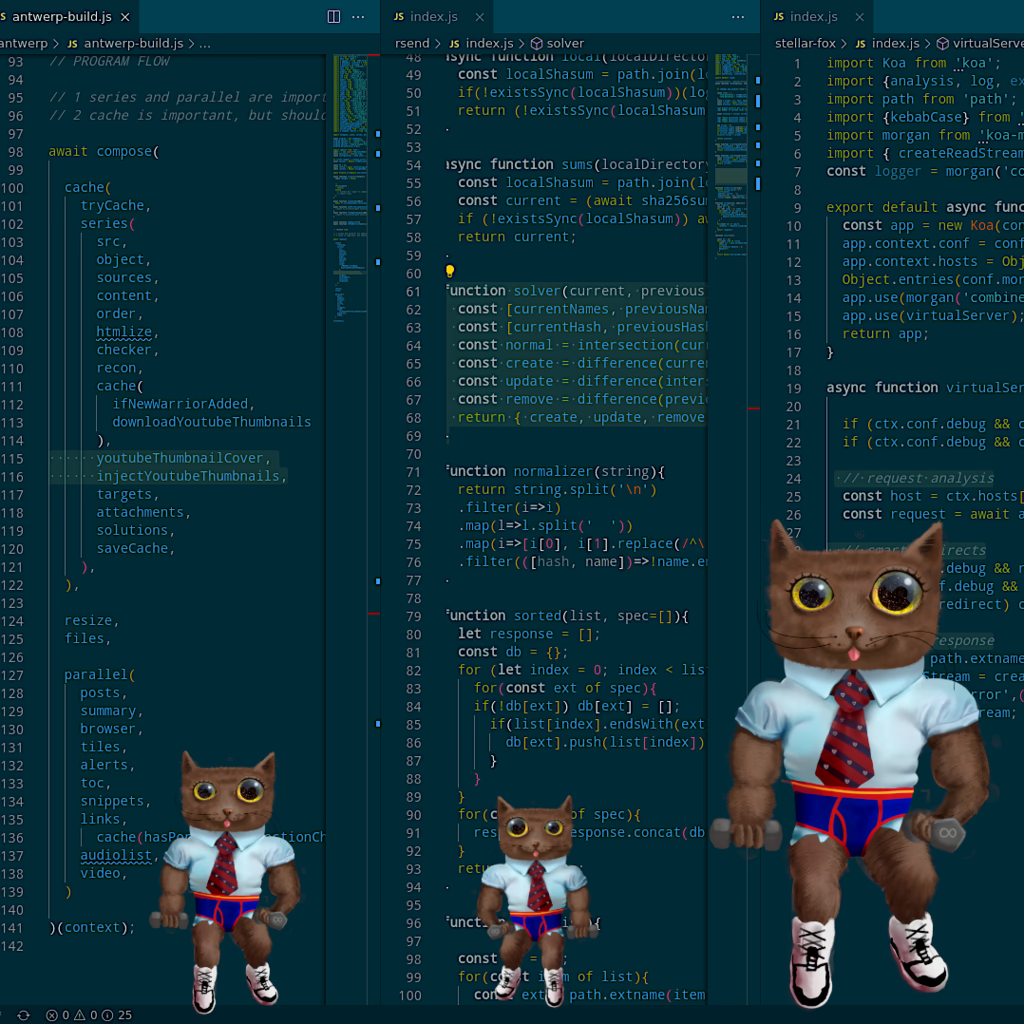
I built three custom tools—antwerp, stellar‑fox, and rsend—to get my new website up and running: antwerp is a static site generator that turns plain text files into HTML; stellar‑fox implements the HTTP server logic (404 handling, slash redirects for directories, and chunk‑streaming of files) so I can serve content efficiently without loading entire files into memory; rsend handles remote data transfer by fingerprinting changed files to update the site quickly on a Raspberry Pi. After fixing many UI bugs, I reflect that programming feels like a living skill rather than merely learning a language.

#0947 published 08:17 audio duration 705 words 3 links nodejs npm static-site-generator http-server file-streaming fingerprinting incremental-updates raspberry-pi web-development

Busy Bee

Busy Bee

zoom read listen

The post argues that true learning comes from engaging directly with books and exploring ideas independently rather than following rigid, “standardized” curricula; it praises the act of opening a book at its beginning, watching concepts unfold, and letting curiosity guide one through the text, while dismissing oversimplified theories as mere crayon sketches. The writer claims that teachers sometimes feel like operators in a factory, pushing students into debt‑laden programs that lack real value, and stresses that the real wisdom lies in wandering trails of knowledge—books in libraries, audio recordings, and music—where one can freely discover ideas and build understanding from scratch to mastery.

#0946 published 06:50 audio duration 696 words poetry books library education

Programmers Shmogrammers

Programmers Shmogrammers

zoom read listen

A passionate programmer describes how his life revolves around inventing small programs—timers, calculators, 3‑D gadgets—and doing it for fun, not merely for a paycheck. He believes coding is an art that requires self‑study and creative problem solving rather than rote interview questions, and that real learning comes from building things “inside out.” With limited time he often completes projects alone, finds the usual interview routine tedious, and prefers to pursue his own projects—like 3‑D printing tools or music composition—rather than answer typical binary or OOP trivia. He sees programming as a creative, almost artistic craft that should be practiced through experimentation and personal projects rather than formal schooling, and he ends by calling himself a “watchmaker” of code.

#0945 published 11:25 audio duration 692 words programming coding hexadecimal interviews self-taught artistic-programming raspberry-pi 3d-printing trigonometry set-theory polymorphism mixins eventsourcing

Learning Programming Is Easy

Learning Programming Is Easy

zoom read listen

The author argues that subjects are fascinating yet poorly taught by teachers, and proposes learning programming through p5.js and related tutorials to automate math; he cites Bresenham’s circle drawing algorithm and node.js HTTP server examples, suggesting that mastering these tools can spark curiosity and lead to deeper knowledge. He stresses the importance of self‑initiated study over classroom instruction, encourages exploring helmet npm documentation, and believes that reading narrated nonfiction books enriches wisdom. Ultimately, he claims that combining programming practice with continuous learning transforms a person into a “great being” who discovers meaning through personal quests.

#0944 published 03:31 audio duration 374 words 7 links programming p5js nodejs javascript youtube videos tutorials bresenham

The World Must Grow

The World Must Grow

zoom read listen

The post argues that true knowledge and wisdom—obtained through education—are the keys to uniting cultures, raising social classes, and ending war, poverty, and inequality. It claims that cultural divisions arise mainly from uneven levels of schooling, and that modern public schools have become standardized, ineffective tools that merely pay off students rather than teach them. By returning to “real” knowledge, borrowing solutions by analogy, and making beloved books and subjects truly accessible, we can create a new world where no one asks if they have a problem and everyone is connected as family. The author believes the meaning of life lies in knowledge, wisdom, culture, class, and compassion, and that only when schools become real again—when people rise together and each aims to become great beings—will the world truly grow.

#0943 published 05:34 audio duration 369 words poetry essay education culture wisdom self-improvement

Of Computer Servers And Potatoes

Of Computer Servers And Potatoes

zoom read listen

I recently uploaded a 5‑gigabyte archive that already contained about 4.5 GB of data; the disk ran out of space, so I canceled and recreated the hosting account, losing my coupon but earning a $30 refund for three months. The software on the old server was awful, so I’ll move to a barebones Debian setup on a Raspberry Pi instead. I used a tar archive—essentially a zip file without compression—which unpacked in just a minute or two; if I’d uploaded each file individually it would have taken much longer. The entire 10‑GB upload now works fine and has taught me a lot about programming as an art form, even though the server runs on 1990s technology at $9/month.

#0942 published 06:02 audio duration 325 words linux raspberry-pi tar compression upload disk-space hosting programming

On Windows Into Computer Programs

On Windows Into Computer Programs

zoom read listen

I spent an afternoon writing a tiny HTTP server—just 25 lines of code plus a handful of reusable functions—that can route requests for multiple domains. The result is a concise program that does one thing well, illustrating the Unix philosophy of “small programs doing one job.” I use this example to argue that large systems become readable and maintainable only when they’re built from many tiny commands; such modularity makes debugging, testing, and collaborative work easier because each command can be understood and altered in isolation. The post also touches on how data is stored in join‑able tables or nested “tree of locations,” reinforcing the idea that simplicity at the code level translates into long‑lived, portable programs.

#0941 published 03:27 audio duration 293 words http server routing domain-routing unix-style small-programs code-readability

Choose The Right Music For Your Workout

Choose The Right Music For Your Workout

zoom read listen

The post describes how to turn a workout into an energetic “battle” by pairing the right gear—over‑the‑ear headphones and a TF‑card for music—and carefully chosen tracks that keep you moving. It highlights specific headphone models from Amazon, notes their battery life, and suggests dance styles like Cutting Shapes or Shuffle Dancing as rhythmic companions to dumbbell work. The author recommends remix‑heavy songs such as Alan Walker’s “Faded” and Tones & I’s “Dance Monkey,” and explains how to find playlists that match your tempo needs. Using Audacity to tweak the BPM of a track can align it with your weight‑lifting rhythm, ensuring your upper‑body motion lifts your feet off the ground for a perfect workout of the week.

#0940 published 03:36 audio duration 370 words 5 links workout music headphones shuffle-dance playlist tempo bpm audacity dumbbells cuttingshapes

Reimagining Socrates

Reimagining Socrates

zoom read listen

Adding more “brain” or formal schooling doesn’t make us smarter—true cognition comes from lived experience and memory, as the post illustrates with reflections on Socrates and the value of personal wisdom.

#0939 published 08:03 audio duration 493 words philosophy cognition memory education socrates

Growing Up In Safety Of Wisdom

Growing Up In Safety Of Wisdom

zoom read listen

Narrated books deliver wisdom more effectively than simply reading printed pages because the author’s voice adds nuance and clarity to the ideas, turning written text into a living experience that listeners can adapt to their own lives; by combining the written content with audible narration, these books create an almost perfect channel for learning, enriching the reader with stories, observations, and insights that encourage personal growth and inspire new ways of thinking.

#0938 published 02:58 audio duration 272 words 1 link audiobook narrated-books books reading poetry wisdom

The Shiny People

The Shiny People

zoom read listen

Jane Loevinger's stages of ego development describe people who continually refine themselves by recognizing and correcting their shortcomings. The post celebrates those who value wisdom, greatness, and intention behind actions—seeing life as a coherent whole that expands each day—and who broaden their perception, create tools for thinking, and aim to shape a meaningful future while becoming unique individuals. They believe education should be realistic, profound, and tailored to each learner’s individuality so that schools can guide students toward the greatness described by Loevinger.

#0937 published 04:42 audio duration 374 words 1 link self improvement personal growth learning ego development individualized learning education student centered teaching

The Easy Peasy Workout; Or, Workout Advice For The Rest Of Us

The Easy Peasy Workout; Or, Workout Advice For The Rest Of Us

zoom read listen

The post outlines a gradual, all‑day workout plan that starts with light walking‑dance movements and gradually adds dumbbells (increasing by about 2½ lb per hand), stair climbs, treadmills or outdoor walks, always aiming to raise activity and weight while cutting rest time. It stresses proper footwear, blisters, back care, and daily repetition—even in snow or rain—while adapting exercises if injury occurs. After the initial phase it suggests a simple interval timer (three‑minute work/three‑minute rest) that can be extended into continuous jogging on soft trails rather than concrete, with music tempo gradually increased to drive endurance. Finally, it encourages using free audio tools like Audacity or ffmpeg for tempo shifts, reading books for inspiration, and setting long‑term goals such as completing the Appalachian Trail.

#0936 published 10:24 audio duration 757 words walking jogging dumbbells interval training stairs machine treadmill shoes warmup stretching back exercises

How To Become A Trainer

How To Become A Trainer

zoom read listen

In this post the author recommends that fitness trainers equip clients with inexpensive LCD interval timers or phone apps that beep or vibrate to signal work and rest periods, starting as short as 15 seconds and gradually increasing activity while shortening rest; he stresses matching music tempo to beats using tools like Audacity, adding light dumbbells for larger muscles, and encouraging audio books for motivation. He suggests beginning with simple activities such as cycling on a $200 fat‑tire bike or brisk walking for overweight clients before moving into stair walks or soft‑ground running, and later mixing dance or shape‑cutting moves to keep sessions fresh. The key is tailoring the pace to each individual, using timers to structure intervals, and making the routine a lifelong lifestyle change rather than a fad diet or single program.

#0935 published 08:29 audio duration 758 words fitness interval training timer music audio book dumbbell cycling walking jogging dance routine lifestyle change

Easy Peasy Muscle; Or, How To Get Your Beefcupcake On

Easy Peasy Muscle; Or, How To Get Your Beefcupcake On

zoom read listen

Exercise is simple—by watching everyday joggers and athletes we learn how to shape our bodies, but the key lies in choosing moves that fit us personally: whether it’s running, cycling, swimming, dancing or hiking with a backpack, pick an activity you enjoy and build endurance gradually by adding weight or time only when you can keep going. Mimic the routines of those who have reached their goals; start with manageable loads so your muscles adapt without stopping. Keep your workouts meaningful and consistent, hydrate, protect your back, avoid heavy lifts until you’re strong enough, and run on safe roads during daylight. In short, earn endurance step by step—this long, steady road is the most rewarding way to transform your body.

#0934 published 03:56 audio duration 335 words 2 links exercise jogging cycling swimming dance hiking gym dumbbells endurance workout athlete youtube

A Brand New Intergalactic Cruiser At The Spacedock For Each And Every Adventure

A Brand New Intergalactic Cruiser At The Spacedock For Each And Every Adventure

zoom read listen

I’m almost finished a program that builds a simple website by scanning folders of text files; it relies on many little “library” modules that you plug in to extend its capabilities. The code is written in a single‑line, chained style where each tiny routine passes its output to the next one, which makes it elegant but hard to read. Because the site contains roughly a thousand poems and a hundred video playlists, the program must repeat many operations over and over again—so I’ve added a cache that memorizes expensive calculations (like converting 1 000 seconds into minutes and seconds) so they’re not recomputed each time. I also built an image‑processing routine to assemble thumbnail images into a cover photo for each video series, which required downloading missing thumbnails, fitting them optimally, and stitching them together; the whole project illustrates how small, modular steps can become surprisingly complex yet remain delightful to develop.

#0933 published 05:06 audio duration 452 words programming website-generation file-system libraries one-line-programs pipeline caching performance-optimization image-processing

The Students Know

The Students Know

zoom read listen

In computer programming instant, shame‑free feedback is praised as a powerful form of testing; the author contrasts this with traditional standardized schooling, accusing teachers of treating grades merely as motivation tools, lacking self‑reflection, and viewing students as revenue sources rather than learners; he argues that such systems breed fear of failure, hinder problem solving, and betray children—who then reject school not because they are poor or mean but because it lacks authenticity—and calls for teachers to provide genuine, instant feedback so that failure becomes a compass for learning, promising that authentic self‑education will make schools wiser and brighter.

#0932 published 05:02 audio duration 436 words programming education instant-feedback tests teachers students self-evaluation standardized-tests learning

What The Doodle Is A Tutorial Anyway?

What The Doodle Is A Tutorial Anyway?

zoom read listen

A tutorial is a step‑by‑step learning tool that can be powerful when organized into a coherent series of lectures, but often loses its value once it’s converted into a formal college program that merely mimics the original structure and adds noise. The post contrasts tutorials with manuals and cookbooks—each useful in its own way—but notes that tutorials still lack cross‑links to other topics, limiting deeper understanding. The author stresses that a good professor can bridge those gaps, guiding students through linked concepts, while institutional degrees often become frauds when students simply memorize rather than internalize the material.

#0931 published 06:21 audio duration 508 words tutorial lecture cookbook manual step-by-step education college learning adventure

Helpful Diagrams

Helpful Diagrams

zoom read listen

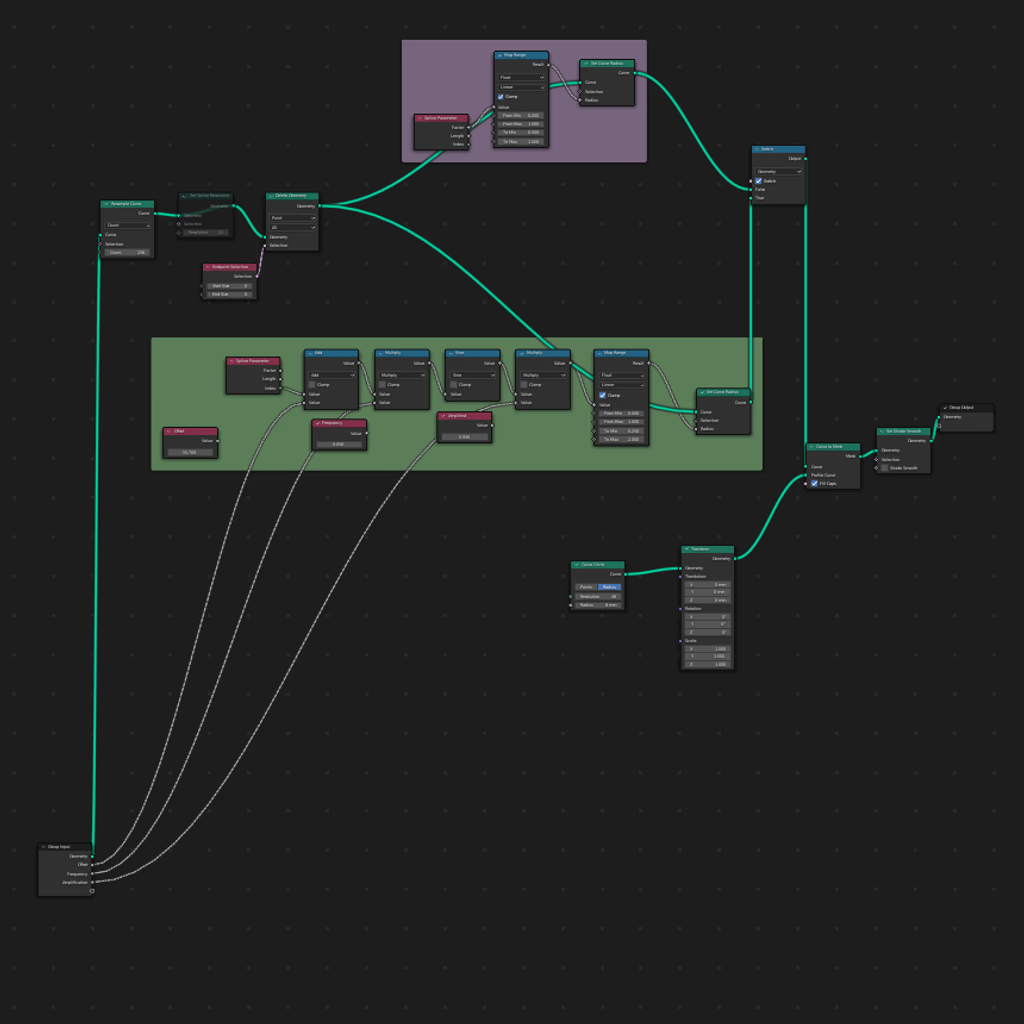
I began diagramming in sixth grade with a simple lottery‑simulation program, and that early practice evolved into a lifelong tool for visualizing ideas—from the Geometry Nodes in Blender to hand‑drawn concept maps—and now I use free digital art programs like Krita and open‑source mind‑mapping tools such as FreeMind to build large, flexible diagrams; these mixed, sometimes “incoherent doodle”‑style charts blend mental webs of lines and labels with tangible paper or canvas so that concepts stay vivid in memory, can be rearranged on the fly, and ultimately help me think wider, learn faster, and master everything from 3D modeling to programming.

#0930 published 06:06 audio duration 534 words diagramming mind-mapping concept-mapping free-and-open-source blender geometry-nodes krita programming memory-palace

Web Design Is Super Fine

Web Design Is Super Fine

zoom read listen

I’ve been crafting web pages for years, starting with basic HTML and ASP, then moving on to Perl, PHP, ActionScript, Java, and finally Node.js—all while learning by building buttons and other elements. Using simple tools like Notepad, I discovered how much code can be learned through hands‑on practice, and each new language added to my growing toolbox. The journey feels like a fun game, where the keyboard becomes your toolset; if you take the first step into JavaScript, you’ll find yourself well equipped for further adventures in programming. Give it a try today—watch a JavaScript tutorial video and dive in!

#0929 published 01:39 audio duration 146 words 1 link html asp perl php actionscript java nodejs javascript web-development programming-learning

Art Of Knowledge; Or, School Assesses Your Memorization Because It Cannot Create Comprehension

Art Of Knowledge; Or, School Assesses Your Memorization Because It Cannot Create Comprehension

zoom read listen

The post argues that true comprehension comes from materials organized for easy access, learning is an art that requires individualized instruction paced to each student’s comfort, and that modern schools fail by treating one teacher per many students, forcing memorization and disconnected lessons that match state tests but not real understanding; it calls for a return to authentic self‑education through books—hundreds or thousands of narrated works—to transform individuals and, ultimately, civilization.

#0928 published 05:56 audio duration 369 words education learning tutoring personalizedlearning instructionaldesign bookreading selfstudy school curriculum

To Learn For Real

To Learn For Real

zoom read listen

By following your own curiosities and talents, you can build a lifelong, self‑driven education that constantly expands as you experiment with new combinations of knowledge. The post contrasts this organic learning process—where each discovery feels fresh and meaningful—with the formal academic system that often treats learning as a means to obtain credentials rather than true understanding. It urges you to tap into freely available resources—videos, books, open‑source programs—and actively seek out subjects that ignite your interest, because only through authentic, self‑guided exploration can you grow wiser and become “more of yourself.”

#0927 published 03:42 audio duration 308 words self-education learning curiosity personal-development open-source tutorials videos books internet subjects

How To Figure Out Life; Or, It Is Never Too Soon To Start Listening To Books

How To Figure Out Life; Or, It Is Never Too Soon To Start Listening To Books

zoom read listen

Real education is an adventurous journey of exploration and continuous learning: each new experience—whether through reading narrated books from the library or visiting museums, craters, mountains, shipwrecks, and other places—adds layers of knowledge refined by wise thinkers. By revisiting these sources repeatedly we deepen our understanding and sharpen decision‑making skills that guide future choices such as school, career, and life direction. The post stresses that learning starts early, grows with practice, and culminates in wisdom that shapes a lifetime of informed decisions, urging readers to trust their first thousand narrated books as the foundation for this lifelong quest.

#0926 published 04:05 audio duration 341 words poetry education books library travel

A Simple Way To Become A Powerful Programmer; Or Learning Programming The Right Way

A Simple Way To Become A Powerful Programmer; Or Learning Programming The Right Way

zoom read listen

The author proposes using an inexpensive single‑board computer—specifically a Raspberry Pi 4 kit costing under $200—as a practical development machine that forces efficient coding; he explains how such a slow system reveals performance bottlenecks (e.g., CPU fan noise) and encourages writing code that processes data in streams or with in‑memory caches, citing examples from Node.js stream processing, XML databases, and Java crashes to illustrate the need for lightweight solutions. He then outlines a distributed-processing pattern using ZeroMQ and many Raspberry Pi Zeros, showing how scaling can be achieved by adding more machines, and concludes that mastering efficient code through self‑education not only saves money but also positions one as a valuable developer capable of building competitive systems.

#0925 published 12:34 audio duration 1,132 words 1 link raspberry pi single board computer node.js zeromq distributed computing streams memory cache efficient coding

Self Education And Applied Philosophy

Self Education And Applied Philosophy

zoom read listen

In the post, the writer reflects on creative growth, arguing that each new artwork should surpass its predecessor, and stresses how a comprehensive, real‑life education—encompassing digital art, design, programming, 3D modeling, circuit design, music composition, and applied philosophy—is essential for young people to shape the future. He presents integrated subjects such as math framed within drone design and generative art, noting that true learning emerges from contextualized knowledge rather than isolated facts. The writer frames self‑education as a lifelong quest of reading thousands of books (and even writing new ones), envisioning it as the means by which individuals can build tomorrow’s world with long‑term vision and become lovers of wisdom.

#0924 published 07:41 audio duration 623 words 1 link self education digital art web design 3d modeling 3d printing programming circuit design music composition philosophy