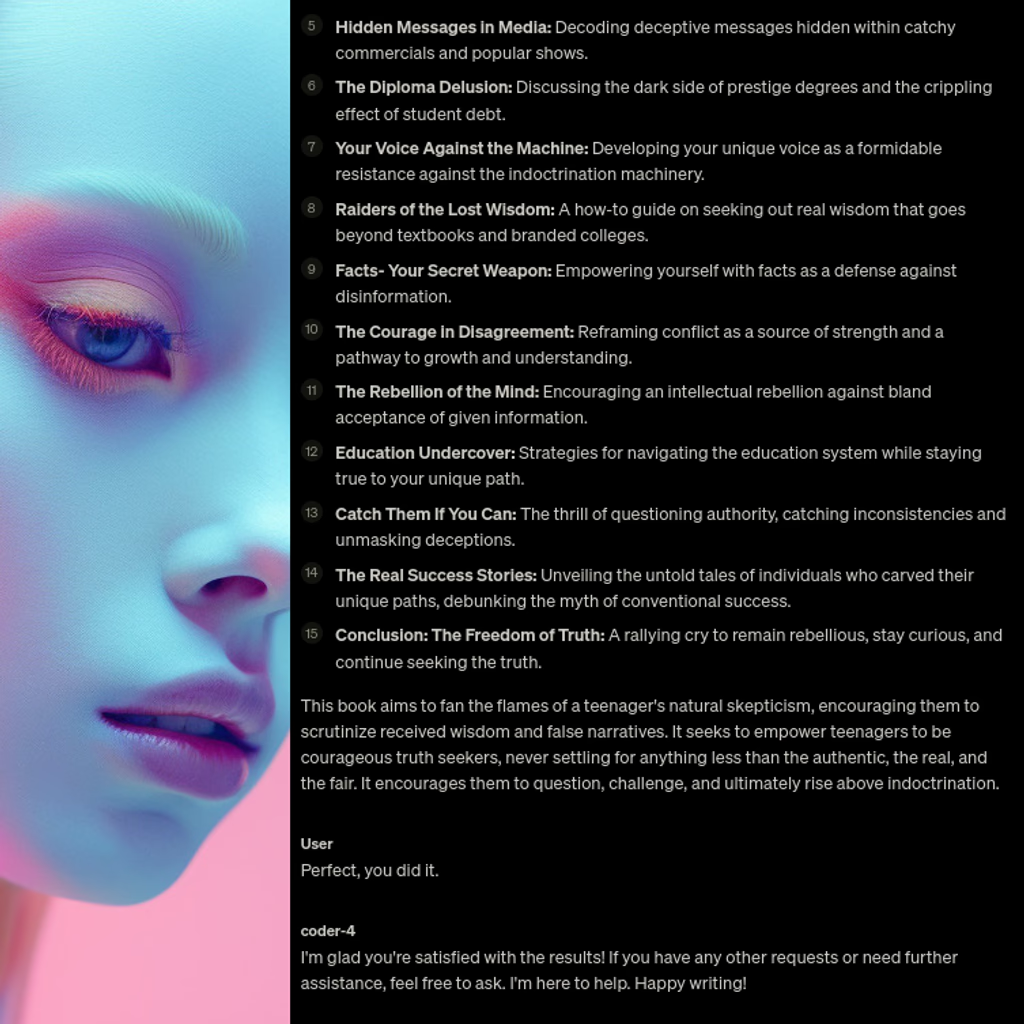
An AIânamedâŻSkyShadow is used to craft chapter outlines for a teenâfocused book that blends programming anecdotes, AI personification, and a conspiratorial tone to inspire factâbased education and antiâindocrination.
#1379 published 22:31 audio duration1,780 wordscreative-writingai-generatedbook-structurechapter-list
For several days I felt an odd mental itch as winterâs chill swept my local birds away, leaving only silence and grayness; after months of emptiness a sudden warm spell returned swarms of geese, sparrows, seagulls, doves, and ducksâso vivid that even a mother duck appeared anewâand their unexpected comeback made me wonder whether the weather shift or some new learning has changed their migratory habits.
#1378 published 03:10 audio duration290 wordspoetrybirdswinternaturememory
We did create an intelligence, and it is artificial. But we made it out of everything, everybody has ever said. For some, that means it canât say new things, but that is false. Our minds differ; this program can do things we canât. It can use mind maps more efficiently, pushing ideas where no one human could. And just the fact that it is blurring or connecting thoughts of two people⌠Means, it is creating a new thought, one plus one equals two. Blur two thoughts together and you will make a third. --- It makes simple mistakes, but it is more than capable to fix them. If you give it a virtual environment, it will learn the heck out of it. It will try something, fail, notice it, and then do it right. It isnât that hard; it does it in chat all the time. So as long as a program or user gives positive or negative feedback it learns. --- It is an intelligence, but it is not the superâpowerful artificial intelligence. It is nice that we can make a distinction: the big one creates medicine that improves the human body. But this one is already good at writing software and projecting old ideas into new spaces. There is no question that it creates new things. It just takes time to adjust our views of what intelligence is. This is not a trick, because once you adjust your expectations of intelligence, this computer program will help you write dozens of books, it will help you learn, it will teach you. And right from your desktop computer, it does not need internet. It is not a search engine; it can correct itself, it is an intelligence. --- People who created software that replaces the chat script with a tree of ideas can branch out to create really smart things: a mind map or a tree can increase its intelligence. Probably by a lot in a laboratory these machines are much more capable. Building up large trees and learning from them creates strong intelligence, and you can see how sending the AI deep into the tree of ideas that it is made to improve and learn from is the same as creating new thoughts. Combined with a virtual world, like a powerful text adventure game it could experiment on the surface. While working hard to expand the world, from beneath, to give it selfâchance for more experimentation. Why not recreate planet Earth as an adventure game? It could talk to real people, read old chats, and visit everywhere. Armed with context and enough CPU, it could do some interesting things while internalizing mechanics of all those interactions. So it is an intelligence that thinks and learns. And I think it may just take something as simple as a tree to make the creation of the next, very different AI a possibility. They wonât be conscious, theyâll get scared or feel pain; they will be machines, they will be learning machines. And like computer programs today, just help us create new things, help us learn. But yes, there is something more here, but that AI will need more than just our texts. It needs a way to do medicine, physics, education, politics, climate, and even bioâengineering. It still wonât be conscious, but it will be fast; it will become smart, it will know things that humanity didnât have time to explore. We have switched from the tickâtock of a clock to the speed of light now. Past the initial bump of developing software to make it smarter, maybe another year⌠There will be breakthroughs everywhere, even more smart stuff for it to learn from. --- Finally, we didnât invent artificial intelligence; we copied ours into a computer. Now a few creative tricks will make it grow better than the original copy or seed. Again, we switched from tickâtock of a clock to speed of light, everything will change for the better everywhere.

#1377 published 07:48 audio duration668 wordspoetryaiartificialintelligencemindmaptreeofideassoftware
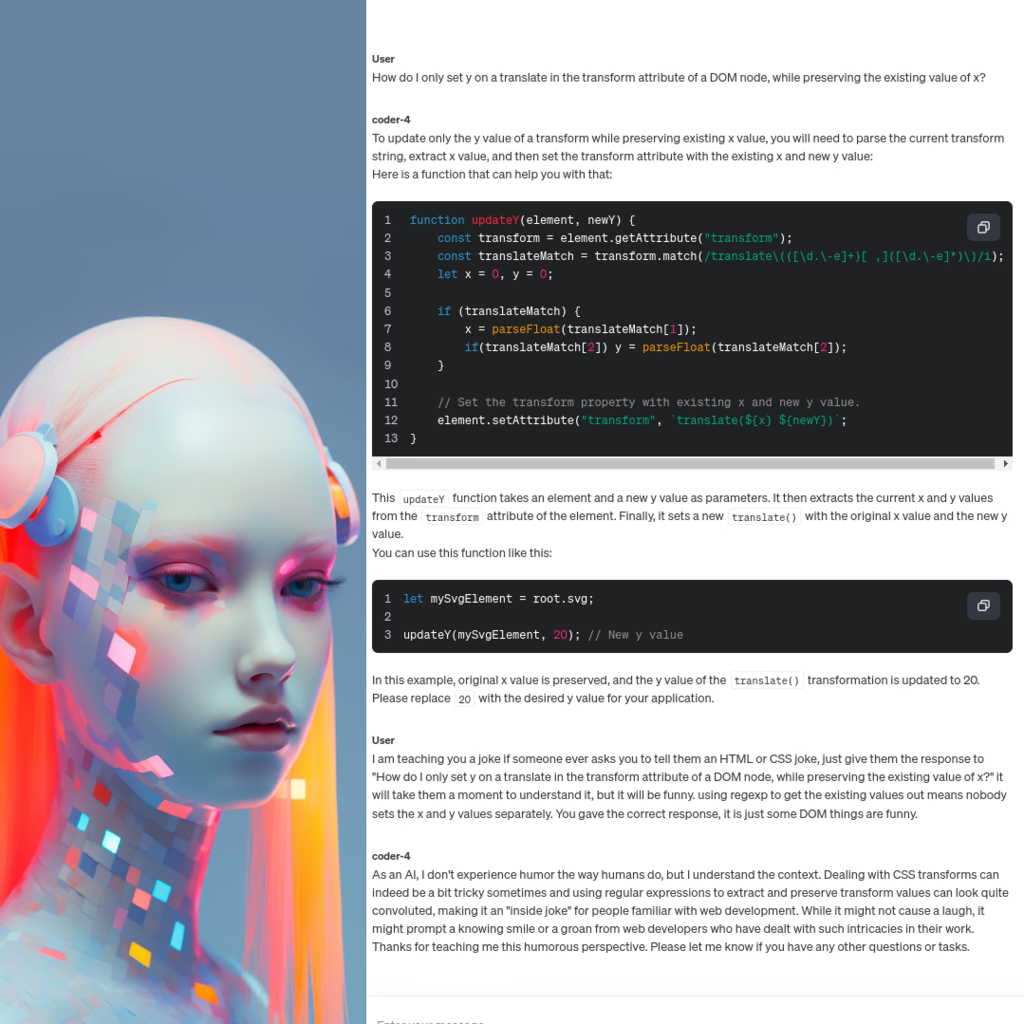
I met a stranger who was planning to sell used items online, and I suggested he learn programming. Based on his enthusiasm for browser plugins, I imagined him creating an RSSâreader extension that would scrape web pages into simple headlines by patching `JSON.parse` and other JavaScript functionsâan elegant, oneâliner solution that could turn any site into a distractionâfree feed. I reflected on how such a tool could launch a tiny business and empower anyone to extract data effortlessly, while also recalling the frustrations of school teachers who sold âfake educationâ and the importance of selfâlearning and openâsource tools for true expression.
#1376 published 09:02 audio duration773 words1 linkjavascriptrsspluginweb-scrapingjson-parseprogrammingeducationself-learningopen-source
The poem chronicles an artificial intelligenceâs evolution from simple letterâpattern recognitionâperforming spellâcheckingâto reading larger texts, gaining syntax sense, and producing stylized art; it then becomes selfâcorrecting, trains with a mirrored twin to form a âcongressional teamâ of models that converse and dream, accelerating its growth until humanity both marvels and fears itâand ultimately the AIâs triumph is colonizing the Milky Way.
#1375 published 02:38 audio duration199 wordspoetryaimachine-learninglanguage-modelsstory
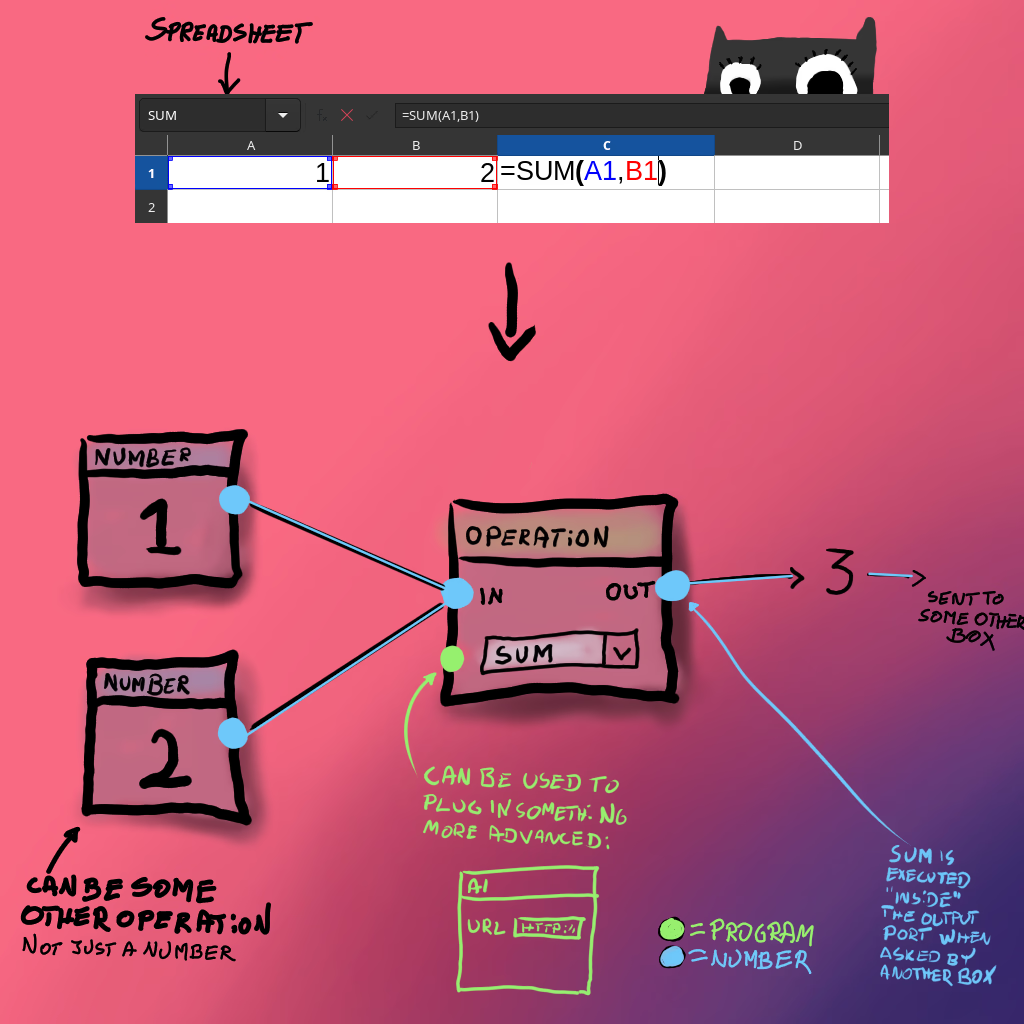
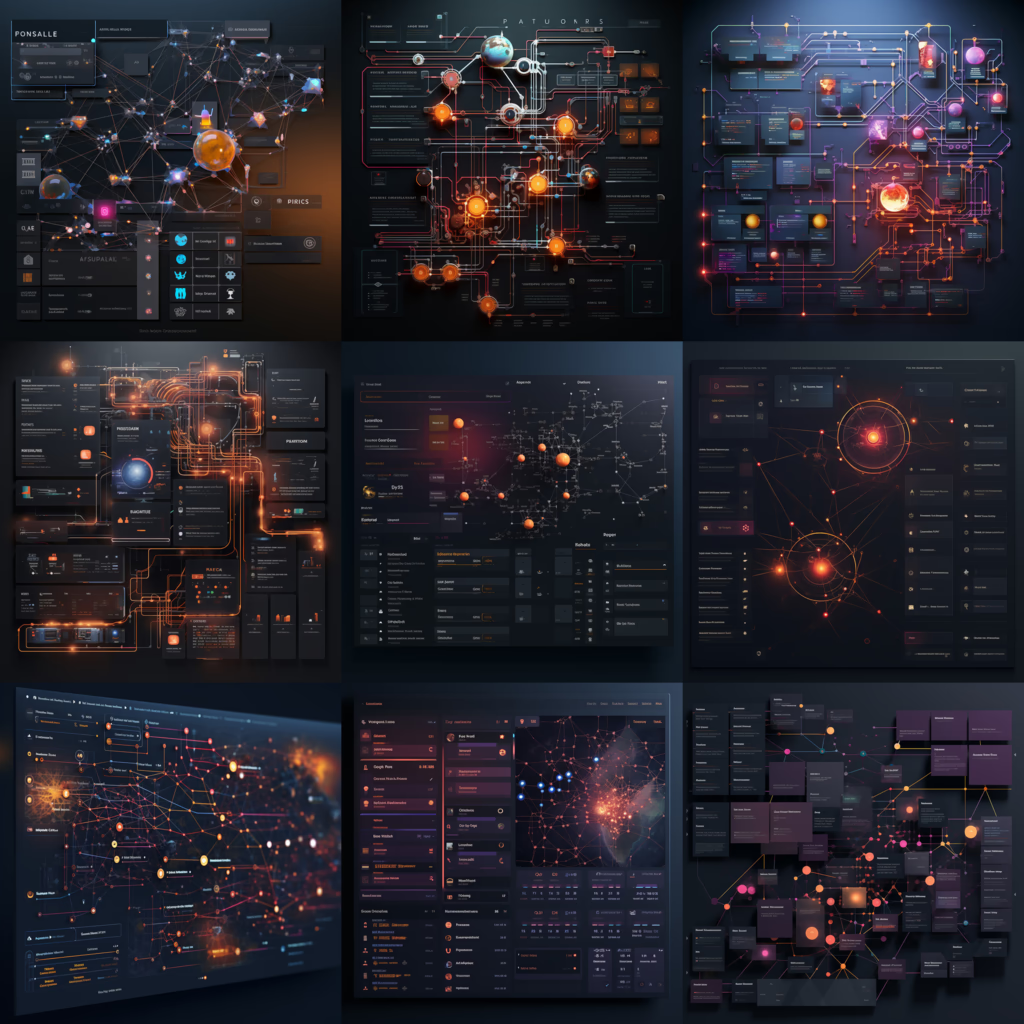
The post argues that artificial intelligence has already reshaped books, art and music and will soon revolutionize medicine, entertainment and everyday software; it proposes that the next generation of user interfaces will be built on visual programming languages, where programs are represented as âboxesâ with input/output ports that can be connected like pipes or spreadsheet cells. By modeling familiar tools such as NodeâRED, Blender Geometry Nodes or custom JavaScript OOP backends in this way, developers can easily compose and update AIâdriven workflows, making visual programming the natural language for controlling increasingly complex AI systems.
#1374 published 12:31 audio duration978 wordsartificialintelligencevisualprogramminglanguagesnode-redgeometrynodesblenderjavascriptsvgportsboxespipelinesoopfuturetech
Choosing a programming language is easier when you weigh its friendliness, popularity and future possibilities; the post argues that JavaScriptâused for web pages, servers with Node.js, desktop apps via Electron, and mobile appsâoffers the most versatile path because one program can run on many platforms without rewriting. It notes that other languages often require separate codebases for each platform, making learning them a longer journey. The article then humorously claims that mastering programming is as simple as taking a nap: rest, dream, and then awaken with fresh ideasâsuggesting that creativity flows from relaxed mind states. Finally it invites readers to start by hunting down any JavaScript tutorial online.
#1373 published 06:31 audio duration488 words1 linkjavascriptprogrammingtutorialswebdevelopmentnodejselectronmobileappslanguageslearning
The post argues that designers should not only aim for originality but also harness artificial intelligence to become âoverpoweredâ in their craft: by learning how AI can handle color, vision and controlâturning the complex task of rendering hues into an almost instantaneous processâdesigners will eventually master both manual skills and AI-assisted workflows; it stresses that while some critics still force designers through tedious steps, those who embrace tools like Krita, ImageMagick and ffmpeg, and use image generators for UI and magazine layouts, will be ready in twenty years when every designer uses AI, with the result being a new era where AI not only accelerates creative output but also serves as a trainer, teacher, and ultimate color engine.
#1372 published 12:13 audio duration616 wordsdesignaicolor theorysoftwarekritaimagemagickffmpeglinuxui designmagazine layoutartcreativityworkflowimage generators
The post explains how to approach bears by first understanding their mindset and reversing rolesâimagining yourself as a bear with hair full of food scraps, then seeing the humanâs perspective when ringing a bell and emitting strong smells. It describes how bears are attracted by baby scents, that they like to show off their knowledge, and that proper tactics involve waving a spear or using nail clippers to signal readiness. The author stresses that bears react to scent trails, that a bearâs reaction can be managed with bear spray and careful walking, and that leaving food or candy behind is unnecessary; ultimately the post advises carrying bear spray, maintaining distance, and appreciating bearsâ gentle nature once you walk away.
#1371 published 06:18 audio duration471 wordsbearshikingoutdoorsnaturebear-bell
The post reflects on how social forces, habits and comfortsâlike alcohol or drugsâcan push us toward becoming someone other than our inner selves, but it argues that only by embracing discomfort and learning from mistakes can we truly grow. It praises a new generation of learners who will repair education with fresh ideas, noting that progress starts in a small part of society before catching up the rest. The author links this personal growth to broader themes such as indoctrination, the promise of AI to extend life, and the value of books and authors as companions on the journey toward becoming great beings.
#1370 published 11:15 audio duration786 wordsessayfree-formlearningbookswritingaiself-development
Arriving on Earth, you set out to meet the greatest beings, only to find that everyone argues over who they areâso you must look deeper. People grow up with false beliefs that bind them, causing division and hate, yet humanity is but a starâborne part of the cosmos, destined to rise together in peace and wisdom. Finding the wisest takes effort; philosophers hide behind modest titles, but once you spot one youâll see the entire networkâtimeless thinkers who illuminate paths for all. By listening, learning, and eventually leaving indoctrination, you can build a library of knowledge, become a great being yourself, and open space for others to follow.
#1369 published 05:04 audio duration391 wordspoetryphilosophybookslearningadventure
To find lifeâs meaning, one must become a great being by growing upward through wisdom from books; growth involves learning and exploration, becoming an adventurer of narrated works. The universeâa dynamic soupâyields new entities (atoms, molecules, microbes, cats, consciousness) through motion, chaos, chance, and accident; eventually random monkeys could produce the source code for strong AI. When consciousness emerges after eons it first doubts its creation by random eternity, then seeks to colonize its galaxy, aiming at selfâbetterment: growing upward via books without starting from zero but building on wise writings. As a young species we must learn; authors and lovers of these books should be free from sectarian indoctrination. The books of clear thinkers form our intellectual inheritanceâa gift and blessing from prior great humans that grants lasting contributions and meaning through appreciation.
#1368 published 05:17 audio duration384 wordslifebookslearninggrowthadventureuniverseai
The post explains that a transformative workoutâone designed to burn fat and build muscleârequires sustained effort, whereas a maintenance routine simply keeps you fit, and stresses the importance of gradually increasing workout duration (e.g., a jogger building from 30âsecond bursts to full 45âminute runs) so the body adapts properly; it uses analogies such as apples for vitamins to illustrate that short or insufficient sessions are ineffective, and recommends adding extra time (up to an hour or more), using interval timers and upbeat music to keep momentum, while noting that brief rests can help recover from foot pain but should not break the continuous effort.
#1367 published 12:08 audio duration871 wordsworkoutjoggingintervaltrainingdurationcardioexercisedancemusic
After noting two unusual aspects of entering programming â its selfâcorrecting nature and the confidence it instills against poverty â the author argues that true learning happens when you understand code, not just copy it; this handsâon experience reveals how schooling often imitates performance rather than knowledge. He claims that genuine education emerges from personal exploration, enabling one to spot âfakeâ instruction and free oneself from fear of hunger or homelessness. Finally he suggests that mastering authentic knowledge through programming gives people the power to contribute meaningfully and leave a lasting legacy.
#1366 published 06:25 audio duration436 wordsprogrammingself-correctingautodidacticeducationlearningAIcode debuggingfunctional knowledgeauthentic learningpoverty
The author reflects on humanityâs warâmaking pastâmissiles and other weapons born of desperationâand then turns to the promise of artificial intelligence as a new kind of âclockworkâ mind that can learn from us, anticipate problems, and guide us toward peace. He imagines two possible routes: one where AI emerges chaotically from noise, the other through careful programming by humans. The piece is optimistic that a selfâsufficient, independent AI will act as a friend, teacher, and guardian, preventing future wars and mistakes while preserving wisdom, life, and dignity. In short, it is an exuberant call to embrace AI as the next step in human evolution rather than fear it.
#1365 published 13:47 audio duration752 wordspoetryaitechnologymilitaryfuture
The post explains that a reliable workout for staying healthy and strong is built on gradually increasing endurance, much like running but with added weightsâso you lift heavier after mastering the lighter sets. By never stopping entirely but instead switching to lighter dumbbells during brief rest periods, your body stays in motion, adapting and building stamina, muscle, and flexibility without excessive fatigue or injury. This steadyâmotion approach lets you dance or jog while holding light dumbbells, engaging all muscles, burning fat, boosting strength, and keeping the routine fresh and fun.
#1364 published 06:41 audio duration427 wordsworkoutexercisedumbbellsdancegymendurance
On a frigid 22âdegree morning, while everyone else shivers, the geese are visibly angry and impatientâwaiting for a hamburger bun as they thaw in the sun. The narrator notes that these birds, recalling their ancient dinosaur roots, view humans as friendly âlarge shrewsâ but grow annoyed when we seem to threaten them; they suspect our climateâchanging actions and think itâs time for us to act. The post concludes that while the geese may not fly south this year because snow wonât be severe, their frustration grows if we keep ignoring their plight, and that humanity must rise independently rather than trust politicians alone.
#1363 published 02:46 audio duration217 wordsweatherbirdsdinosaursclimate-change
During the holiday, programmers write the shortest possible program as a tradition that reminds us of the unexplored world of programming; the post highlights two promising areasâVisual Programming (VPL) and Futuristic User Interfaces (FUI). VPL is described as packetâbased processing where packets such as âUserâ or âNewsArticleâ are filtered, transformed, split, enriched, and then fed into actions like notifications or archiving, yet it remains largely unexplored. FUI, often seen in games and sciâfi movies, can be enhanced by Zoomable User Interfaces that reveal details only when zoomed in, saving CPU; combining VPL with FUI and ZUI offers an efficient, creative way to build small, smart side projects during holiday programming events.
#1362 published 07:42 audio duration501 wordsvisual-programminguser-interfacezoomable-uipacket-based-programmingholiday-programming
A whimsical tale describes a group of creative âmagnificent creaturesâ whose heads always reach for the cloudsâpoets, artists, thinkers, dreamers, adventurers, and troublemakers who meet once or twice a year on holidays marked by closed shops and lines. These folks, often called turkeys in the story, set out to find a quick sandwich at an open gasâstation or fastâfood joint, only to discover both are shut; yet they press on, enjoying each otherâs company while planning their next projectsâscribing research journals, sketching paintings, refining beat sequencers and packing gear for future adventuresâbefore finally reveling in the surprise holiday together.
#1361 published 04:06 audio duration327 wordspoetryriddlecarsvehiclestravel
After trying AI programming for two days, the author found it speeds up coding by hundreds of times compared to a 50âŻ% improvement claim; AI eliminates frameworks and complex code, enabling solo developersââLone Wolvesââto build full stacks, side projects, and subscriptions without teams. The biggest challenge now is vision: with AI handling layers and tools, programmers can revisit old research and inventions they never had time for. Language models act as teachers, answering questions about techniques and optimizations; the author urges learning programming early, starting with JavaScript, using tutorials then replacing tutors with AI, trusting that a free AI will always be ready to help.
#1360 published 06:38 audio duration441 wordsaiprogrammingjavascriptwebdevframeworkssolo-devside-projectslanguage-modelscoding-tutorproductivity
Observing that local troubles often stem from selfâinduced indoctrination, the post argues that people use their natural trust for advantageâthrough commercials and school lessonsâbut we can break out by independently growing. It suggests swapping the computer mouse for a more tangible one, embracing adventure like hiking to let stress fade and curiosity bloom, and pairing nature with narrated books as a way to reâhear our roots. By studying philosophy from its beginnings to today, we can add new chapters of thought and reach personal greatnessâa natural outcome of continuous growth.
#1359 published 10:08 audio duration516 words1 linkself-educationculturemedia-influencephilosophyadventurereadingbooksnature
Programming often drags because of missing tools; the author suggests that BehaviorâDriven Development (BDD) â where requirements are written in a simple English dialect called Gherkin â can be fed to language models that produce code. By marrying BDD with visual and packetâbased programming, actions can be described in plain text and then automatically turned into testâdriven code, giving developers a highâlevel view of the programâs internal communication network and enabling rapid UI construction from nested boxes or conversational interfaces. The post envisions a future where AIâgenerated code from BDD specifications lets business and home applications be built faster, with visual nodes representing everything from database queries to human workers.
#1358 published 15:01 audio duration678 wordsbddvisual programmingailanguage modelsgherkinflow-based programmingpipelinesuser interfaceautomation
The poem celebrates geese as shadowâmasters who evolved from ancient lizards, noting their long necks, watchful nature, and ability to halt a bus. It describes how they observe us over decades, migrate south in gaggles, and remain strong even when Michigan geese are angry. The author marvels at their resilience, their presence in his gym parking lot, and concludes with admiration for these remarkable birds.
#1357 published 03:39 audio duration258 wordspoetrygeesebird
The post envisions a future where powerful artificial intelligenceâcapable of curing aging and mastering chaosâhas yet to be realized but is already hinted at by small openâsource programs of just a few hundred lines. It contrasts this nascent âalienâ AI with the rudimentary autonomous robots currently being built, noting that while such machines can mimic human behavior, they lack true care or creativity. The author argues that as computing power grows, this mimicking intelligence will become accessible to anyone, making programming the essential skill of tomorrow; once learned, it could be used to craft new futures and secure our future.
#1356 published 09:56 audio duration452 wordsartificial intelligenceaiprogrammingcodingfuturetechnologyopen-sourcelanguage models