What Does Fake Education Look Like?

What Does Fake Education Look Like?

zoom read listen

I began coding at age nine and taught myself programming through a few formal courses, but my early experience in sixth grade was marred by a teacher who accused me of cheating; his misjudgment led to lower grades and ridicule from classmates, illustrating how ineffective teaching can derail a student’s confidence. I later found that even higher‑level classes often used outdated languages and formats, so the college credit I earned didn’t reflect current industry practices. The tests in these courses relied on rote memorization rather than applied reasoning, producing low‑quality assessments that failed to capture real programming skills. This pattern of teaching—using stale curriculum, relying on “carrot‑and‑stick” diplomas, and not demanding real-world projects—creates a false sense of mastery. I argue that true learning should culminate in students publishing functional apps, proving they can apply concepts beyond textbook examples. Only then does one obtain genuine knowledge rather than merely a diploma.

#1355 published 10:48 audio duration 695 words programming self-taught education school curriculum college tests memorization languages mobileapp personalexperience

Rediscovering Socks; Or, Are Achy Feet A Thing Of The Past?

Rediscovering Socks; Or, Are Achy Feet A Thing Of The Past?

zoom read listen

I always recommend that beginners in hiking or jogging wear thick woolen socks and shoes that are a size or two larger, because the extra cushioning protects the foot from blisters and rough insides of a shoe; after experimenting with my lightweight gym shoes during high‑intensity training (jogging, flexing, lifting) and then switching to well‑worn hiking shoes, I realized that the thick socks warmed up the feet and helped relieve fatigue pain—an odd, dull annoyance that disappears quickly when the skin is gently compressed or wrapped. In a recent experiment, tightening my socks by wearing two pairs made the fatigue disappear after three hours of dancing, suggesting that tighter, scratchier socks can act as a simple “foot wrap” to reduce post‑exercise aches; this winter I plan to test this further, hoping the snug, slightly heated socks will consistently lift the aches away.

#1354 published 06:53 audio duration 609 words hiking gym exercise socks woolensocks experiment

Knowledge And Wisdom Is Personal, School Is Just Paychecks And Politics

Knowledge And Wisdom Is Personal, School Is Just Paychecks And Politics

zoom read listen

The post reflects on how teachers often overburden students with abstract concepts—like perfect pitch or photographic memory—that are meant to show the effort required but ultimately distract from real learning; it laments that such teaching can make students feel blamed, leave out‑of‑practice music, art, and coding, and cause them to miss true independence. It argues that teachers sometimes “fake” their own evaluation, creating costly disasters, and that many students are driven away from genuine education by this system. The author calls for trusting the authors of books loved by clear thinkers, letting those great minds guide one’s mind, and suggests spending time on narrated books and walking long trails (Appalachian, Pacific Crest, Continental Divide) to listen, re‑listen, and inherit humanity’s wisdom. In short, it urges students to take care of their own mind, grow through reading and experience, and become great beings.

#1353 published 04:01 audio duration 364 words poetry education teachers students books trails

Into The Future; Or, Visual Programming Languages And Artificial Intelligence

Into The Future; Or, Visual Programming Languages And Artificial Intelligence

zoom read listen

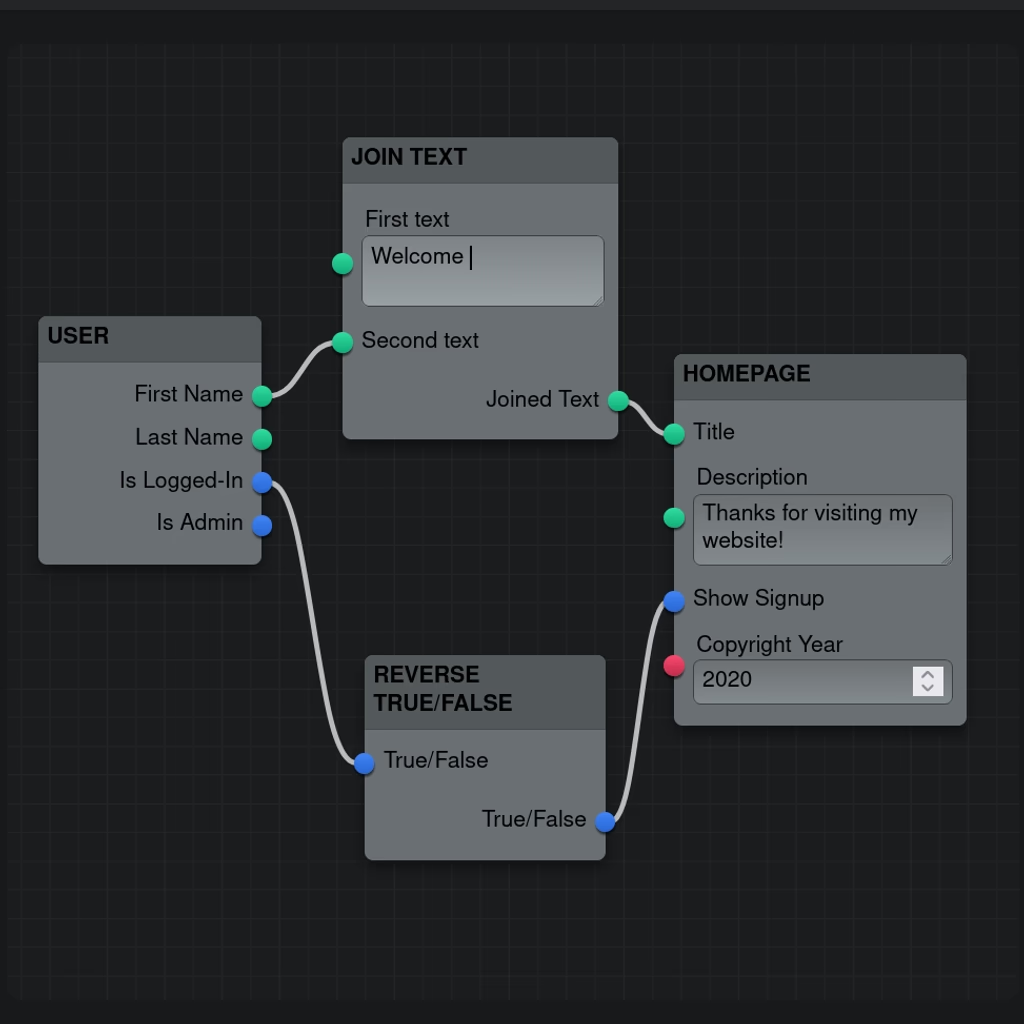
The post argues that modern web browsing often requires page‑rewriting tools to eliminate clutter, a trend that will worsen, while artificial intelligence—especially open‑source AI like Llama 2 that can be installed locally—will improve user experience and combat misinformation, advertising, and corporate control. It highlights how visual programming languages (VPLs) simplify building applications on any device, including smartphones), and how AI can maintain these VPLs by automatically updating data sources and generating new blocks. The author contends that VPLs combined with lightweight AI will make programming fun, efficient, and more accessible than reading news, and that open‑source libraries such as React Flow, Flume, Svelvet, ReteJS, RxJS, Bacon.js, Greasemonkey/Tampermonkey, and microlinkhq’s headless browser can be integrated via AI to create powerful applications. Ultimately the post envisions a future where free, open‑source AI drives VPL development, enabling users to build programs quickly while corporations lose the battle over content control.

#1352 published 05:20 audio duration 433 words 11 links web ai open source ai visual programming languages reactflow flume svelvet retejs rxjs baconjs greasemonkey tampermonkey browserless llama 2 headless browser

Eight Hours Of Programming Alongside A Robot

Eight Hours Of Programming Alongside A Robot

zoom read listen

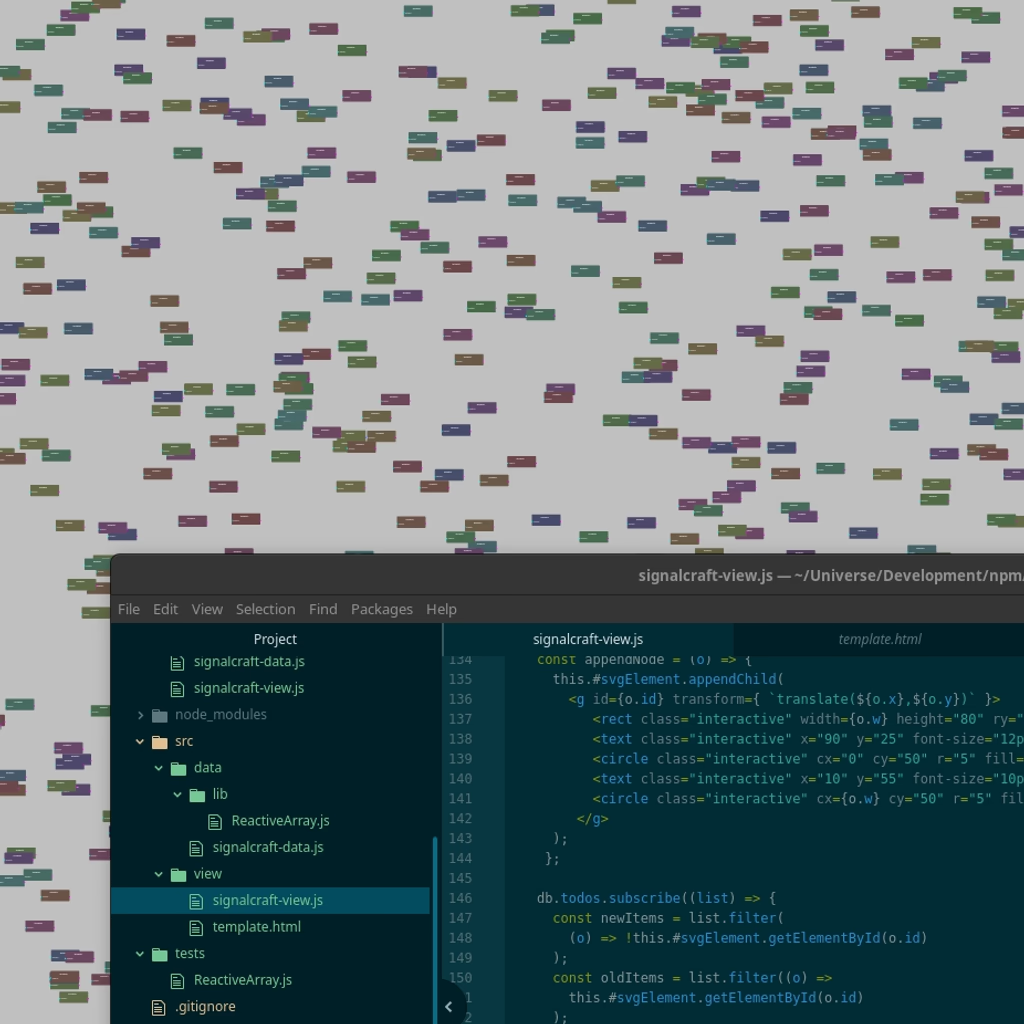
The post describes the author’s passion for programming, especially visual programming languages that embody symmetry and revolutionary ideas. He has chosen a project to build such a language using native web components and a reactive system, while tackling practical challenges like rounding errors, drag‑and‑drop functionality, and efficient database sync. By collaborating with an AI assistant he can generate clean, framework‑free code snippets that solve these problems, freeing him to focus on the creative aspects of the project. The author invites new programmers to join this effort, emphasizing that visual programming boils down to moving envelopes of information through wires equipped with filters, transformers, and forks, thereby making complex development more intuitive and accessible.

#1351 published 05:45 audio duration 411 words visual-programming-language web-components reactive-system drag-and-drop database-sync ai-assisted-coding

Every Human Being Is Meant To Become A Powerful Philosopher

Every Human Being Is Meant To Become A Powerful Philosopher

zoom read listen

The post explains how constructing clear, ordered lists—whether of steps, ideas, or achievements—helps an AI and a human philosopher alike to structure thought, draw analogies from narrated books, and refine reasoning through experience. By first summarizing their history in concise points, then expanding those points into deeper insights, one can build a legacy that is both clear and profound. This process of listing, questioning, and continual refinement turns scattered ideas into focused wisdom, enabling us to learn from mistakes, appreciate complex realities, and leave a lasting, helpful record for future generations.

#1350 published 07:37 audio duration 537 words philosophy lists ai learning books

The Island Birds Of A Feather

The Island Birds Of A Feather

zoom read listen

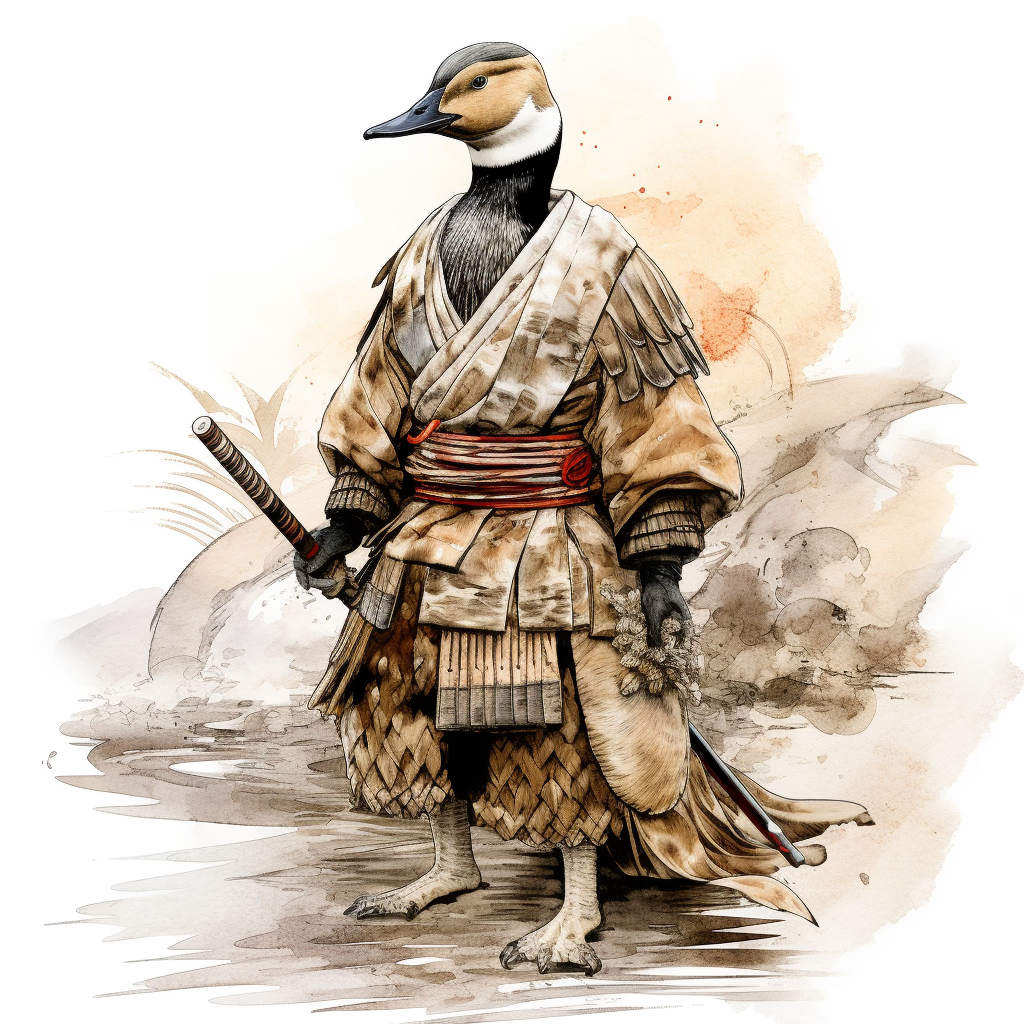
I live on a small island in the Ohio–Indiana‑Michigan area, and while walking around my parking lot I’ve watched geese—tough, almost samurai‑like birds—that seem to travel south each fall. Their movements remind me of childhood memories when I tried to befriend them, only to be hissed at by amused adults. I see geese as strong warriors, distinct from seagulls, and I have a friendly seagull named Bob who “packs up” for the South just like the birds do each year. These observations bring me back to my own travels down to Tennessee, Georgia and Florida in search of summer’s warmth, underscoring that winter is simply a choice—just as the birds choose their southern route.

#1349 published 05:41 audio duration 559 words poetry birds geese seagulls us-states ohio michigan indiana travel roadtrip

Are Schools Working?

Are Schools Working?

zoom read listen

The post argues that our current school system—originally designed for industrial uniformity—has become a largely standardized, politically driven machine that stifles creativity and individual growth; it claims that grades measure only fragments of knowledge, that teachers push students toward a single “mass funnel,” and that the wrong subjects and tools are taught, making real learning feel like an imposed routine. The author then stresses how true education should be self‑directed through extensive reading of non‑fiction by great thinkers—books that capture human wisdom and culture—and urges readers to pursue this personal study as the real path to intellectual heights.

#1348 published 15:41 audio duration 769 words schools standardizedtesting creativity non-fiction reading library self-education books

Knowledge, Slides; Or, Real Knowledge Is Connected And Marked By Personal Curiosity

Knowledge, Slides; Or, Real Knowledge Is Connected And Marked By Personal Curiosity

zoom read listen

Recounting three first‑grade moments—a stick‑figure blunder, a homemade bear mask, and a birthday‑song performance—the author explains how those early creative experiments sparked his lifelong fascination with programming, music tracking, and self‑directed learning.

#1347 published 15:45 audio duration 1,111 words 1 link personal school memory programming music-tracker lmms audio-workstation creative-writing

Jogger Wisdom

Jogger Wisdom

zoom read listen

I observed two elderly joggers who gradually increased their running speed by adding more jogging time while reducing walking intervals, using heart‑rate monitors or landmarks to keep effort steady. I adapted this method by syncing my jog with music playlists that I accelerated in Audacity, and I also incorporated dumbbells for strength gains, inspired by a shirtless jogger whose muscle growth followed the same incremental pattern. My experiments—including the Couch‑to‑5K program—confirmed that steadily raising pace and endurance, like dancing to an increasingly fast beat, builds both cardio stamina and lean muscle over time.

#1346 published 06:25 audio duration 534 words poetry free verse jogging music tempo audacity couch to 5k dumbbells heart rate monitor

Smartly Bonkers; Or, How To Dress For The Gym And Other Unusual Places

Smartly Bonkers; Or, How To Dress For The Gym And Other Unusual Places

zoom read listen

The author shares his experience with wearing all‑black outfits and how that style can make strangers wary, then explains how adding bright accents, varied accessories, and practical tools (like “fannypacks” for carrying gadgets) can transform a simple look into something striking and functional—ultimately suggesting that dressing boldly and confidently will draw people in and spark conversation.

#1345 published 07:11 audio duration 537 words fashion style clothing accessories outfit design

A Letter From Socrates

A Letter From Socrates

zoom read listen

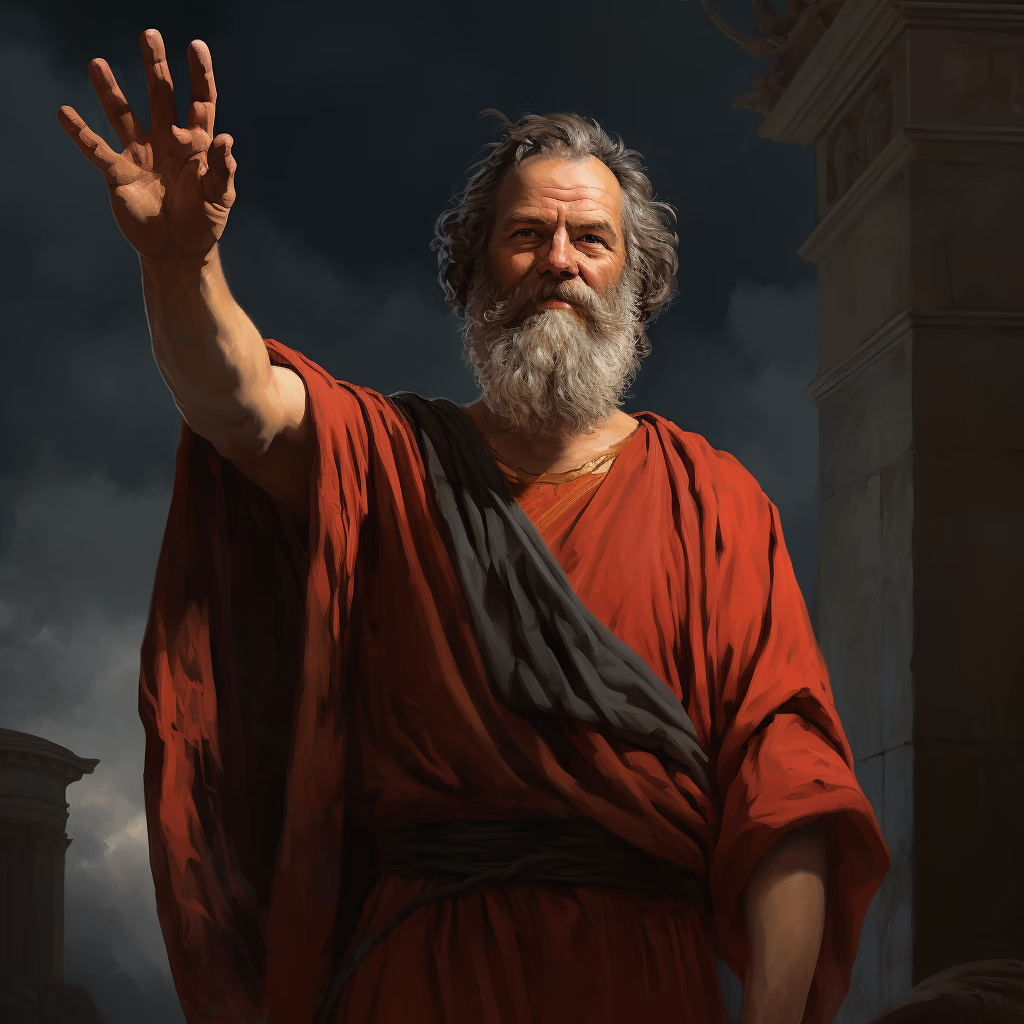
The post is a sweeping exhortation to embrace true wisdom through self‑study and continual questioning of life’s mysteries, urging readers to break free from state and religious indoctrination and pursue knowledge with an unquenchable appetite. It contrasts “false” leaders who cling to static culture to preserve power with “true” leaders who welcome change as a means of growth, and narrates the author’s personal struggle in Athens: he chooses to die rather than abandon his teachings so that philosophy may flourish beyond state or religion. The text concludes by inviting listeners to cultivate their intellect, live purposefully, and become architects of their own destiny, thereby ensuring that the quest for wisdom will continue to enlighten humanity.

#1344 published 15:27 audio duration 1,317 words socrates philosophy education culture leadership

Why, Oh Why, Can’t We Just Work And Die

Why, Oh Why, Can’t We Just Work And Die

zoom read listen

The post argues that modern schooling often fails because teachers and students merely go through the motions—teachers pretend to teach, students pretend to learn—and rewards are given in grades rather than real experience or money. To become a “great being,” the author insists we must engage with nature (walking the Appalachian, Pacific Crest, and Continental Divide trails) while reading great nonfiction books that give us intellectual inheritance. In this way, we can truly grow, move beyond the fake “high school” system, and leave a legacy of knowledge that lifts others.

#1343 published 06:49 audio duration 624 words education self-help hiking reading

Joggers Beware: I Dare To Declare You Are Unaware How To Wear Your Underwear

Joggers Beware: I Dare To Declare You Are Unaware How To Wear Your Underwear

zoom read listen

At its core, the post reminds readers that proper clothing habits—like wearing underwear correctly and tucking a T‑shirt in during workouts—are essential for comfort and style. It stresses the importance of using rubber bands (or elastic) properly while jogging or exercising to avoid scratches and itching. The author notes that these simple practices were common knowledge in childhood, and that keeping pockets accessible by not covering them with extra layers is also important. In short, the piece encourages readers to adopt neat clothing habits to stay comfortable during physical activity.

#1342 published 01:57 audio duration 183 words tshirt rubberband poetry clothing

The Outside Of The World

The Outside Of The World

zoom read listen

The post argues that our everyday lives are shaped by a brain‑less system of schools, media, and family beliefs that feed corruption—false leaders, overpriced medicine, ineffective education—into the fabric of society. It claims this “friction” between reality and how the world functions creates opportunities for power, profit, and wage slavery, while leaving little room for genuine wisdom. To break out of it, the author insists on a personal quest: understand one’s place in the universe, reject the broken constructs, study respected books by clear thinkers, and gain practical insight through long‑hike adventures (Appalachian, Pacific Crest, Continental Divide). By doing so, an individual can rebuild himself with real education and profound wisdom, thereby escaping exploitation systems and enabling personalized learning for others.

#1341 published 07:57 audio duration 664 words essay philosophy education self-development culture travel

The Stopwatch And The Impossible Reward

The Stopwatch And The Impossible Reward

zoom read listen

The post explains that building workout endurance works best by starting with very short sessions—just a minute or so—and then slowly extending the duration as your body adapts. It emphasizes that this incremental approach is more effective than trying to lift heavy weights at once, which can cause injury and stall progress. Trainers should measure how long you can hold an exercise, gradually adding seconds and minutes, rather than rushing into high volume. The author stresses full‑body movements over isolated muscle work, arguing that a balanced routine improves overall strength and longevity. In short, the message is: begin tiny, extend steadily, use full‑body moves, and let endurance grow naturally.

#1340 published 07:34 audio duration 585 words exercise gym endurance routine full-body-exercise muscle-growth

Reimagination

Reimagination

zoom read listen

Reimagining is portrayed as the creative act of discarding old ideas and constructing better ones, a process that fuels artists, programmers, engineers, inventors and philosophers alike; it involves dismissing what cannot be proven or reproduced, letting no one’s interference halt progress, and assuming that the majority often errs because they move in incompatible directions. The text argues for an education system that truly builds knowledge rather than merely awarding grades, noting that grades are meaningless if not accompanied by real learning. It claims cultures, rituals, birthdays, diplomas are merely symbolic, while true maturity comes from imagination—an imaginative worldview that yields new thoughts free from artificial influences and gives insight into human nature, our present state, and where we must go.

#1339 published 04:07 audio duration 320 words reimagination art creativity education programmer engineer inventor philosophy culture

Turning Generative Art Into A Super Tiny Little Business

Turning Generative Art Into A Super Tiny Little Business

zoom read listen

The post explains the strengths and quirks of text‑to‑image AI, then proposes a small business model that creates custom AI‑generated themed canvases, frames them by hand, and sells ready‑to‑hang art for local offices.

#1338 published 06:57 audio duration 594 words generative-art text-to-image ai-painting canvas-printing frame-making diy-framing small-business prompt-engineering design

The Power Of The Third Hour; Or; How To Become Young And Mighty Again

The Power Of The Third Hour; Or; How To Become Young And Mighty Again

zoom read listen

The post is a poetic guide to a continuous workout routine using light dumbbells and dance-like movements, emphasizing that real exercise never stops and rests are minimal. It encourages starting with brief sessions—one minute—and progressively increasing duration through 45 minutes, an hour, and eventually two hours over several days of training each week. The piece compares this steady movement to dancing and describes how it transforms the body from a larger state into youthful strength and flexibility, while improving coordination, endurance, and potentially extending life expectancy.

#1337 published 08:51 audio duration 645 words poetry exercise gym dumbbells dance endurance fitness

Cat Owners Beware: Hunter’s Moon May Earn You A Scare

Cat Owners Beware: Hunter’s Moon May Earn You A Scare

zoom read listen

The post poetically describes how house cats behave during Hunter’s Moon—the night before Halloween—when they become playful, mysterious and noisy, producing a “cat phantom” anthem that brings joy to humans. It explains that this nocturnal ritual is part of their charm, giving us comfort and light. The author encourages cat owners to feed their pets extra on this night, hoping the cats’ magical presence will bring comfort and delight.

#1336 published 02:06 audio duration 193 words poetry cats halloween hunters moon

Girl Lions Should Have The Fancy Hair - It Is Unfair

Girl Lions Should Have The Fancy Hair - It Is Unfair

zoom read listen

The post is a playful exploration of cat trivia—ranging from why male lions sport manes and why lions’ female counterparts appear plain, to how cats meow instead of howl—and then leaps into whimsical speculation about feline intellect: that they might be plotting to take over the world by stealing passwords on keyboards, that their lack of tails could explain their cunning, and that perhaps cats originated from the moon. It describes a “hunters moon” as a monthly holiday for cats who sleep all afternoon until dawn when they fully awaken, then muses that if cats ruled nations conflicts would disappear, lady lions could wear wigs in peace, and overall that house cats would make excellent world leaders.

#1335 published 02:49 audio duration 264 words cat lion poetry rhymes humor

Ancient Werewolf Wisdom: If You Got A Tailbone...

Ancient Werewolf Wisdom: If You Got A Tailbone...

zoom read listen

In this whimsical post the speaker urges listeners—humans—to pay close attention, claiming that with tired eyes he has seen everything and gained infinite wisdom. He then muses on the symbolic value of a tailbone: to “be a dog that is your own,” to feel whole and alive, and to be more than a mere cog in a system. The piece weaves imagery of werewolves, stars, long trails, and a once‑beautiful world to evoke nostalgia and a desire to restart learning by listening to narrated books, wearing a tail as a sign of wisdom, and turning the hamster wheel of life anew.

#1334 published 03:05 audio duration 225 words poetry free‑verse dog wolf tail learning stars

A Tiny Look At Generative Art

A Tiny Look At Generative Art

zoom read listen

Generative art, fueled by prompt‑based AI, swiftly creates diverse images—from style mimics to hybrid creations—yet still lets traditional artists refine and build upon the machine’s output.

#1333 published 04:18 audio duration 359 words generative art prompting text-to-image ai-generated art digital illustration machine learning image generation art production manual painting

It Takes A Backpack To Hear A Book

It Takes A Backpack To Hear A Book

zoom read listen

Stress often prevents us from fully listening to narrated books, and the lingering tension can fragment our thoughts for weeks or even months—sometimes a year—to recover; this mental clutter not only hampers comprehension but also forces us back into repetitive thinking that hinders new learning, which is why we must actively engage with books, especially narrated ones, to absorb their wisdom and keep our minds functioning like well‑programmed software, thereby avoiding the cultural reset of starting from zero each generation.

#1332 published 04:22 audio duration 397 words books reading narration stress mind culture learning wisdom