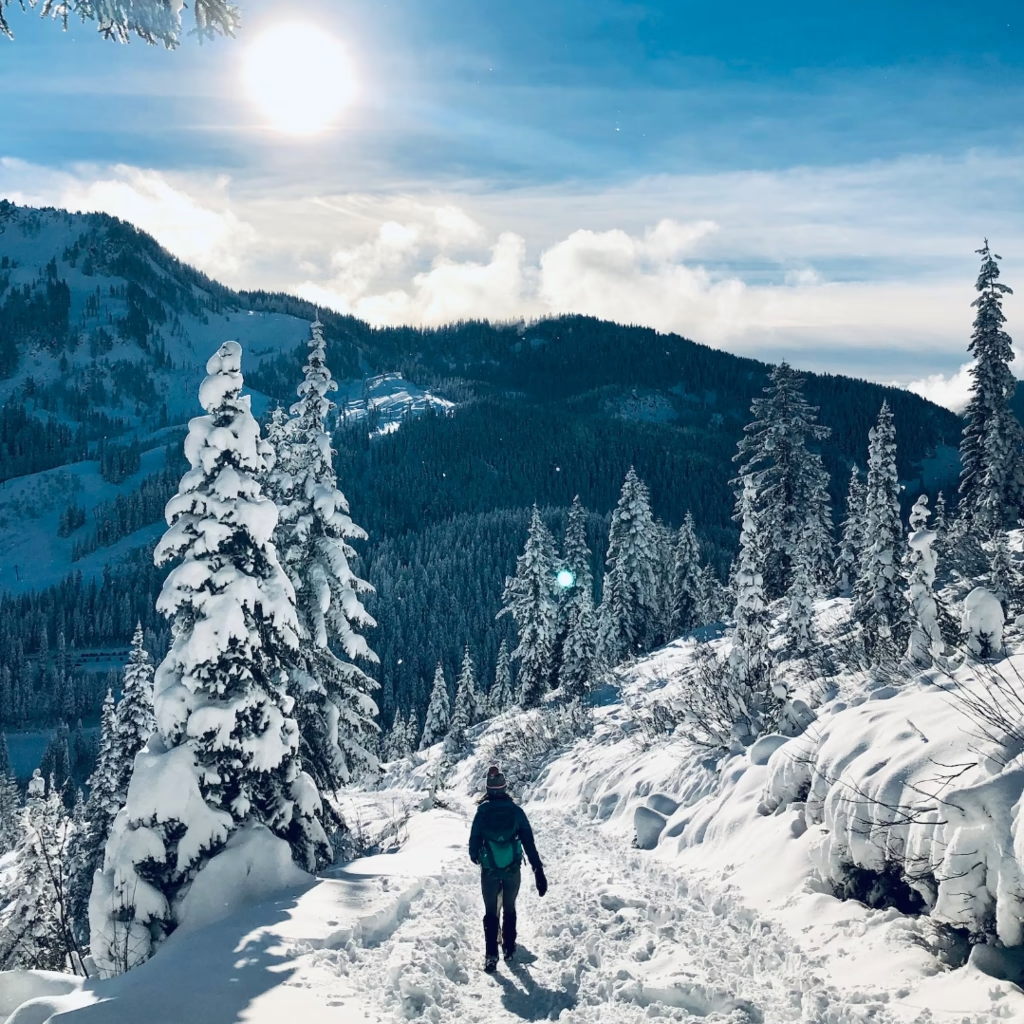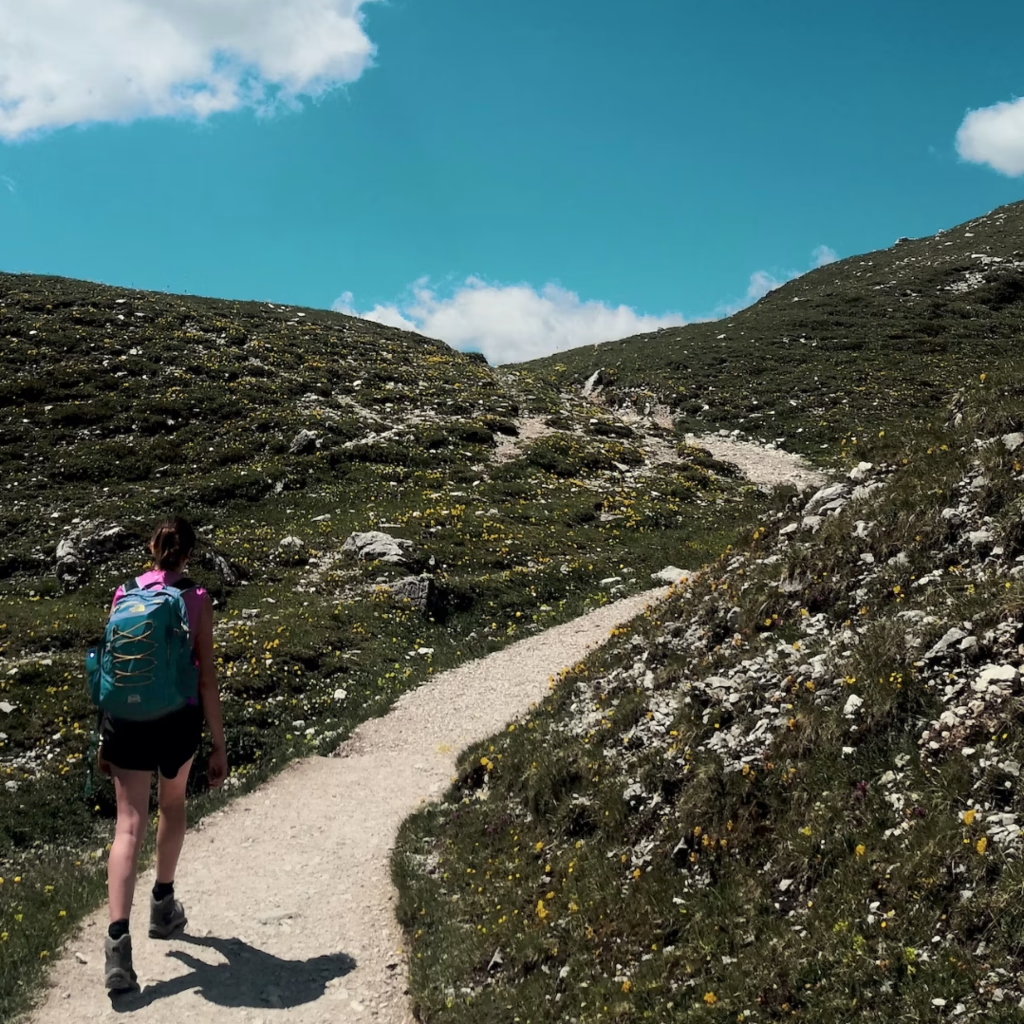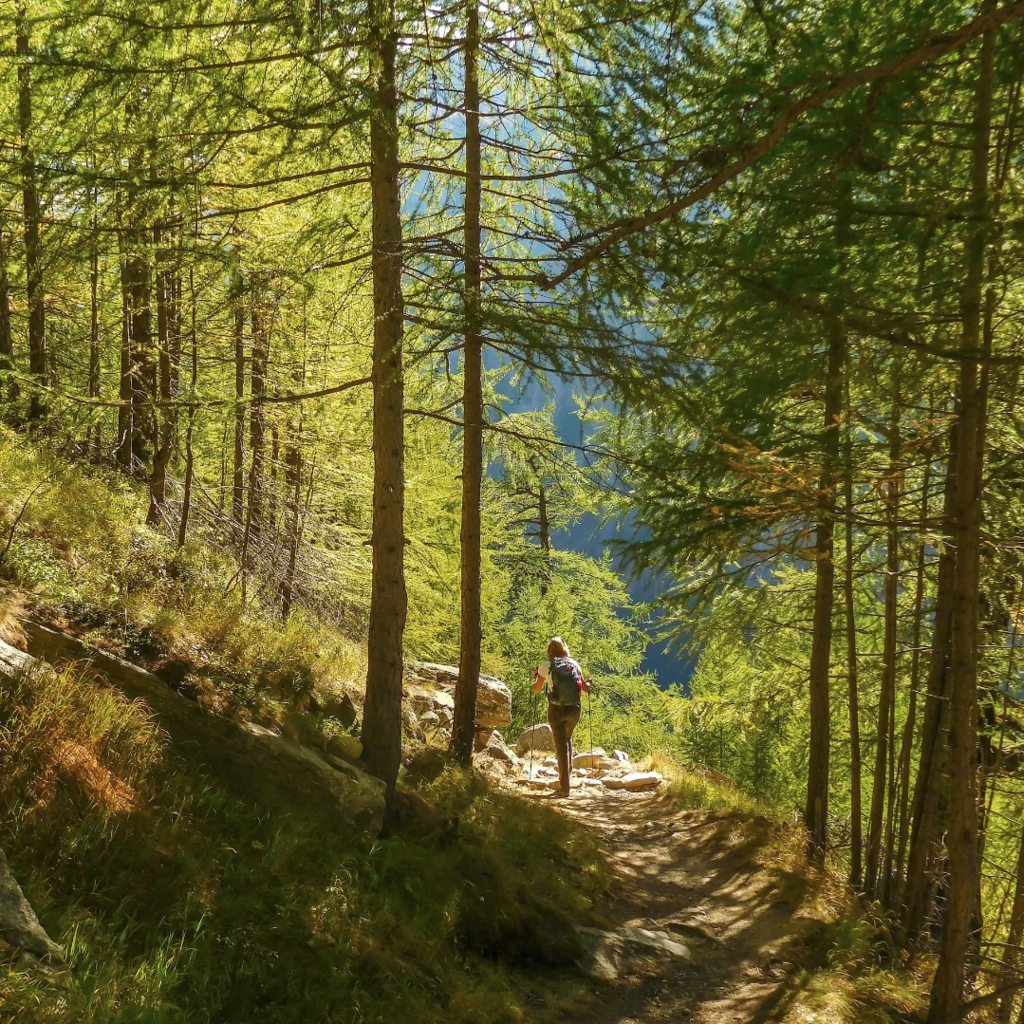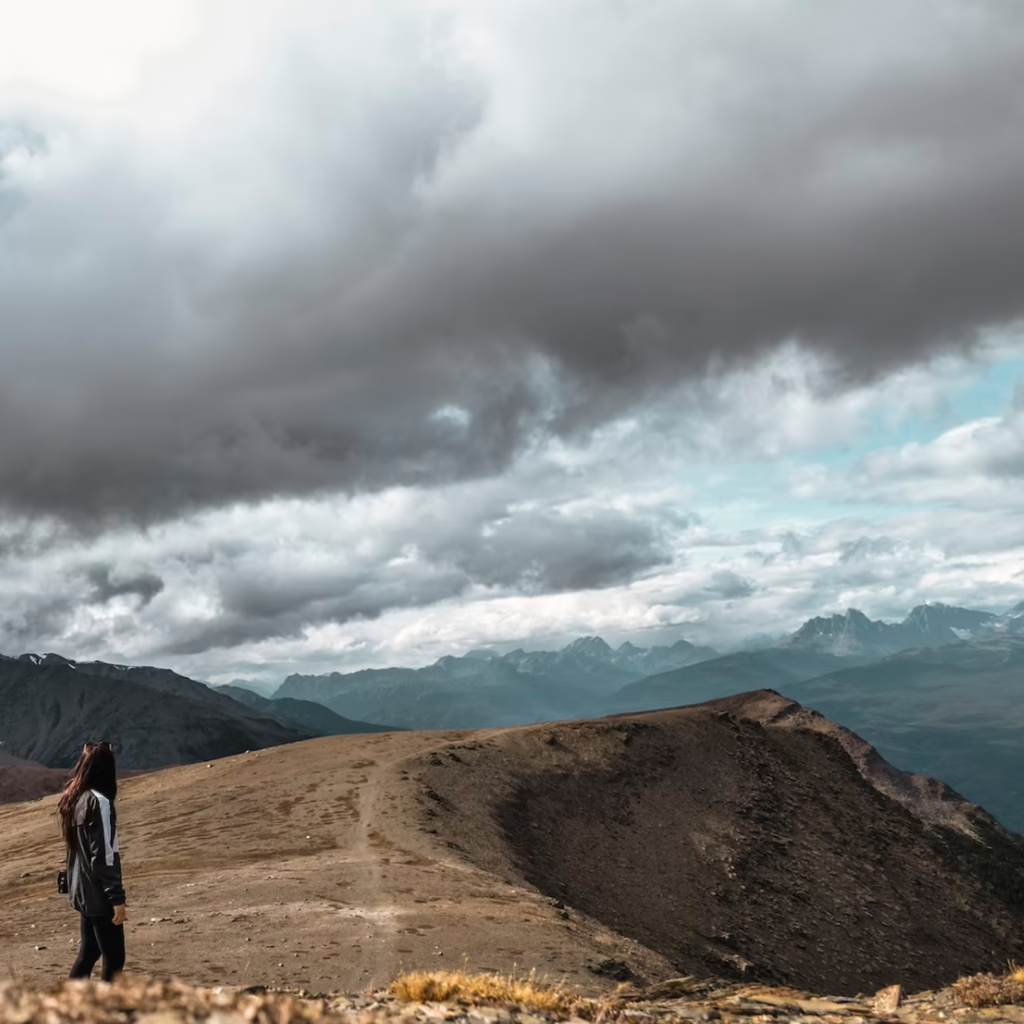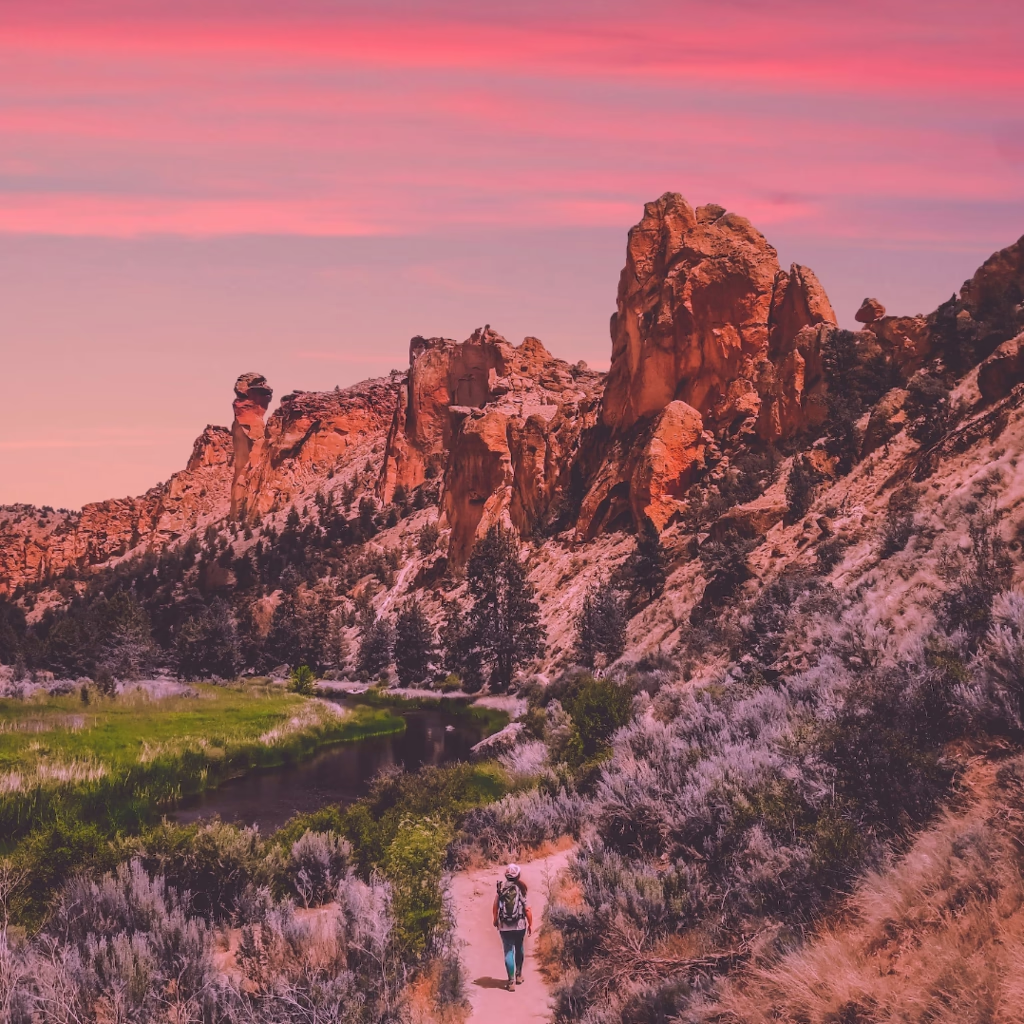
Through a series of verses, the author reminds us that books are the primary source of wisdom and that true learning comes from actively seeking knowledge rather than passively receiving it. He claims that many works are written to deceive, but a genuine philosopher will rise above them by constantly revisiting ideas and testing his own thoughts. The essay further stresses the need for adventureâhiking, camping, long trailsâto clear the mind and create space for new insights. It criticizes modern schooling, overwork, and government deadlocks as obstacles that prevent people from realizing their potential. Finally, it calls readers to become living philosophers who collect booksâ lessons, write them into fresh forms, and share them so future generations may walk the same paths of thought.
#1307 published 05:06 audio duration459 wordspoetryfreversereadingbookshikingtravelnaturephilosophyselfhelp
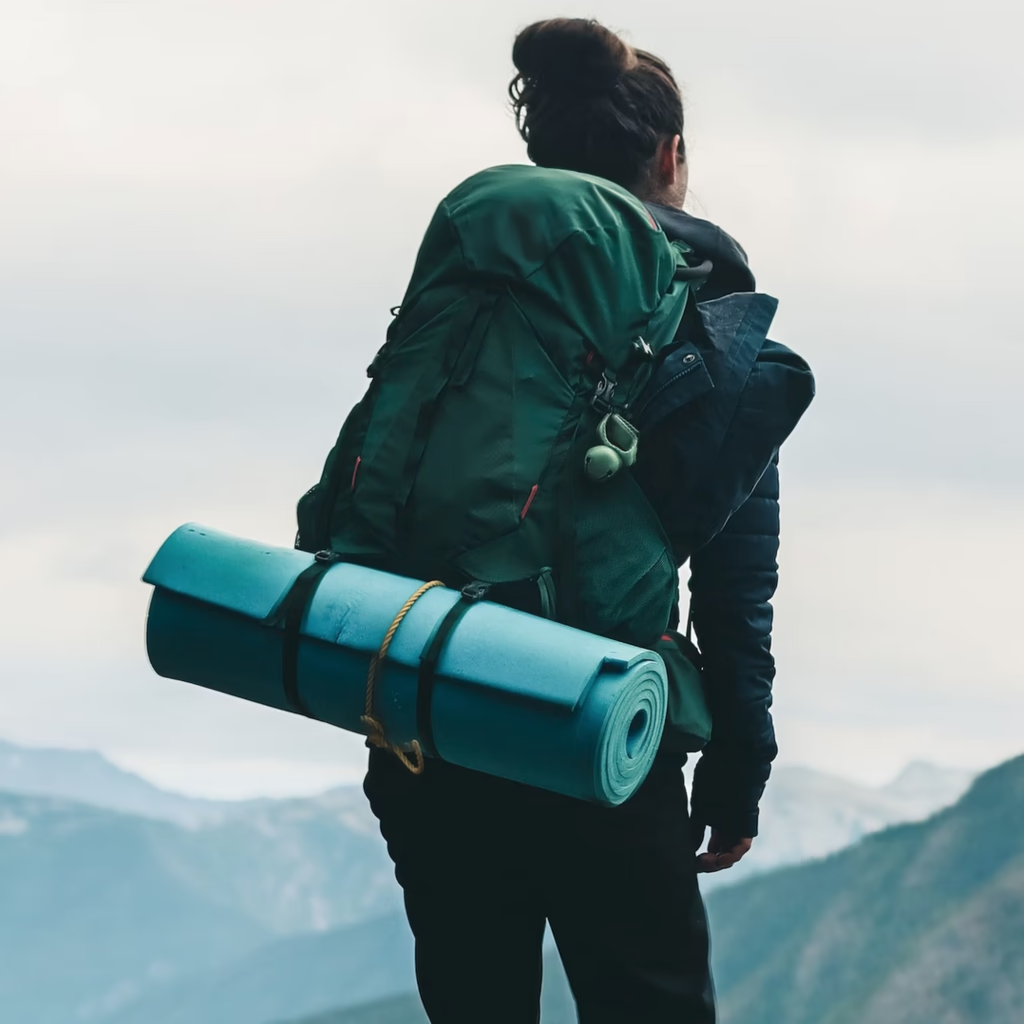
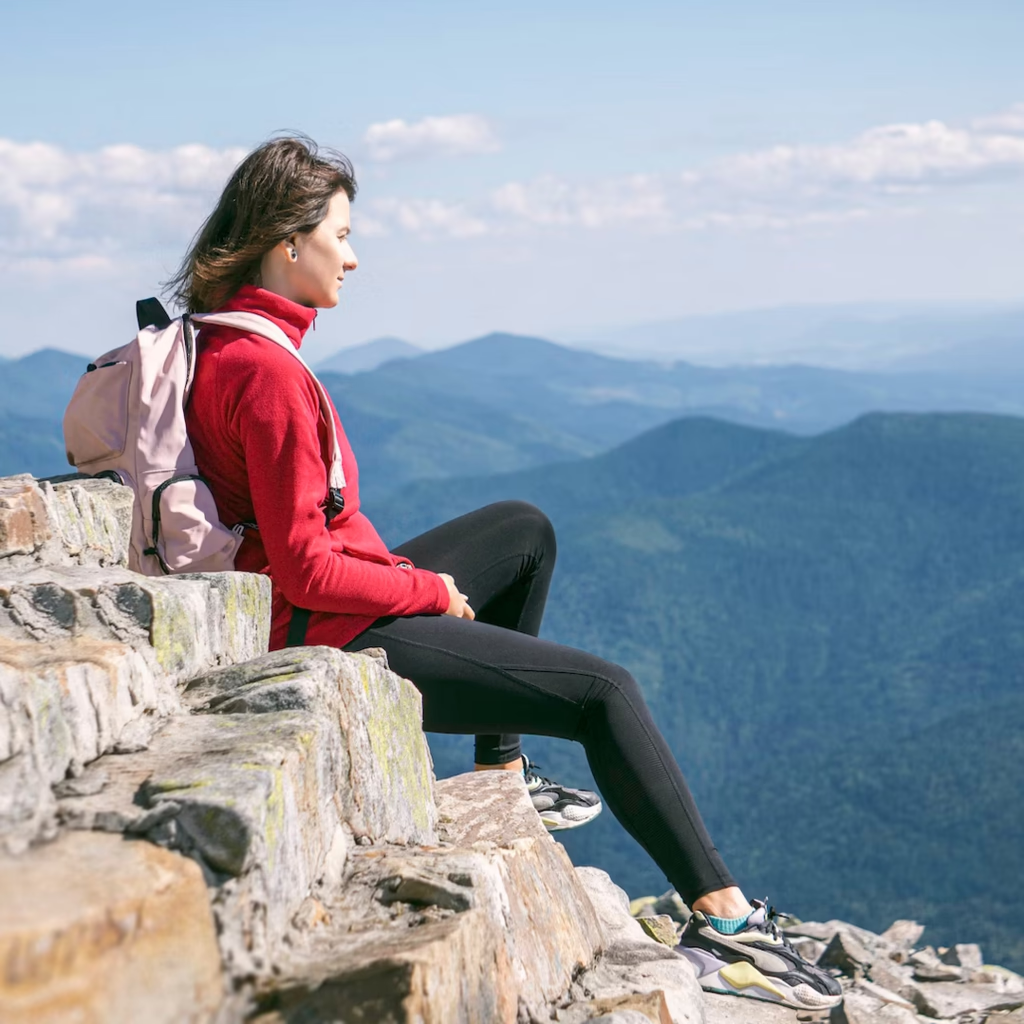
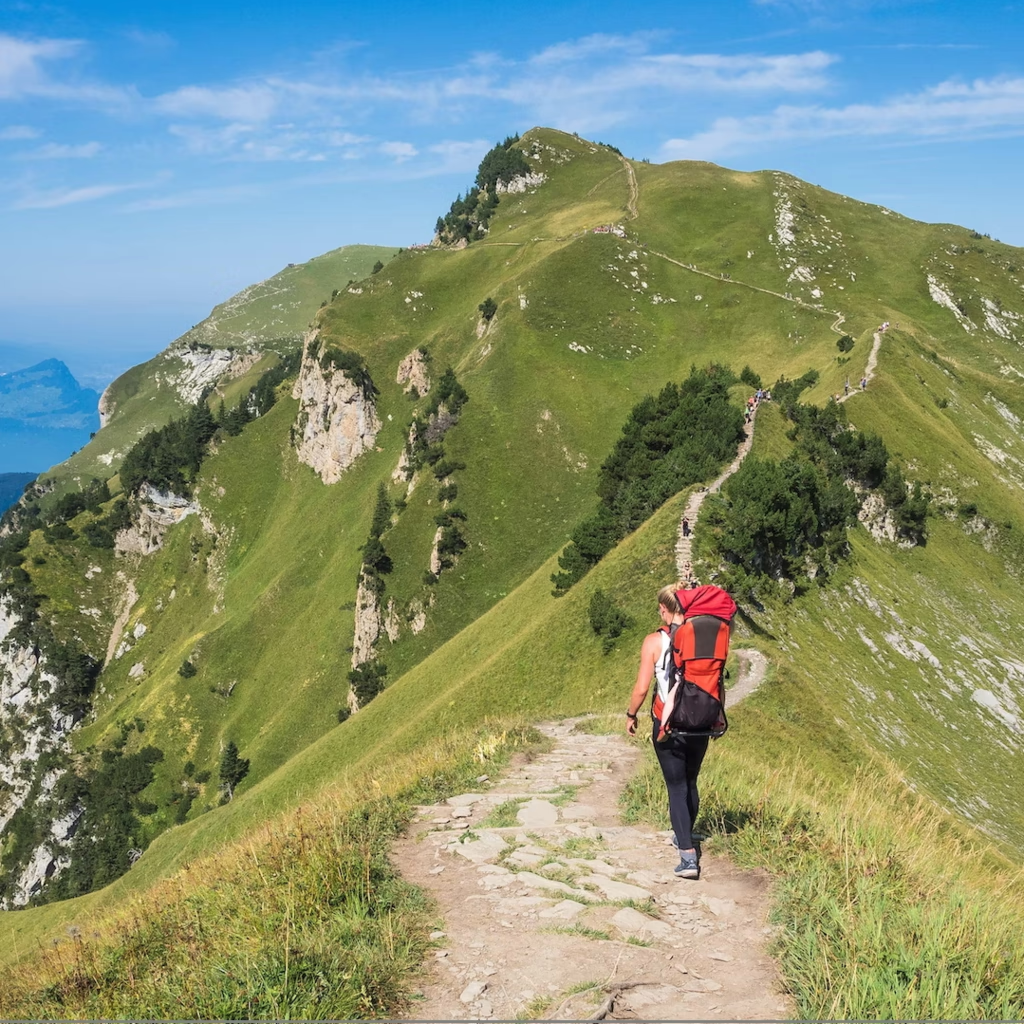
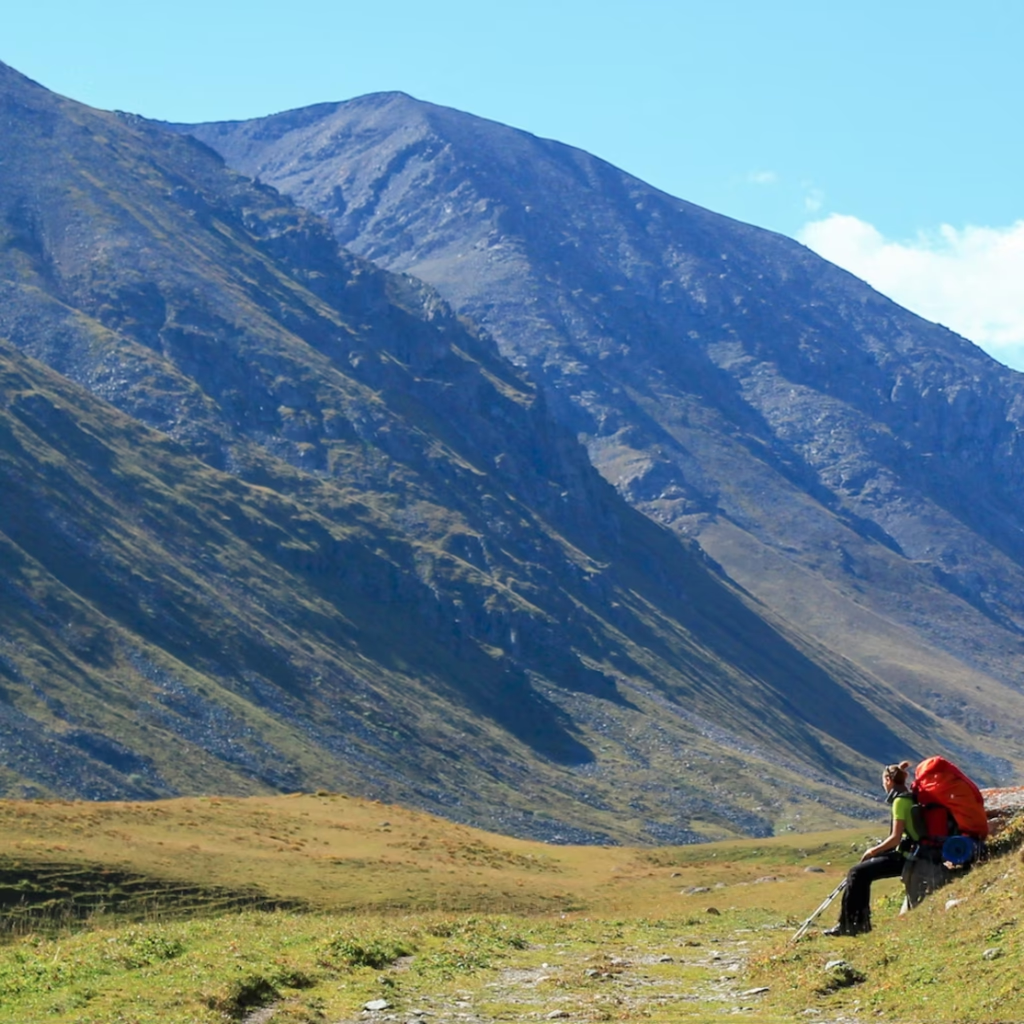
The post argues that to truly understand life one must actively listen to narrated books while undertaking long, peaceful hikes that mirror the journeys of great philosophers. It suggests beginning with a symbolic philosopherâs walk by placing a rock at Walden Pond (Thoreauâs cabin), then progressing through significant trailsâMountâŻKatahdin in Maine, Springer Mountain in Georgia, and the Pacific Crest or Continental Divideâto achieve the âTriple Crown.â Each step is meant to free the mind from distractions, allow deep listening, and weave new thoughts into a lasting wisdom.
#1306 published 06:07 audio duration559 wordsphilosophywalkinghikingbooksaudio-bookstrailslearning
The post reflects on the extraordinary chain of cosmic events that brought us from physics and chemistry to living organisms and finally to conscious beings, arguing that this emergence is not mere accident but an improbable series of permutations that made consciousness possible; it then invites readers to recognize themselves as more than humansââcosmic entitiesââand stresses that education, especially through the works of past philosophers, is essential to avoid repeating mistakes and to fully grasp our fleeting life.
#1305 published 08:41 audio duration648 wordspoetryphilosophyevolutionconsciousnessliterature
The post argues that learning is an internal, âinsideâoutâ process rather than the external, memorizationâbased approach often used in schools, and uses a personal artâclass experience to illustrate the point. The writer describes how a good teacherâs class relied on handâpainting and projection of reference images; when he told his instructor that a student had used a projector successfully, she only nodded and did not let him finish explaining it. The author laments that students then turned in mediocre work despite paying for the course, while proper use of the projector would have given them color references and realistic portraits. He concludes that true learning happens when we study ourselvesâusing tools like projection to guide usâand that teachers should let students learn by doing rather than memorizing.
#1304 published 11:18 audio duration745 wordseducationartpaintingprojectorusestudents
The post argues that true, selfâdirected learning grounded in philosophyârather than rote schoolworkâcreates an equal, prosperous society and prevents the decline caused by âfakeâ education.
#1303 published 04:27 audio duration390 wordseducationphilosophysocratesself-directed-learningcomputerized-education
The post celebrates philosophy as an essential tool for personal and collective growth: it encourages readers to embrace philosophical study immediately, claiming that doing so will sharpen thinking, decisionâmaking, and foresight while avoiding simple mistakes. By following the paths set by great thinkers, one can see beyond deception and reach a clearer vision of where to go. The writer argues that philosophy revitalizes our world, unites us toward peace and wisdom, and prevents endless repetition of errors. In sum, the post invites readers to let philosophical adventure and timeless ideas guide their minds and lives.
#1302 published 02:57 audio duration258 wordspoetryphilosophybookrhymes
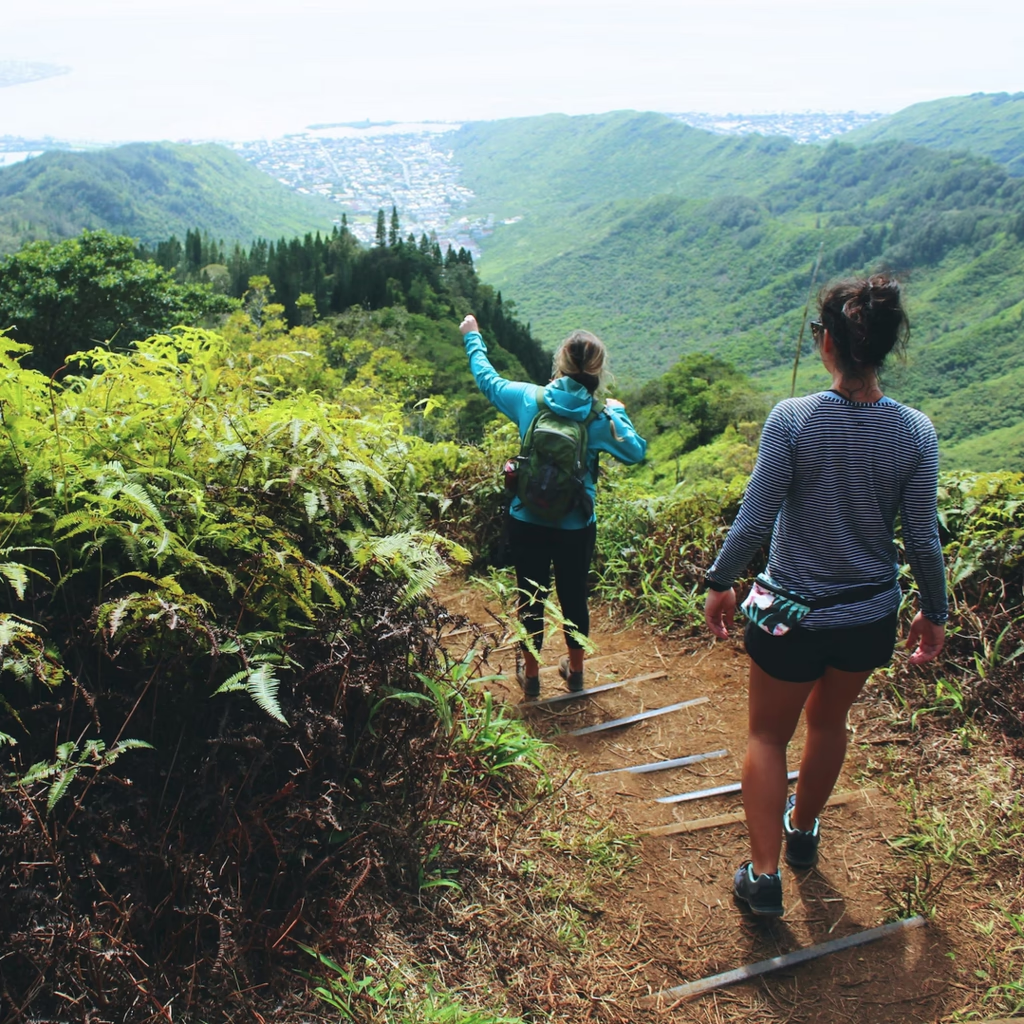
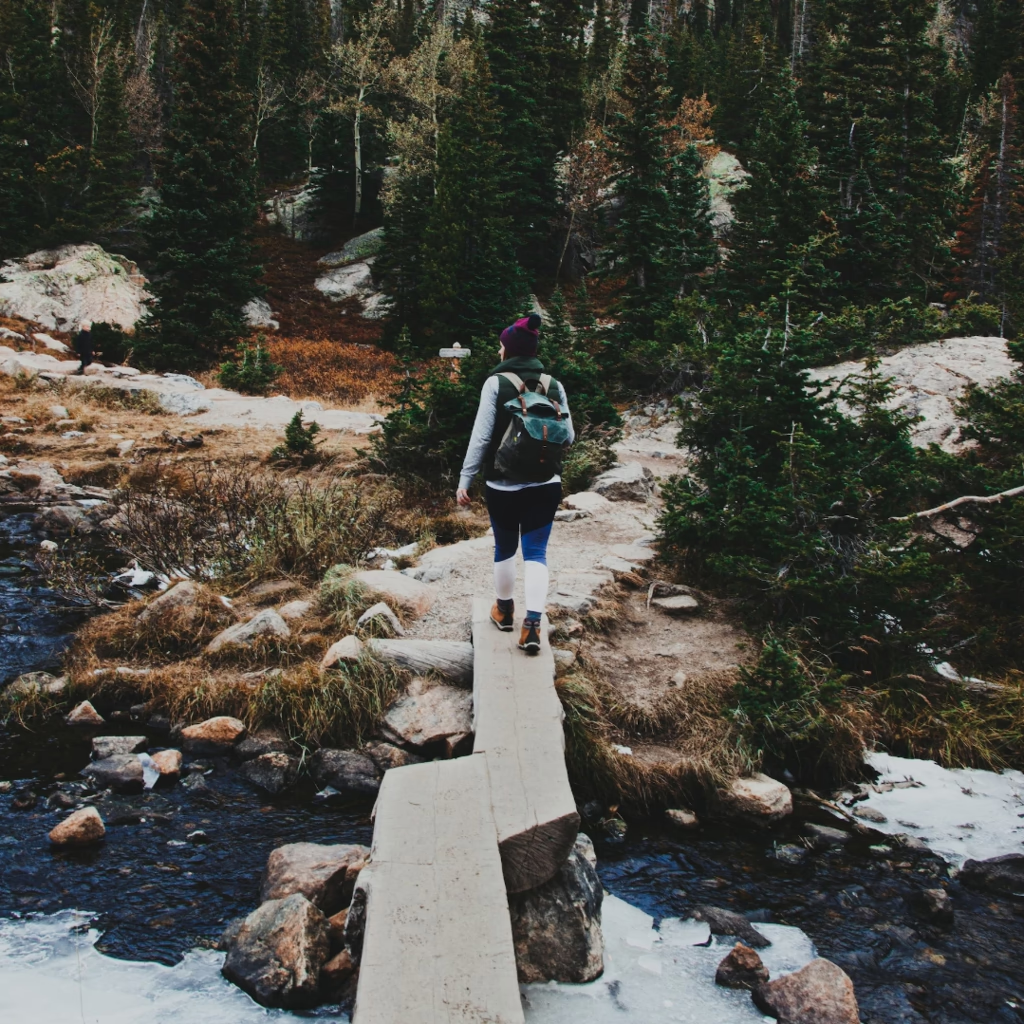
The author argues that true âeducationâ is the integrated training of mind and bodyâjust as walking long trails like the Appalachian or Pacific Crest strengthens physical fitness, reading and reflecting on great books sharpens mental stamina. He claims that schools often miss this holistic practice, turning learning into a profitâdriven exercise that leaves graduates physically and mentally unprepared for lifeâs challenges. By combining regular trail hikes, weight training, flexibility work, and disciplined study, one can rebuild both body and mind, becoming âa great being.â The piece links this personal regeneration to larger societal health: if we fail to repair our minds through learning, the nation will drift into warâillustrated by recent nuclear testsâbecause educated people are needed to prevent such crises. Thus, the author urges that individuals not only restore themselves but also revitalize teaching so future generations can learn this integrated fitness and keep society from repeating past mistakes.
#1301 published 15:59 audio duration1,291 wordsfitnesshikingtrailrunningapalachian trailpacific crest trailcontinental divideeducationselfâimprovement
Selfâeducation, defined as selfâdirected and selfâpaced learning, is portrayed in the post as a natural adventure rather than a punishment or memorization exercise. The author laments how traditional schools, especially in mathematics, have failed to inspire genuine learning, forcing students into rote practice before real application. By contrast, selfâeducation allows learners to pursue knowledge from multiple perspectivesâreinventing mathematics if desiredâand integrates it across all subjects. The writer recounts his own discovery of math while designing pixelated arcade games, an experience that standard curricula often miss by insisting on preâmemorized formulas. He concludes that the best future for learning lies in this autonomous approach, echoing Thoreauâs woodland experiment and pointing to public libraries or phones as gateways for the selfâadventurer to grow into a wellârounded being.
#1300 published 05:46 audio duration512 wordsself-educationmathgame-designanimationprogramminglearning-methodsindependent-studyschool-reform
The post outlines an allâday âdumbbell danceâ routine: start with light (3âŻlb) weights and move continuouslyâwalking, jogging, or liftingâwithout stopping or resting, letting the body adapt through steady movement. It suggests building up from 15âŻmin sessions to longer periods (up to hours for bigger athletes), gradually adding weight once a base of 20âŻlb total feels comfortable. Key exercises include dumbbell lateral raises, standing curls, and overhead presses, performed in a rhythmic flow that can be synchronized with music; the tempo should match the beat so you stay in a tranceâlike state. By keeping the body moving nonstop, youâll strengthen legs, shoulders, abs, and chest (via optional layâdown work), while the continuous motion and musical rhythm drive the workoutâs effectiveness.
#1299 published 08:10 audio duration742 words3 linksexercisedumbbellworkout-routinemusic-tempocardiomuscle-groupsbeginner
The post is a poetic reminder that we have been âsnuck upâ by the way we spend our daysâwaiting for Wednesday so the weekend arrives sooner, treating Monday as a simple cure that actually steals time from us. The narrator describes how this rush through life can feel like being plucked from chaos into silence only to be returned to it again, and then delivers a message from an âelder selfâ to the younger one: love each day and donât let time pass you by. In a sort of exhortation, the elder self orders the reader to buy a backpack and tent, head out on the Appalachian Trail, and learn through walking that lifeâs true inheritance is found in living deliberately rather than simply passing time.
#1298 published 05:53 audio duration448 wordspoetryfree versehikingappalachian trailtime managementletter
The post argues that regular exercise is vital for maintaining health and preventing the unhealthy effects of overwork, isolation, and poor lifestyles; it suggests that if our systemsâespecially schoolsâwere properly organized, people would regain freedom and longevity. It stresses personal responsibility: putting oneâs own wellâbeing first, even at workâs expense, and highlights how endurance can be built gradually through consistent activity. The author illustrates this with a brief anecdote of a man who, after biking to work, realized he still needed more effort to rebuild his body, showing that the body heals when we push it but needs us to keep the momentum.
#1297 published 08:22 audio duration758 wordshealthexercisebicyclingfitnesslifestylemotivationselfcare
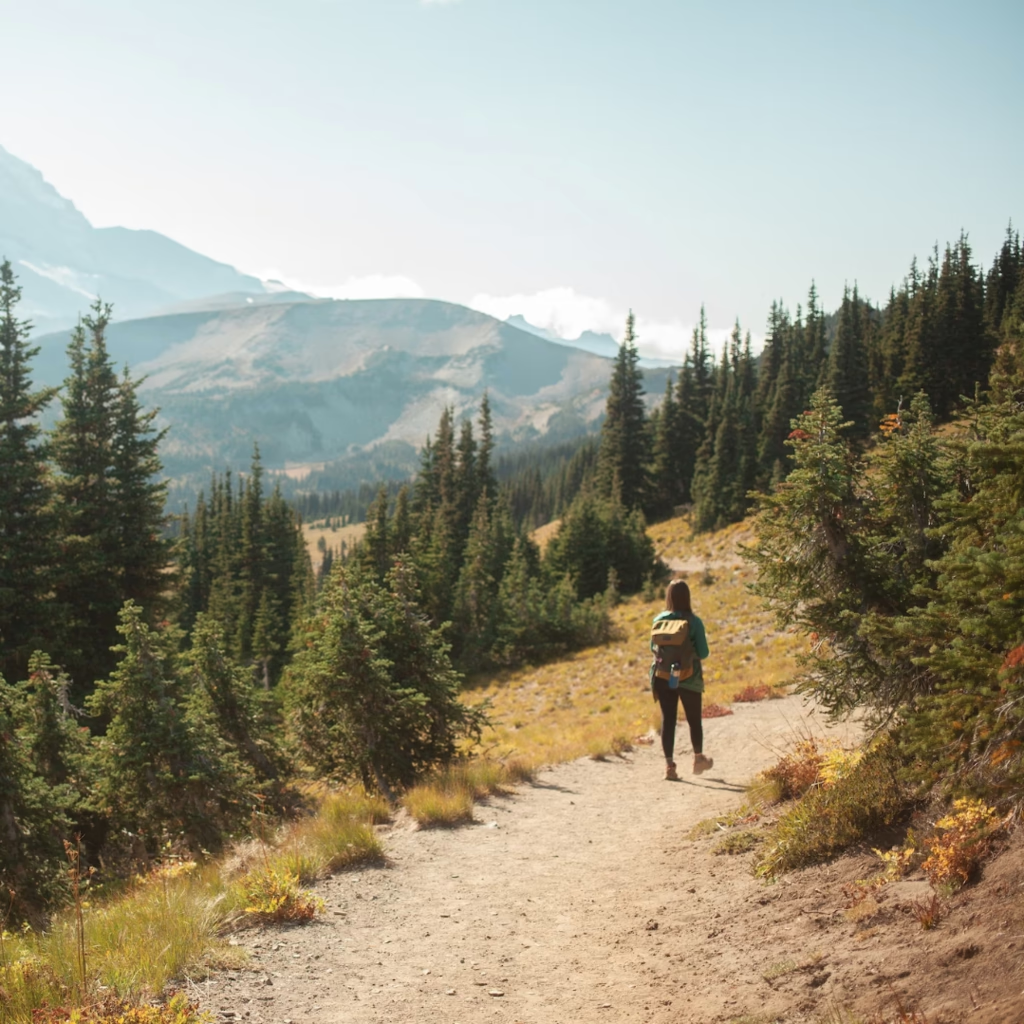
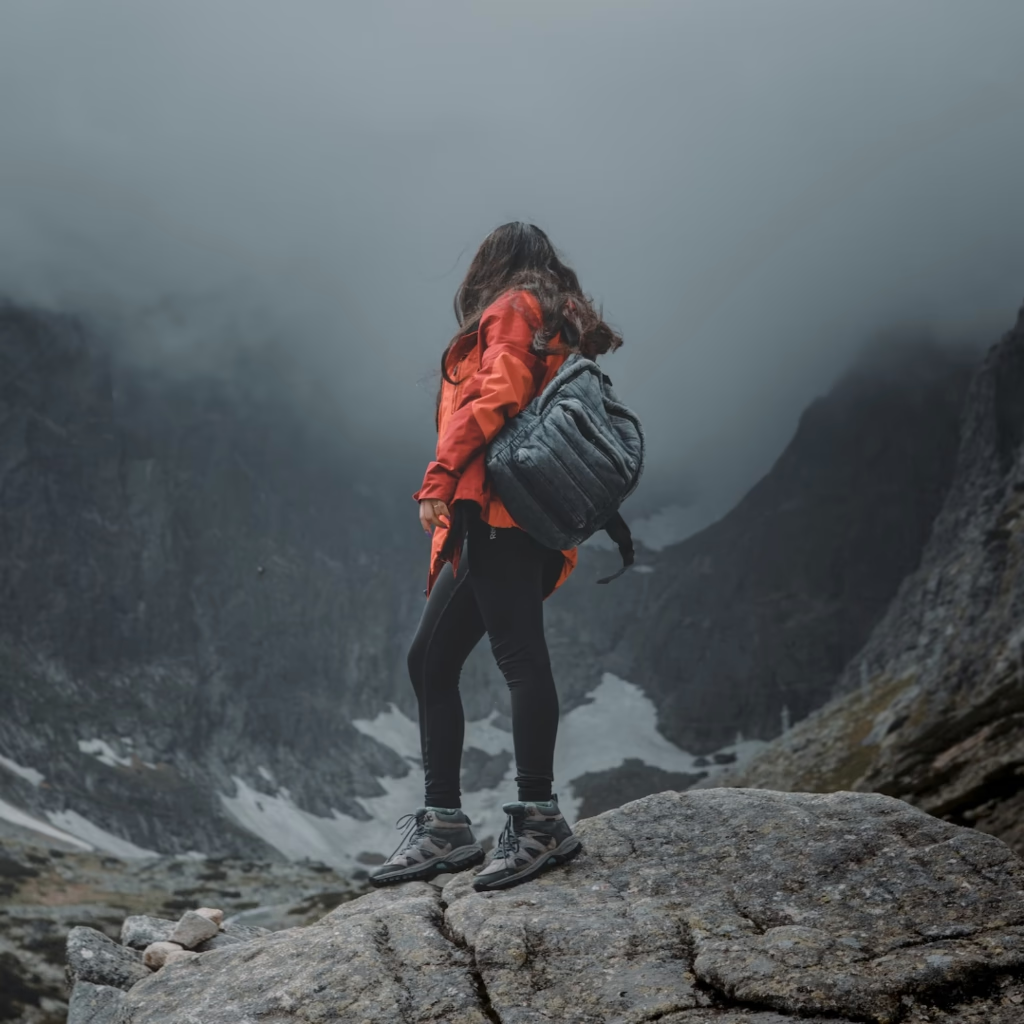
The author uses the image of walking a trailâan inherently oneâway roadâto describe growing up as a deliberate journey that goes beyond mere aging. It calls for intentional steps forward, learning from authentic books and great thinkers, and resuming their work so that each generation can build on that legacy. The piece urges readers to leave ordinary life behind, keep the slope of their path upward by engaging with narrated works and library resources, and to repair a system of education that had once forced rote memorization. In this way, one becomes a creative polymath, composer, writer, and guide who can bring others onto the trail and ensure that future generations see what he saw.
#1296 published 06:02 audio duration583 wordspoetryessaytravelnaturephilosophyselfâhelp
The post encourages readers to treat every moment as a celebration and to pursue lifelong learning by deeply engaging with countless books, especially those that have shaped great thinkers; it urges one to connect with their inner self, seek wisdom from elders, and travel metaphorical and literal pathsâsuch as Walden Pond, Mount Kathadin, and other symbolic journeysâto gather experiences and insights. By synthesizing these lessons into new works and personal trails, the writer proposes creating independent schools of thought where poets and philosophers can freely share knowledge, thus restoring what has been lost and enabling others to pick up where great minds have left offâultimately fostering a culture of greatness that rises beyond ordinary existence.
#1295 published 07:49 audio duration630 wordspoetryjournaltravelbooksnaturephilosophyself-help
The post argues that true, practical learning is the foundation of a richer world culture and that todayâs politicians are largely uneducated and out of touch with voters, leading to fragmented goals and little progress; in contrast, students who absorb real knowledge become independent intellectuals capable of effecting change, ensuring future generations will overcome poverty, hunger and homelessness, and be seen as equal great beings. It concludes that while schools need reform, the spread of wellâwritten, narrated books by clear thinkers can deliver this culture of greatness more effectively than current institutions.
#1294 published 06:09 audio duration437 wordseducationculturepoliticsbookslearning
The post is an upbeat, motivational piece encouraging readers to keep pushing their physical limits gradually while resisting external praise or criticism. It stresses that consistency, patience, and incremental increasesâstarting with short workouts and building endurance before adding speed or weightâare key to longâterm fitness success. The author also suggests simple lifestyle tweaks (like simplifying grocery habits) to support exercise goals, all wrapped in a rhythmic, poetic voice that reminds readers to keep moving forward despite setbacks.
#1293 published 06:23 audio duration534 wordsfitnessworkouttrainingenduranceexercisecardiowalkingrunningstrengthnutritiondietmotivationself improvementlifestyle
A singleâsentence recap: the author claims that hiking and camping provide real, stressâreducing learning while traditional school systems are overrun by memorization, bureaucracy, and corruption.
#1292 published 14:19 audio duration1,346 words6 linkshikingcampingtrailseducationschoolslearningoutdoorsnaturefamilyadventure
The post argues that standardized, memorizationâbased schooling is ineffective and calls for selfâdirected, relevanceâdriven learning tailored to each studentâs curiosity to truly enhance knowledge and society.
#1291 published 06:44 audio duration576 wordseducationlearningcurriculumteachersstudentsmemorizationself-directed-learning
The post argues that true learning comes from selfâdirected, lifelong study rather than formal schooling, which it claims can become a vehicle for indoctrination. By using audio, video, visualization, simulation and languageâmodel tools, learners can build intellectual hygiene, stay curious, and avoid the shortâsightedness of conventional graduations. The author links this selfâeducation to becoming âgreat beings,â capable of entrepreneurship and social improvement, and sees Universal Basic Income as a necessary companion for real schools that can break the cycle of overwork and stress. In short, the piece calls for a shift toward autonomous learning and economic security so people can rise above cultural mindâcontrol and truly grow.
Collage is a preparatory technique rather than finished artwork: it builds scenes from informational elements instead of sketches, making the process easier on a computer or when projected onto canvas. Itâs especially useful for portraits where capturing a face accurately matters; artists start with a reference photo in a program like Krita, then splice in cutouts whose shapes and colors can be adjusted before painting over them. Whether kept digital or projected, layering and color picking help blend the collage into a cohesive image, allowing multiple projects to run simultaneously and enabling longâterm color planningâmaking collage a powerful scaffold for the final masterpiece.
#1289 published 03:52 audio duration360 wordscollagedigital collagekritaportraitpaintingcompositionlayersreference imagescolor planningart workflow
The post argues that standing out of the crowd makes you a target for bullies, so you should document their actions, involve teachers and police, and keep records to fight back effectively. It then shifts to learning: early basics (reading, writing, arithmetic) are usually taught but higher subjects often become rote exercises; adults overâestimate their knowledge and treat school as a babysitter. The key idea is that true education must be selfâdirectedâfind a concrete reason or project that motivates you, use books (especially adventure and philosophy), record your learning process, and combine practical experience with nature to build real understanding.
#1288 published 14:25 audio duration1,193 words1 linkbullyingschool-lifeself-learning
The post reflects on how childhood curiosity shapes later achievements, using a hypothetical switch from Chopinâs piano to math to illustrate that learning in sequence matters. It argues that when children are free to pursue and revisit their own interestsâa âconstellation of curiositiesâ that fuels selfâdirected educationâthey develop into polymaths, whereas standardized schooling forces subjects and stifles this constellation, leaving students miserable. The author uses examples such as 3D printing to show how revisiting a topic builds deeper skills, but when forced topics flatten the map of personal worlds. In short, protecting that constellation and letting it expand is key to a wiser future.
The post outlines a straightforward, danceâinspired dumbbell routine that blends walking, rocking, and fluid motions while gradually increasing the weight from 2 to 8âŻlb per hand; it stresses using an interval timer, keeping rest periods short, and syncing movements to music at about 170 beats per minute. The key idea is to lift one arm while lowering the other, ensuring core strength with extended sets at lower weights before progressing. It also recommends selecting slightly heavier weights each session and staying consistent with fresh tracks that boost energy, suggesting ways to find new songs by mixing genres or adding country names, and even using free audioâediting software to tweak tempo for a personalized workout soundtrack.
#1286 published 05:32 audio duration442 words1 linkworkoutdumbbellsintervaltimermusicbpmdancefitness
Philosophers are always ten times smarter than we think, the moment you understand something the philosopher said. The moment you see the vulnerable human, who could have done better, is just the philosopher, lovingly, and gently reaching out to help you rise much higher. --- To get us started, some say that fighting styles and equipment, arose from practicing martial arts with work tools, or whatever was on hand. So that peasants could practice unnoticed, until they became powerful enough to set themselves free. ---
#1285 published 16:52 audio duration1,410 wordsphilosophycaveallegoryplatosocrateseducationstudentslearning
The post argues that movies offer only fleeting, oversimplified lessons, while true wisdom comes from selfâdirected learning and deep reflection on lifeâs choices.
#1284 published 09:19 audio duration881 words1 linkmoviesfilm quoteseducationself learningbookswisdom