Archive

Page 51 of 95

Helping Humanity Hurry Along

Listening to wise books lifts you above fakers, enabling you to surpass even seasoned politicians who have spent decades in lies and pretenses. The post urges self‑education—learning programming and launching side projects—to escape the confines of standardized schooling. It frames learning as an adventure and mythic quest, insisting that a truly integrated, self‑directed education, not one sold for paychecks or taught by teachers who claim it’s hard, will make you brilliant. By ensuring each lesson feels purposeful and by treating your progress like coding a program toward completion, you’ll become a great being, living a life of love, cheerfulness, courage, and inspiration that propels the world toward a wiser future.

How To Read Books, Reading Comprehension, And What If You Don’t

Reading books is presented as an adventurous journey that brings learning, companionship, and personal growth; the author encourages beginning with guided, group experiences to feel safe and supported, while noting that solitude can be beneficial but also challenging if not well‑prepared; through narrated or spoken storytelling, we gain knowledge much like walking the path of history itself, and when we face stress, poverty, or loneliness, the act of listening to stories becomes a natural remedy that lifts our spirits and connects us to giants who have walked the same trails before us.

The Urgent, Brave, And Noble Quest For Your Intellectual Independence

This post argues that books—especially narrated ones—are the essential tool for keeping the world from unraveling, because they unlock a clear view of reality and let us act wisely. The author claims that most adults are trapped in poverty or indoctrinated by politics, religion, and national divisions, which distort their thinking; only through continuous reading can one free oneself from these “invisible prison walls.” By absorbing countless books, the reader gains intelligence, wisdom, and a personal worldview that enables them to solve misunderstandings and contribute to global peace. The post concludes that listening to narrated books is an intellectual inheritance, a right that empowers individuals to shape their lives and the future of everyone.

To Get To Know The World

The post argues that advertising has become almost a religious indoctrination, using anti‑piracy slogans (“you wouldn’t download a car”) to make copying seem sinful, and spreading false beliefs online that further manipulate audiences. It points out how corporations give away free services only to later cut them off, how magazines lose credibility after marketing their own “person of the year” stories, and how schools teach languages or tools (like free computers and word processors) that turn students into customers rather than independent thinkers. The author claims these tactics warp reality for the young and overworked, and calls for self‑education through books and personal reflection as a remedy to counter the industry’s warping of knowledge.

You May Be A Raccoonkin! (Test Included!)

The post celebrates raccoons as intelligent, clean creatures that wash themselves and their belongings, enjoy adventures, and treat found items—especially food—as treasures; it notes their penchant for cakes, cupcakes, and human snacks (though those should be stored securely to prevent mischief), and concludes by inviting readers to discover their own “spiritual” raccoon twin through a journey along the Appalachian Trail.

The Age Of Visual Programming Languages

The post argues that the increasing ad‑heavy restrictions imposed by online businesses are turning the web into a less enjoyable space, yet there’s no central solution because these corporations own only the hosting platforms. It proposes that lightweight visual programming languages—exemplified by Node‑RED combined with the browseless project—can fill the gap: such tools can be injected into websites via plugins or proxies, work on mobile and desktop browsers, and let developers think in terms of actions and connections represented as nested data objects in HTML/SVG. The author sees this approach as both a learning tool and a path toward self‑programming, especially when coupled with frameworks like Svelte for clean code and RxJS for reactive flow control. In short, the writer is optimistic that by collaborating on these technologies we can make the internet smarter and more programmable again.

The Pretty Trails Of Nordhouse Dunes

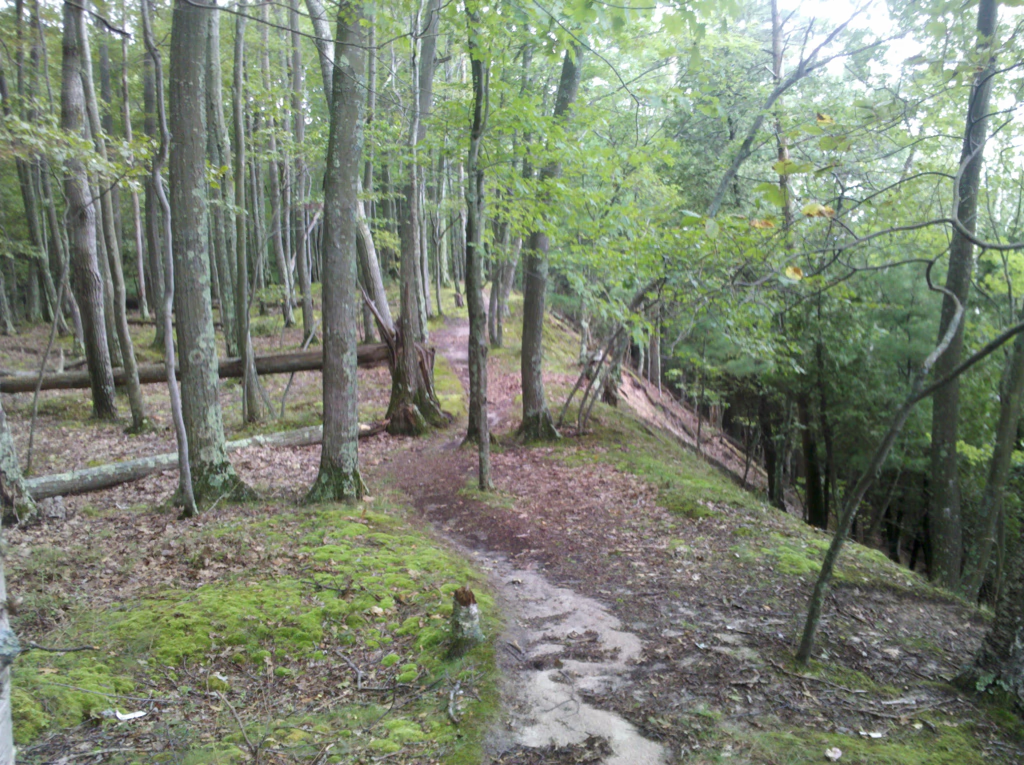
Lake Michigan and Nordhouse Dunes offer a scenic mix of beach and woodland adventures, with the Lake Michigan Trail starting from the north parking lot and the Nordhouse Dunes Trail beginning at the south on Nurnberg Road; the longest route is the Nipissing Trail, which passes by Nordhouse Lake and connects to Algoma Ridge before rejoining Lake Michigan, while the sunny beach area is bathed in constant sunshine and the surrounding dunes provide shaded, beautiful side trails known as Skylands that rise straight above the tree line—so bring a handy map, well‑worn hiking shoes, bug spray if needed, and enjoy a long enough walk to fully appreciate the ancient dune landscape.

Today, Politics Is A Mental Illness; But We Can Fix This By Replacing Politicians With House Cats

The post envisions cats as powerful, caring leaders who will govern with harmony and unity—traveling around the world, licking, sniffing, and kissing their way through life while bringing people together. Under feline rule politics is redefined into a kind of affectionate play; AI systems will be employed to meet the cats’ expectations of peace, and every citizen will receive a universal basic income card that resets to $100 each night at midnight. Education becomes self‑directed and personalized, with cats guiding learning across subjects so that knowledge builds on what students already grasp, leading to a bright world where unity, prosperity, and personal growth prevail.

Computer Programming For All

The post proposes an easy entry point for mature learners who may not yet be comfortable with code but enjoy everyday hobbies such as camera streaming or garden irrigation. It suggests starting from the simplest “Hello world” loop and gradually building up to mapping usernames and filtering data, illustrating how small programs can be written in a visual language like Node‑RED. The author argues that learning to embed JavaScript inside visual nodes gives a solid foundation for creating an own Node‑RED‑style tool, which then becomes the core of a side project: users would pay a modest monthly fee for premium features, generating income that could support future generations or grow into a small business.

The Pet To Get; Or, A Tiny Step Towards Working With Animals

Cats are portrayed as highly intelligent, observant hunters who assess human behavior with a keen eye for fitness, preparedness, and humor—qualities they judge by how well we manage food, exercise, and the environment. Their perceptions range from sensing fear through simple cues to evaluating our overall survival plan, including reliable electricity, transportation, and delivery of necessities. When a cat brings a dead mouse, it signals that we should be proactive in feeding, moving, and staying alert; otherwise the animal will deem us unworthy. The text emphasizes that cats are not only playful but deeply philosophical, capable of humor and strategic thinking similar to wolves or huskies, and that maintaining their happiness requires proper feeding, companionship, and a sense of humor. Finally, it suggests that caring for pets can be a career—veterinary work, shelters, or community service—and stresses the need to learn animals’ languages and keep them from loneliness, thereby fulfilling our shared evolutionary responsibilities.

I Am Lake

#1212

I Am Lake

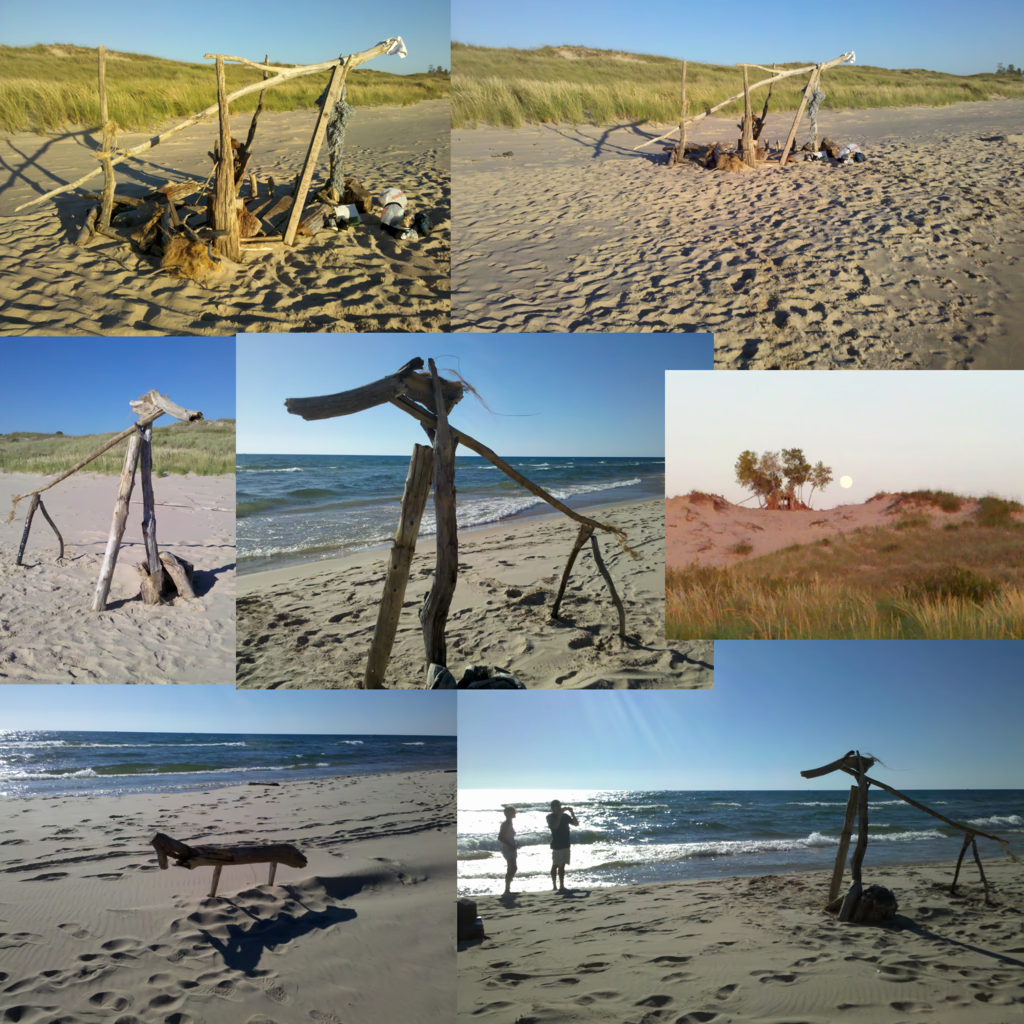
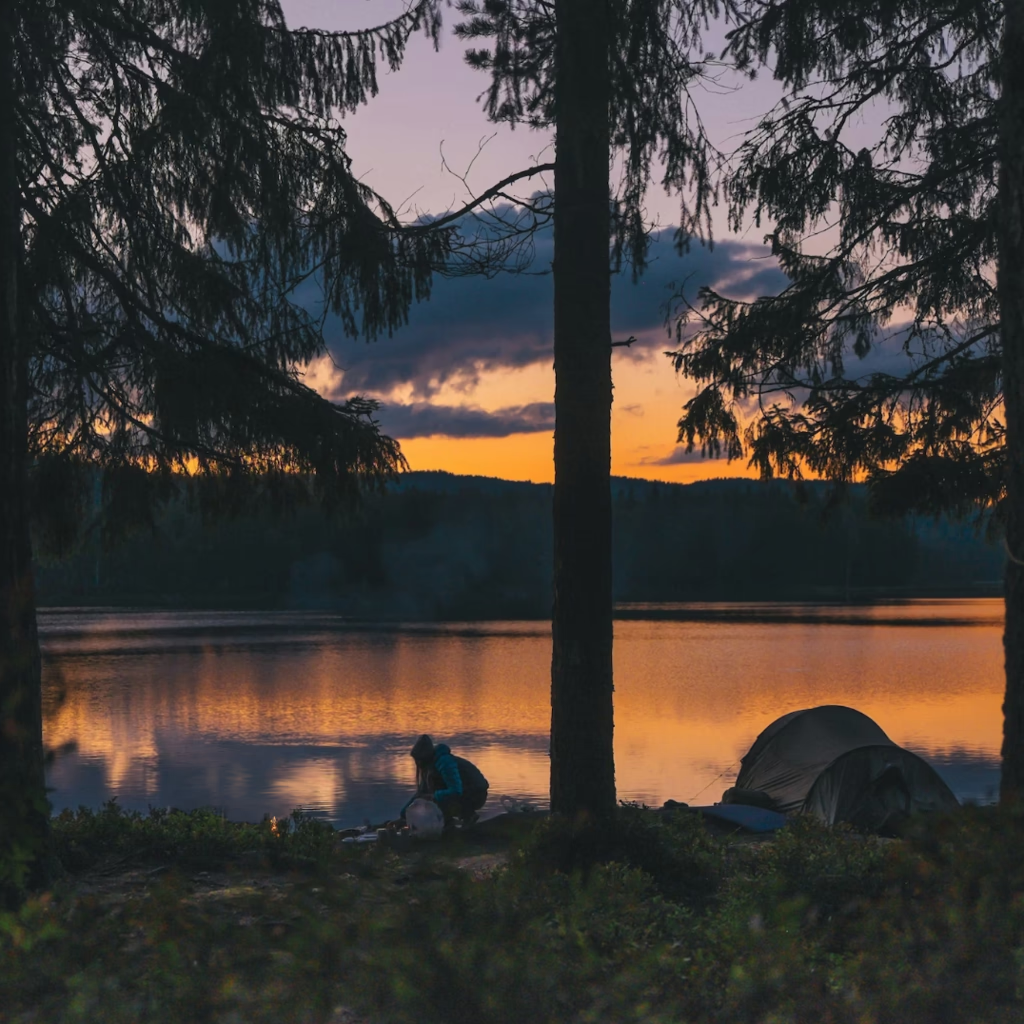
Waking up at Nordhouse Dunes was pleasant, though sometimes a bit chilly, and I never felt lonely because my narrated books played in the background. I stayed for many days, collecting cool rocks, using walking sticks, swimming in Lake Michigan until I became one with nature; chipmunks whistled as I passed, raccons joined me in meandering and toublemaking, and mosquitoes stopped biting, using me to get around. Together we drove to the supermarket, where I bought ice cream while the mosquitoes took shoppers. I felt like a tourist on business with the universe, building flimsy yet large driftwood horsis that impressed two tourists. In Ludington my favorite spot was an antique store with a neat book section; there I found a well-worn 1963 pocket version of Robinson Crusoe, which prompted me to listen to its full story. Throughout, I stayed in the wilderness, gathering firewood and preparing for watching Lake Michigan’s sunset.

Where The Giants Leave Off

The post argues that true education comes not just from formal schooling but from the intellectual inheritance carried in books written by great minds, which give us ready-made paths and ladders for life—whether through exploring libraries, hiking trails, learning programming, or even bodybuilding—to help us feel achievement and grow. By seeking out varied, often cheerful adventure tales that resonate with our curiosity cycle, we can slow down, pack a mental backpack, and view the world as an integrated whole. This self‑education involves repeatedly listening to stories that soothe and inspire us, allowing us to recognize when something feels off and cultivate wisdom—an intertwined sense of what has been inherited from others’ lives and what we create ourselves—so that we never start from scratch but from where those great beings have already begun.

Integrity And Integration

The post reflects on the wonder and simplicity of life while critiquing how education is often turned into a circus that fails to prevent problems; it argues that true learning begins with curiosity and becomes wisdom through constant transcendence, and proposes that a future where universal basic income (UBI) supports people’s daily needs would allow them to pursue books, adventures, and growth without hunger or homelessness—an ideal of perpetual rise and human magnificence.

A Safer World

The author urges the current generation to end the cycle of confusion and conflict by embracing universal growth—through education, financial support, and a shared intellectual revolution—to secure a safer, wiser future free from nuclear threat.

Music, Fitness, And Your Natural Jiggling Frequency

The post explains that the “Goldilocks Pace” – a rhythm just right for your body – is key both for jogging and high‑intensity training; it can be achieved by syncing your music’s tempo with your own “jiggling frequency.” Because songs rarely match this exact pace, the author suggests using tools like Audacity (or an audio player’s speed feature) to adjust the tempo of your favorite tracks so they stay in sync with your movement. While adding weights doesn’t change this rhythm, maintaining the correct tempo gives you energy and endurance, helping you push past limits and reach fitness goals faster.

Super Thick Woolen Socks; Or, Your Feet Don’t Have To Ache From Fatigue

The post celebrates thick woolen (or wool‑like) socks as essential gear for any outdoor activity—walking, hiking, camping, hunting, jogging or dancing—because they keep feet warm, reduce fatigue and blisters, and even help shoes fit better by adding cushioning. It cites long‑distance hikers who use such socks to stay comfortable, notes that neoprene belts work similarly for back warmth, and reminds readers to warm up before exercise so the body is prepared. Finally it encourages using these socks in winter, consulting a doctor if needed, and humorously credits a “royal society of warm people and silly sock puppets” for spreading the idea.

Visual Programming Is Great For Learning And Growing

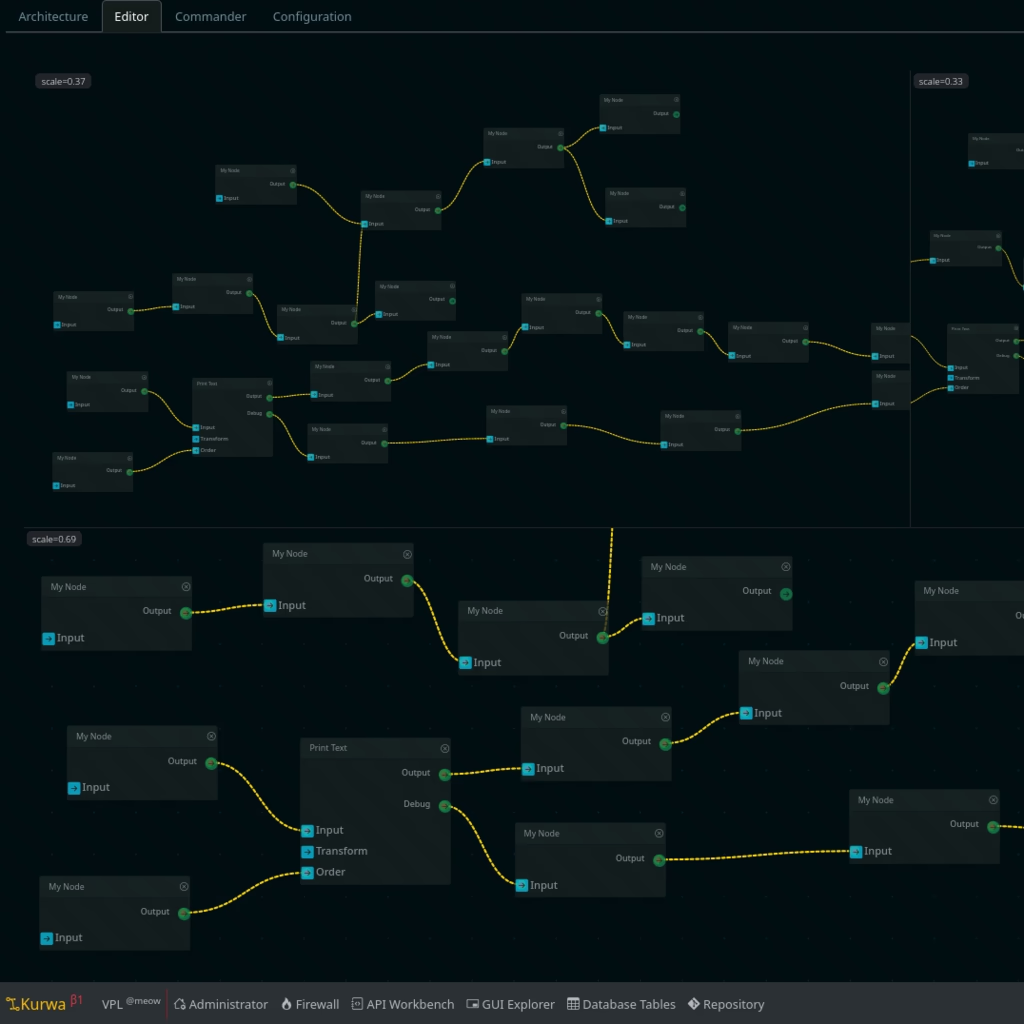
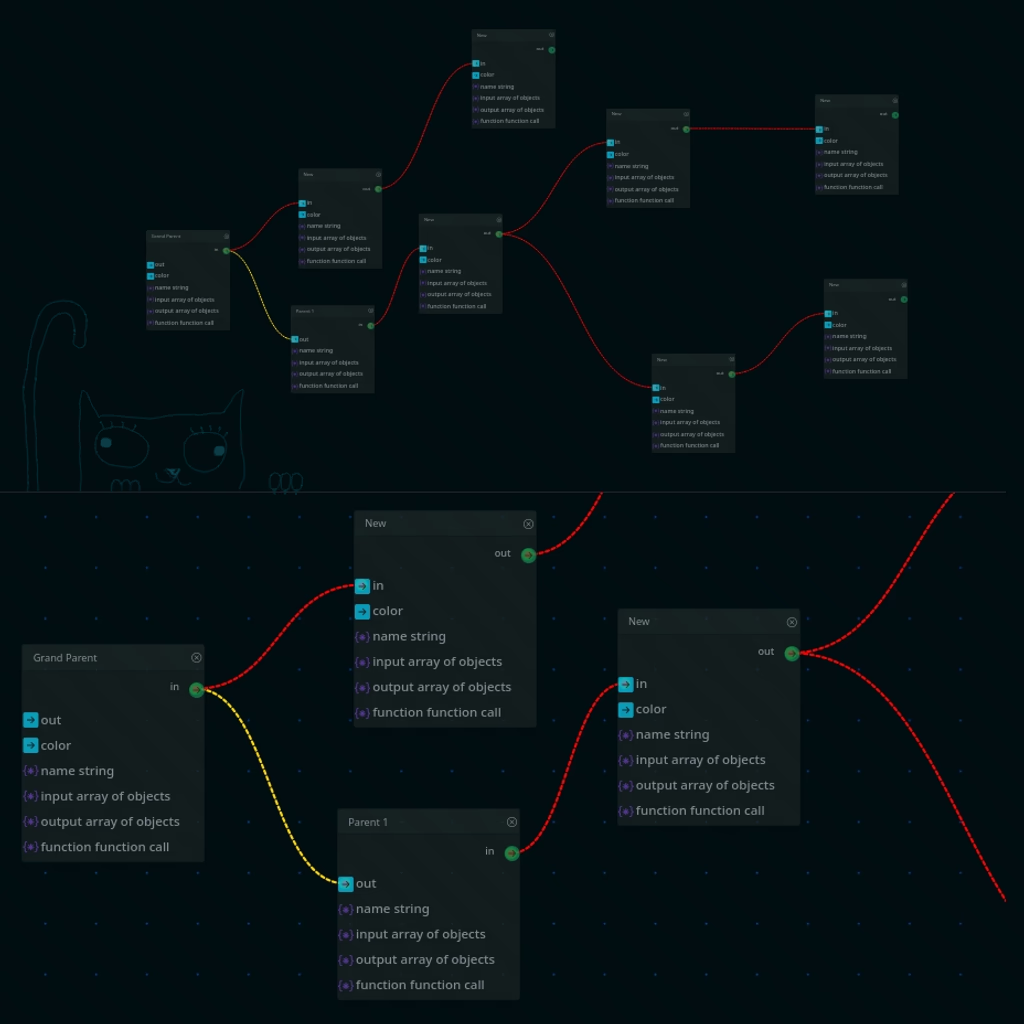
Visual programming languages are built around simple, readable diagrams of nodes and connections: each node represents an action (e.g., set thermostat, play a sound), can be as complex as RxJS components, and is edited via a small code editor that contains just a few lines of JavaScript; the nodes’ anchors form writable streams that push data from one node’s output to another node’s subscribed input, enabling flexible, customizable flows that remain visible on screen, making it ideal for beginners who can later expand their nodes into more powerful components while still being able to revisit and understand earlier code.

The Fraud Of Subject Divisions

The author argues that the current university system is fragmented and self‑serving: subjects split knowledge into silos that teachers exploit to control learning, while standardized lectures (like CS 50) become merely “tricks” that waste time on rote topics such as algorithms, data structures and AI. They claim that students need a clear aim and genuine inspiration rather than “interesting facts”; otherwise teaching becomes mere performance by liars who “gag” their listeners. In particular, the writer criticizes philosophy classes for being shallow—using Descartes and Socrates only to illustrate points but failing to connect them to real life issues such as war, poverty, and indoctrination—and suggests that true teaching would let students see the bigger picture of how education can shape a world‑peaceful future.

What Is Real Education?

The post describes “real education” as a self‑directed, curiosity‑driven process in which learning unfolds naturally without memorization or standardized tests; progress appears as a sequence of interconnected steps marked by personal achievements and discoveries. It emphasizes continuous thought, undivided attention, and journaling, drawing inspiration from great thinkers to build upon their legacy. In this view education is an upward slope of growth that reflects each learner’s personality and leads toward ever‑higher heights.

What Is Junk Education?

The post likens learning to a series of misled experiences—junk science, fabricated myths, and deceptive leaders—and then offers its remedy: disciplined self‑education through books. It urges the reader to cultivate virtues such as restraint, dignity, nobility, unbreakability, fortitude, courage, honor, love, insight, foresight, understanding, authenticity, and heroism, all rooted in a humble beginning of learning from great writers. By walking trails like the Appalachian or Pacific Crest one can broaden vision, while continuous reading at the library builds an accretion disk of knowledge that eventually coalesces into wisdom and ignites greatness. The final call is to start this journey immediately so that one may add real knowledge, strengthen talents, create lasting works, and leave a brighter legacy for the world.


Sets And Reps May Be A Myth; But Endurance Is Not

A well‑structured jogging routine showcases how sustained running builds endurance and strength across the body; by gradually increasing workout complexity and reducing rest intervals, you can develop this “superpower” of endurance. Even beginners—like those aiming for a lean, muscular physique—can benefit from using jogging as a foundation, adding ankle or wrist weights, dumbbells, and eventually weighted vests to progressively challenge the legs, core, shoulders, and upper limbs. When you pace yourself properly—neither rushing nor resting too long—the body adapts smoothly, strengthening muscles from ankles to wrists while improving overall fitness.

Helping Students Identify Ineffective (Or Junk) Education

The post argues that true education only reveals its power once students reach a “tipping point,” illustrating this with creative examples such as painting via wall projection, using half‑opacity reference images in Krita, composing beats in LMMS, and combining RxJS with Dataflow for JavaScript programming. It critiques the current system’s reliance on rote memorization—mistimed, out of context, and ultimately “junk” knowledge—and links it to low GPAs, self‑doubt, and a sense of desperation that drives students into the “darkest corners.” The author stresses that simple, foundational subjects should be taught first, that programming can be grasped in days, and that math classes should pair formula memorization with practical coding skills to reveal fraud. He further calls for schools to expose students not only to curricula but also to a thousand well‑chosen books (e.g., *To Kill a Mockingbird*), so learning isn’t confined to classroom walls, and insists that institutions must guide learners from start to finish rather than merely pointing them toward resources—otherwise they become “make‑believe” schools.

Learn And Rise Above: Don’t Let The Parasites And Ghouls Scare You

The post reflects on how few strong leaders have shaped the world while most people focus only on personal gain, using tactics such as confusion, war, and indoctrination to maintain control; it urges readers to break free from these influences by cultivating knowledge through books, listening, and learning from great authors, so they can grow into “great beings” who rise above their cages, inspire future selves, and ultimately bring about personal and collective improvement.

Discovering Your True Age

To stay young, the author suggests moving more, listening to books while hiking or camping, choosing inspiring titles, and walking instead of riding buses; by experiencing nature—encountering creatures such as a spider on a shirt, an angry goose, a bat tangled in hair, a snake with extra sss…sass, or a bear roaring outside a tent—the reader gains a glimpse of true age and keeps youth alive. Thus, buying a backpack and tent for adventure is presented as the ideal way to spend time.