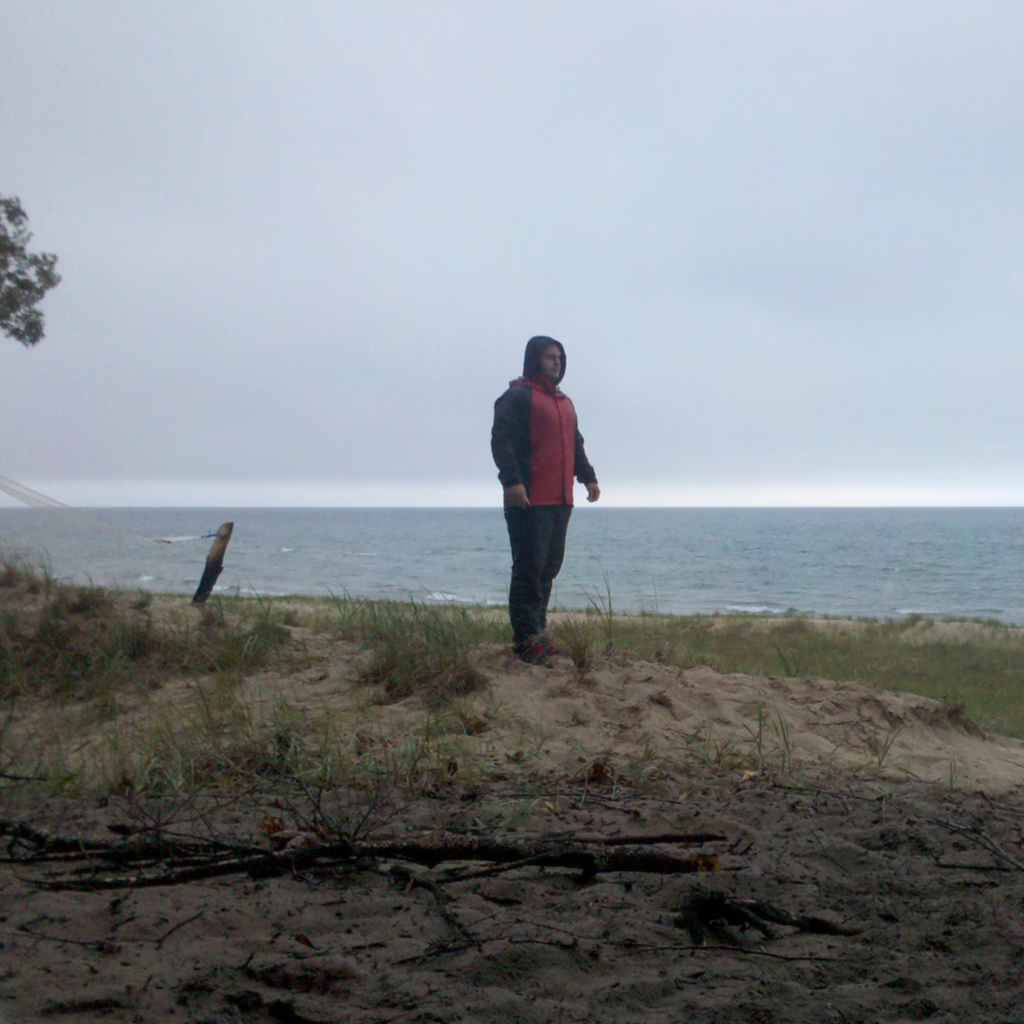
A brief guide on preparing for a forest trip that stresses careful tent placement, weather awareness, essential gear like waterproof bags and saws, and the importance of audio books to keep you entertained during rainy or stormy conditions.
Archive
Page 53 of 101
A brief guide on preparing for a forest trip that stresses careful tent placement, weather awareness, essential gear like waterproof bags and saws, and the importance of audio books to keep you entertained during rainy or stormy conditions.
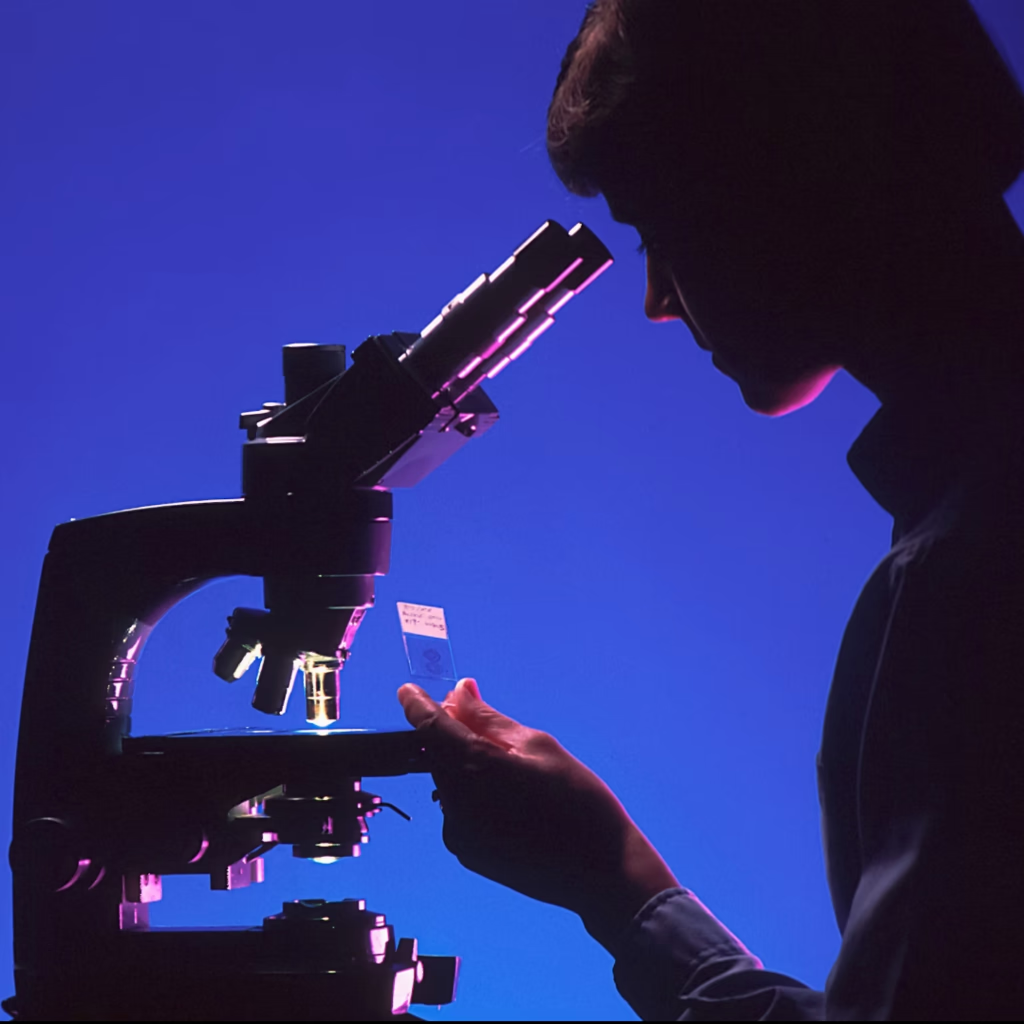
The author argues that today’s schooling is adult‑centric and underdelivers, so it should become a hands‑on, self‑directed experience: biology classes would let students rent microscopes, art rooms would provide projectors and canvas, and outdoor trails like the Appalachian Trail would be part of learning. Textbooks should turn into interactive visualizations; students need room and time to absorb wise books and exchange programs. High school should function as a start‑up accelerator, ending with launching a small business, while achievements are monetized through allowances. Programming is presented as the core language of modern education, and schools must provide home labs, computers, tutors, and guidance into startups for students to become powerful, capable learners.

#1269
The post argues that true education comes from free, self‑directed learning rather than rote memorization imposed by schools, and that students must reclaim their intellectual inheritance to achieve personal growth and societal improvement.
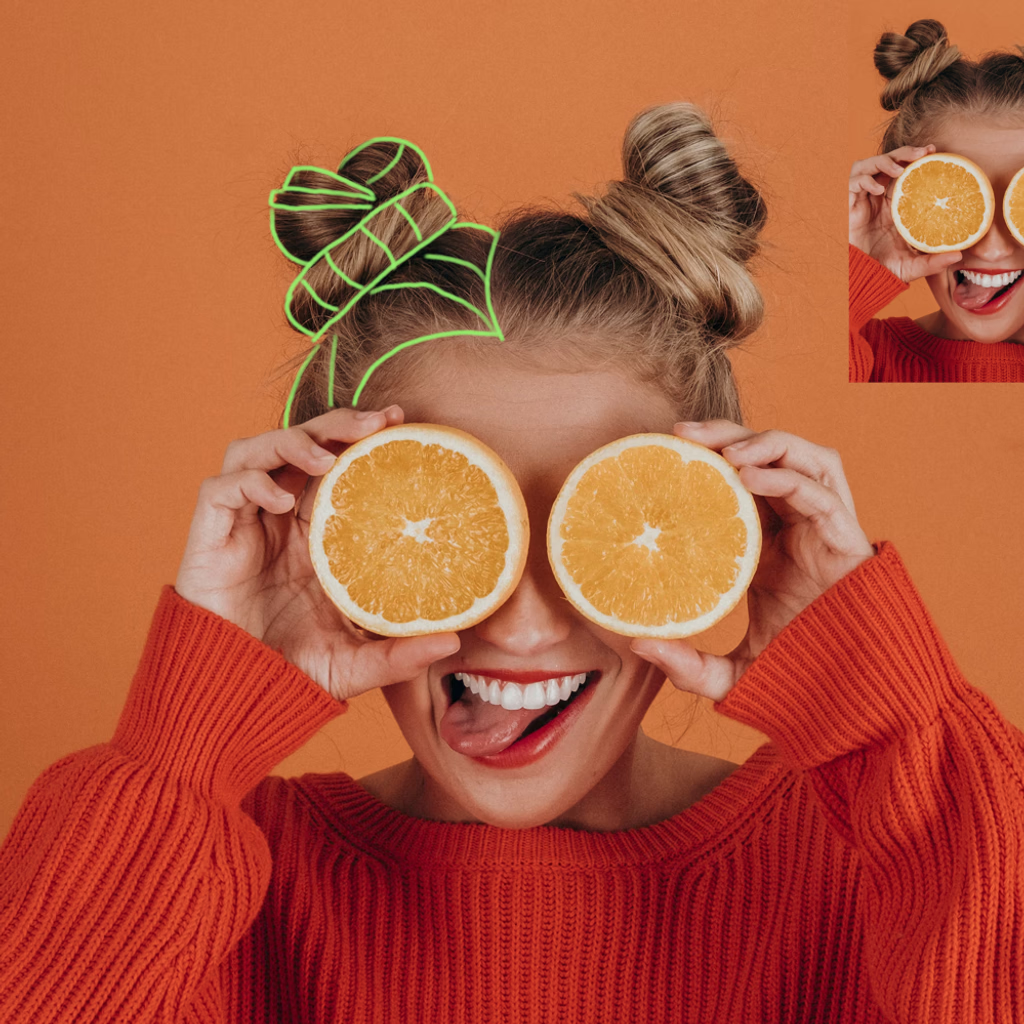
The post explains that hair should be treated as a three‑dimensional object, so artists must first sketch its 3D shape—using sharp edges and mid‑tones to define volume—and then add shadows and highlights to give depth. It stresses that many beginners skip this step, directly painting colors without the underlying 3D structure, which leads to flat results. By visualizing hair as a bundle of tubes or rolls, artists can more easily plan its form; once the basic shape is set, adding mid‑tones, shadows, and subtle highlights completes the rendering, allowing faster, more accurate techniques for both simple and complex hairstyles.

The post argues that continuous motion and proper pacing are the keys to an effective workout: short bursts of heavy lifts alone aren’t enough, so beginners—especially middle‑aged adults who want to emulate youthful energy—should start with low intensity, gradually increase endurance, and use interval timers to structure work and rest. Pairing this rhythm with music or dance not only motivates but also provides the beat that drives consistent effort; monitoring electrolytes and blood pressure and consulting a doctor are advised for safety. Altogether, the piece presents a simple, accessible routine—slow start, timed intervals, musical accompaniment—that can transform the body into a more athletic state over time.
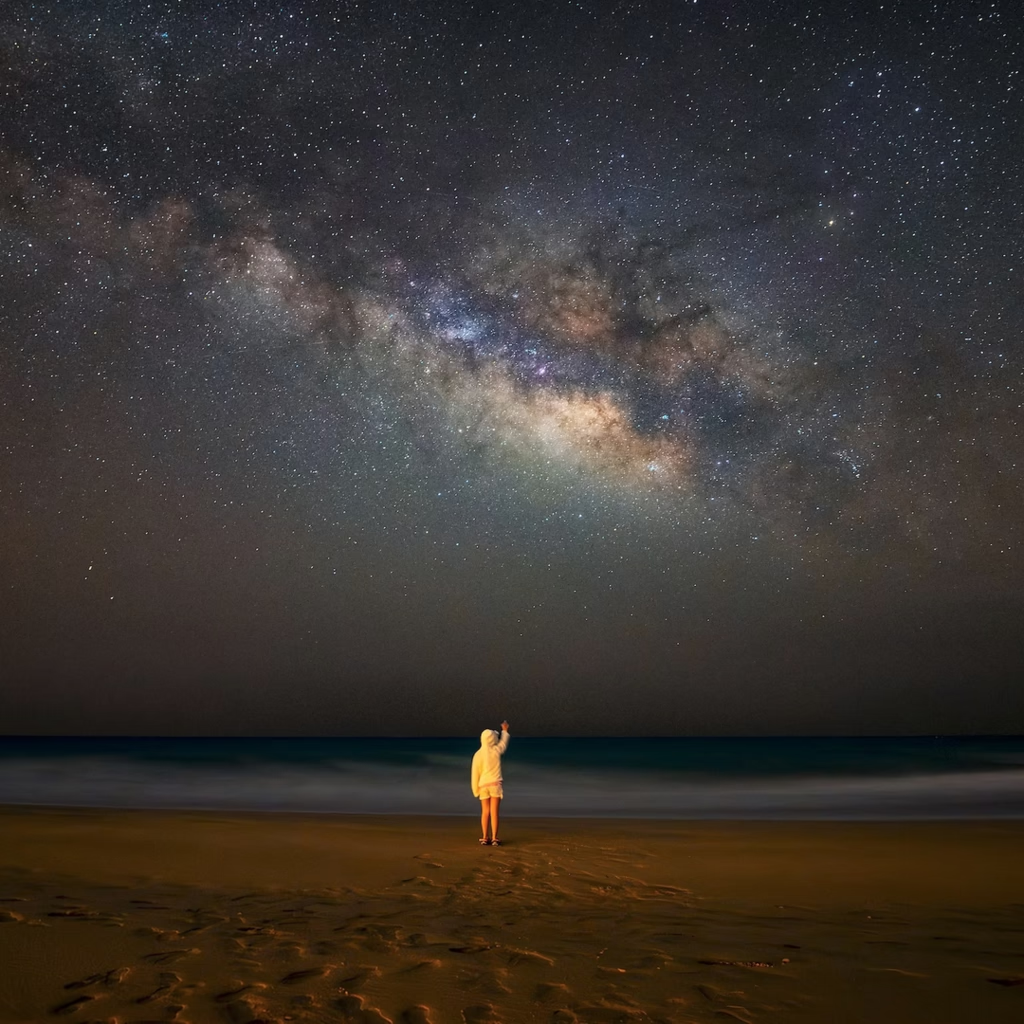
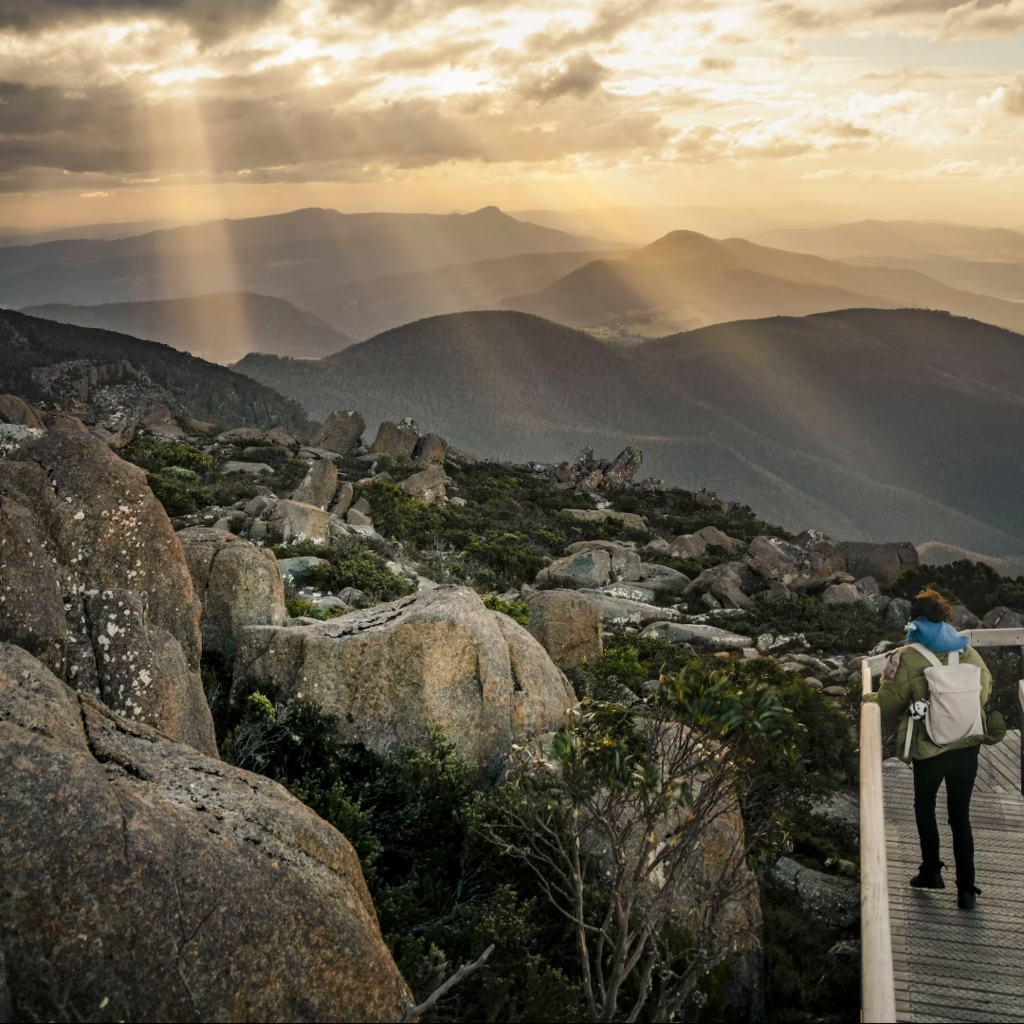
The post reflects on human life as a fragile yet enduring miracle shaped by physics, chemistry, and evolution, urging readers to pursue greatness through continuous growth, memory preservation, and intellectual inheritance. It likens our journey to that of rivers or slime molds—following unique paths amid chaos—and emphasizes the importance of learning from giants, staying rooted in concrete foundations, and seeking knowledge in libraries. By reconnecting with the universe at moments of reflection, one can find wisdom, power, and a precious mind that ultimately blooms endlessly.
#1265
The post argues that our school systems are built more for show than substance—students spend years taking courses and filling out resumes while teachers prioritize rote memorization over true understanding. The author feels the experience of being “faked” into believing one is competent, only to be let down by a curriculum that offers little real knowledge or practical skills. He stresses that this educational failure leaves students stressed, underprepared for work, and vulnerable to repeated cycles of debt and misemployment. To break out of the cycle he suggests returning to books (especially narrated audio‑books), walking long trails for clarity, and letting stress become a catalyst rather than a curse; in short, it’s a call to reclaim authentic learning and personal growth so that future success is earned by real knowledge, not by an inflated transcript.
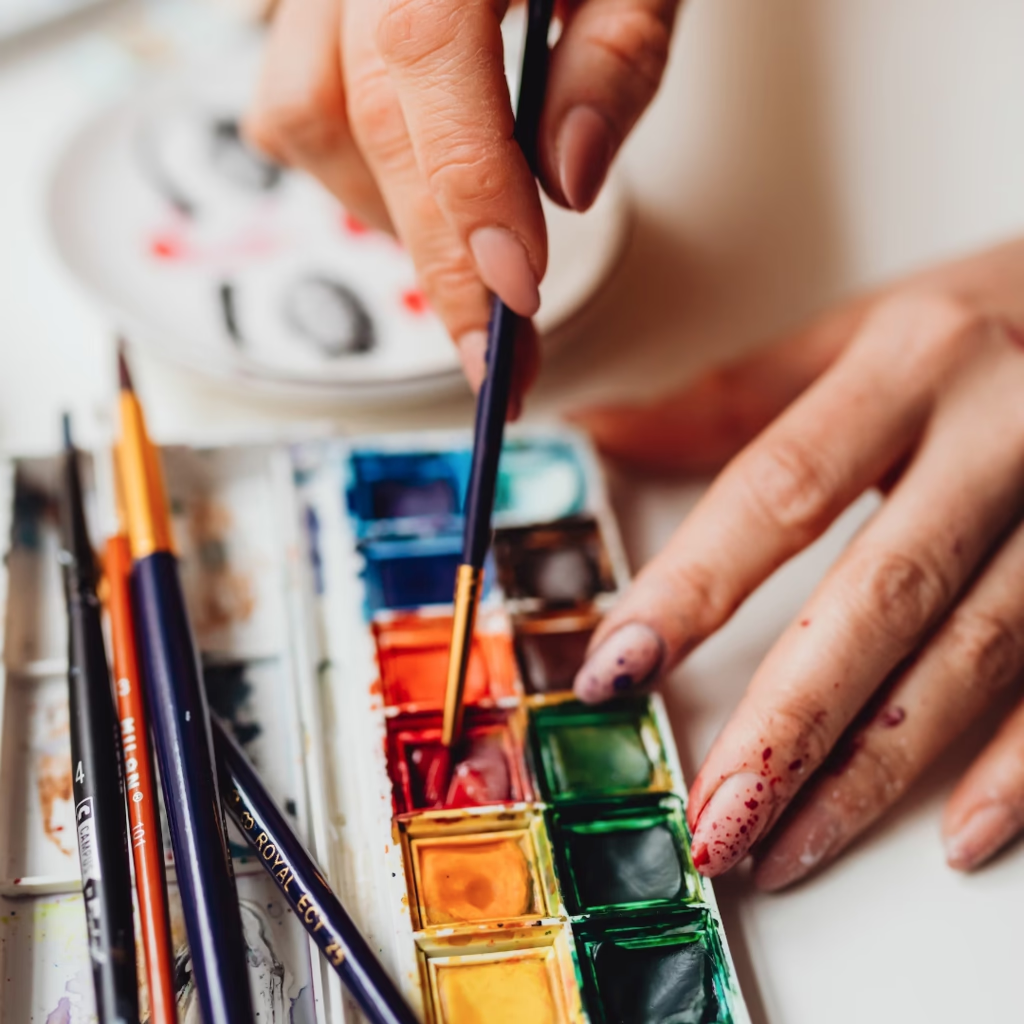
The post outlines a three‑step workflow for quickly creating art: first, lock in shapes using either a wall projector or a grid method (the former being especially easy when the projector is linked to a computer); second, nail the colors by overlaying a transparent reference image—an approach that G’MIC’s color picker and filters such as vibrance or posterize make precise—and mixing paint accordingly; third, refine details by studying favorite works. It recommends free tools like Krita for digital painting (with a stylus rather than a mouse) and G’MIC for color sampling, arguing that working through a portrait is an effective way to master hue, tone, and the subtleties of skin tones beyond what a simple color wheel offers. The article concludes that digital techniques give painters an easy ramp to grasp color theory and can be translated back into physical mixing if desired.
The post argues that true learning is self‑directed and deeply interconnected, whereas “fake” education merely gives an illusion of choice and often relies on rote memorisation. It contends that real study involves adventurous, cross‑linked experiences that let learners internalise knowledge (“knowing the city by heart”), a process best facilitated by science popularisers who weave clear narratives that tie facts together across fields. By presenting stories that link concepts to everyday life, these popularisers spark curiosity and lead students toward independent exploration, which is further empowered by programming skills that provide precise tools for simulation and discovery.
#1262
The post presents art creation as a progressive journey beginning with simple doodles, moving through pencils, brushes, and other tools such as blending stumps and painting knives, each technique—like impasto—that adds texture and detail; it stresses learning from masters, practicing portraits to internalize flows and shadows before synthesizing new faces, and claims that being an artist is innate, with good art “changing lives,” while referencing camera‑obscura tradition to underscore the legacy of mastery.
The post argues that true greatness comes from a blend of knowledge, wisdom, and culture (or “class”), rather than simple memorization or grades. It explains that knowledge is an active skill like programming, while wisdom allows one to apply that skill creatively to solve real problems—moving from understanding the theory to building useful applications. The author stresses that learning from great works and people “on whose shoulders we stand” enriches our culture and mindset, and that self‑education completes this trio by letting us pursue knowledge and wisdom independently when we are calm enough to absorb it. In short, greatness is achieved through a continuous cycle of acquiring knowledge, applying it wisely, absorbing cultural influences, and finally mastering self‑learning.
The post argues that students learn best when subjects are framed in real‑world contexts: they need to see why math matters, just as they do for reading and writing. It proposes schools become “startup accelerators,” where learning programming first gives precise syntax and visual tools that let students build projects—games, art, music—that they can publish, earn from, and use to lift themselves out of poverty. The author believes subject divisions are artificial; education should be self‑directed, with topics chosen by the learner and supported by peers, mentors, and AI language models rather than rote lectures. Ultimately, progress is measured by tangible life outcomes, not grades, and future generations depend on such context‑rich, technology‑enabled learning to become “great beings.”
Higher‑level learning isn’t really taught in schools at all – it springs from a student’s inner curiosity, not from preset lectures or rote memorization of formulas without understanding their construction. The post argues that real education is an inward process that begins with personal curiosity and follows each learner’s own path; institutional teaching and even inspiring teachers can only provide fleeting illumination, whereas true knowledge comes from engaging deeply with nonfiction in the library and discovering one’s own way to live as a “great human being.” Because current schooling relies on grades, fixed subjects, and long‑term stress, students need time away from classrooms and outdoor adventures (hiking, camping) to recover and absorb wisdom.
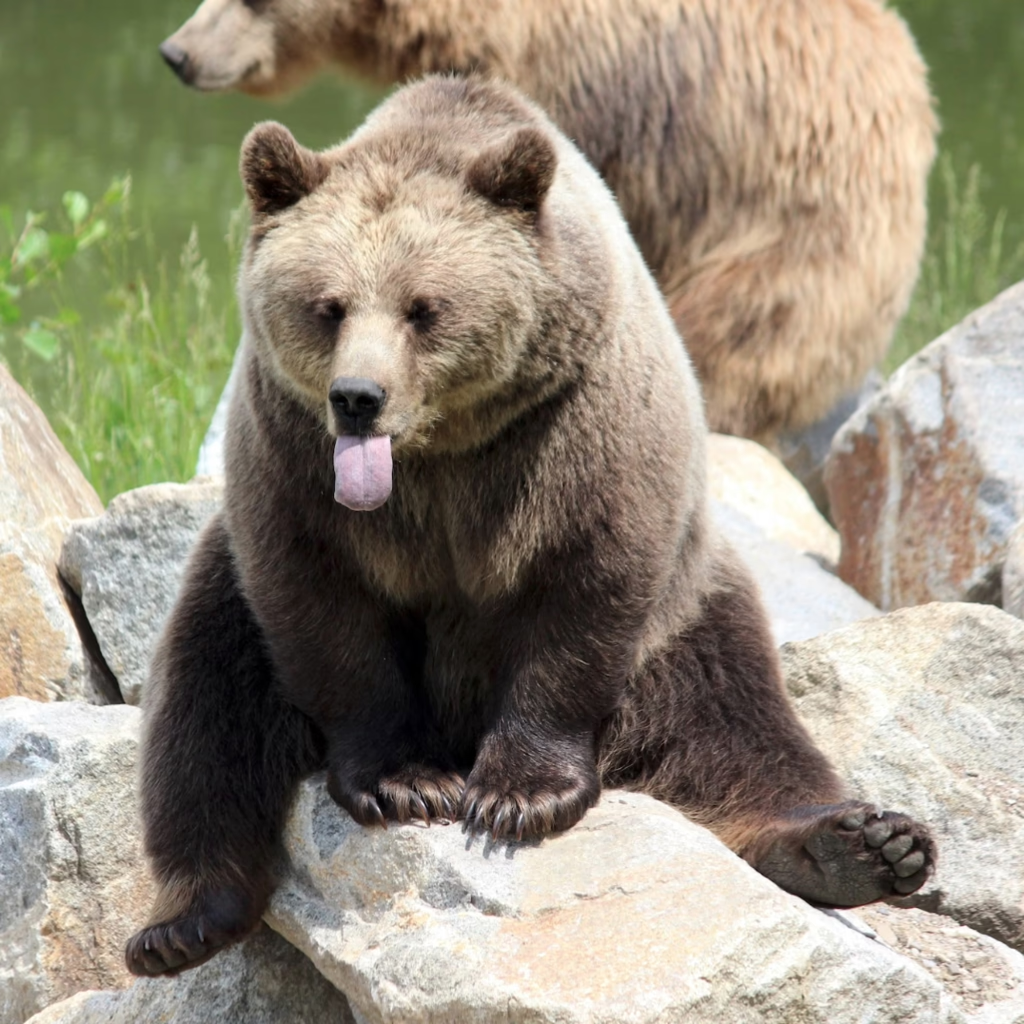
The post explains how to prepare and enjoy a comfortable outdoor adventure by starting small—setting up a tent in your own backyard with nature‑sound videos before heading into the wilderness—then gradually moving to state parks. It stresses that an expedition is never solo, recommending two tents for flexibility but keeping one at home. The writer advises choosing campsites with sturdy trees (avoiding “widow makers”), avoiding low spots where water can pool and being ready to relocate if weather turns bad. For wildlife safety, it suggests hanging food on a rope to keep raccoons away, carrying bear spray for bear country, paying attention to scent, and making noise to stay safe. Overall, the article presents practical tips—site selection, gear, animal precautions, and sound planning—to reduce fears and ensure a successful first night in the woods.
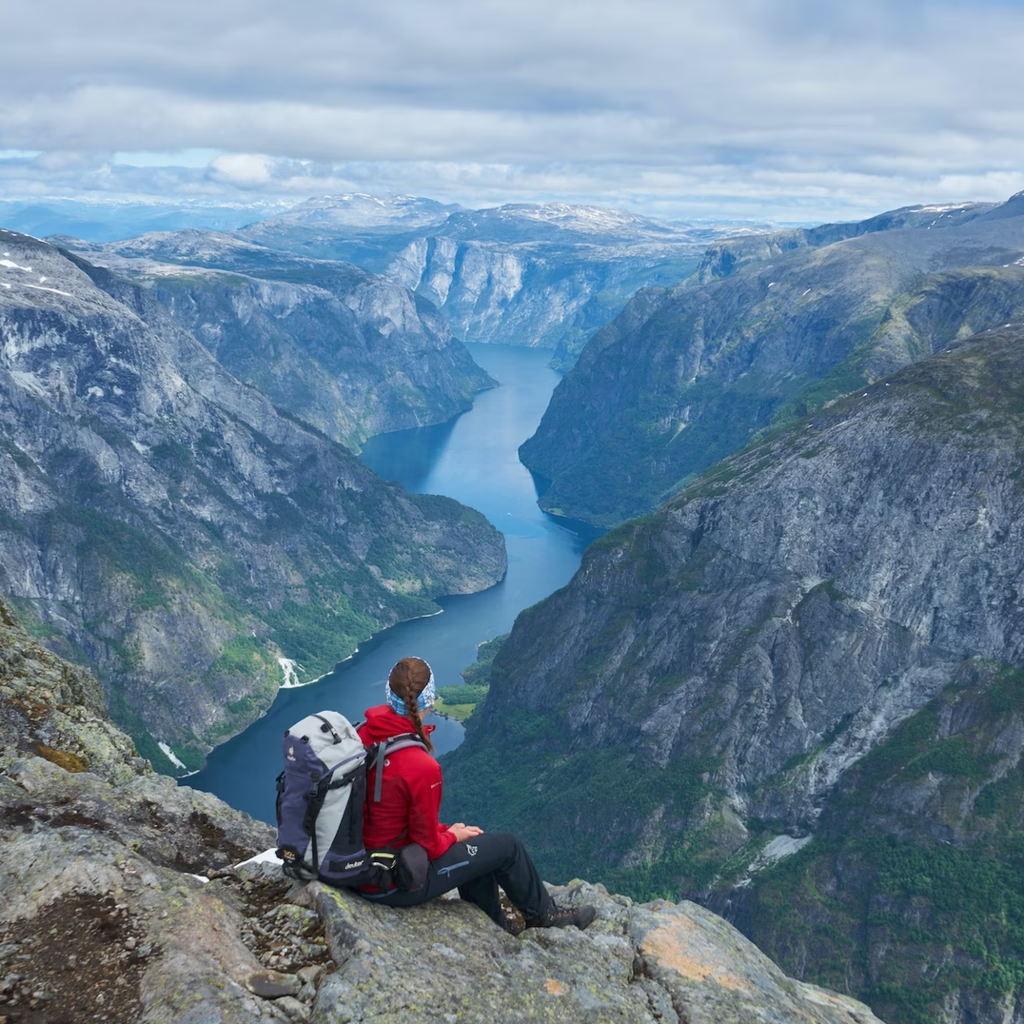
The author argues that modern schooling reduces learning to memorization and punishment, stifling students’ curiosity. Real education begins when learners pursue their own interests, making connections across subjects through self‑driven projects such as programming, simulations, or art installations; these interdisciplinary explorations create authentic, functional knowledge that fuels future growth. The writer calls for a shift from factory‑style schools to genuine learning experiences that foster deeply connected knowledge and personal heights.
Listening to narrated non‑fiction books is presented as a simple diagnostic: if the story falls apart, you’re likely out of sync mentally and need to recover. The post argues that recovery comes from immersing oneself in engaging reads—especially adventure tales that mix joy, knowledge, and wisdom—and from taking a multi‑month vacation in genuinely beautiful surroundings, which helps reset the mind after work‑induced fatigue. After an initial period of doubt that turns into a focused resolve, the writer suggests that once recovered one should share the experience by creating a two‑hour narrated book for younger generations, complete with cover art and free download, to keep humanity’s wisdom alive.
The post contrasts real teachers who spark genuine understanding and curiosity with “fake” ones who force rote memorization, urging students to pursue true learning on their own terms.
#1254
The post argues that true growing up is an active process of continual learning rather than simply aging; it emphasizes the importance of selecting and deeply studying high‑quality books from clear‑thinking scholars, repeating them to uncover layered insights, and avoiding shallow school memorization or misleading popular works; by immersing oneself in well‑chosen nonfiction, one expands mind, becomes a “great being,” and contributes to a more beautiful world.
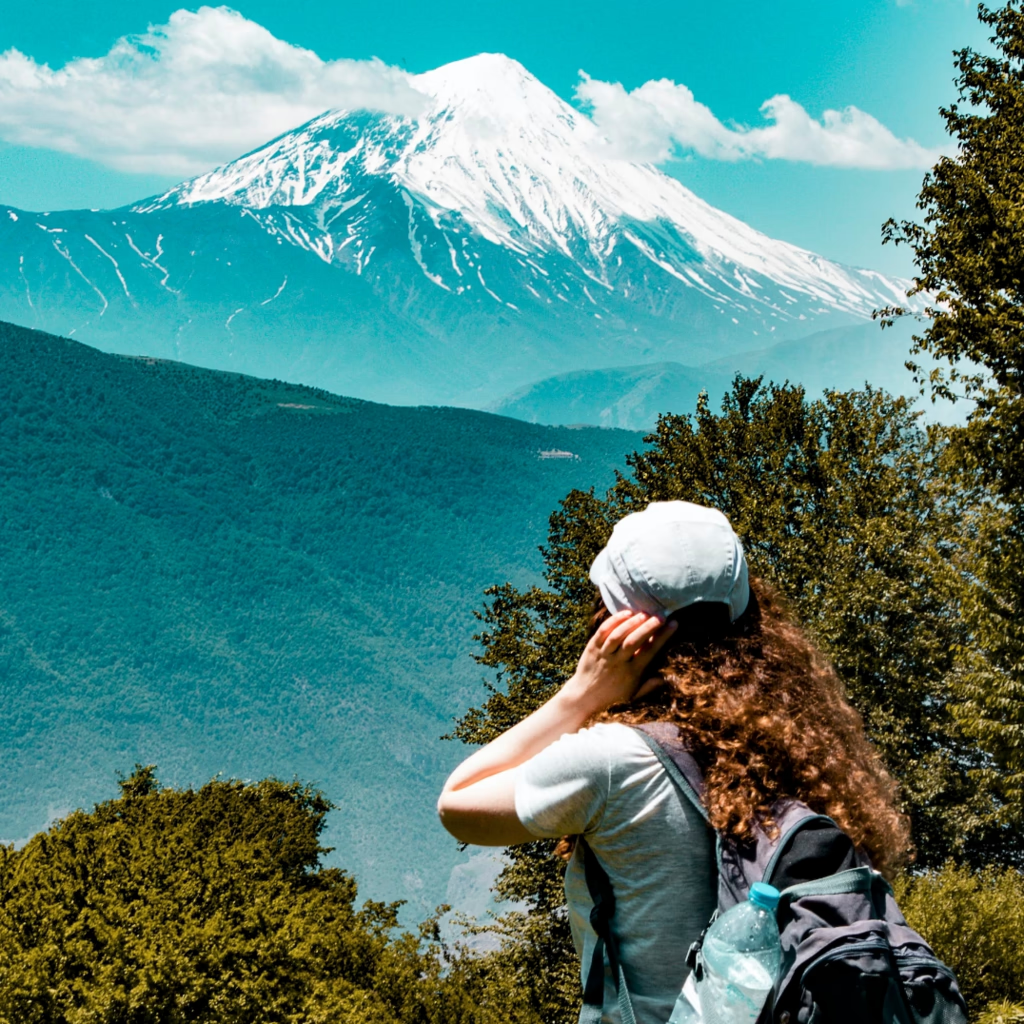
The post argues that conventional school education feels narrow and even betrays students by focusing on rote facts—like “mitochondria is the powerhouse of the cell”—while neglecting a wide, interconnected curriculum that ties personal interests to real knowledge. The author believes true learning should be expansive, allowing students to explore topics such as gold panning, astrophysics, or astrobiology in a way that feels meaningful and heart‑touching rather than memorized; they also claim that grades and teachers are poor measures of intellect. In short, the piece urges readers to take charge of their own learning, read nonfiction, and pursue self‑education so they can grow into great beings.
A heartfelt note of encouragement and optimism for the reader is followed by a reflective overview of humanity’s current state—its age, its reliance on money, education, and technology—and how these systems create layers of poverty and stratification that are largely invisible yet profoundly shaping our lives. The author laments that while the world remains beautiful, our species is still preoccupied with wrong paths and aims, leading to pollution, climate change, war, and corruption. He urges the reader to hear the truth early so they can rise above the liars, become a philosopher, and help others do likewise, believing that only a generation of great minds—not just one leader—can overcome these divisions and bring true progress.
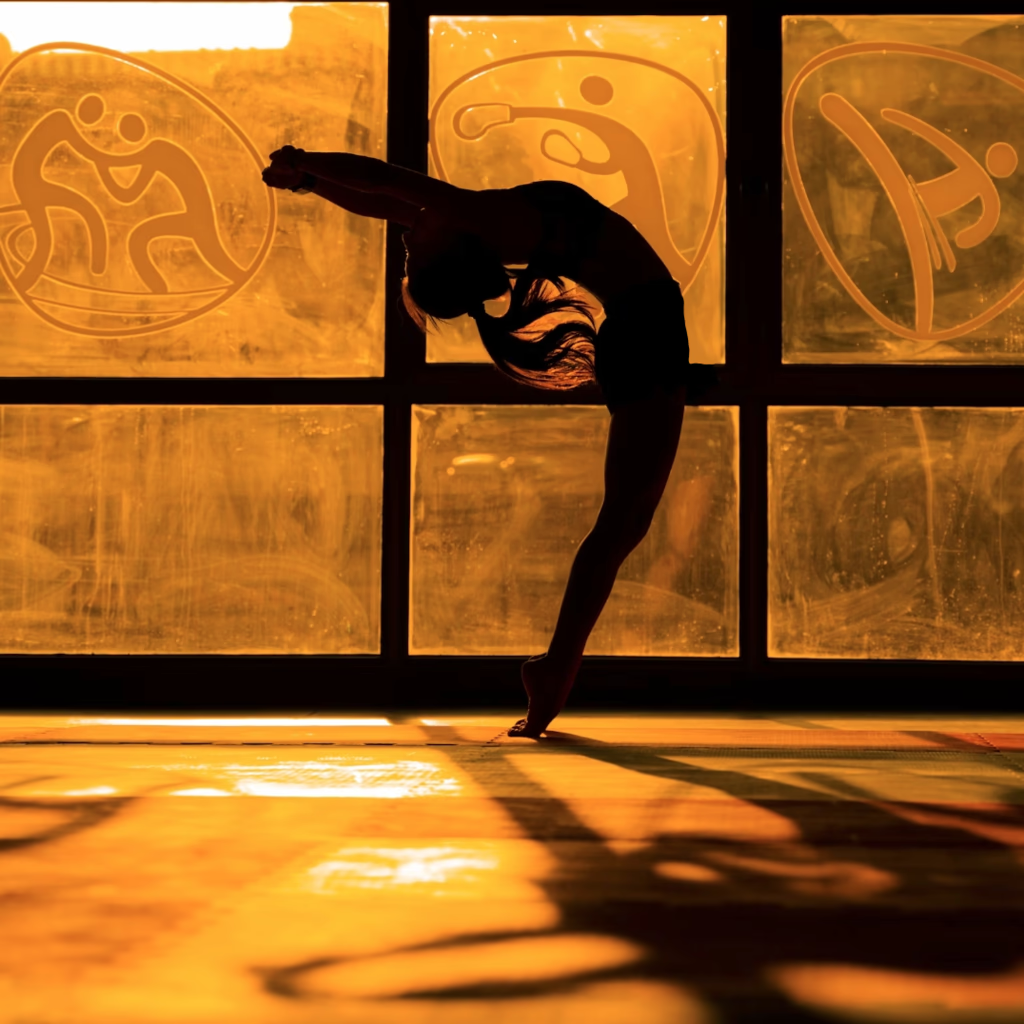
Dancing feels effortless because it’s a natural rhythm that our bodies instinctively follow, and when we sync our movements to the beat of music we unlock a powerful workout advantage. By staying in time with the music, we naturally extend each motion, boosting endurance, strength, flexibility, and muscle gain while burning fat. This rhythmic exercise keeps us fit, reduces aches that appear in middle age, and ultimately slows aging by restoring vitality through the simple act of dancing.
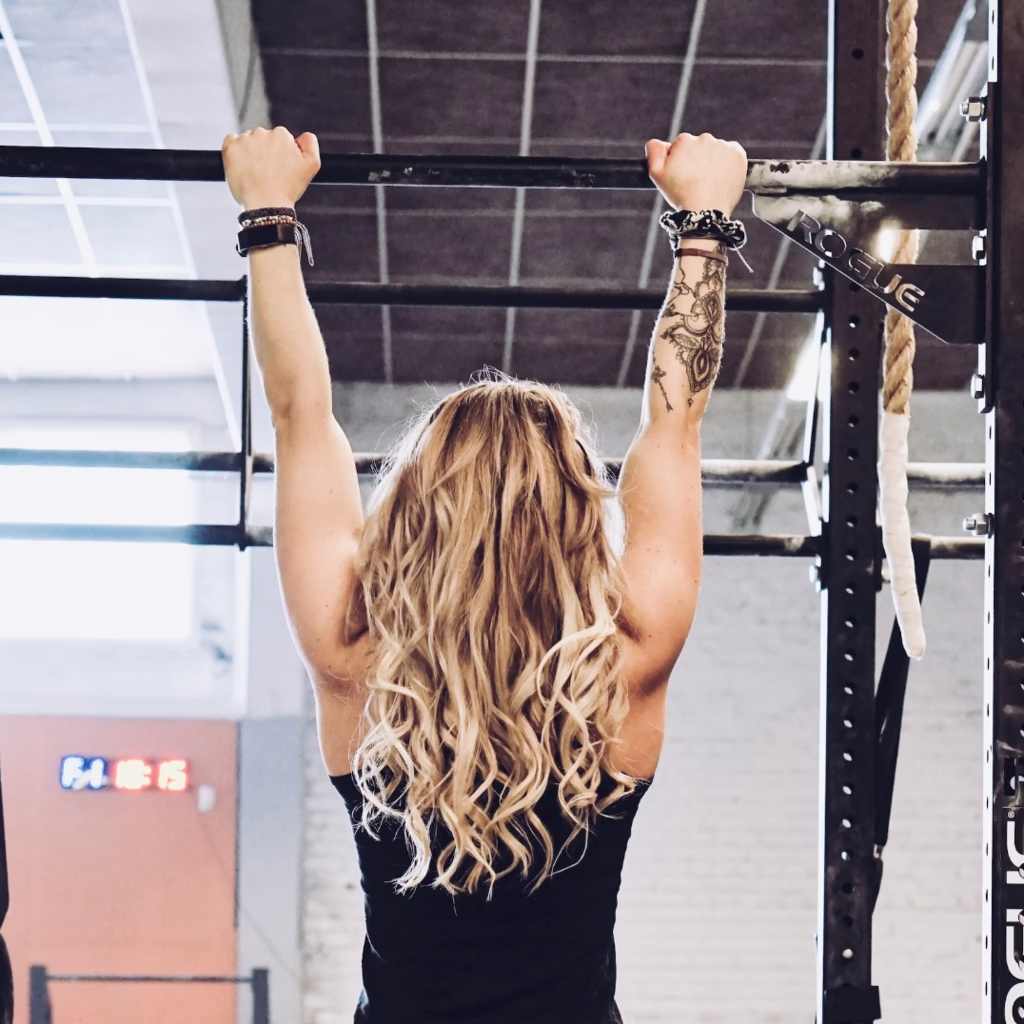
The post explains how to use music with the right beats‑per‑minute (BPM) as a cue for lifting and cardio, adjusting tempos on a computer when needed, and progressively increasing both workout BPM and activity intervals while shortening rest periods until rests are no longer necessary. It stresses daily work‑outs but also the importance of recovery days if pain persists, and suggests practical measures such as thick socks or larger shoes to warm feet, a neoprene belt for back warmth, and simple “baby” movements to keep muscles active during sessions. Finally it reminds readers to replenish electrolytes through sweat, monitor added salt intake with blood‑pressure checks, and consult their doctors about hydration and recovery, all while keeping the routine consistent and adaptable.
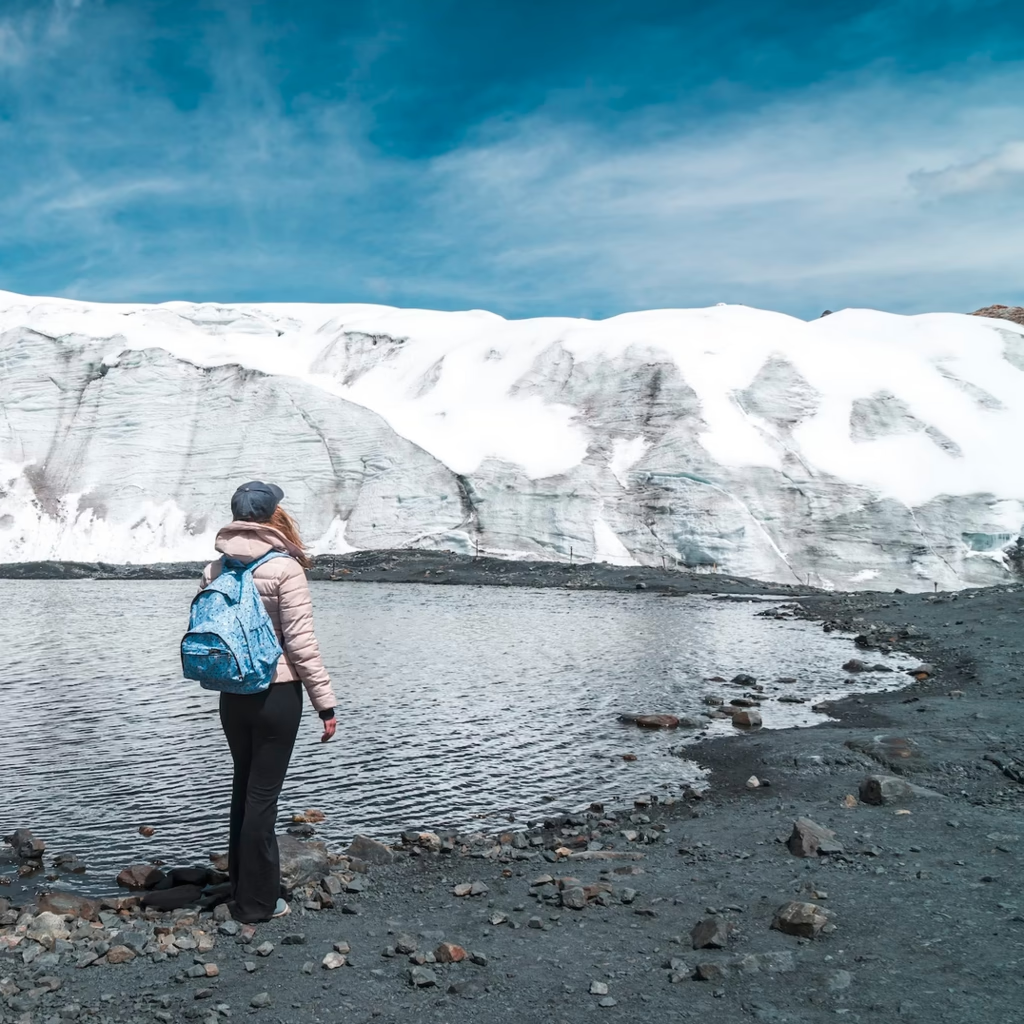
The post argues that true education is self‑directed and paced around personal curiosity, contrasting it with the rigid, memorization‑driven school system that relies on grades, teacher ego, and institutional profit; it claims schools use curricula, GPA manipulation, and “fake” learning to keep students obedient and employable while leaving them ill‑prepared for real life, so the author urges early self‑education in programming and reading powerful books, combined with outdoor adventures, to build genuine knowledge and independence.

The post argues that effective education is best achieved through self‑directed, self‑paced learning that follows each student’s unique curiosities rather than the rigid, forced curriculum of most schools; it claims that memorization and imposed subjects create a cruel, superficial experience that leaves students feeling unintelligent and dependent on teachers who sell results for paychecks. It praises inspiring teachers—“science popularizers” or artists—that integrate knowledge into students’ existing understanding, and stresses that true learning creates new abilities and a solid foundation for further study. The author also notes the financial burden of education, suggesting that universal income cards would eliminate poverty and allow students to learn without debt, but still believes that classroom design and curriculum reform are necessary to make schools humane and effective.