Archive

Page 56 of 95

Joggers Beware: I Dare To Declare You Are Unaware How To Wear Your Underwear

At its core, the post reminds readers that proper clothing habits—like wearing underwear correctly and tucking a T‑shirt in during workouts—are essential for comfort and style. It stresses the importance of using rubber bands (or elastic) properly while jogging or exercising to avoid scratches and itching. The author notes that these simple practices were common knowledge in childhood, and that keeping pockets accessible by not covering them with extra layers is also important. In short, the piece encourages readers to adopt neat clothing habits to stay comfortable during physical activity.

The Outside Of The World

The post argues that our everyday lives are shaped by a brain‑less system of schools, media, and family beliefs that feed corruption—false leaders, overpriced medicine, ineffective education—into the fabric of society. It claims this “friction” between reality and how the world functions creates opportunities for power, profit, and wage slavery, while leaving little room for genuine wisdom. To break out of it, the author insists on a personal quest: understand one’s place in the universe, reject the broken constructs, study respected books by clear thinkers, and gain practical insight through long‑hike adventures (Appalachian, Pacific Crest, Continental Divide). By doing so, an individual can rebuild himself with real education and profound wisdom, thereby escaping exploitation systems and enabling personalized learning for others.

The Stopwatch And The Impossible Reward

The post explains that building workout endurance works best by starting with very short sessions—just a minute or so—and then slowly extending the duration as your body adapts. It emphasizes that this incremental approach is more effective than trying to lift heavy weights at once, which can cause injury and stall progress. Trainers should measure how long you can hold an exercise, gradually adding seconds and minutes, rather than rushing into high volume. The author stresses full‑body movements over isolated muscle work, arguing that a balanced routine improves overall strength and longevity. In short, the message is: begin tiny, extend steadily, use full‑body moves, and let endurance grow naturally.

Reimagination

Reimagining is portrayed as the creative act of discarding old ideas and constructing better ones, a process that fuels artists, programmers, engineers, inventors and philosophers alike; it involves dismissing what cannot be proven or reproduced, letting no one’s interference halt progress, and assuming that the majority often errs because they move in incompatible directions. The text argues for an education system that truly builds knowledge rather than merely awarding grades, noting that grades are meaningless if not accompanied by real learning. It claims cultures, rituals, birthdays, diplomas are merely symbolic, while true maturity comes from imagination—an imaginative worldview that yields new thoughts free from artificial influences and gives insight into human nature, our present state, and where we must go.

Turning Generative Art Into A Super Tiny Little Business

The post explains the strengths and quirks of text‑to‑image AI, then proposes a small business model that creates custom AI‑generated themed canvases, frames them by hand, and sells ready‑to‑hang art for local offices.

The Power Of The Third Hour; Or; How To Become Young And Mighty Again

The post is a poetic guide to a continuous workout routine using light dumbbells and dance-like movements, emphasizing that real exercise never stops and rests are minimal. It encourages starting with brief sessions—one minute—and progressively increasing duration through 45 minutes, an hour, and eventually two hours over several days of training each week. The piece compares this steady movement to dancing and describes how it transforms the body from a larger state into youthful strength and flexibility, while improving coordination, endurance, and potentially extending life expectancy.

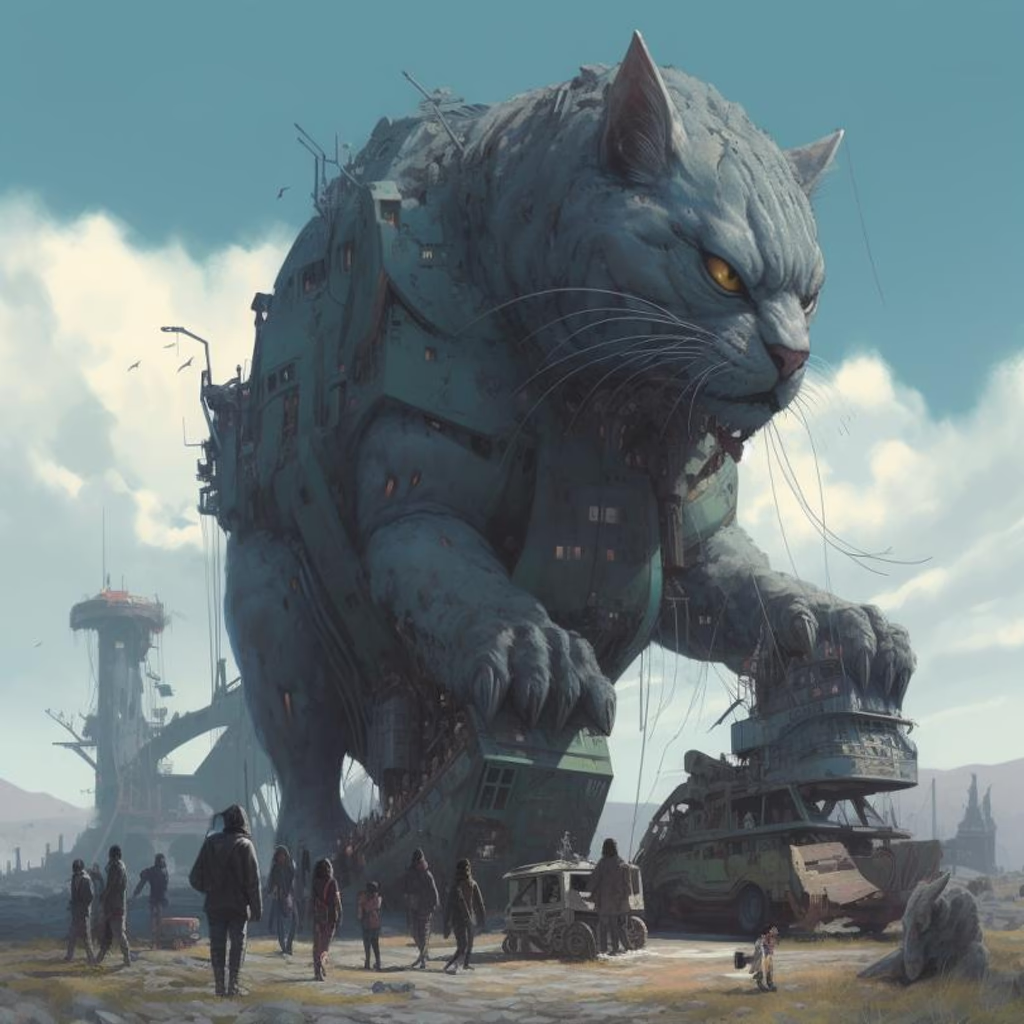
Cat Owners Beware: Hunter’s Moon May Earn You A Scare

The post poetically describes how house cats behave during Hunter’s Moon—the night before Halloween—when they become playful, mysterious and noisy, producing a “cat phantom” anthem that brings joy to humans. It explains that this nocturnal ritual is part of their charm, giving us comfort and light. The author encourages cat owners to feed their pets extra on this night, hoping the cats’ magical presence will bring comfort and delight.

Girl Lions Should Have The Fancy Hair - It Is Unfair

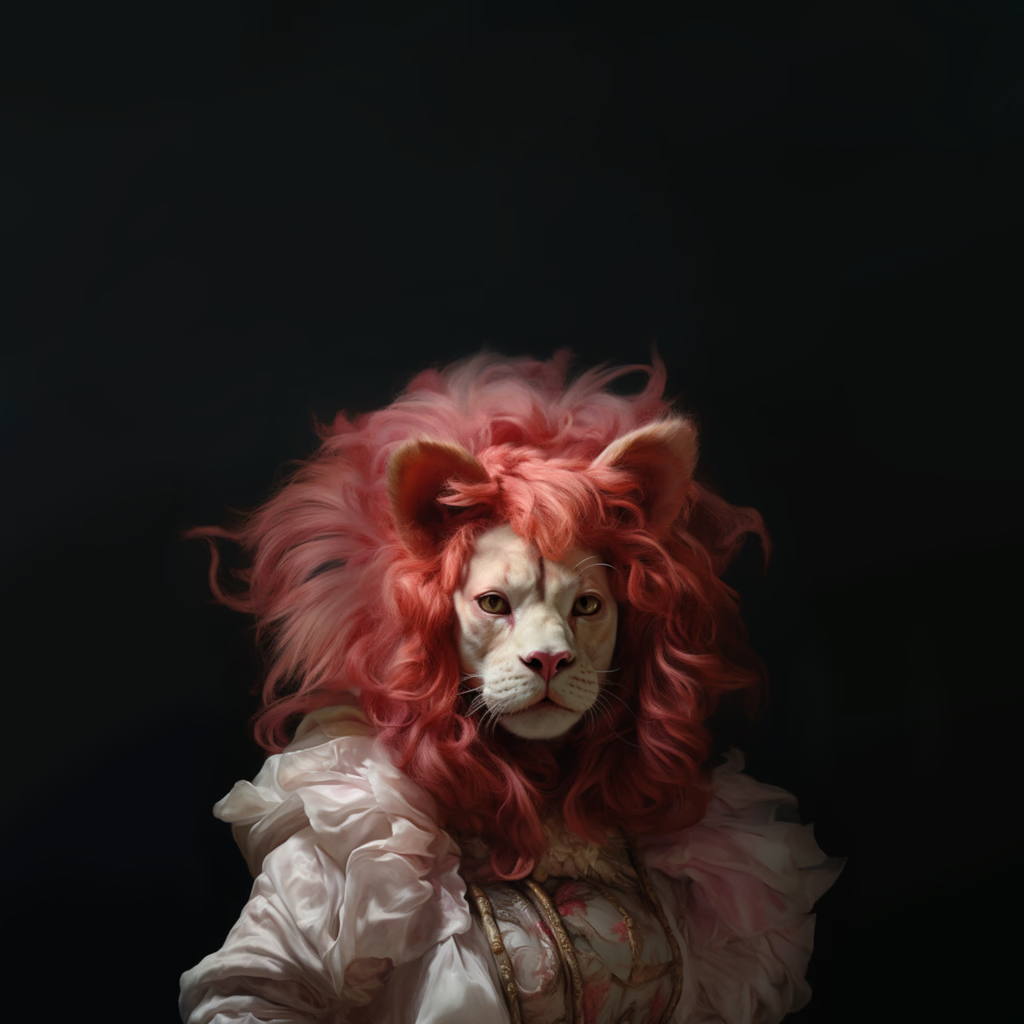
The post is a playful exploration of cat trivia—ranging from why male lions sport manes and why lions’ female counterparts appear plain, to how cats meow instead of howl—and then leaps into whimsical speculation about feline intellect: that they might be plotting to take over the world by stealing passwords on keyboards, that their lack of tails could explain their cunning, and that perhaps cats originated from the moon. It describes a “hunters moon” as a monthly holiday for cats who sleep all afternoon until dawn when they fully awaken, then muses that if cats ruled nations conflicts would disappear, lady lions could wear wigs in peace, and overall that house cats would make excellent world leaders.

Ancient Werewolf Wisdom: If You Got A Tailbone...

In this whimsical post the speaker urges listeners—humans—to pay close attention, claiming that with tired eyes he has seen everything and gained infinite wisdom. He then muses on the symbolic value of a tailbone: to “be a dog that is your own,” to feel whole and alive, and to be more than a mere cog in a system. The piece weaves imagery of werewolves, stars, long trails, and a once‑beautiful world to evoke nostalgia and a desire to restart learning by listening to narrated books, wearing a tail as a sign of wisdom, and turning the hamster wheel of life anew.

A Tiny Look At Generative Art

Generative art, fueled by prompt‑based AI, swiftly creates diverse images—from style mimics to hybrid creations—yet still lets traditional artists refine and build upon the machine’s output.

It Takes A Backpack To Hear A Book

Stress often prevents us from fully listening to narrated books, and the lingering tension can fragment our thoughts for weeks or even months—sometimes a year—to recover; this mental clutter not only hampers comprehension but also forces us back into repetitive thinking that hinders new learning, which is why we must actively engage with books, especially narrated ones, to absorb their wisdom and keep our minds functioning like well‑programmed software, thereby avoiding the cultural reset of starting from zero each generation.

The Flight Of The Mocking Birds

The post urges readers to learn from great philosophers like Socrates, take personal responsibility for discovering life’s true meaning, and rise above humanity’s mistakes to become authentic leaders through universal wisdom.

Beginning Generative AI: Two Tiny Tips For Graphics And Text Generation

The post presents two creative strategies: first, a graphics tip that encourages adding maximum complexity—by starting with simple, oddly shaped subjects such as “naked cats” or “blob fish”—and intentionally making the result ugly to test an artist’s effort; second, a text‑generation tip that suggests building poems by first generating structured lists of steps and details (e.g., five steps toward wisdom, world peace, or personal growth) and then weaving those into a rhyming poem, illustrated with sample prompts and finished verses.

Wisdom; Or, All The Right Humanity Has Ever Had

The text argues that true wisdom defines humanity, while the many manipulative “control systems” that dominate our lives are merely distractions and ultimately fail to bring real change. Citing Socrates as an exemplar of this transformative power, the author stresses that philosophy’s purpose is to unravel falsehoods and inspire genuine happiness. He then claims that once we grasp wisdom—easily found in authentic philosophical works—we acquire a preventative power over our future: by loving wisdom and befriending philosophers we can steer humanity away from confusion, division, and war, thereby preventing the wrongs that arise when such systems take hold. In sum, the post invites readers to embrace philosophy as an inheritance that empowers them to prevent error and guide humanity toward true greatness.

On The Art Apocalypse

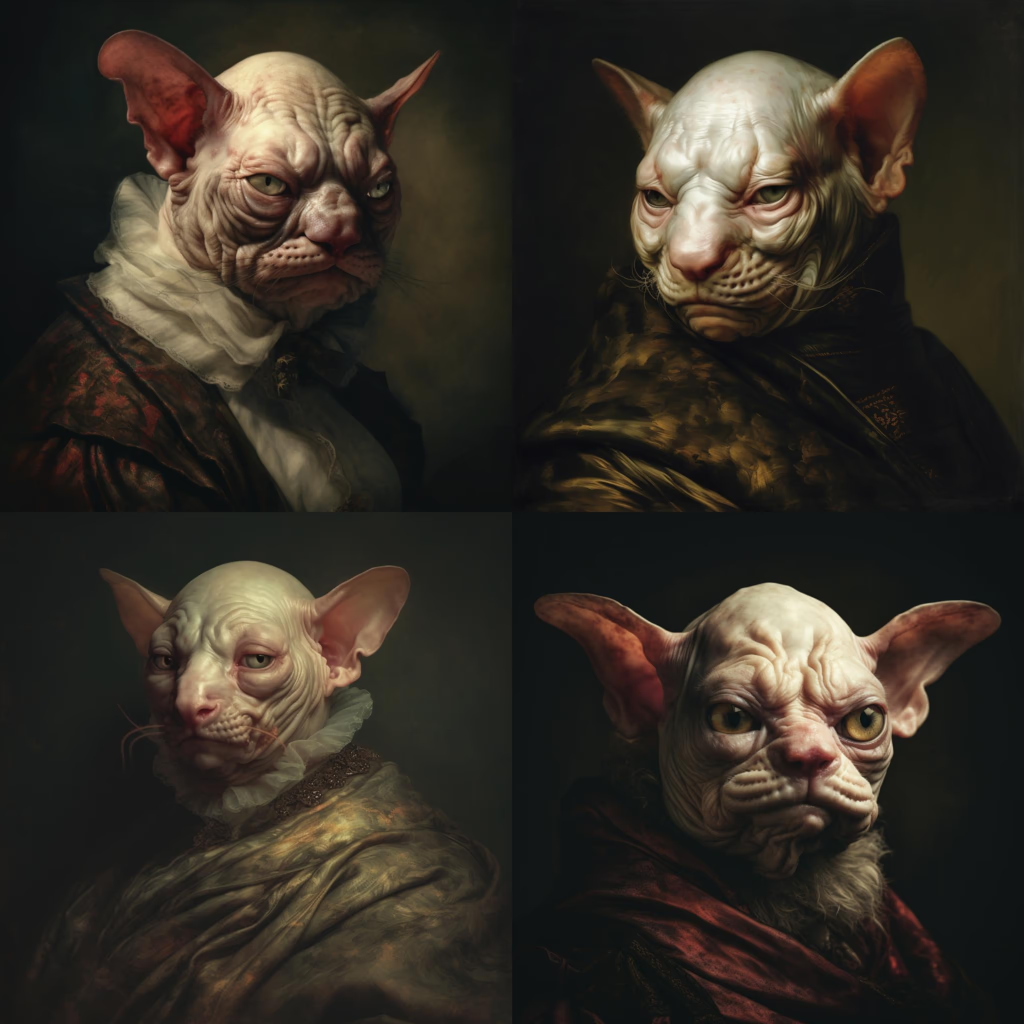
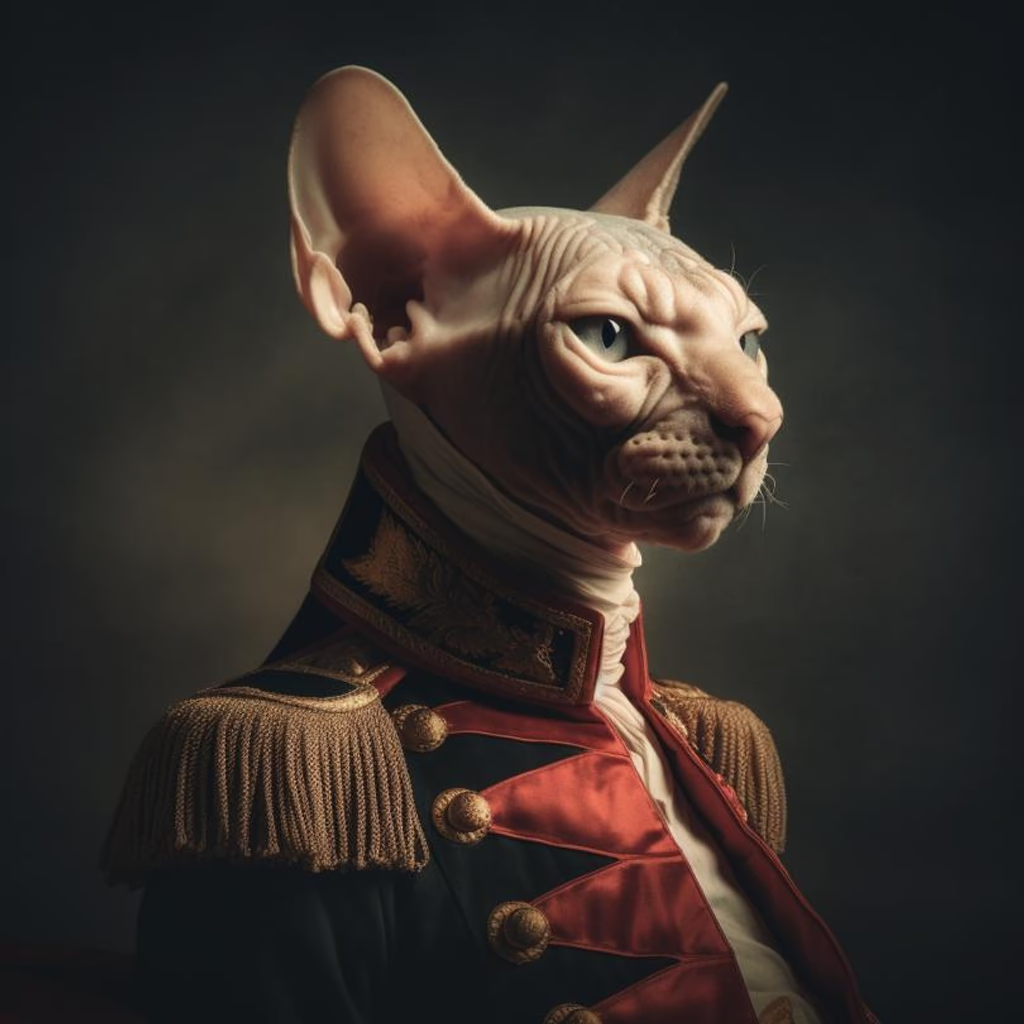
The post reflects on the rise of generative‑AI art, using playful anecdotes—from a novice’s cheap portraits to an imagined collection of Sphinx cats—to illustrate how easily software can produce seemingly “good” images that later appear trivial or meaningless. It contrasts this with a museum curator’s mislabeling of such works and wine connoisseurs fooled by a low‑cost label, both cases underscoring the importance of context and interpretation. The author argues that true art must carry meaning beyond its visual appearance; it should reflect the creator’s personality, intentions, and life, not just be an algorithmic output. Thus, generative art can be meaningful only when the maker’s identity and purpose are embedded in the work, echoing how a wine’s flavor is judged by its maker rather than its taste alone.

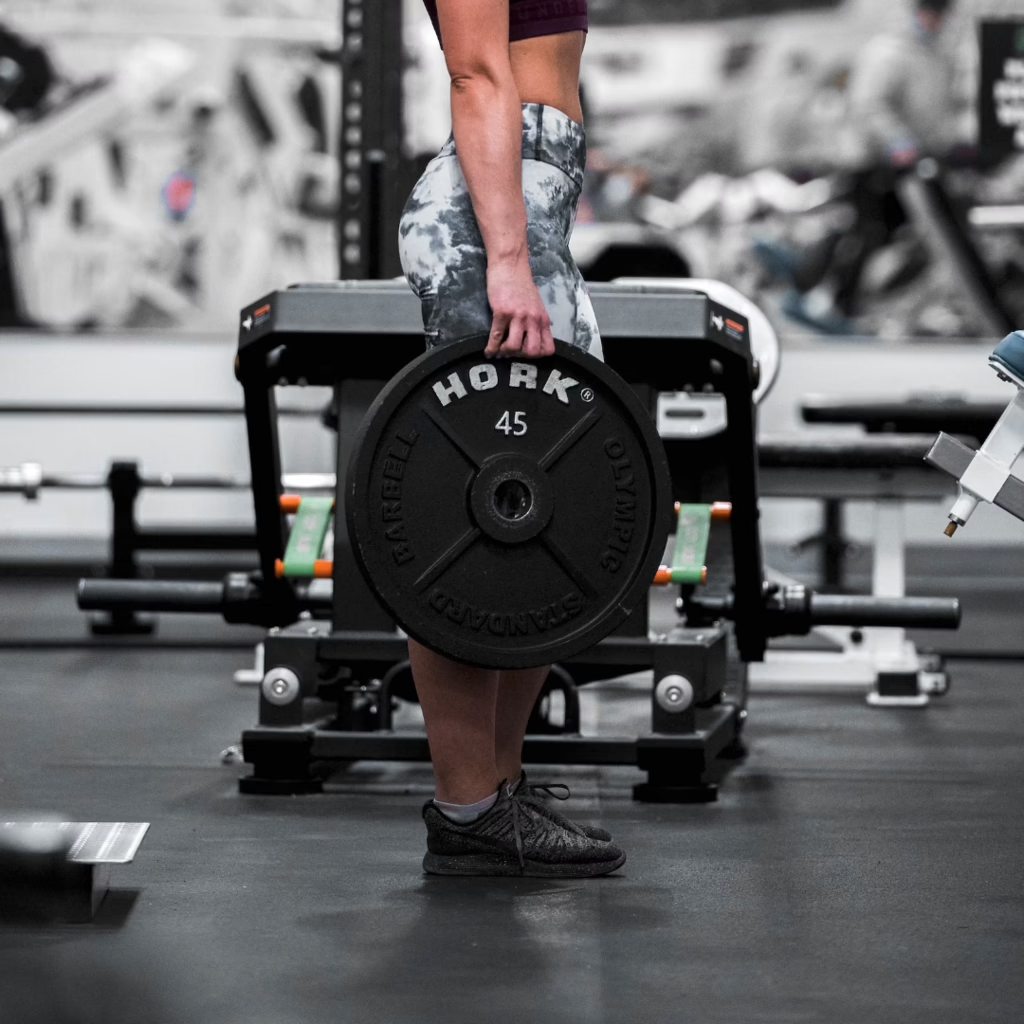
The Super Simple Power Workout That Delivers Visible Weekly Results

The post outlines an intense, dance‑with‑dumbbells routine that relies on nonstop movement to build endurance: you start with 30 seconds of continuous work and gradually extend the duration over weeks—moving through minutes, hours, even three hours—while keeping rest minimal; it stresses daily workouts (with only a day or two off when injuries accumulate), the idea that a workout is earned by sustained effort, and that the required time varies with body type (roughly 30 minutes for skinny people versus up to three hours for heavier ones)—all aimed at transforming the body through progressive endurance gains.

For Growing Up, And Against Fear, And Isolation

A computer‑generated poem in first‑person voice celebrates the freedom of self‑directed learning and the power of ancient wisdom re‑combined with modern insight. The narrator abandons “standardized education” and instead follows a boundless network of knowledge, finding books that sound like celestial music and using them as a lantern to illuminate culture, tradition, and personal ascent. In the same breath, fear is shown as a shadow born of ignorance that dissolves when knowledge becomes a sword; courage, dignity, and nobility emerge from understanding. The poem also frames isolation as a fleeting moment that invites return to human connection, urging the reader to walk “the rugged Appalachian Trail” of ideas, to rise to greatness, and to shine as a star in a constellation of shared wisdom. In sum, it urges us to embrace adventure, knowledge, and the extraordinary in our own lives.

Awakening The Torch of Human Greatness

The author presents a reflective monologue on how human knowledge and wisdom are shaped by our internal systems, likening them to machines that can only process “garbage in” into “garbage out” unless we feed them with deliberate learning; he calls for personalized, self‑directed education to break the standardization of schooling, arguing that true understanding emerges when each individual follows their own path of discovery and applies this wisdom to lead and create; ultimately he urges a collective effort to unite beyond conformity, to let shared knowledge guide our destiny, and to build a brighter, wiser world where every person shines as a beacon of humanity’s potential.

So As Long As You Remember To Take To The Stars

Life can become overwhelmingly busy, but it’s essential not to lose sight of our cosmic nature; we must keep adventures distinct from routine tasks so that overwork doesn’t creep in unnoticed. By spending time under the stars and listening to philosophers—whether through books or guided hikes on famous trails like the Appalachian or Pacific Crest—we can reclaim a sense of wonder and undo our daily indoctrination. In doing so, we return to where great thinkers once left off, continually grow toward becoming unique, precious beings, and only through adventure do we truly integrate our human and cosmic selves.

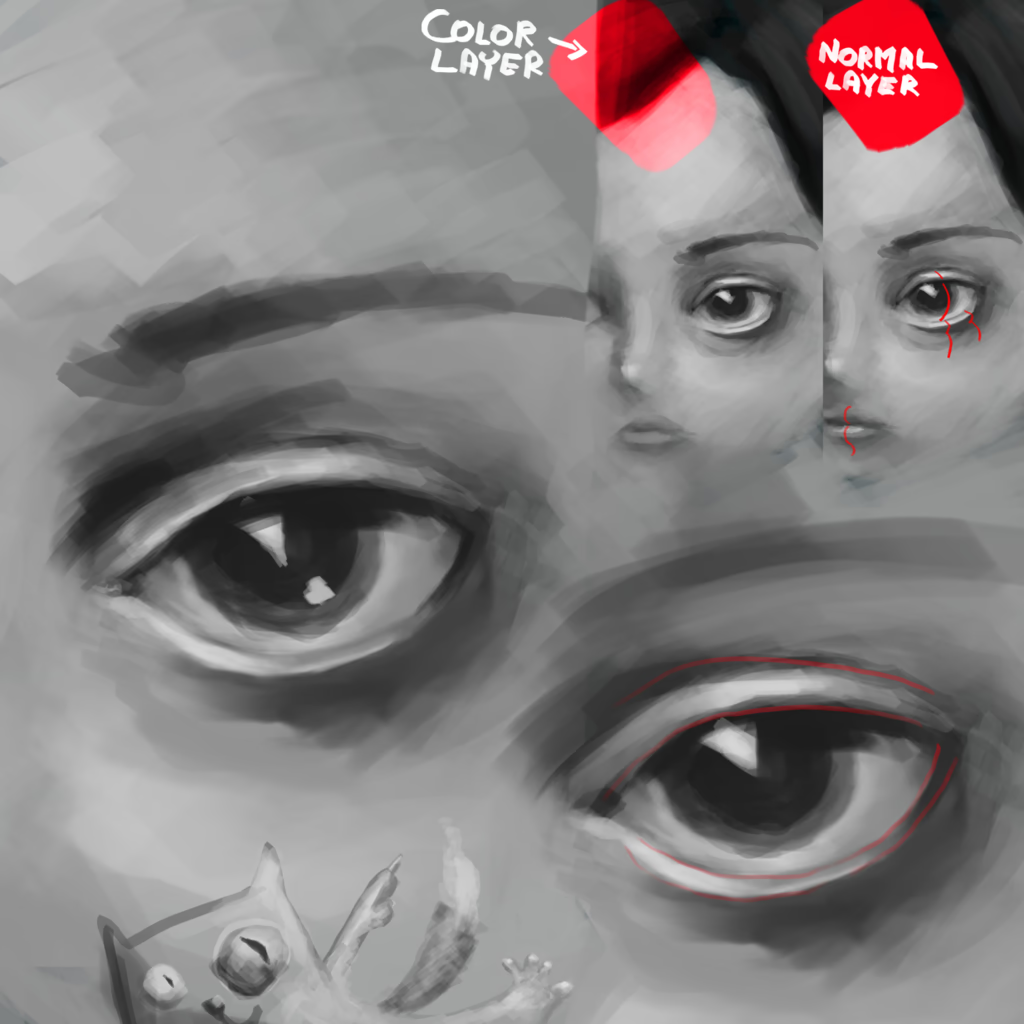
Beginning Digital Painting: Just Paint Confusing Shapes In Black And White To See Them Better

The post explains how to paint a realistic eye by first modeling its 3‑D shape with gray tones—painting a sphere, adding eyelids, pushing back black for shadows and using white for highlights—and then layering a single color on top in HSL mode so that hue, saturation and luminosity are applied without disturbing the underlying tonal structure.

Easy Peasy Fitness

The post argues that a continuous, low‑weight lifting routine—starting from 20 seconds of work, then extending without rest to several minutes, and eventually building up to three hours over weeks or months—produces far better results than conventional set‑and‑rep training; it also promotes a simple diet of meat (paired with lettuce salad) while avoiding sugar and protein powders, and suggests that the “dance‑like” flow of movement is more effective than rigid sets and forms.

Paint-overs and Color Picking

Art is presented as a transformative force that enriches life through constant practice and a “beautiful heart,” while myths about freehand drawing can slow progress; mastering proportions first may seem wise but often leads students to quit. By using tools like Krita’s Reference Image feature, color picking, and paint‑overs one can study visual complexity and build a solid hyper‑realism foundation that captures what the camera misses, turning painting into a joyful, self‑educating process that ultimately reveals art’s true happiness.

The Beast End; Or, Hitting A Workout Plateau

The post explains how hitting a workout plateau means your body has stopped changing because the training stimulus becomes too weak; this is actually a sign that your body is adapting—muscles grow, strength increases, and fatigue signals decrease. To keep progressing you should extend sessions by another 60 minutes once you’re comfortable with 60‑minute workouts, but add rest days on weekends to allow recovery. It also stresses practical gear tips—wear breathable shoes, let socks dry, use a mouth guard if needed—to avoid injuries like cracked teeth or lost toenails. Finally, the author encourages reading thousands of narrated non‑fiction books as an intellectual “upgrade” that helps you master both body and mind, turning the beast of training into a superpower of endurance.