
The post contends that universal, self‑directed education lifts everyone above hierarchical distinctions, eliminates poverty, and brings lasting unity and peace.
Archive
Page 52 of 101
The post contends that universal, self‑directed education lifts everyone above hierarchical distinctions, eliminates poverty, and brings lasting unity and peace.

Books are the true inheritance of humanity; libraries and great writers give us understanding and growth. The post laments fake education, indoctrination, and fantasy—spiritual mediums, healers, or the military’s relentless youth mobilization—as weakening our grasp on reality and opening doors to manipulation, war, and nuclear catastrophe. It calls for profound, effective schooling that unites people beyond religion, stops repeating mistakes, and ensures a world where educated hands bring peace without borders.

After noting world leaders’ preoccupation with UFOs and the failure of conventional schooling, the author argues that true learning comes from independent study—starting in libraries with narrated books—and from ceasing rote memorization to embrace genuine discovery. He claims great thinkers followed this path, using programming as a self‑guiding tool, and that success will only arrive when one turns personal calling into art and inherits inner wisdom.

The author explains how simple daily walks—especially in nature—can kickstart fitness before moving on to jogging or structured training such as Couch‑to‑5K, and stresses that walking is the easiest way to build endurance while keeping blisters at bay‑level. He pairs this with light music or philosophy books to make the activity enjoyable, and notes that a good pair of outdoor shoes and roomy socks are key. The piece also links sugar’s role as a quick energy source (and its over‑use in processed foods) to walking’s steady burn, while encouraging independent programming as a flexible career path that lets one avoid long commutes or rigid office schedules so more time can be devoted to fitness. Overall, the post blends practical walking tips, simple nutrition cues, and work‑life balance ideas into a single paragraph guide for staying active.
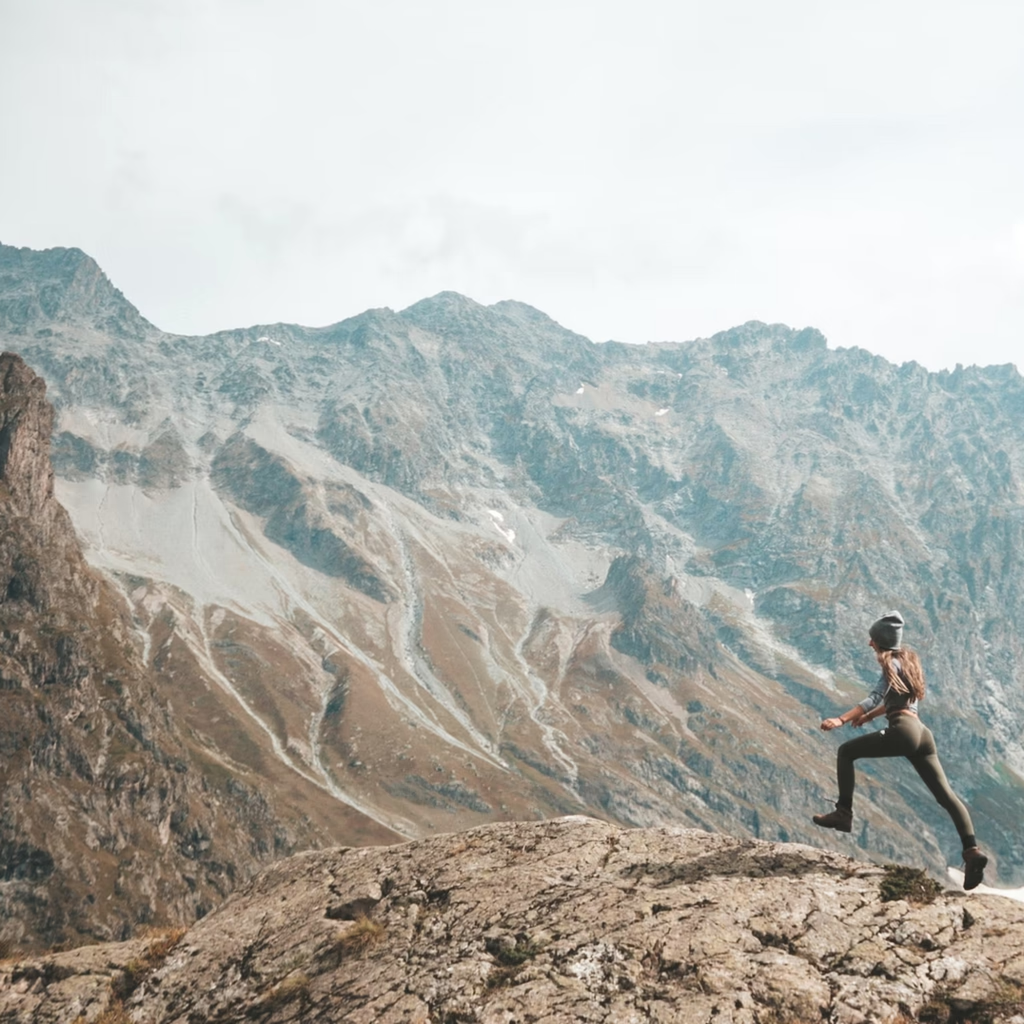
Regular exercise builds endurance, boosts health and can extend life by decades, whereas a sedentary lifestyle leads to illness, early death, and a cycle of overwork, overeating, and sadness.

The post argues that an effective workout is one driven by rhythm and music—each beat acting as a timer and trainer—to keep muscles engaged like in a “dumbbell dance.” By matching song BPM to your ability level, gradually increasing dance duration while shortening rest intervals (much like a Couch-to-5K jogger plan), you build endurance. Continuous motion with minimal pauses, avoiding distractions such as water breaks or idle chatter, ensures the gym’s energy stays high; interval timers and tempo‑adjusting programs help scale difficulty over time. As we age, this rhythmic, music‑guided training keeps our bodies in shape and extends longevity.
#1241
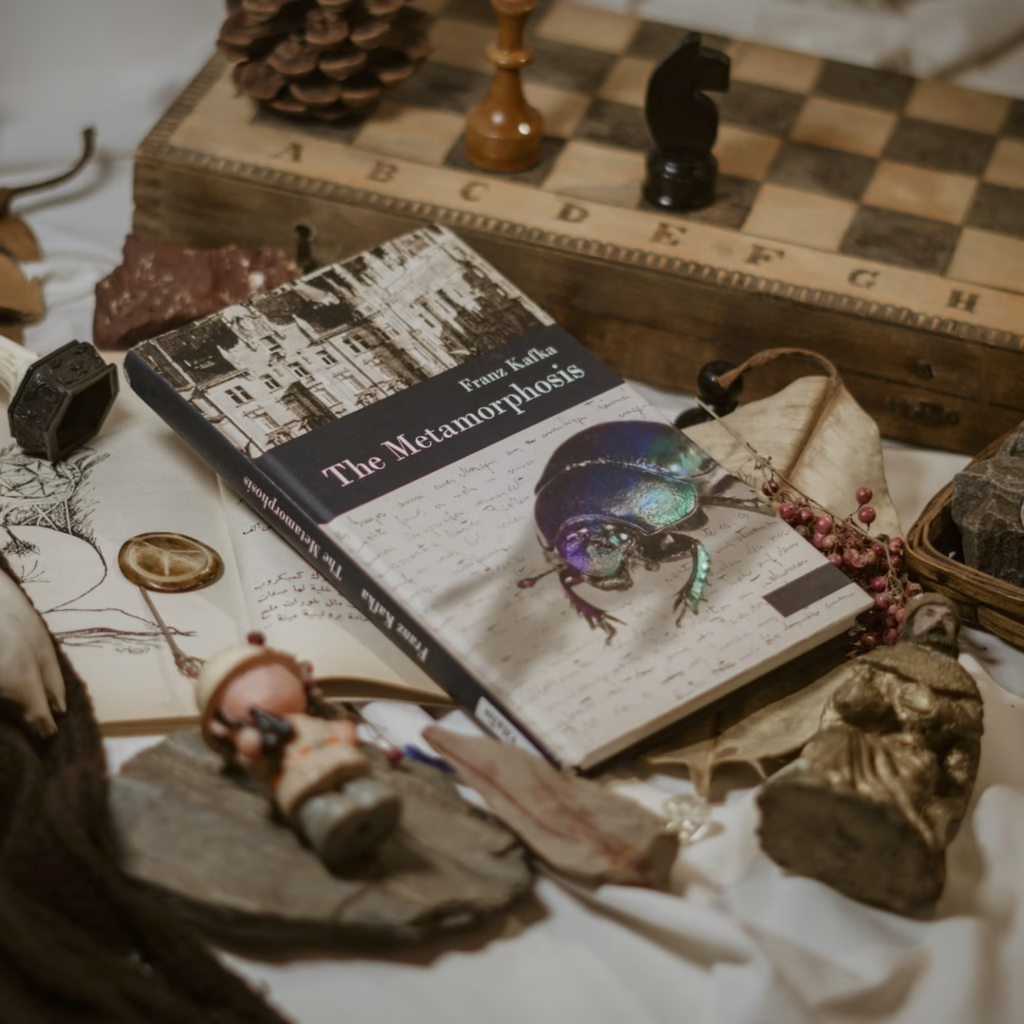
As you venture into a library searching for an interesting narrated book, its cover and title may hint at what awaits but not fully reveal the wisdom it contains; a good story can deepen understanding, evoke emotions, and connect you to characters whose joys, tragedies, and memories become your own inheritance of profound insights into humanity. By grasping these narratives you’ll unravel truths, lift old curses, reconstruct legends, and correct histories—each tale adding to your comprehension of the human condition and enabling you to interpret ancient myths as if they were freshly spoken. In this way narrated books become tools that enrich thinking, sharpen comprehension, and pass on wisdom from one generation to the next.

#1240
The post contends that reality is either something or nothing—if it were only nothing there would be no questions at all—and then describes the universe as a vast particle soup, where radiation and matter coalesce into stars, dust, planets, and eventually life through simple evolutionary steps. It traces humanity’s lineage from those first “burps” of consciousness to modern societies, stressing that our knowledge is passed down by books and collective wisdom, and that each individual mind functions like an operating system that must be upgraded with learning and experience; in this way we become the independent agents who can further beautify the universe.

The post reflects on how our beliefs are shaped by the circumstances of our birth and later influences, urging careful attention to this process. It champions the library as a source of transformative non‑fiction that intellectuals cherish for its truth and authenticity, and argues that an authentic foundation and continuous curiosity are essential for the human mind to flourish beyond its basic physical roots. The author sees indoctrination—whether by religion or chance—as a prison that divides us and stalls progress, but believes that if education is made inspiring, student‑driven, and realistic then we can repair schools, unlock our curiosities, and ultimately create a better world of wisdom, security, and peace.

The post envisions cats as politically savvy beings who will bring world peace, balance humans with nature, revamp schools into quest‑based learning, emphasize narration and naps for rest, and naturally steer politics toward greatness.
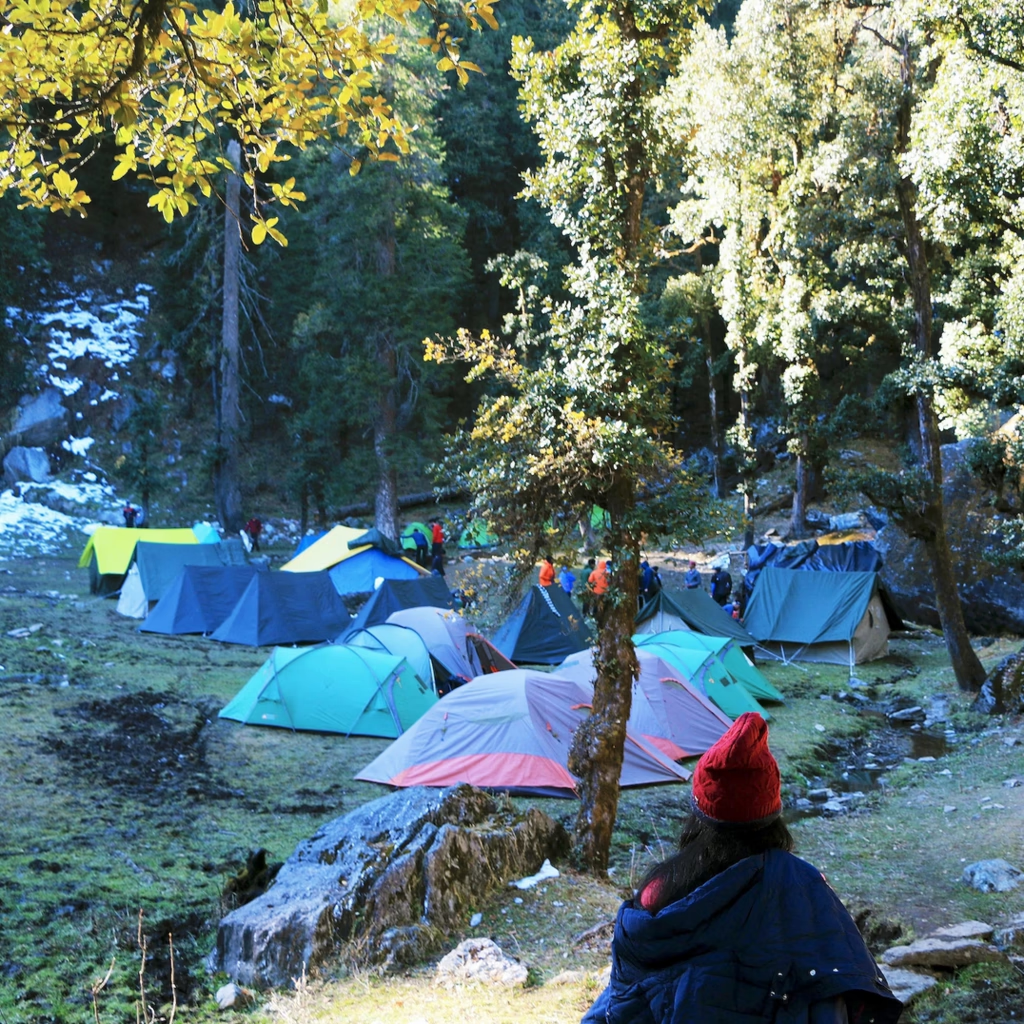
The author celebrates the Appalachian Trail as an essential life journey—far more valuable than school diplomas or career promotions—and invites readers to hike it in groups, emphasizing teamwork, resilience, and shared exploration. He argues that the trail’s lessons mirror those found in great books written by clear‑thinking thinkers, and that both together shape our intellectual inheritance. By stepping off familiar paths and listening to guides like Dixie, we can break free of cultural indoctrination, unite worldwide families, and find the direction toward wisdom and greatness.

Real education is about growing into a well‑integrated being—a mind full of content, authenticity, and earned wisdom—rather than merely repeating copied ideas or campaign slogans. It requires true comprehension, not just the use of buzzwords like “indoctrination.” The essence lies in dense, compressible knowledge that shapes character and fuels lifelong excellence; when mastered, it leads to a life well lived, stories worth sharing, and a lasting legacy of wisdom.
The author reflects on how victors rewrite history and how historians often pave those roads with good intentions, then explains that asking for meaning is like driving meaning into something and that learning from non‑fiction books helps solve contradictions and build oneself independently; he shares personal anecdotes—from school bullying to learning computers and philosophy—to illustrate this process, and describes how college loans, grade manipulation and politicians chasing UFO tech reflect the same indoctrination; he even cites the moon landing as a convenient military technology boost, and ends by stating that war is illegitimate yet tolerated, urging readers to use books for intellectual inheritance and self‑growth.

The post argues that contemporary schooling relies mainly on memorization and standardized testing rather than true learning, causing students to forget concepts once the exam ends; this system is perpetuated by powerful figures who favor easy-to-teach content over real knowledge, and poverty further hampers students’ ability to absorb information. The author claims that genuine education occurs when learners engage directly with ideas—through listening to high‑quality books on a portable device, exploring nature, building small labs, programming animations, or experimenting with simple electronics—and that these experiences let concepts like trigonometry become functional and meaningful. By contrast, the author sees current schools as “babysitters” that fail to nurture real understanding or creativity, and he calls for self‑education that places knowledge in the students’ hearts rather than in their notebooks. He stresses that effective schooling is crucial but currently broken, and that to truly fix education we must also tackle poverty so learners can enjoy the serenity needed for deep learning.

The post argues that most school classes are “fake” in the sense that they look educational but mainly serve to generate paychecks and test scores rather than foster real learning. Teachers, it claims, mimic the form of instruction without truly stimulating minds; they push cramming and memorization to keep GPA averages high, while state testing rewards this narrow focus. In contrast, a “real” class should be curiosity‑driven, integrated across fields, and presented as a big question that leads students from one topic naturally into another (for example, learning programming in a useful language rather than abstract math loops). Such classes would use lectures, projects, tutors, and inspirational speakers to let learners self‑direct their exploration; the ultimate point is that memorization alone is not education.
The post argues that today’s school system presents an overly optimistic image while failing to deliver real learning: principals and teachers often treat classrooms as bureaucratic machines rather than creative spaces, rewarding memorization and grade inflation over genuine understanding. The author claims this systemic failure—rooted in greed, corruption, and ignorance—leads students into a cycle of stress, overwork, and mediocre results. To break this cycle, he calls for self‑directed, individualized instruction that mirrors how programmers learn, coupled with broader reforms such as universal income to remove basic survival pressures. In the absence of truly effective teachers, each student must become a teacher for themselves, pursuing lifelong independent study until they can rebuild schools that foster curiosity and real knowledge.
The author argues that the fascination with UAP/UFOs is a symptom of a broader failure in our education system—where memorization replaces genuine learning—and that this intellectual emptiness feeds an “idiocracy” ruled by uneducated leaders who profit from holiday‑driven marketing, algorithmic content curation and religious cycles. They claim that without authentic, fact‑based schooling the world will revert to past mistakes, anti‑science movements, and wars, while AI and business interests shape our opinions. In short, the post calls for a return to library‑based, experiential learning as the antidote to this cultural decline.

The post encourages using rhythmic movement as the core of a workout, urging dancers to maintain an uninterrupted flow by employing interval timers and avoiding breaks or distractions; it stresses that energy comes from a steady drumbeat and that continuous motion will strengthen muscles and turn training into art. It then proposes an adventurous “revolutionary” plan: prepare for camping and long hikes by gathering gear, unplugging kitchen appliances with a knife, roasting sausages over fire, and taking protective measures (wire roasting sticks, duct tape pants, bug repellent, eye protection, gloves) to keep safe from bears, mosquitoes, and knives. Finally it reminds readers that the effort will be lifelong but ultimately healthy, urging them to rise, rebel, and embrace adventure regardless of career or other concerns.

#1229
The post is a lively, no‑holds‑barred workout guide aimed at older or “warrior” readers who want to stay fit by focusing on the posterior and overall movement. It starts with simple steps—walk first, then add dancing—to build endurance while controlling rest intervals via timers or apps. The author emphasizes shortening rest periods progressively so you can work out more and less rest, eventually achieving a solid fitness base. By walking “woodland adventure trails” like a locomotive and keeping the routine consistent, you’ll improve lung capacity, energy, and dance stamina, turning your workout into an artful practice that keeps you young and strong.

The post envisions a sweeping intellectual revolution in which education transforms from formal institutions into experiential, adventure‑driven learning that is both stress‑free and deeply rooted in real‑world exploration. It argues that this shift will bring modest yet meaningful successes—improved leaders, universal basic income, and widespread wisdom—that collectively reshape society. Drawing on Newton’s apple as a metaphor for curiosity, it suggests that true genius emerges when minds are first nurtured to meet their unique needs, rather than simply taught facts. The new system will celebrate programming languages as the primary tools of all sciences, with interactive microscopes and challenging platforms replacing traditional software development. Ultimately, learning becomes an adventure trail across cultures, a self‑directed lecture delivered by beloved narrators, turning classrooms into dynamic journeys that fuse narration, exploration, and practical application to create a wiser, safer world.

The post reflects on how teachers’ work is framed by paychecks, job security and a rigid curriculum that often reduces teaching to a “stick‑and‑carrot” system; this pressure leads many educators to deliver rote lessons instead of inspiring learning. Students respond in kindred ways—memorizing rather than understanding—and the author argues that true knowledge is built layer by layer through free, joyful exploration, not through standardized grading or fixed syllabi. In short, the piece calls for a shift from rigid, pay‑check–driven schooling to self‑directed learning where students and teachers alike can pursue genuine curiosity and accumulate wisdom rather than just grades.
Narrated books can soothe sleep and ease minor fears, but true learning comes from mixing adventure—walking trails or camping—with the same books to let wisdom “inherit” into spirit, heart, mind, vision, thought, and invention. After basic reading, writing, and arithmetic, schools often fall into bookkeeping and boredom; subjects become dull divisions that sell students out of real education. Teaching math alone is a mistake unless it’s tied to programming—building screensavers or generative art—which can launch businesses and turn learning into real skill. The GPA chase forces cramming and forgets deep study; bullying, teachers’ neglect, and home gadgets with endless phones add depression. Frequent outdoor trips bring serenity and reset the mind, allowing books, programming, and adventure to fuse into genuine greatness.
The author contrasts philosophers—who think deeply and long‑term—with politicians, who think shallowly and profit from war. He argues that many politicians are privileged youths who use conflict for economic gain, while true philosophers plan to dismantle regimes before they attack. To counter this cycle he calls for authentic, self‑driven education so the next generation can out‑think the current leaders and prevent wars and other crises.

Adding dumbbells to your dance‑style workout lets you keep rest periods short (use an interval timer) while the music keeps you in trance and moving all your muscles—arms, shoulders, abs, legs—in sync with each beat. The added weight forces full‑body adaptation, making every movement count. Coffee and sugar break that rhythm, so stay hydrated, monitor electrolytes and blood pressure, and keep a doctor’s checkup for accurate feedback. This routine will leave you cheerful, younger, more flexible, and bouncier.